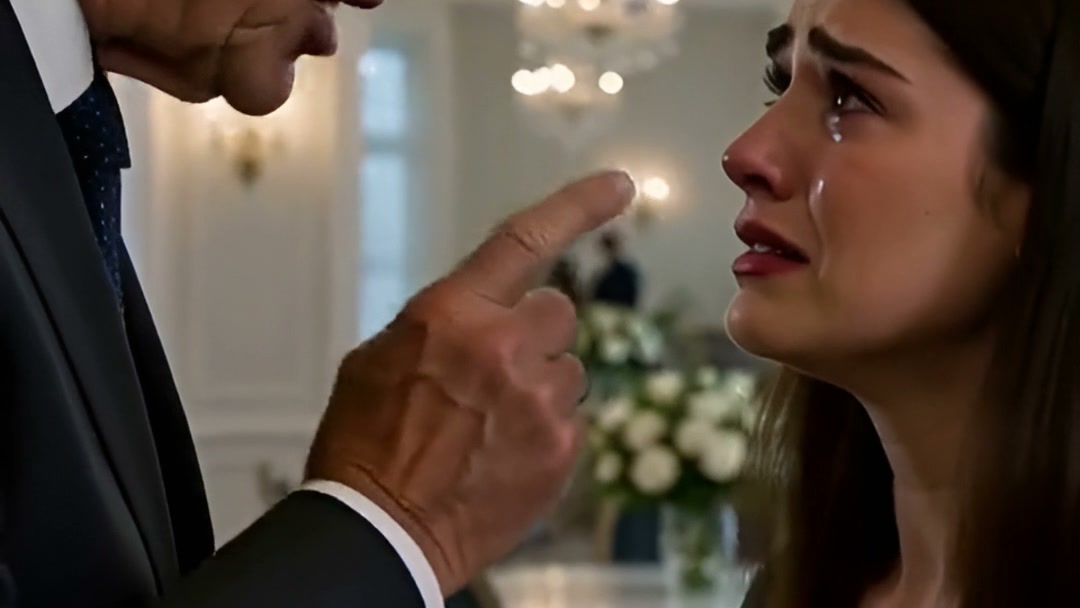
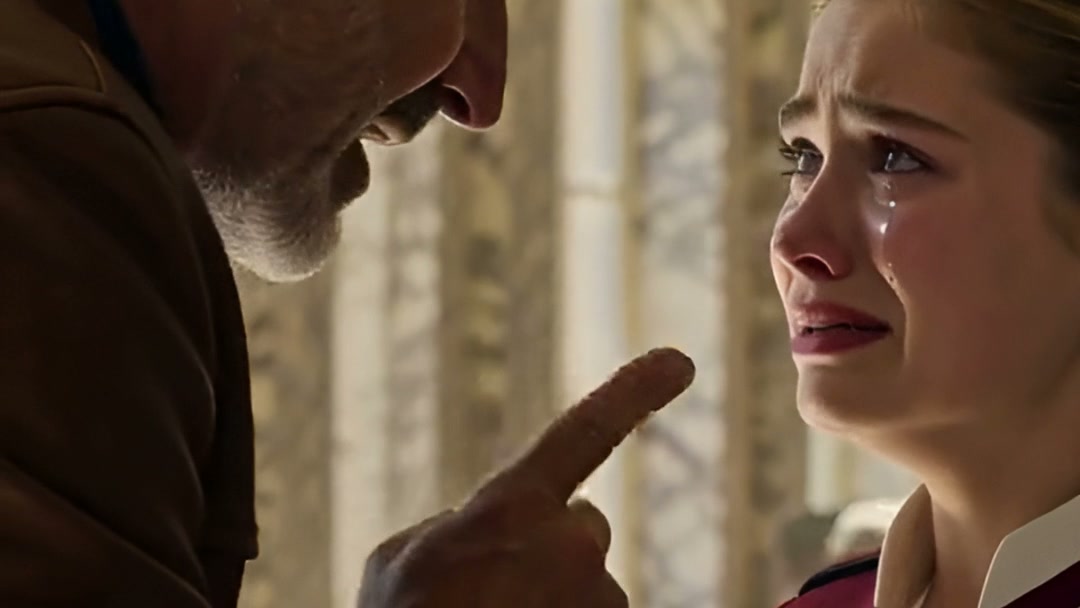
Hotel mogul Ethan Cole watched a nineteen-year-old trainee get her first paycheck ripped away in his marble lobby… But when she opened her trembling hand and showed him a brass key, every senior manager on the floor stopped breathing.
The Bramwell Grand had a rule Ethan Cole had drilled into every manager on every floor: *nobody* gets humiliated in this lobby.
It was a Tuesday morning, sharp and gold, white orchids on every pillar, sunlight cutting clean slabs across the marble. Mara Voss, nineteen, one week on the job, stood at the reception counter holding her first pay envelope like it was something holy.
She had earned it. Every shift, every smile, every guest she’d guided to their room with quiet grace.
Then the lobby doors swung open.
Gerald Voss was a thick-necked man in a trucking company polo, a face like a clenched fist. He crossed the marble floor without stopping, snatched the envelope from Mara’s hand and turned it over, fanning the bills at her like a deck of cards.
“You think this is yours?” he said, loud enough for the whole lobby to hear. “Every ride I ever gave you. Every year under my roof. You owe me, girl. Every cent.”
Mara went white. Her hands dropped to her sides.
The envelope disappeared into his jacket.
He reached for her collar.
A hand caught his wrist.
Not a security guard’s hand. A young man’s hand, clean nails, a grey three-piece suit, no tie. He was maybe twenty-eight, dark-blond hair, calm grey eyes that were not calm at all underneath.
“Let go of her,” Gerald said.
“I’m not holding you,” the man said, very quietly. “You’re the one who needs to let go.”
Gerald looked at the hand on his wrist. Then at the man’s face. Something in that face made him take a step back.
The man released him.
“Leave the envelope on the counter,” the man said. “And leave the building.”
“You have no idea who I—”
“I know exactly who you are. Gerald Voss, unit fourteen, Parkside Trucking, forty-three parking violations outstanding in the county. Now leave the envelope.”
Gerald put the envelope on the marble counter. The sound it made was very small. He walked back across the lobby and through the doors and the doors closed behind him, and for two full seconds nobody in the lobby moved.
The man picked up the envelope and held it out to Mara.
She took it with both hands, like it might fly away.
“Thank you,” she said. Her voice was barely there.
“Are you alright?”
She nodded. Then she looked down at her free hand, the one that had been pressed to her side, and she slowly opened her fingers.
Lying across her palm was a brass room key on a short chain. Old-fashioned, heavy, the number 14 pressed into it. Not a modern card. Not a Bramwell Grand key. Something older.
“I found it,” she said. “In the lost-and-found box yesterday. I was going to hand it to the duty manager. But—” She stopped. She looked up at him with those pale, steady eyes. “There’s a room upstairs nobody in this building will tell me about.”
The man’s expression did not change. But his stillness changed.
“Which room?” he said.
“I don’t know. The key doesn’t match any room number we use.” She turned it over. On the back, stamped in faint letters: *B. COLE. BRAMWELL ORIGINAL.*
The man looked at the key for a long time.
Then he looked at Mara, and something moved through his face that he did not try to hide.
“Where did you say you found it?” he said.
“Lost-and-found. Tucked inside an old guest ledger. The ledger was dated 1987.”
His jaw worked once. “Who gave you the job here?”
“The general manager. Ms. Dray. She said I came recommended.” Mara frowned. “She never told me by whom.”
The man reached into his breast pocket and produced a small card. He set it on the counter beside the orchids.
“Room 14B,” he said. “It’s not on any guest map. It’s on the original floor plan, which I have. Come up at four o’clock.” He paused. “My name is Ethan Cole. My grandmother built this hotel.”
Mara stared at the card.
“Your grandmother,” she said slowly, “was Eleanor Cole.”
“Yes.”
“The woman in the portrait on the fourth-floor landing.”
“Yes.”
Mara looked at the key in her palm. Then she looked at him with an expression that was careful and deliberate, like someone choosing their words from a very short list.
“Mr. Cole,” she said, “the ledger the key was tucked inside — there’s an entry in your grandmother’s handwriting. It’s a name. My mother’s name. Dated three months before I was born.”
The lobby was completely silent.
Ethan Cole looked at Mara Voss. At the shape of her face. At her pale eyes, steady and grey.
His own eyes were pale. His own eyes were steady and grey.
He did not speak for a long time.
“Four o’clock,” he said at last. His voice was different now, careful and very quiet, like a man handling something he was terrified to drop.
At four o’clock Mara took the old elevator to the fourth floor and found a door at the end of the corridor behind a velvet rope that the cleaning staff had told her was a storage room.
Ethan was already there with a lawyer named Briscoe and a manila folder three centimetres thick.
Inside: letters between Eleanor Cole and a young woman named Diane Voss, dated across nineteen years. Monthly payments. A trust. A promise. *She will want for nothing when she is old enough to find her way here.*
And at the bottom of the stack: a DNA test ordered by Eleanor Cole eighteen months before she died, comparing her bloodline to a sample labelled only *D.V.’s daughter.*
The result was a single typed word on a laboratory letterhead: *Confirmed.*
Mara sat in the armchair by the window and read the whole file while the afternoon light moved across the floor.
Ethan sat across from her and did not rush her.
When she finished she put the folder on her knees and looked at the brass key on the chain in her palm.
“She left me the key,” Mara said. It was not a question.
“She left instructions with Ms. Dray. If a young woman named Voss ever applied for a position here, she was to be hired and placed at the front desk. The key was to go in the lost-and-found where you’d find it on your first shift.”
“She planned all of it.”
“She was that kind of woman.”
Mara was quiet. Outside the window the city went about its afternoon.
“Gerald Voss is not my father,” she said.
“No,” Ethan said. “He is not.”
“Which means my mother lied to me my whole life about who I was.”
“Your mother was protecting something your grandmother asked her to protect until you were old enough. I think she ran out of time to tell you herself.”
Mara’s jaw tightened. She did not cry. She pressed her lips together and breathed through her nose and looked at the key.
“What does this make us?” she said.
“It makes you my grandmother’s great-granddaughter,” Ethan said. “It makes you family. What you do with that is entirely up to you.”
Mara set the key on the table between them. She looked at him for a long time.
“Then fire Gerald Voss’s trucking contract,” she said. “Bramwell uses his company for laundry transport. Three routes, twice a week. Cancel them.”
Ethan blinked.
Then, for the first time that afternoon, he almost — no. He did not almost anything. He smiled. Clean and clear and without apology.
“Done,” he said. He reached across and picked up the key and held it out to her.
She took it.
“And your job,” he said, “if you want it, is no longer trainee receptionist.”
Mara stood up, tucked the key into her breast pocket, and looked at him with those grey eyes that were, he now understood, their grandmother’s grey eyes.
“I’ll need my own office,” she said.
“Fourth floor,” he said. “End of the corridor.”
She looked at the door they had come through.
“I know where it is,” she said.
She walked out, and the velvet rope swung behind her, and somewhere on the marble floors below Gerald Voss’s trucking contract was already being cancelled by a phone call Ethan made before Mara had reached the elevator.
The key was hers. The name was hers. The hotel, one distant and legal day, would be hers.
She had walked in through the front door in a burgundy uniform and she would never be invisible again.