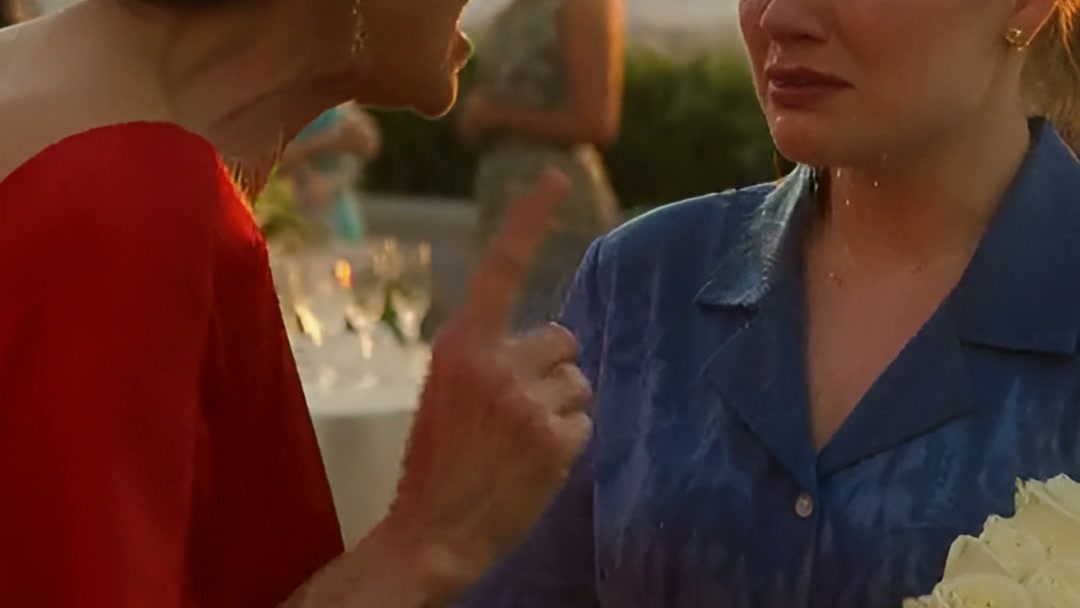

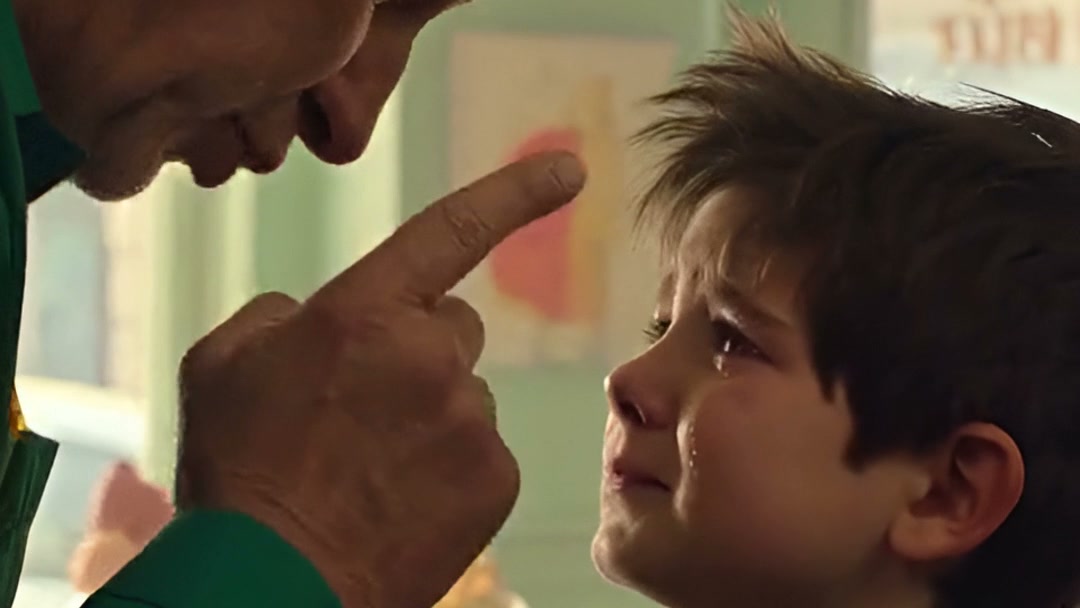
The mob boss walked into a pastel ice cream parlour and found a small boy in a patched coat clutching a single cone… But when the boy opened his fist and showed a silver coin, the most feared man in the city couldn’t speak.
The Salvatore Creamery was the kind of place that made people forget bad things existed. Mint green walls. Big sunny windows. The smell of waffle cones and warm sugar drifting all the way to the sidewalk.
Dante Morrow noticed the boy the moment he pushed through the glass door.
Six years old, maybe seven. A patched blue coat two sizes too big. Brown eyes scanning the display case like he was memorising every flavor he’d never taste.
He was holding a small cone — single scoop, strawberry — that a woman at the counter had clearly bought him out of kindness before leaving.
“Hey.” The supervisor, a thick-necked man in a white apron, stepped around the counter. “What did I say about loitering?”
The boy looked up. “I’m not loitering. The lady bought it for me.”
“She’s gone.” The supervisor reached over and plucked the cone right out of the boy’s hand. “You’re not a paying customer. And frankly —” he leaned down, nose wrinkling, “— you smell.”
The cone hit the floor. Strawberry pink splattered across clean white tile.
The boy didn’t cry. He just stared at it.
Every customer at every table went completely still.
Dante was already moving.
His hand shot out and caught the supervisor’s wrist before the man could point a finger in the boy’s face. Dante Morrow — thirty-two years old, black leather jacket, a jaw that looked like it had been cut from the same stone as a courthouse — looked at the supervisor with the kind of calm that people in three counties had learned to be very afraid of.
“You dropped something,” Dante said quietly.
The supervisor looked at the grip on his wrist. He opened his mouth. He closed it again.
“Walk away,” Dante said.
The supervisor walked away.
Dante let go, crouched down to the boy’s eye level, and looked at the ruined cone on the floor. Up close, the boy’s coat had at least four different patches in four different fabrics — someone had stitched them carefully, lovingly, with mismatched thread.
“What’s your name?” Dante asked.
“Eli.”
“Eli. I’m Dante. What was the flavor?”
“Strawberry.” A pause. “But I like chocolate too.”
Dante stood, turned to the counter, and ordered two scoops of chocolate on a fresh waffle cone without looking at the supervisor once. He set it in the boy’s hands, made sure the boy’s grip was solid, and crouched back down.
“There you go.”
Eli looked at the cone. He looked at Dante. Something in his small face was working through a calculation much too serious for a seven-year-old.
Then he opened his left fist.
Lying in his palm was a plain silver coin — old, worn smooth, the size of a quarter but heavier. A coin that should not have existed outside of a very specific locked drawer in a very specific house that had been burned down eleven years ago.
Every person in the shop went quiet.
Dante stared at the coin.
“Where did you get that?” he said. His voice was still calm. But his hands were not.
“The woman,” Eli said.
“What woman?”
Eli pointed at the empty chair by the window — the one where no one had been sitting since Dante walked in. His brow furrowed with the total seriousness of a child who needs the adult to understand.
“The one nobody else can see,” he said. “She said to give it to the man who’d come in angry and leave kind. She said you’d know what it means.”
The ice cream shop was silent.
Dante Morrow — who had faced federal prosecutors and not blinked, who had walked out of two ambushes and a burning warehouse and never broken stride — sat down on the clean white tile floor of a pastel ice cream parlour in the middle of a Tuesday afternoon.
He turned the coin over in his fingers. His hands were shaking.
On the back of the coin, barely visible under eleven years of wear, was a tiny engraving he had put there himself with a pocket knife the night before he lost her. Three letters. *M.A.M.* — Maria Anne Morrow. His sister. Dead at twenty-six in a fire that investigators had officially ruled accidental.
He had carried the matching coin every day until the week she died, when he gave it to her for luck.
He had never told another living soul it existed.
Eli was eating the chocolate cone, watching him with kind, patient eyes.
“She said one other thing,” Eli added, around a lick of ice cream.
Dante looked up.
“She said the man who did it kept the ledger. She said you already know where it is. She said —” Eli pointed at Dante’s chest, “— you’ve been standing in front of the answer for three years and you keep looking away because you’re scared of what you’ll have to do next.”
The woman at the corner table had pressed both hands over her mouth.
The supervisor had gone into the back room and had not come out.
Dante sat on the floor for a long moment. Then he took a breath that sounded like something breaking loose inside his chest.
He knew exactly what ledger she meant. He had been paying a very powerful man not to use it for thirty-six months. He had told himself it was strategy. He had told himself it was patience.
He stood up. He put the coin in his breast pocket, against his heart.
“Eli,” he said. “Is there someone waiting for you outside?”
“My grandma. She’s on the bench.”
“Okay.” Dante reached into his jacket, pulled out a business card, and wrote a number on the back. “Give this to your grandma. Tell her Dante Morrow says the boy is owed a Sunday here, every week, all the ice cream he wants. On my account. No one will bother him.”
He walked to the counter. He put down enough cash to cover every customer in the shop. He looked at the supervisor, who had crept back to the doorway of the back room.
“If I hear you spoke to that boy again,” Dante said, “the health inspector will get an envelope he won’t be able to ignore.”
The supervisor nodded.
Dante pushed through the glass door.
He walked two blocks to his car, sat in the driver’s seat, and opened his phone. He pulled up a contact he had not called in three years — a forensic accountant who owed him a favour and who had asked, repeatedly, to help.
He made the call.
“It’s Morrow,” he said when she answered. “I need you to pull everything on Victor Hale. I know where the ledger is. I’ve been letting it sit. That stops today.”
He listened.
“No,” he said. “I’m not afraid of what it costs me. I should have done this three years ago.”
He hung up. He sat for a moment with his hand on the coin in his breast pocket.
Four months later, Victor Hale was indicted on forty-two counts of fraud, arson and obstruction of justice in connection with the fire on Calloway Street. Prosecutors used a physical ledger recovered from behind a false panel in his office — a panel in front of which Dante Morrow had stood, as a guest at Victor Hale’s fundraiser, three separate times without lifting a hand.
The lead investigator told reporters it was the most meticulously documented criminal record she had ever seen. Someone, she said, had wanted that evidence preserved.
The case closed in eight weeks. Victor Hale was sentenced to twenty-two years.
Dante Morrow was at the Salvatore Creamery on Sunday when the verdict came through. Eli was at the counter, pointing very seriously at the mango sorbet. His grandmother sat in the sunny chair by the window, watching her grandson with the quiet satisfaction of a woman who had prayed very hard for a very long time.
Dante ordered the chocolate. He sat at the corner table and turned the silver coin in his fingers.
The sunny chair beside him, the one that faced the window, stayed empty.
He didn’t need it to be filled.
She had already said everything she needed to say.