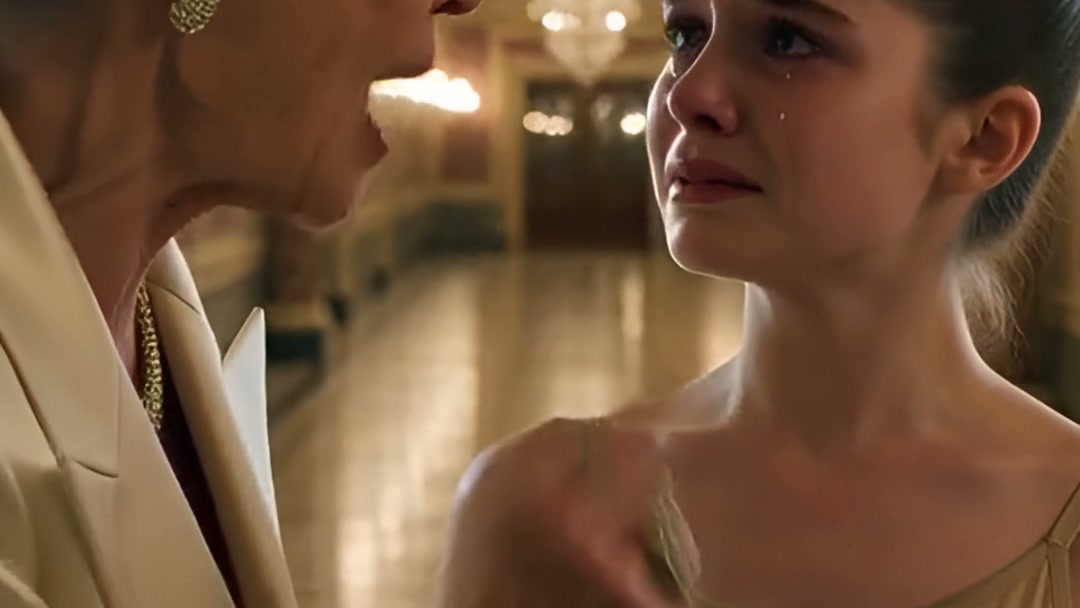
Mafia boss Dante Rove watched a sixteen-year-old foster girl in taped ballet shoes stare up at a portrait in his academy’s marble foyer… But when she whispered the dead woman’s name like a lullaby, every chandelier in the room seemed to stop swaying.
The Marchetti Ballet Academy had never seen a gala day like this one. Crystal chandeliers blazed above the marble foyer. Girls in clean white leotards moved like swans through the afternoon light, while donors in silk and diamonds smiled at one another and said nothing real.
Mia Voss stood against the far wall and tried to disappear.
She was sixteen, thin-shouldered, with dark hair pinned back in a bun that was already coming loose. Her grey leotard had been washed so many times it had gone the color of old dishwater. The toes of her ballet shoes were wrapped in athletic tape because the soles had split two weeks ago and nobody at the group home had signed the repair form yet.
She was not looking at the donors. She was looking up.
Above the main staircase, in a heavy gilded frame fixed to the wall, hung a portrait of a ballerina. The woman in the painting was maybe thirty, in full stage makeup, one arm extended, her face turned toward something just outside the frame. She looked like she was listening for music only she could hear.
Mia had been looking at that portrait every day for three years. She had never told anyone why.
“You.”
The voice came like a slap. Mia turned.
Constance Harlow, the academy’s primary patroness, was moving toward her in a column of ivory crepe, her silver hair set in iron waves, her expression the one she reserved for dirty shoes on clean floors. She was fifty-eight years old and had funded the academy’s entire east wing. She had never once learned Mia’s name.
“What are you doing standing here?” Constance said. “Today of all days.”
“I’m waiting for rehearsal,” Mia said. “It doesn’t start until—”
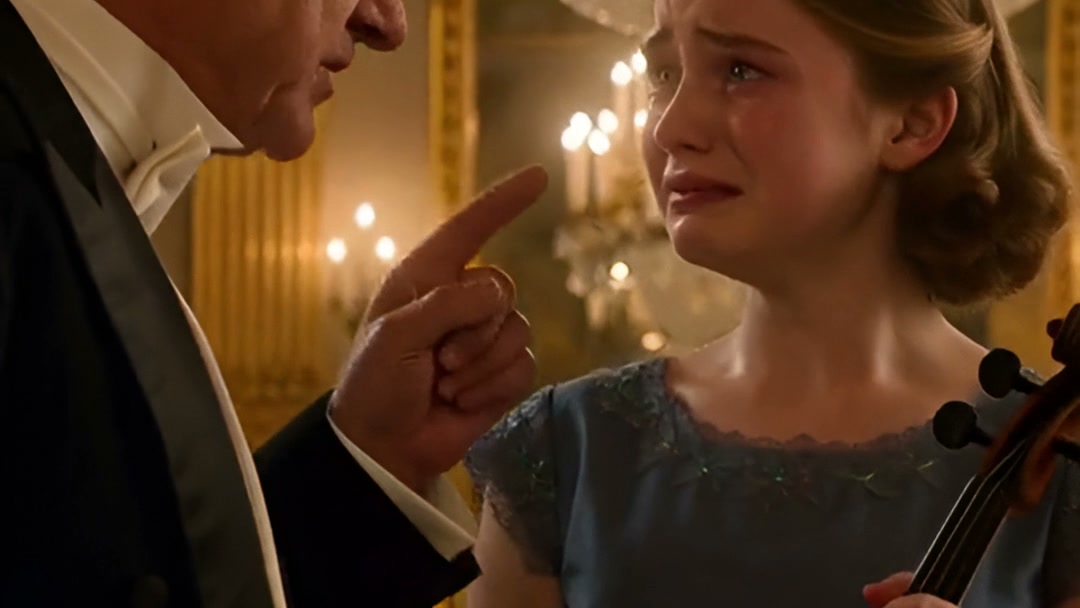
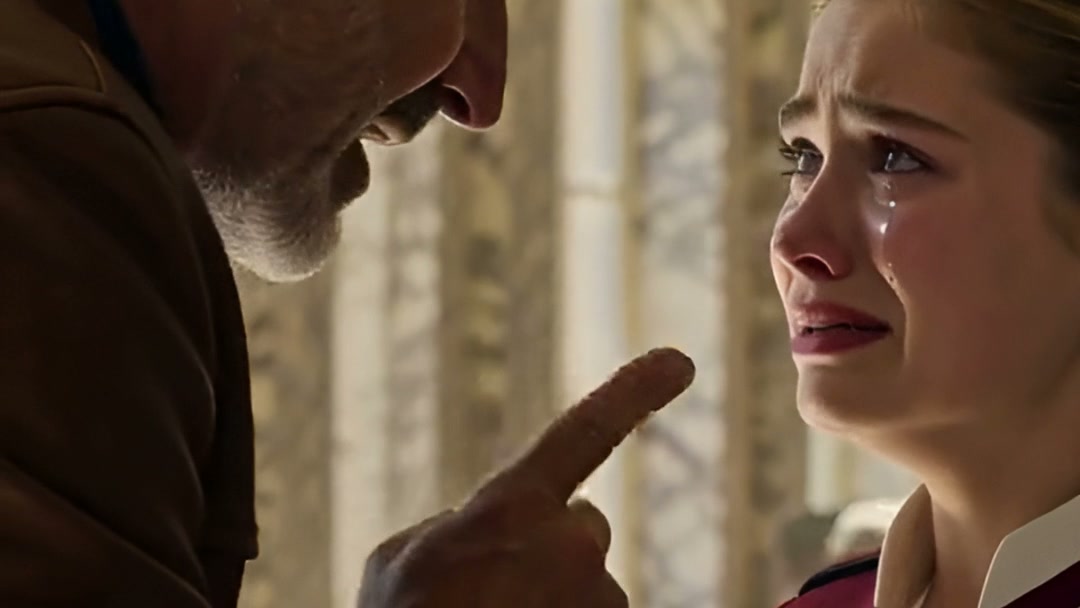
“I know when rehearsal starts.” Constance looked her up and down. Mia watched the woman’s gaze stop at the taped shoes and stay there. “You charity cases are always somewhere you shouldn’t be. I have donors coming through this foyer in twenty minutes. You are not what they come here to see.”
Mia’s face went very still. “I have as much right to be here as anyone.”
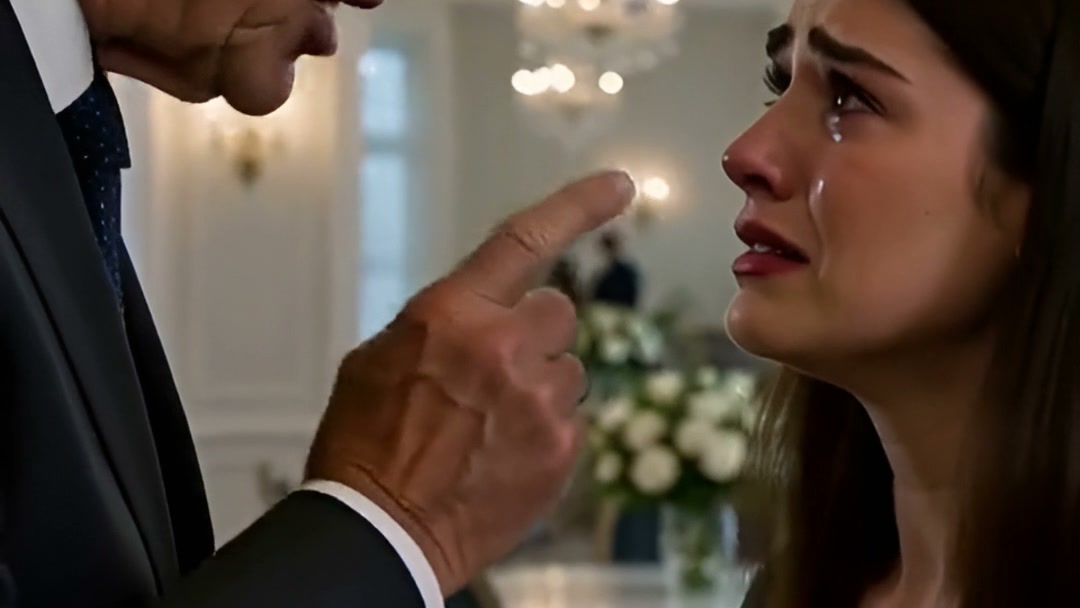
“You have whatever right I decide to give you,” Constance said, and her hand came up and closed around Mia’s arm just above the elbow. “Now move.”
A hand appeared between them.
It caught Constance’s wrist in the air, smoothly, the way you’d catch a glass before it fell off a table. The grip didn’t squeeze. It simply stopped.
Constance turned. Everyone in the foyer turned.
Dante Rove was thirty-four years old, dark-eyed, broad-shouldered, wearing a white dinner jacket over a black shirt with the collar open. He had the kind of face that made people decide quickly whether to trust him or run. His family had poured six million dollars into this academy over the past decade, which everyone knew, and his family had also made its original fortune in ways that nobody in this foyer would say out loud, which everyone also knew.
He was looking at Constance with an expression so calm it was frightening.
“Take your hand off her,” he said.
Constance sputtered. “Mr. Rove, I was simply—”
“You were finished,” he said. “Walk away.”
Constance Harlow, who had made three board members cry in the last calendar year, walked away.
The foyer exhaled. Mia exhaled. She became aware that her hands were shaking and pressed them flat against her thighs.
Dante Rove crouched down in front of her. He looked at the taped shoe, then looked at her face.
“May I?” he said, and held out his hand toward the shoe, asking, not taking.
Mia stared at him. “You don’t have to do that.”
“I know,” he said.
She gave him her foot. He took the loose end of the tape and wound it carefully, pressed it flat, tucked the edge. His hands were steady and precise. She noticed a thin scar along the back of his left hand, old and silver, the kind that had healed a long time ago.
“There,” he said, and stood.
Mia looked up at him. Then, because she always did when she was nervous, she looked up at the portrait.
“She was your mother,” Mia said.
The foyer went absolutely silent.
Dante did not move. “What did you say?”
“The woman in the painting.” Mia’s voice was quiet, factual, the voice of someone stating a thing they had always simply known. “Elena Rove. She was a principal dancer here in the nineties, before the Marchetti family sold the building. She died when you were about eight.” She paused. “I’ve read everything about her I could find. I’ve been copying her port de bras from old recordings since I was thirteen.”
Dante was staring at her.
“Nobody in this building ever talks about her,” Mia said. “I never understood why. She was the best dancer this academy ever produced.”
“She was,” Dante said. His voice had changed. It had dropped to something rougher and more careful, the way voices go when they’re carrying weight.
“The portrait used to be in the main studio,” Mia said. “Someone moved it out here about five years ago. Into the foyer. Where it’s decorative instead of—” She stopped. “I’m sorry. That’s not my business.”
“Who told you it was moved?”
“Madame Petrescu. Before she retired. She said it was a board decision.” Mia finally looked back at him. “She said she argued against it.”
Dante was quiet for a long moment. Around them the foyer had begun to breathe again, donors and students alike pretending to look elsewhere, pretending very hard.
“What’s your name?” he said.
“Mia. Mia Voss.”
“How long have you been at the academy, Mia?”
“Three years. On scholarship.” She said the last word without apology, the way she’d learned to.
“And before that?”
She met his eyes. “Foster care. Four placements. The last family was actually fine. They couldn’t keep me when the dad got relocated.” She shrugged, a small, practiced gesture. “The scholarship kept me in the city. In the school.”
Dante looked at her for a long time with an expression she couldn’t fully read. It wasn’t pity, which she’d had enough of to recognize at fifty yards. It was something more like recognition.
“She would have liked you,” he said, nodding toward the portrait. “She used to say the best dancers were the ones who watched everything and said nothing until they were sure. Then they said exactly the right thing.”
Mia looked up at Elena Rove’s painted face. The extended arm. The turned head. The listening.
“She looks like she’s waiting for the music to start,” Mia said.
“She always was,” Dante said. “Even offstage. Even at dinner. My father used to say she was only ever half-present in any room because the other half of her was always already in the wings.” He paused. “I used to think that meant she didn’t love us. I know now it meant she loved the thing she was born to do. Those aren’t in conflict.”
Mia felt something loosen in her chest that had been tight for a very long time.
“There’s a full scholarship endowment in her name,” Dante said. “It covers housing, equipment, and summer intensives. It was set up twelve years ago.” He looked at her. “I’ve been asking the board to award it every year for the last four. They keep tabling it.”
Mia said nothing.
“They table it because the endowment has a condition,” Dante continued. “The recipient has to have come through the foster system. Constance Harlow and two other board members find that requirement—” he paused carefully—”aesthetically inconsistent with the academy’s brand positioning.”
“That’s obscene,” Mia said.
“Yes,” he agreed. “It is.”
He reached into the inside pocket of his dinner jacket and took out his phone. He typed something, showed her the screen. It was an email draft to the full board and the academy’s legal counsel, citing the endowment terms, requesting an emergency vote at the gala, and noting that failure to award the scholarship to a qualifying candidate in good standing might constitute a breach of the original gift agreement.
“Send it,” Mia said.
He sent it.
Constance Harlow’s phone buzzed somewhere across the foyer. They both heard it.
The board vote happened in the academy’s small conference room at six-fifteen, before the gala dinner. Dante sat on one side of the table. The academy’s legal counsel, a methodical woman named Grace Park, laid out the endowment terms in four minutes and seventeen seconds. Constance Harlow tried to speak three times and was each time redirected to the binding language of the original gift document.
The vote was five to two.
The Elena Rove Endowment Scholarship was awarded to Mia Voss, effective immediately.
At six forty-five, Mia was back in the foyer. The gala was beginning. Donors were arriving in evening clothes. The chandeliers were blazing. A string quartet was playing somewhere she couldn’t see.
Dante found her standing in front of the portrait again.
“Thank you,” she said. “I don’t have a word big enough.”
“You don’t need one,” he said.
She looked at him. “Why do they keep the portrait out here? Really?”
He was quiet.
“My mother was not careful about what she said to people in power,” he said finally. “She believed the academy should admit students solely on talent. Regardless of background. Regardless of income. She said this loudly and repeatedly at board meetings for six years.” He looked up at the painted face. “When she died, there were people on this board who were relieved. They moved the portrait out here because a foyer is public enough that removing it entirely would look bad, but peripheral enough that no one has to think about what she stood for.”
Mia stared at him.
“I put twelve million dollars into this building,” he said quietly, “and I still could not get her portrait back into the main studio.”
“Until now,” Mia said.
He looked at her.
“You just created a legal record,” she said. “You’ve got board minutes, a scholarship vote, an endowment document with her name in the heading. You build on that. You make the endowment high-profile. You endow the main studio in her name. You make it cost them too much, publicly, to keep her peripheral.” She paused. “You’ve been fighting this the wrong way. You’ve been pushing. You need to make them want to carry her themselves.”
Dante Rove looked at the sixteen-year-old girl in the worn grey leotard and the newly-taped shoes.
“You’re not wrong,” he said.
“Madame Petrescu said she was tactical,” Mia said. “That she never pushed a door that was locked. She found the door that was almost open and she put her shoulder there instead.”
“She did,” he said. “Exactly that.”
Mia looked up at the portrait one more time. At the arm, the turned head, the listening.
“I’m going to dance like her,” Mia said. It wasn’t a wish. It was a declaration. “I’m going to dance this program until I’m good enough to perform the role she never finished. The Firebird. The one she was rehearsing when she got sick.”
Dante said nothing for a moment.
“I know,” he said. “I’ve watched your rehearsal recordings.” He saw her expression. “I asked Madame Petrescu before she retired. She sent me three years of footage. I’ve watched all of it.”
Mia felt the floor tilt slightly beneath her.
“You’ve been watching me for three years,” she said.
“I’ve been watching to see if the scholarship had a candidate,” he said. “I’ve been watching to see if my mother was right. That talent is everywhere if you look in the right places.” He met her eyes. “She was right. She always was.”
The string quartet shifted key somewhere beyond the foyer doors. A piece Mia knew. The opening bars of the Firebird.
She turned toward the music.
“Go,” Dante said. “You have a gala to dance.”
She went. At the foyer doors she stopped and looked back at him once, then at the portrait above the staircase.
“She would have loved today,” Mia said. Then she pushed through the doors and was gone.
Dante Rove stood alone in the marble foyer under the crystal chandeliers, looking up at his mother’s face in the heavy gilded frame.
By the end of the evening, he had texted his architect. The main studio renovation proposal — the Elena Rove Studio — was drafted before midnight. The board approved it six weeks later, unanimously, because refusing had become impossible and they all knew it.
Mia Voss performed the Firebird for the first time on a Thursday evening the following spring, in a studio that bore the name of the woman whose arm she had been copying since she was thirteen years old, in shoes that no longer needed tape.
She danced like she’d been listening for that music her whole life.