Hello again, puzzle friends!
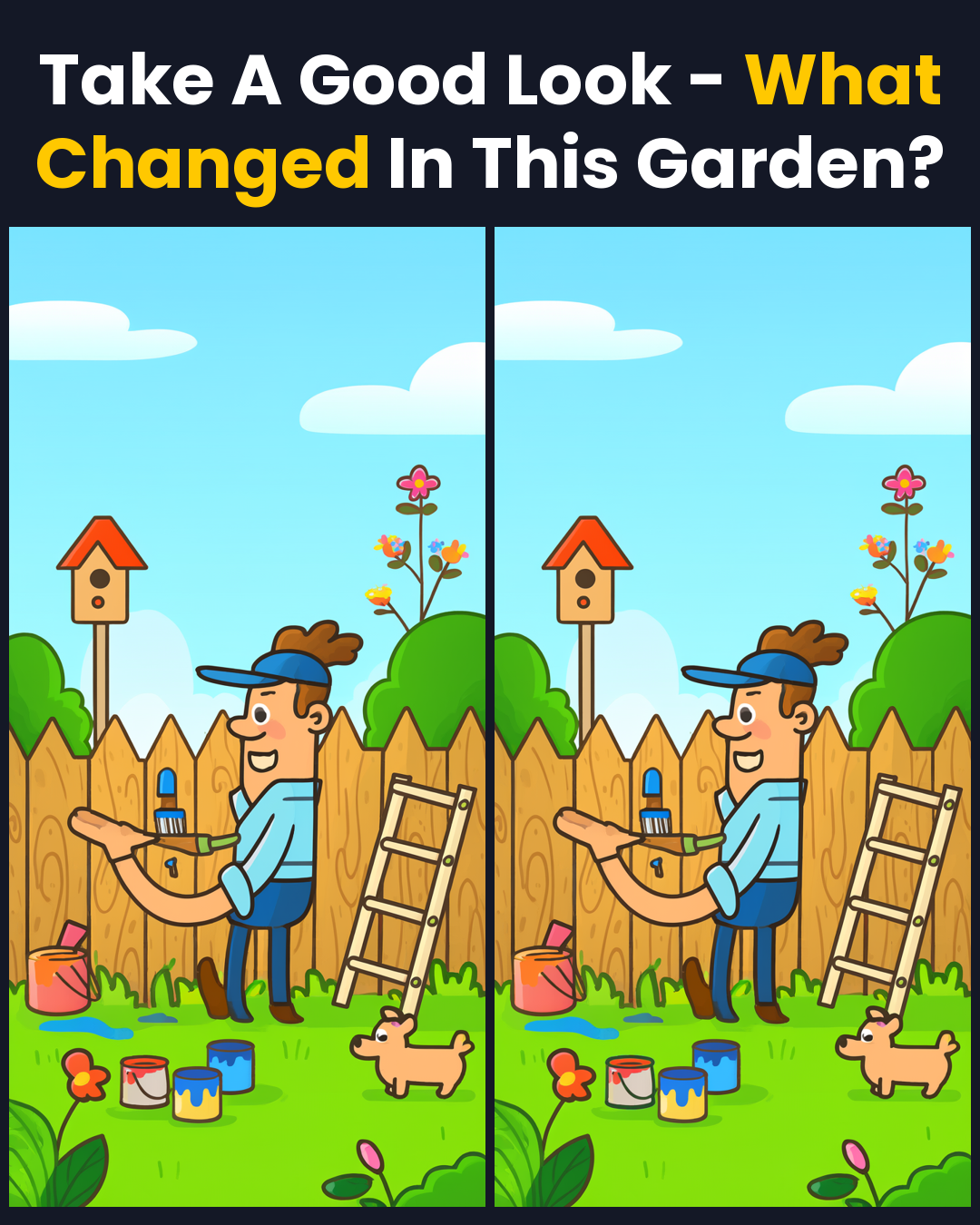
Today we are standing in a sunny back garden, where a happy man in a blue cap is giving his wooden fence a fresh coat of paint.
His little dog is keeping him company, a birdhouse watches from its post, and a few paint cans are waiting in the grass.
The two pictures seem identical, right down to the ladder leaning against the fence.
Yet one detail on the right has quietly changed while you were admiring the flowers.
Go slowly. The answer is not in the sky and not in the fence.
Take a deep breath and start looking. Good luck!
Take your time and look closely before you scroll down!
A Simple Method That Really Works
Before you start hunting, decide on a route and stick to it. A good route for this garden is from top to bottom: first the sky and the clouds, then the birdhouse and the tall flowers, then the fence and the bushes, then the man himself, and finally the grass with the dog and the paint cans.
The reason a route works so well is that it stops your eyes from circling. Without a plan, we check the same three interesting spots over and over and never reach the quiet ones. With a plan, every part of the picture gets its fair turn.
And give the bottom of the picture real attention. Puzzle makers know that we read pictures the way we read a page, from the top down, and that our interest fades before we reach the last few inches.
Why The Brain Loves To Be Fooled
Looking is not the same as seeing. The eye sends only a rough sketch to the brain, which then fills in the details from experience. It knows what a garden looks like, so it paints in grass, fence and flowers without inspecting them.
This is a wonderful skill in daily life. It lets you walk through your own kitchen in the dark and lets you recognise a friend from across the street. The cost is that small, quiet changes slip through, especially changes of colour in an object we think is unimportant.
There is also the matter of busy corners. When several objects of similar size sit close together, the brain groups them and treats the group as one thing. Inside such a group, a single changed item is remarkably well hidden.
Painted Puzzles Through The Years
Comparing two almost identical drawings is one of the oldest paper games there is. Victorian magazines printed them for children, wartime newspapers used them to give families a few light-hearted minutes, and puzzle books have never stopped printing them since.
They are popular with memory trainers as well. To compare two pictures you must hold a small piece of one in your head while you look at the other, and that gentle exercise is good for the mind at any age.
Best of all, nobody needs to explain the rules. You see two pictures, you know at once what to do, and you are playing within a second.
The Challenge
Most people need around a minute to find this one. Quick finders usually spot it in twenty seconds because they go straight to the grass.
If you cannot see it, try holding your device a little further away, or narrow your eyes slightly. Softening the picture hides the detail and makes colours stand out instead.
When you have found it, challenge someone else in the family and see whether they beat your time. A friendly race makes every puzzle twice as enjoyable.
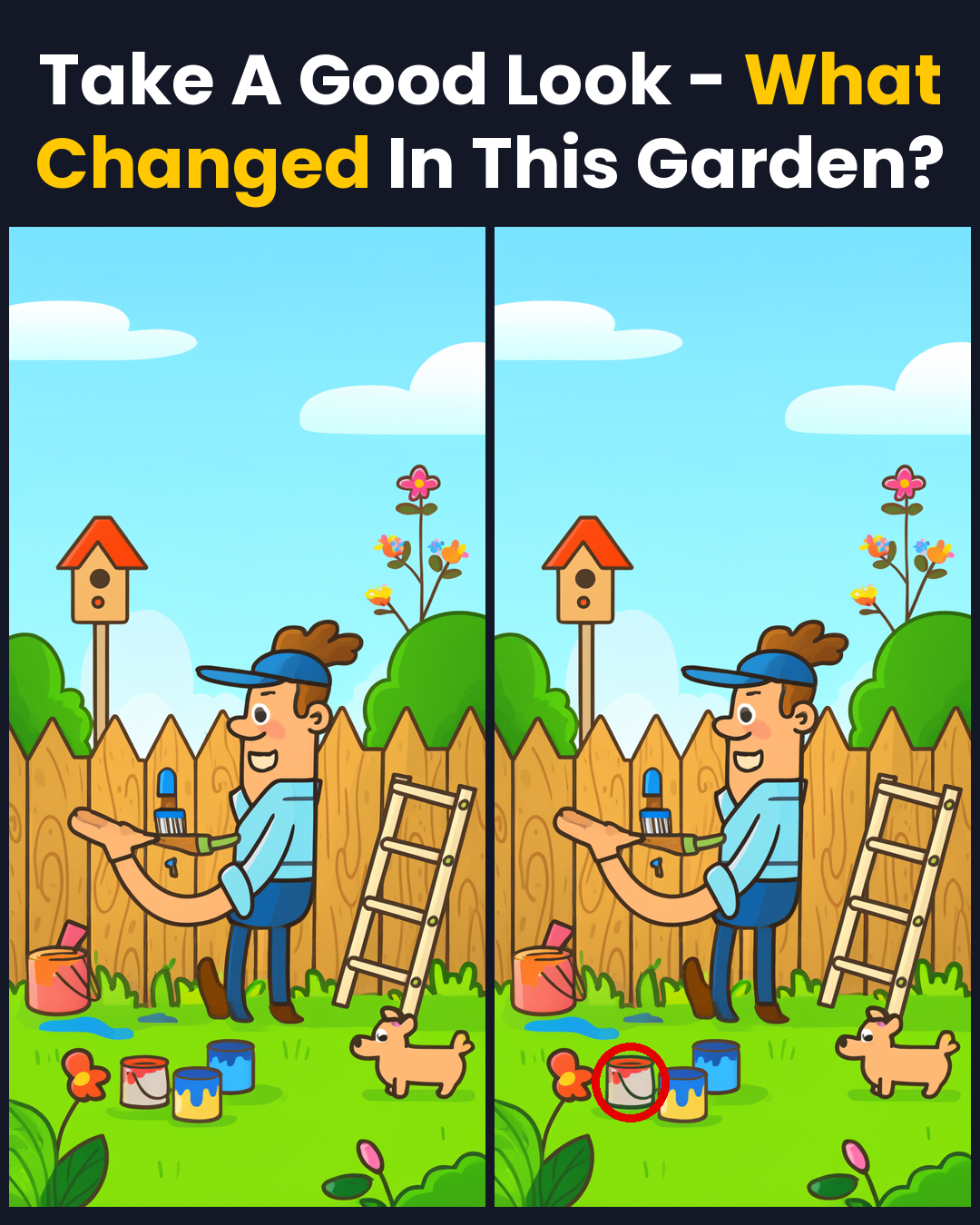
ANSWER: The paint in the first paint can on the grass changed colour – it is pink in the first picture and orange-red in the second.
Down In The Grass, Next To The Flower
Look at the three paint cans standing on the lawn at the bottom left of the picture. In the first picture, the open can nearest the red flower is filled with soft pink paint. In the second picture, that same can holds a warm orange-red paint instead.
Everything else about the can is unchanged. Same shape, same handle, same place in the grass. Only the colour inside is different, which is exactly the kind of change that slides past a quick look.
Why So Many People Walk Past It
The man with the brush is the hero of this picture, so that is where your eyes go. After him, the bright birdhouse and the tall pink flower collect most of the rest of your attention. By the time you reach the grass, your mind has already decided that the bottom of the picture is just lawn, dog and paint cans.
The three cans sit close together and look alike, so the brain reads them as one little group. Inside a group like that, a changed colour has an easy time hiding. Add the fact that the picture is full of bright colours anyway, and one more shade of red hardly raises an eyebrow.
How Did You Do?
Under 10 seconds: eagle eyes, and you clearly started at the bottom.
10 to 30 seconds: very sharp indeed.
30 to 60 seconds: the usual result for a careful looker, and nothing to be modest about.
Over a minute: you stayed with it until the end, and that patience is the real skill these puzzles reward.