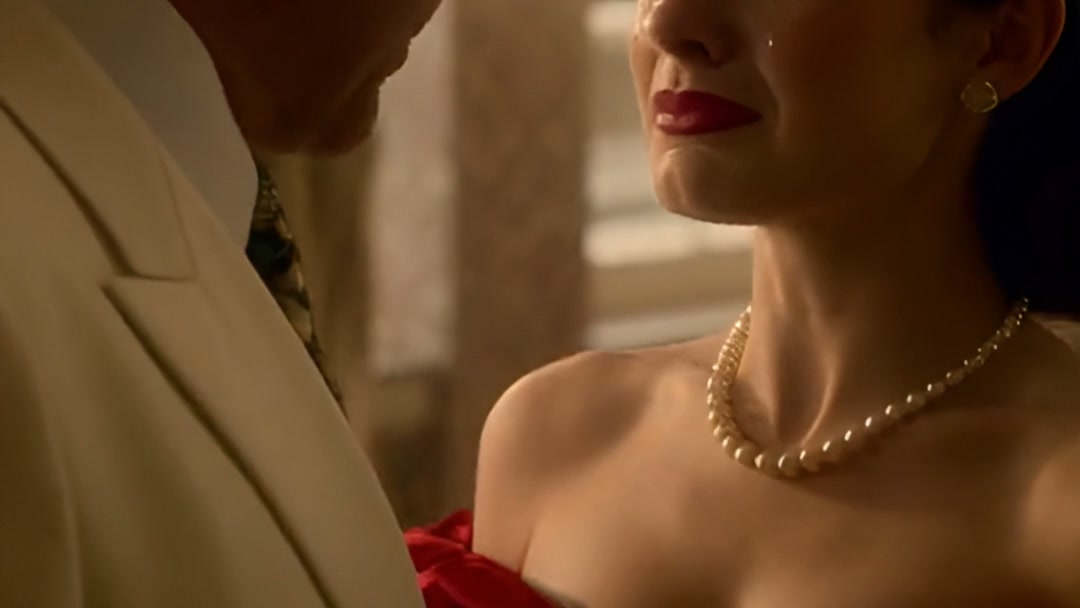
Decorated General Harold Mercer caught the socialite’s wrist before he could shove the young cloakroom girl a second time… But when she looked at the pearls around the glamorous woman’s throat and whispered, “My mother was buried in those,” every guest in the ballroom doorway went still as stone.
The Langford Grand’s ballroom cloakroom smelled of cedar and expensive perfume. It was a Tuesday afternoon, which meant the charity luncheon crowd was arriving in waves — furs, pearls, pocket squares, and entitlement.
Mara Ellison, twenty-three, had been working the cloakroom for eleven months. She was good at her job. She was fast, careful, and she always smiled, even when she didn’t feel like it.
She was smiling when Donovan Hale walked in.
Donovan was forty-one, broad-shouldered, the kind of handsome that knew it. He wore a cream linen suit that cost more than Mara’s monthly rent, and on his arm was a woman named Cassandra Wells — red silk gown, dark hair pinned up, a strand of pearls lying perfect against her collarbone.
Donovan flung his fur coat. Not handed. Flung.
It hit Mara square in the face. She stumbled back into the rack, hangers clattering.
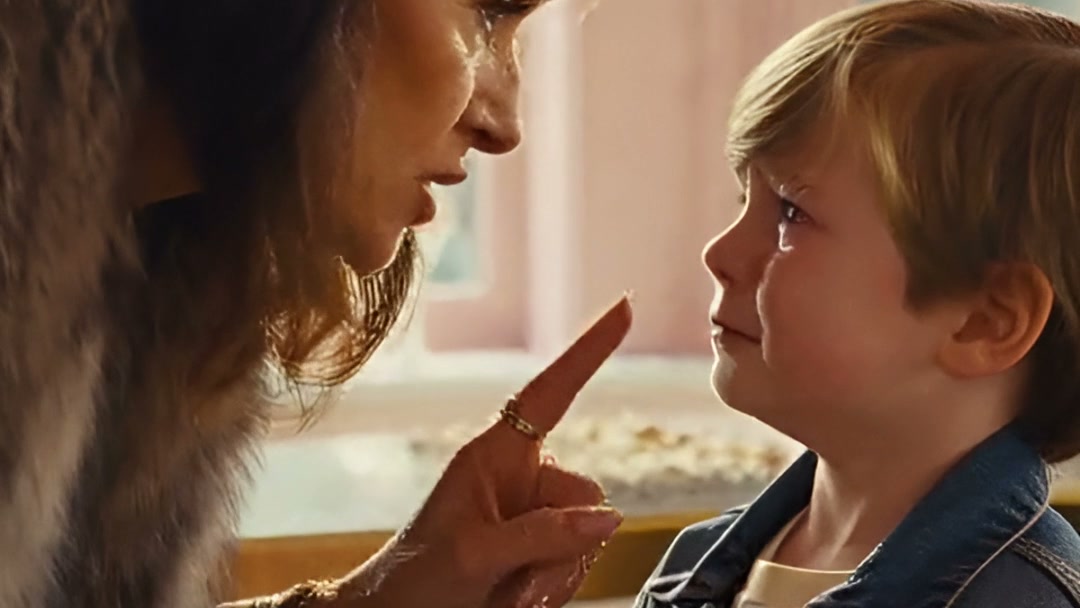
“Do try to be useful,” Donovan said, his voice carrying the bored cruelty of a man who’d never been told no. “Or is competence not part of the job description?”
Cassandra laughed, a small, silver sound that said she found it mildly entertaining.
Mara straightened, cheeks burning. She reached for the coat.
Donovan stepped forward and shoved her shoulder. Not hard enough to bruise — just hard enough to remind her what she was.
“Learn your place,” he said.
The hand came from nowhere.
A firm, broad grip wrapped around Donovan’s wrist before his palm could make contact a second time. The grip was calm. Absolute. The kind that didn’t need to squeeze to make its point.
General Harold Mercer was sixty-seven years old, silver-haired, and wearing the full dress uniform of the United States Army — four stars on his collar, a chest of ribbons that told forty years of history. He was not a large man. But he had a way of taking up exactly as much space as he needed.
“That’s enough,” Mercer said. Not loud. Not aggressive. Just done.
Donovan turned, surprised, then irritated. “Excuse me — do you know who I am?”
“I know exactly who you are,” Mercer said. He released the wrist and looked at Donovan the way a man looks at something he stepped in. “Donovan Hale. Your father made his money in municipal contracts and you’ve been spending it on bad manners ever since. You may go in.”
Donovan opened his mouth.
“Now,” Mercer said.
Donovan went. He took Cassandra’s elbow and steered her toward the ballroom doors, muttering something sharp and low.
Mercer turned to Mara. “Are you hurt?”
“No, sir,” she managed. “I’m fine. I’m sorry about the — “
“Don’t apologize,” he said. “You have nothing to apologize for.”
She nodded. She was trying very hard not to cry, and mostly winning. She reached for Donovan’s fur coat to hang it properly and that was when she saw them.
The pearls.
Cassandra was still close enough — paused near the ballroom entrance, adjusting her wrap — and the afternoon light came through the tall windows in a long gold bar and fell directly on the strand around her throat.
Mara’s hands went still.
She knew those pearls. She had known them her whole life.
They were graduated, cream to ivory, with a clasp shaped like a small daisy — gold petals, a tiny chip of citrine in the center. Her mother had called it her garden clasp. She’d bought the strand at an estate sale the year before Mara was born, and she’d worn it every Sunday to church, and to every school play, and on her last birthday, and she’d been wearing it the morning she died, and the funeral home had told Mara’s father they’d laid her to rest in them because she’d looked so lovely and he hadn’t had the heart to say take them off.
Mara’s mother had been buried in those pearls.
Fourteen months ago.
“Those are my mother’s pearls,” Mara said.
Her voice came out strange — not accusing, not loud. Just certain. The way you speak a thing you know so completely there’s no room for doubt.
Mercer turned.
Cassandra turned too, her expression shifting from blank to briefly startled. “I beg your pardon?”
“The clasp,” Mara said. She stepped forward without thinking, her whole body aimed at that daisy of gold petals. “The daisy clasp. My mother called it her garden clasp. She bought it in 1998 at the Whitmore Estate Sale. She’s been buried in those pearls for fourteen months.”
The ballroom doorway was suddenly very quiet for a doorway.
Cassandra’s hand went to her throat. Not guilty — more like someone reaching for something they believe they own, checking it’s still there. “These were a gift,” she said. “Donovan gave them to me for my birthday in March.”
“March,” Mara said. Her voice was steady now in the way that comes after the shaking stops. “My mother died in February. We buried her February eighteenth.”
Mercer was already looking at the clasp.
He had a daughter. He’d bought his wife jewelry for thirty-one years. He knew the difference between a mass-market piece and a one-of-a-kind estate find — the weight, the slight irregularity, the way this clasp caught light like something hand-finished and old.
“Miss,” he said to Cassandra, carefully, “may I look at the clasp?”
Cassandra blinked. “Why would I — “
“As a courtesy,” Mercer said, “I’m asking.”
Something in his tone made her reach up and turn the clasp. He leaned in — not touching, just looking. He could see the back of it. There was an engraving.
He looked at Mara. “Is there something engraved on the back of your mother’s clasp?”
Mara’s breath caught. “Her initials,” she said. “E.R.E. Eleanor Rose Ellison. My father had it done for their anniversary.”
Mercer straightened. He looked at Cassandra.
Cassandra looked at the clasp she could not see the back of, and something in her face shifted — something uncertain, something that hadn’t been there a moment ago.
“Take it off,” Mercer said quietly. “Please.”
“I don’t think I’m obligated to — “
“No,” he agreed. “You’re not. But a young woman is telling you her mother is in the ground and those pearls went in with her, and you have a choice right now about what kind of person you are.” He paused. “I’d take it off.”
Cassandra’s jaw tightened. She reached up with both hands, unclasped the strand, and held it out to him.
He turned the clasp over.
E.R.E.
He showed it to Mara. She made a sound like a word that didn’t quite finish — the sound of something that has been held underwater for a long time suddenly breaking surface.
“Those are mine,” she whispered. “Those are my mother’s.”
Mercer placed the strand in her hands.
It was at that moment that Donovan Hale reappeared in the doorway. He’d noticed the silence, noticed Cassandra standing without him, and come back with the expression of a man who expected to retrieve a situation.
He saw the pearls in the cloakroom girl’s hands.
“What is going on?” His voice had the new sharpness of someone who senses money leaving the room. “Cassandra, why are you — those were a gift. Give those back.”
“She’s not giving them back,” Mercer said.
“Those pearls were purchased legally,” Donovan said, his tone climbing. “Whatever this girl is claiming — “
“Where did you purchase them?” Mercer asked.
Silence.
“An estate sale,” Donovan said, finally. “Or — a dealer. I don’t remember exactly.”
“You don’t remember exactly,” Mercer repeated.
“This is absurd. You’re taking the word of a coat-check girl over — “
“The clasp is engraved with her mother’s initials,” Mercer said. “Her mother was buried in these pearls fourteen months ago. So I’d very much like to know which dealer sold you jewelry lifted from a grave, Mr. Hale, and I suspect the police would as well.”
The color left Donovan’s face in a single wave.
“I want the name of your dealer,” Mercer continued, “and I want it in the next sixty seconds, or I’m going to walk into that ballroom, find Detective Superintendent Walsh — who is at table seven, because I sat next to him at last year’s luncheon — and ask him to have a conversation with you instead.”
Donovan gave him the name.
It took four days for the detective’s inquiry to confirm what Mercer had already put together: a funeral home employee in the next county, dismissed eight months earlier for unrelated misconduct, who had been systematically removing jewelry from the deceased before burial and selling to a small network of estate dealers who asked no questions. Three families. Eleven pieces. A quiet, horrible, sustained violation.
The employee was arrested on a Thursday morning.
Mara was at work when Mercer called to tell her. She had to sit down on the three-legged stool behind the coat rack and press the phone against her ear very hard because she didn’t trust her hands.
“It’s done,” he said. “He’s in custody. The prosecutor has everything.”
“The pearls,” she started.
“Yours to keep,” he said. “No question.”
She looked at them on the cloakroom shelf where she’d placed them every morning this week — not wearing them yet, not quite ready, but needing them near. The daisy clasp caught the afternoon light.
“I don’t know how to thank you,” she said.
“You don’t need to,” he said. “You knew what was yours. You said so. That was all the courage required. I just made a phone call.”
“You didn’t just make a phone call.”
A pause. “No,” he said, quietly. “I suppose I didn’t.”
She wore the pearls to her mother’s grave that Sunday. She stood in the cold and told her mother what had happened and that they were home now and that some people, not all of them but some of them, were still exactly who they were supposed to be.
Then she drove back to the city, clocked in for her afternoon shift, and smiled at the first guest who came through the door.
This time, she meant it.