He Called Timeout Mid-Game — Then Walked Off The Court For His Little Brother
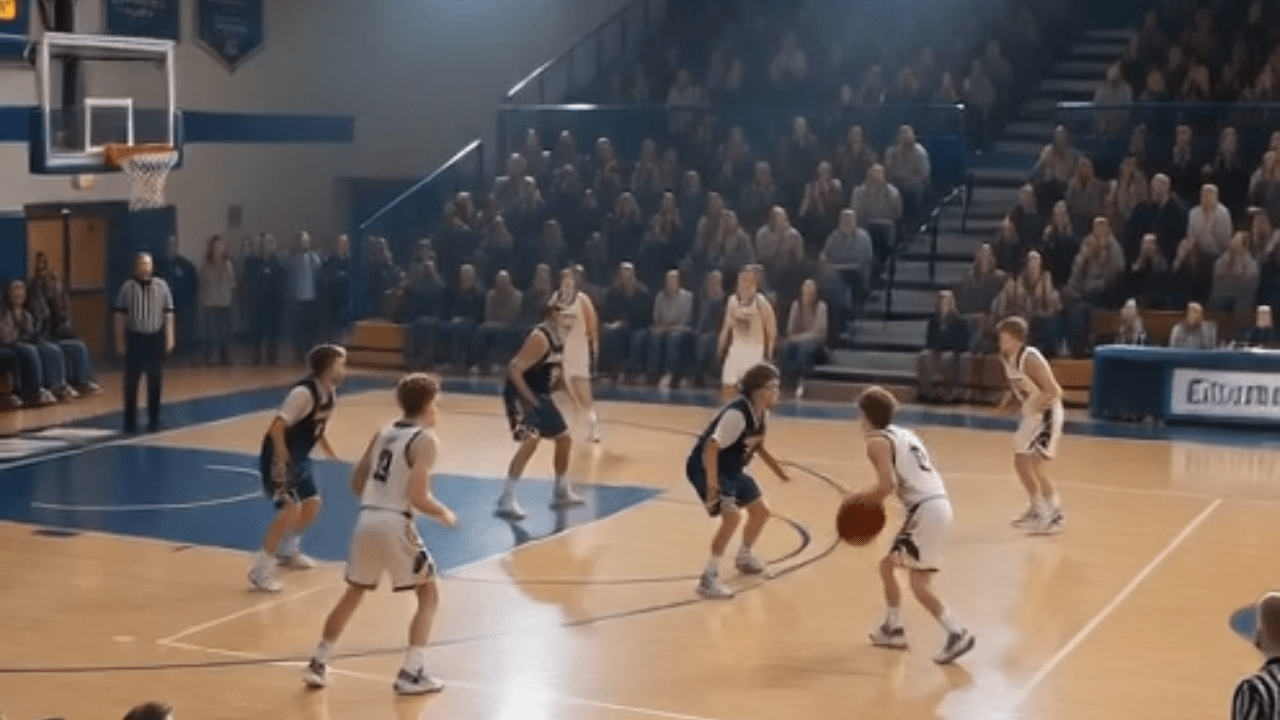
A senior girl slapped a nine-year-old boy courtside at the varsity basketball game… But his big brother called timeout from the three-point line — and walked off the court still holding the ball.
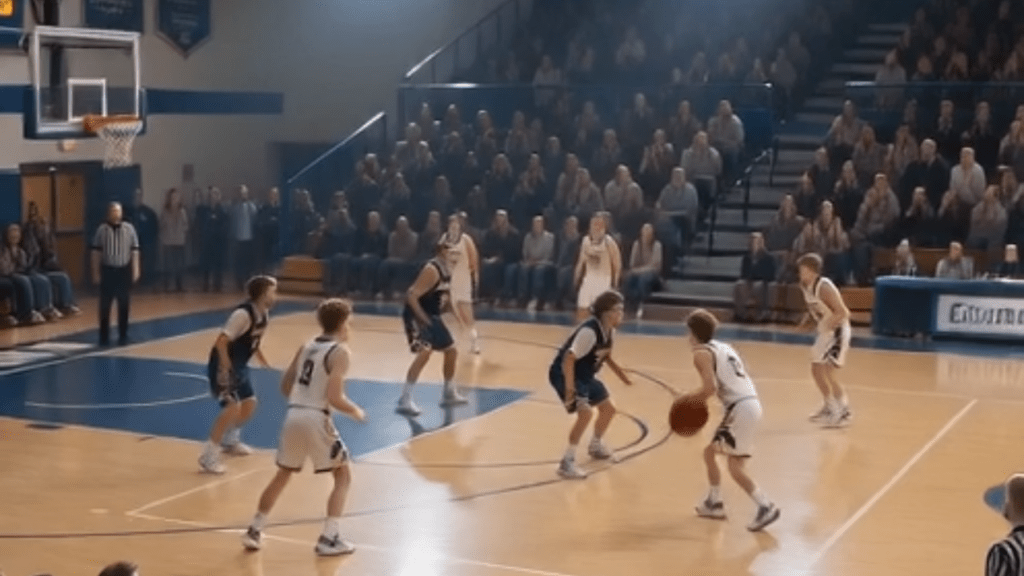
The gym was loud the way only a Friday night home game can be loud — sneakers, buzzers, bleacher stomping, two hundred people who had nowhere better to be.
Marcus Webb was nine years old and small for it. He sat in the front row, right against the court railing, legs dangling because they didn’t reach the floor. He had his brother’s number written in marker on the back of his hand. Number 14.
He’d been there since warmups.
The senior girl — Kayla Merritt, seventeen, varsity cheer jacket, the kind of girl who treated every room like an audition — had been sitting two seats down. She’d been annoyed since the third quarter. The little boy kept standing up when his brother touched the ball. Kept yelling. Kept blocking her view of the boy she’d come to watch.
“Sit down,” she said, twice. The third time she didn’t say anything.
She just turned and slapped him.
Open palm. Hard enough that the sound cut through the crowd noise for a half-second before the crowd noise swallowed it.
Marcus grabbed the railing. His hand went to his cheek. His eyes went wide and wet, the way eyes go when the body hasn’t decided yet whether to cry.
The parents directly behind him stood up immediately. A woman two rows back said “Hey!” A man in a Ridgewood Booster Club sweatshirt took one step forward and stopped, because he didn’t know what came next.
On the court, twenty feet away, Darius Webb was mid-play.
He was at the three-point line. The ball was in his hands. Two defenders between him and the arc, his team down by three with four minutes left. His coach was on his feet on the sideline. The crowd was on its feet in the bleachers.
He saw it.
He saw it the way you see something you’ve been subconsciously watching for your entire life — not looking for it, but ready for it. The small figure in the front row. The arm that moved wrong. The way his brother’s head snapped sideways.
He didn’t pass the ball.
He didn’t look at his coach.
He called timeout.
“TIMEOUT.”
His voice went up over the game noise like it had been waiting. The referee’s whistle came two seconds later, but Darius was already moving.
He walked off the court.
Not jogged. Walked. Ball still in both hands, jersey dark with sweat, sneakers squeaking on the hardwood as he stepped off the court surface and onto the rubber matting at the edge of the bleachers. The gymnasium went from Friday-night loud to the kind of quiet that happens when two hundred people all decide at the same moment to pay attention to the same thing.
He reached the railing.
He looked at Marcus first.
The red mark on his brother’s cheek was visible from where he stood. Marcus was blinking hard, trying to hold it together the way nine-year-olds do when they don’t want to cry in public and don’t fully understand yet that it’s okay.
Darius looked at the hand still pressed to Marcus’s face.
Then he looked at Kayla Merritt.
She had her chin up. The chin-up posture of someone who expected the world to absorb her behavior without comment.
Darius set the ball down on the bleacher bench beside his brother.
Not handed it off. Not dropped it. Placed it. Gently. Like it belonged there. Like his nine-year-old brother was the most important thing in the building and the basketball was just an object that needed to be somewhere while he handled what actually mattered.
Both hands free.
The bleachers read that immediately.
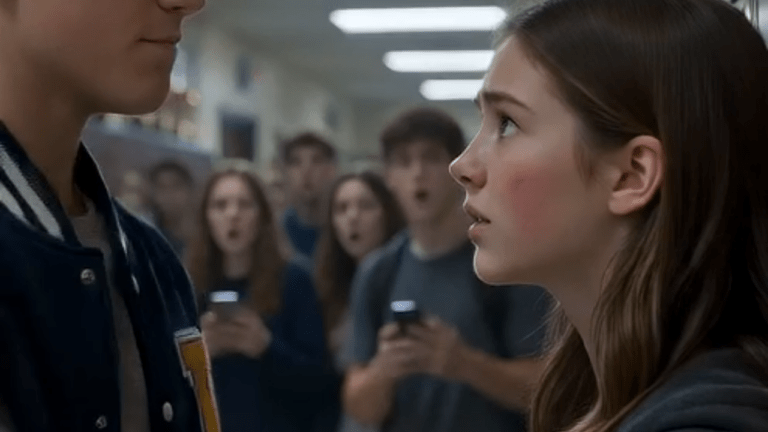
“Who are you?” Kayla said. She said it the way people say things when they’re scared and don’t want to show it.
“I’m his brother,” Darius said. “That’s all you need to know about me.”
“He was blocking my view all night—”
“He’s nine.” Darius’s voice didn’t rise. That was the thing people would talk about later. It never rose. “He’s nine years old and he came here to watch me play. You put your hand on him.”
“It was a tap—”
“Don’t.” The word landed flat and final. “Don’t do that.”
The man in the Booster Club sweatshirt — his name was Greg Hartley, Marcus’s fifth-grade baseball coach, as it turned out — stepped down from the second row and put his hand on Kayla’s shoulder. Not rough. Just present. “Young lady, I need you to come with me to the athletic office right now.”
Kayla looked around for backup. The girl beside her had already moved three feet away. The boy she’d come to watch was somewhere in the middle of the court, hands on his hips, not looking at her.
“This is ridiculous,” she said. But she stood up.
“Go,” Darius said. Not to her. To Greg. Like he was releasing the situation into capable hands so he could do the thing he’d actually walked off the court to do.
He turned to Marcus.
He crouched down so they were eye level, which meant Darius Webb, starting guard, nineteen years old, was crouching on the floor of a packed gymnasium in front of two hundred people without a single visible concern about what that looked like.
“You good?” he said.
Marcus nodded. Then shook his head. Then nodded again.
“Which one is it?” Darius said, and the corner of his mouth moved.
“My face hurts,” Marcus said, very quietly.
“I know.” Darius put one hand on the back of his brother’s neck, the way their father used to. “I saw it.”
“You were all the way over there.”
“Doesn’t matter where I am.” He said it simply, like a fact about gravity. “I always see you.”
Marcus pressed his lips together. Held it. Then leaned forward and put his forehead against his brother’s shoulder, and Darius let him, right there, in front of everyone, for as long as it took.
The gymnasium was still quiet.
Then someone in the upper bleachers started clapping. Slowly at first. Then the row around them. Then the whole home side, and then the visiting side, because some things don’t have a team.
Darius stood up.
He picked up the ball from the bench beside his brother.
He looked at Marcus one more time. “You gonna be alright for four more minutes?”
Marcus wiped his eye with his sleeve. Sat up straight. “Yeah.”
“Good. Watch this.”
He walked back onto the court.
His coach met him at the sideline. Coach Briggs was fifty-three years old and had seen a lot of basketball. He looked at Darius for a long moment without saying anything.
Then he said, “You good?”
“Yes sir.”
“Alright.” He put his hand on Darius’s shoulder. “Let’s go get three.”
The referee blew the whistle. Play resumed.
Darius Webb hit a three-pointer with two minutes left to tie the game. He hit another one with forty seconds left to win it.
After the final buzzer, in the chaos of teammates and noise and the gym lights still blazing, he went straight to the front row. He picked Marcus up off the bleacher — all ninety-two pounds of him — and held him up over the celebration like the nine-year-old was the trophy, because to Darius, he was.
Marcus laughed. Actually laughed. Red mark still on his cheek, marker number 14 still on the back of his hand, laughing in the lights above a gym that had just watched his brother stop a game for him.
Kayla Merritt was escorted out of the building by the athletic director twenty minutes before the final buzzer. The school’s conduct review the following Monday resulted in a two-game suspension from all school events and a formal letter in her file. Three colleges she’d been in contact with received notification from the athletic director as a matter of record.
She told her friends it was overblown.
Her friends had already seen the video.
The gym had two hundred phones in it, and every single one of them had caught the moment Darius Webb placed that ball on the bench beside his little brother, both hands free, and didn’t say a word until he had to.
It had four million views by Sunday morning.
The caption someone put on it was simple: *He called timeout from the three-point line. Then he put the ball down. Watch what he put it next to.*
Marcus saw it on his brother’s phone that Saturday, sitting on their couch, eating cereal.
“That’s us,” he said.
“Yeah,” Darius said.
“You’re famous.”
Darius looked at him. “We’re famous.”
Marcus considered this seriously for a moment.
“Cool,” he said, and went back to his cereal.