She Won the Spelling Bee — Then Walked Off Stage Mid-Applause for Her Brother
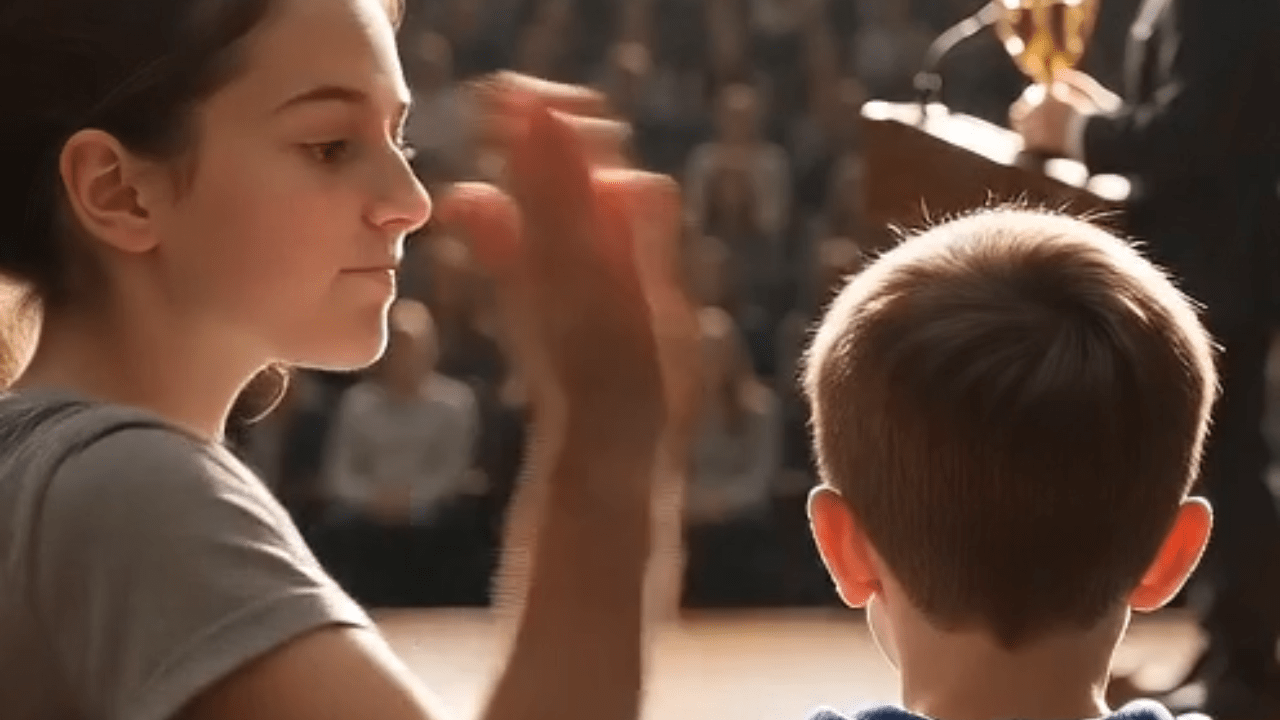
A senior girl slapped a small boy at the school spelling bee in front of every parent and teacher in that auditorium… But his big sister had just won — trophy still warm in her hand, applause still going — and she walked off that stage without stopping.
The auditorium was packed.
Every folding chair filled. Parents lining the back wall with phones up. The principal at the side table. The banner overhead reading DISTRICT SPELLING BEE — hand-painted by the student council, slightly crooked on the left.
Callie Marsh, nineteen, stood at the podium on stage.
She had just spelled *conscientious* correctly. Then *ephemeral*. Then the final word — *perseverance* — which felt almost too on the nose, and she’d smiled a little when she heard it.
The moderator, Mr. Hendricks, lifted the trophy.
“This year’s District Spelling Bee champion — Callie Marsh.”
The applause started immediately. Warm, full, two hundred people clapping at once. Callie felt the trophy placed in both her hands. It was heavier than she expected. Still warm from sitting under the stage lights.
She stood at the podium and looked out at the audience.
That’s when she found Danny.
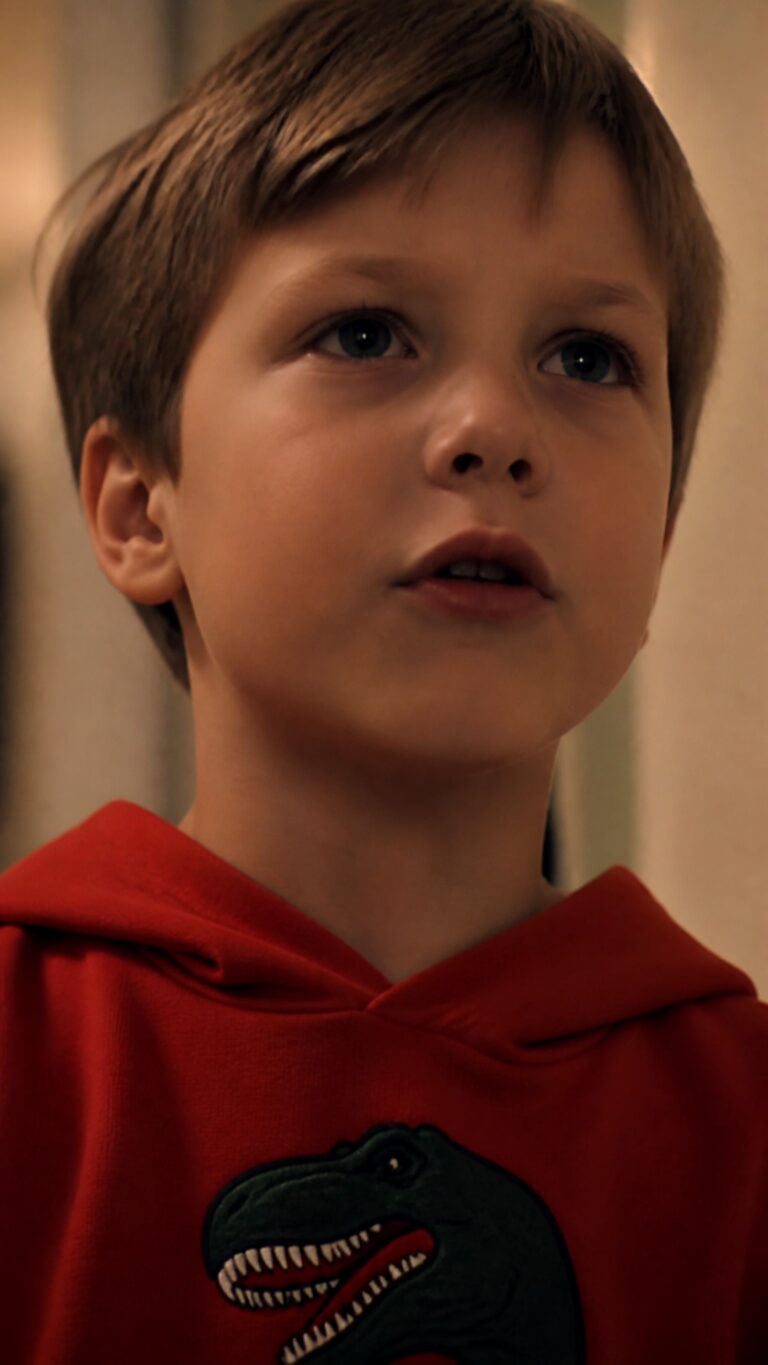
Her brother was eight years old and had insisted on sitting in the third row because he wanted her to be able to see him.
“So you know I’m there,” he’d told her that morning, pulling on his sneakers. “So you don’t get nervous.”
“I don’t get nervous,” she’d said.
“You do,” he said. “Your left eye does this thing.”
She had laughed and messed up his hair and told him to sit wherever he wanted.
Third row. Aisle seat. Blue hoodie. He’d waved at her twice during the competition, big slow waves like he was flagging down a ship, and she’d had to look at the wall behind him to keep from laughing at the podium.
Now, from the stage, she saw him lurch forward.
It happened fast.
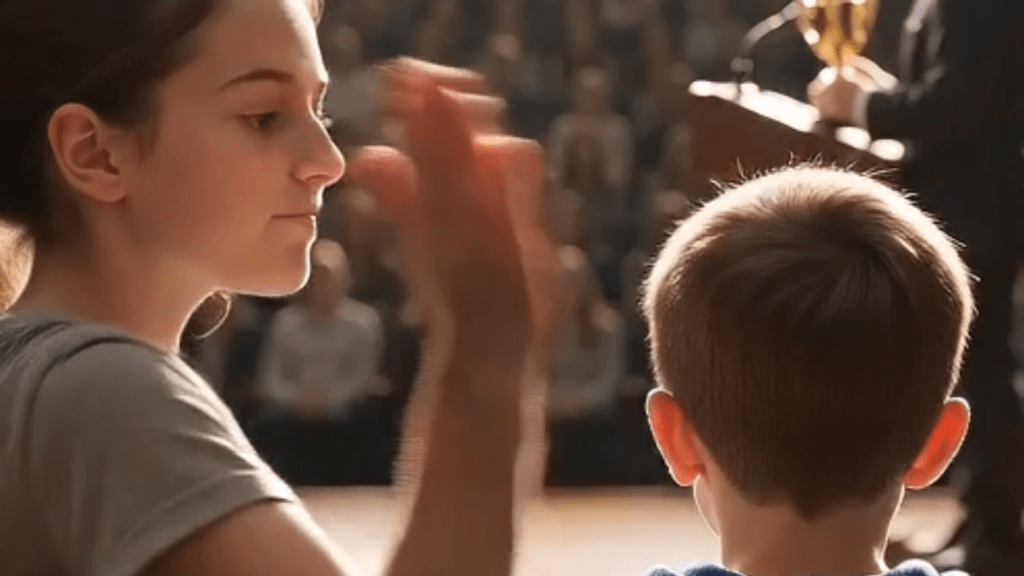
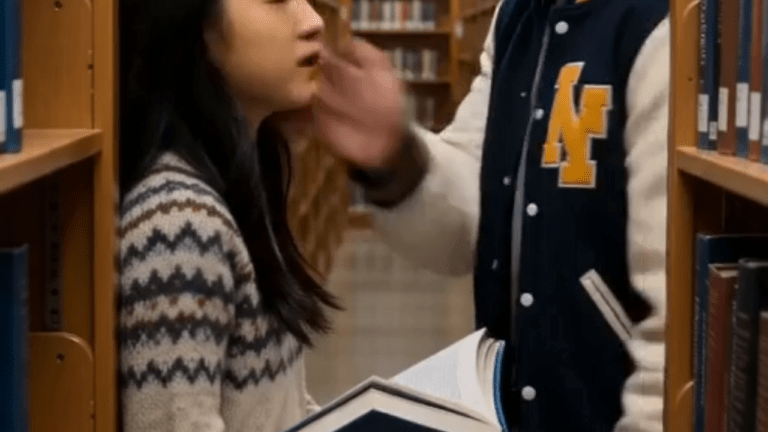
The girl directly behind Danny — a senior, seventeen, dark ponytail, the kind of expression that had probably never been told no — leaned forward in her chair and brought her open hand hard across the back of his head.
Not a tap. Not an accident.
A slap. Flat and deliberate, the sound cutting up through the applause like a crack.
Danny’s hand flew to his skull. He pitched forward in his chair. His mother — Callie’s stepmother, Linda — grabbed his arm and gasped, loud enough that the parents on either side of her turned.
The senior girl sat back. Smirked. Looked at the stage like nothing had happened.
Callie saw all of it.
She saw Danny’s hand go to his head. Saw Linda’s gasp. Saw the girl settle back into her chair with that expression — satisfied, small, the look of someone who had done something and was not afraid of what came next.
The applause was still going.
Mr. Hendricks was saying something into the microphone. Something about the school district and thanking the sponsors. His voice was warm and ceremonial and completely irrelevant.
Callie stepped off the stage.
She didn’t put the trophy down.
There was no moment to. The applause was still happening — for her, around her, filling the room — and she just stepped off the stage platform and onto the auditorium floor and started walking.
Center aisle. Steady pace. Trophy in her right hand, still catching the stage light.
The first two rows didn’t notice. They were still clapping, still looking at the podium, still waiting for her to come back.
Then the third row saw her.
Then the fourth.
The applause started dying the way a fire dies when the air is cut off — not all at once, but section by section, people mid-clap realizing she wasn’t on the stage anymore, realizing the winner was walking toward them, and the clapping found no destination and simply stopped.
By the time she reached the third row, the auditorium was silent.
She crouched in front of Danny first.
She put her free hand on his face — both cheeks, then the back of his head, pressing gently, checking. He was looking at her with wide eyes, more startled than hurt, the way kids look when something happens and they haven’t decided yet whether to cry.
“You okay?” she said quietly.
“She hit me,” he said. “I didn’t even do anything.”
“I know.” She pressed her hand flat against the back of his head once more. “Does it hurt?”
“Kind of.” He paused. “Are you supposed to be on stage?”
“In a minute,” she said.
She stood up.
The senior girl’s name was Brooke Calloway. Callie knew her the way you know people at school without knowing them — by face, by reputation, by the particular way certain people move through hallways like the space belongs to them.
Brooke was looking up at her now with an expression that was trying to stay bored and not quite managing it.
“You hit my brother,” Callie said.
Not loud. Not performed. Just a statement of fact, delivered to Brooke’s face in front of two hundred people who were no longer making any sound at all.
“He kept kicking my seat,” Brooke said.
“He’s eight.”
“I don’t care how old he is.”
Callie looked at her for a moment. The trophy was still in her hand. She was aware of it — the weight of it, the way it caught the light, the fact that she had not put it down. She hadn’t planned that. There just hadn’t been a moment.
“You hit a child,” Callie said. “In front of his mother. In front of every adult in this building.”
Brooke’s jaw tightened. “It was a tap.”
“It was a slap.” Linda’s voice, from beside Danny, firm and shaking slightly. “I watched you do it.”
From the back of the auditorium, footsteps.
Vice Principal Karen Doyle was already moving down the center aisle, lanyard swinging, face set in the expression of someone who had seen the whole thing and was now dealing with the consequences of having waited thirty seconds too long to act.
“Brooke,” she said, arriving at the row. “Come with me. Now.”
Brooke stood. She was trying to look unconcerned. She was not succeeding.
“This is ridiculous,” Brooke said. “It wasn’t even—”
“Now,” Ms. Doyle said. Flat. Final.
Brooke grabbed her bag. Looked at Callie once — a look that was meant to be defiant and landed somewhere closer to rattled. Then she walked up the aisle toward the exit, Ms. Doyle two steps behind her.
The auditorium doors closed.
Mr. Hendricks cleared his throat at the microphone.
“We’ll — take a brief pause,” he said carefully.
Nobody moved.
Callie looked down at Danny. He was watching Brooke’s exit with the focused expression of an eight-year-old filing information away for later.
“She’s in trouble,” he said.
“Yes,” Callie said.
“Big trouble?”
“Pretty big.”
He considered this. “Good.”
Linda put her arm around him and pulled him close. She looked up at Callie with an expression that was trying to hold itself together and not quite managing it either. “Thank you,” she said. “You didn’t have to—”
“Yes I did,” Callie said simply.
Ms. Doyle reappeared at the auditorium doors twenty minutes later, while the spelling bee was resuming — the runners-up receiving their certificates, the photographer repositioning everyone for the group photo.
She found Callie in the lobby with Danny and Linda.
“Brooke’s parents have been called,” she said. “She’s been removed from the event. There will be a formal disciplinary meeting Monday morning. Given that there were witnesses—” she glanced around at the several parents who had drifted into the lobby and were very obviously not leaving — “approximately two hundred of them — this will be treated as a conduct violation with potential suspension.”
“She’s never done anything like this before?” Linda asked.
Ms. Doyle paused. “There have been prior incidents that were handled informally.” She said it carefully, the way administrators say things they wish they had handled differently. “This will not be handled informally.”
Danny tugged Callie’s sleeve. “What’s informally?”
“It means they should have done something sooner,” Callie said.
Ms. Doyle did not disagree.
The photographer found them in the lobby for the official photo.
“We need the winner back on stage,” he said, looking at his clipboard. “With the trophy.”
Callie looked down at the trophy. She was still holding it. Had been holding it this whole time — through the confrontation, through the conversation with Ms. Doyle, through Danny’s detailed explanation of how Brooke had been kicking his seat back at him first and he had only done it once.
“One second,” she said.
She handed the trophy to Danny.
He took it with both hands, eyes going wide at the weight of it.
“Hold this,” she said. “Don’t drop it.”
“I won’t drop it,” he said, deeply offended.
“I know you won’t.” She looked at him. “You want to come up for the photo?”
His face did something complicated and then settled into pure delight.
“Yeah,” he said. “Yeah, I do.”
The photo that ran in the district newsletter the following week showed Callie at the podium, trophy back in her hands, grinning. Danny stood beside her in his blue hoodie, slightly too short for the microphone, one hand raised in a wave at the camera.
The caption read: *District Spelling Bee Champion Callie Marsh with her brother Danny.*
Brooke Calloway received a five-day suspension. The prior incidents that had been “handled informally” — three of them, two involving younger students — were reviewed and added to the formal record. Her parents hired a lawyer. The lawyer reviewed the witness list and quietly advised settling.
Danny told every kid in his third-grade class that his sister had walked off the stage mid-applause with a trophy in her hand to check on him.
He told it the same way every time, with the same ending:
“The clapping was still going. She just walked.”
He was not wrong.