Hello there, puzzle friends!
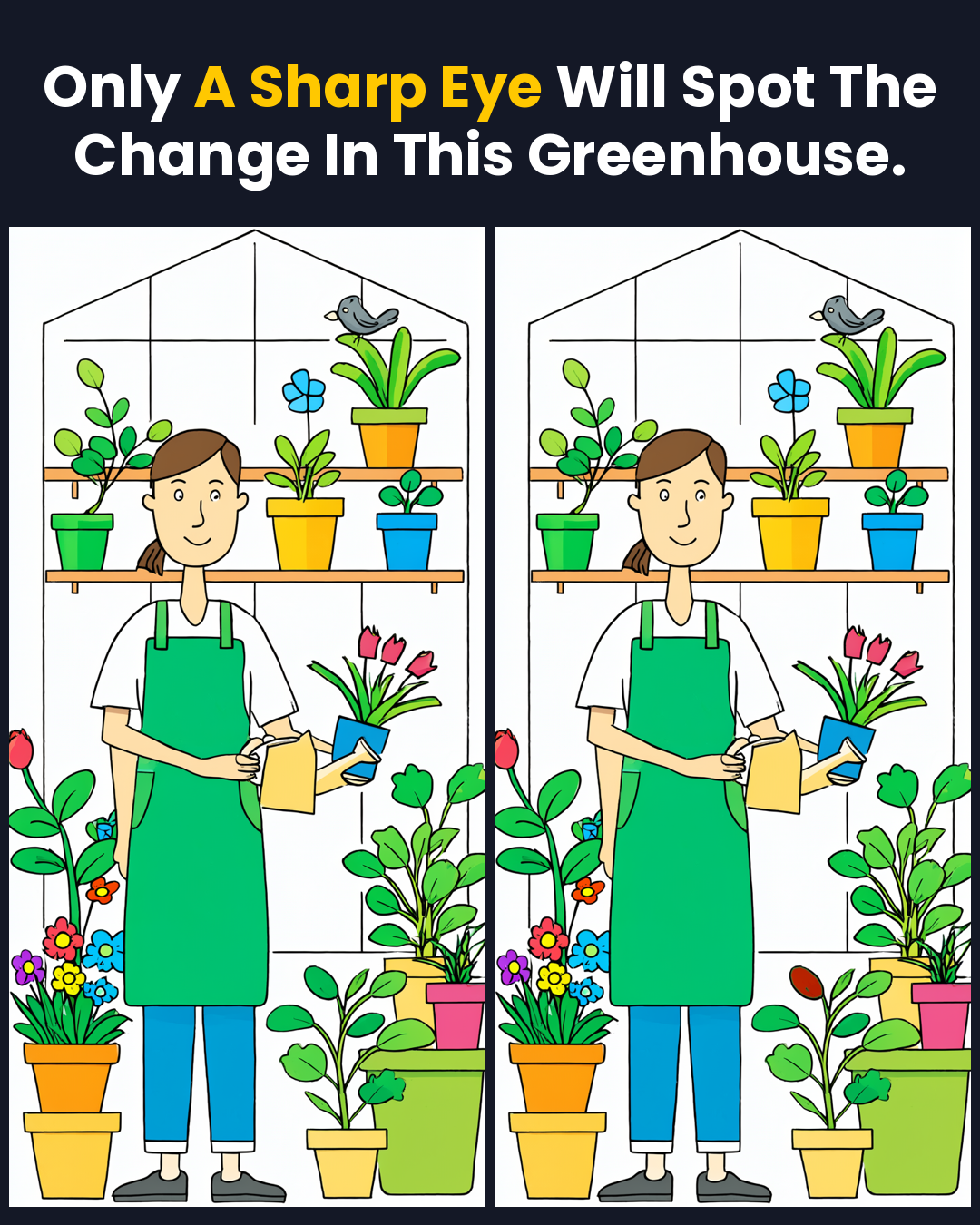
Today we step into a bright little greenhouse, where the shelves are full of happy plants and a friendly gardener is doing her morning round.
At first sight the two pictures look exactly the same. The pots are in the same places and the small bird still sits on the top shelf.
But one single detail in the right-hand picture is not the same as in the left one.
It is not a big, loud change. It is the kind of quiet little detail that your eyes slide right past.
Take your time, look from shelf to shelf, and trust your first feeling when something seems a little off.
Ready? Let the hunt begin, and good luck!
Take your time and look closely before you scroll down!
Start With A Plan, Not With Your Eyes
The biggest mistake in a spot-the-difference puzzle is to let your eyes wander wherever they like. They will always go to the brightest, biggest things first, and they will keep going back to them. That is how you can look at a picture for two minutes and still miss a change that was right in front of you.
A much better method is to divide the picture into sections, the way you would divide a garden into beds. Begin at the top left corner, compare that small square in both pictures, and only then move on. Top shelf, middle shelf, the gardener herself, then the pots on the floor. Four or five calm passes beat one wild search every time.
It also helps to compare shapes first and colours second. Shapes are easy for the brain to match. Colours take a moment longer, and that is exactly where many small changes like to hide.
Why Our Brain Makes This So Hard
Our eyes are wonderful, but they do not send a full picture to the brain. They send a quick summary. The brain fills in the rest from memory and from what it expects to see. In a greenhouse, the brain expects green leaves, so it writes green over the whole plant without checking every single leaf.
This useful shortcut is the reason a small change can sit in plain sight. Scientists call it change blindness, and it happens to everyone, young and old. It is not a sign of poor eyesight. In fact, people with very sharp vision fall for it just as often.
There is a second trap here too. The two pictures are side by side, so your eyes have to jump back and forth. During that jump, the brain briefly stops taking in new detail. Changes that fall into that moment can be missed many times in a row.
A Puzzle With A Long History
Spot-the-difference pictures have been making people happy for well over a hundred years. They appeared in family magazines and newspapers long before anyone had a screen in the house, and they were often printed on the back page so the whole family could gather around after supper.
Teachers and doctors liked them too. Comparing two pictures gently trains attention, patience and short-term memory, and it does so without feeling like work. That is why you still find these puzzles in waiting rooms, in puzzle books and now on the phone in your pocket.
The idea has never needed to change, because it works. Two pictures, one secret, and a happy little moment when you finally see it.
The Friendly Challenge
Most people need between forty and sixty seconds to find the change in this greenhouse. Some lucky souls see it in ten. If you are still looking after two minutes, step back from the screen a little. Distance often helps more than leaning closer.
When you have found it, do not say it out loud straight away. Show the picture to a friend or to someone in the family and watch them search. Half the fun of these puzzles is watching someone else go through exactly the same struggle you did.
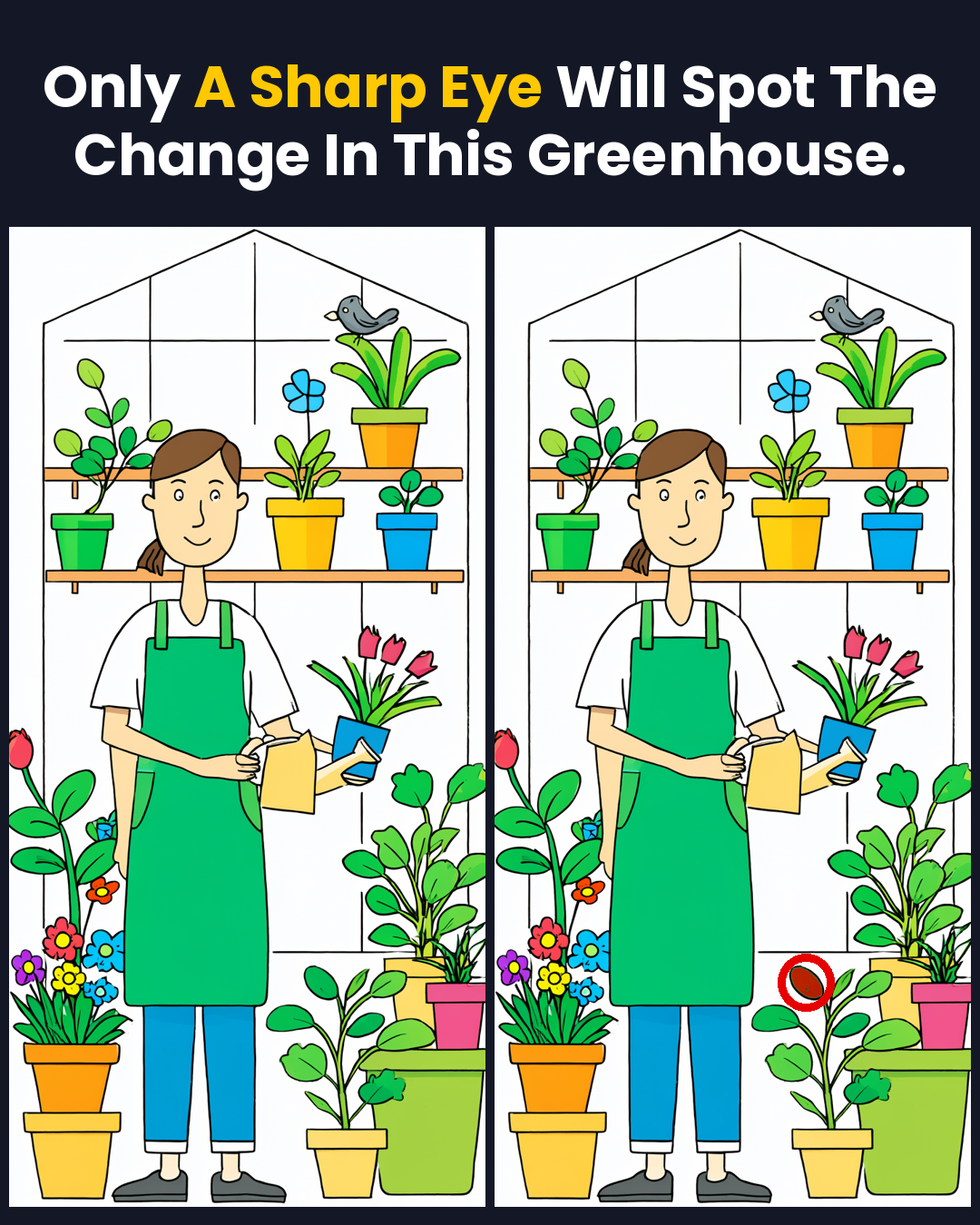
ANSWER: One leaf on the tall plant on the right has turned brown instead of green.
Where The Change Is Hiding
Look at the leafy plant standing on the floor on the right-hand side of the picture, just behind the pink pot. In the left picture every one of its leaves is fresh green. In the right picture, one single leaf near the top has turned a warm brown, as if autumn arrived for that one leaf alone.
It is a small shape in a busy corner, surrounded by other leaves of the same size, and it sits low in the picture where most people look last. That is a perfect hiding place.
Why Almost Everyone Misses It
Your eye is pulled to the gardener in the middle, to her green apron and to the bright blue and yellow pots on the shelves. Those are the loud parts of the picture, so the brain checks them first and keeps coming back to them.
The plants on the floor are read by the brain as one block of green. Once it has decided green, it stops checking leaf by leaf. A brown leaf inside that block does not shout, because the colour is quiet and the shape is unchanged. Only a slow, section-by-section look brings it out.
So, How Did You Do?
Under 10 seconds: eagle eyes. You compare pictures the way a bird of prey scans a field.
10 to 30 seconds: excellent. Your attention is sharp and well organised.
30 to 60 seconds: right in the middle, where most people land. A very good result.
Over a minute: no shame at all. This one was built to be quiet, and you kept going until you found it. That patience is worth more than speed.