Hello, puzzle friends, and welcome into a cosy little bookshop.
A customer is reading by the counter, and a white cat is having a nap.
Below you will see the very same shop twice, side by side.
One small detail in the second picture is not the same as in the first.
Everything else, from the tall shelves to the warm lamp, stays exactly as it was.
Check the books, the plant, the rug, the counter and the sleepy cat.
A friendly tip: look low, down near the floor, before you look high.
Settle in, take a slow breath, and start your search.
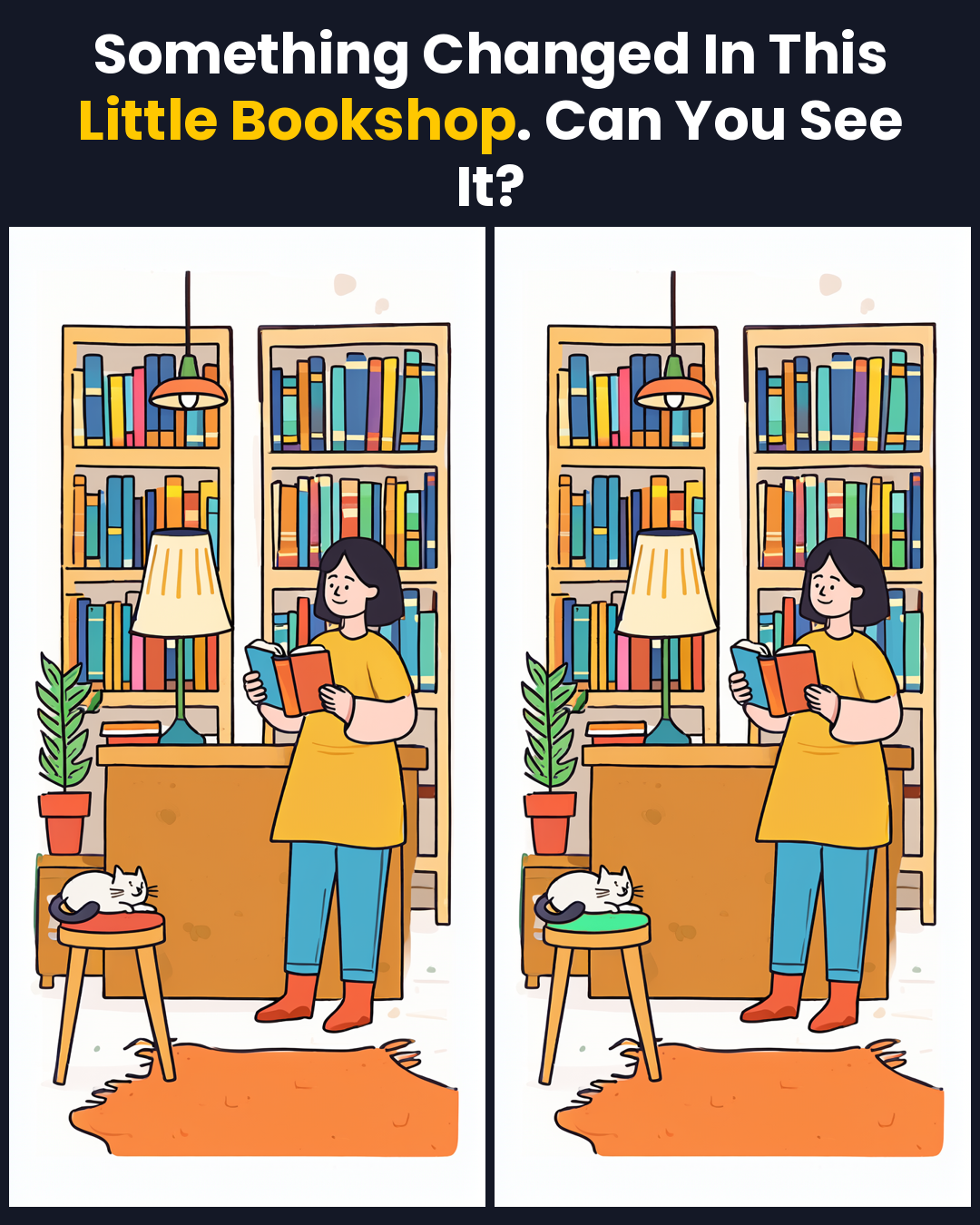
Take your time and look closely before you scroll down!
A Simple Method That Really Works
Resist the urge to let your eyes wander freely over the whole shop. A busy picture with shelves, books and furniture will always pull your gaze back to the brightest, biggest shapes, and the small things never get their turn.
Instead, work from the bottom up. Most people start at the top, so the lower third of a picture is the part that gets the least attention. Begin at the floor, with the rug, the legs of the stool and the shoes, then move up to the counter, and only then to the shelves.
Another useful trick is to compare in pairs. Put your finger on an object in the left picture, then find the same object on the right and look at both for two full seconds before moving on. Slow, steady pairs beat fast, wide sweeps every time.
Why The Brain Gets Fooled
A bookshop is a feast of detail, and detail is exactly what overloads us. Our attention works like a narrow torch beam in a dark room. It is bright and sharp, but it only lights up one small circle at a time, and everything outside that circle is a vague impression.
On top of that, our memory of a scene is built from meaning, not from paint. We remember a cat sleeping on a stool, not the precise shade of the cushion under it. When the shade changes but the cat, the stool and the pose stay the same, the meaning is unchanged, so nothing feels wrong.
Warm colours add one more layer of mischief. The rug, the boots and the lamp are already in that same family of tones, so a warm cushion simply blends into the story the room is telling.
Puzzles And A Long Tradition
Comparison puzzles have a long and respectable history. They were printed in weekly family papers long before television, often under names like the twin pictures, and whole households would argue over them at the kitchen table.
The idea reaches even further back. Artists and engravers once made nearly identical prints with small deliberate changes so that apprentices could train their eye for accuracy, which is the same skill a proofreader or a quality inspector uses today.
So when you compare two pictures for fun, you are practising something people have valued for centuries: the patient habit of really looking.
The Friendly Challenge
Most readers find this one in about half a minute. Under fifteen seconds puts you in the top group, and a minute is a perfectly respectable result for a scene with this many objects in it.
When you have found it, pass the picture to someone else and time them without telling them where to look. Watching another person search the shelves while the answer sits quietly near the floor is a small joy all by itself.
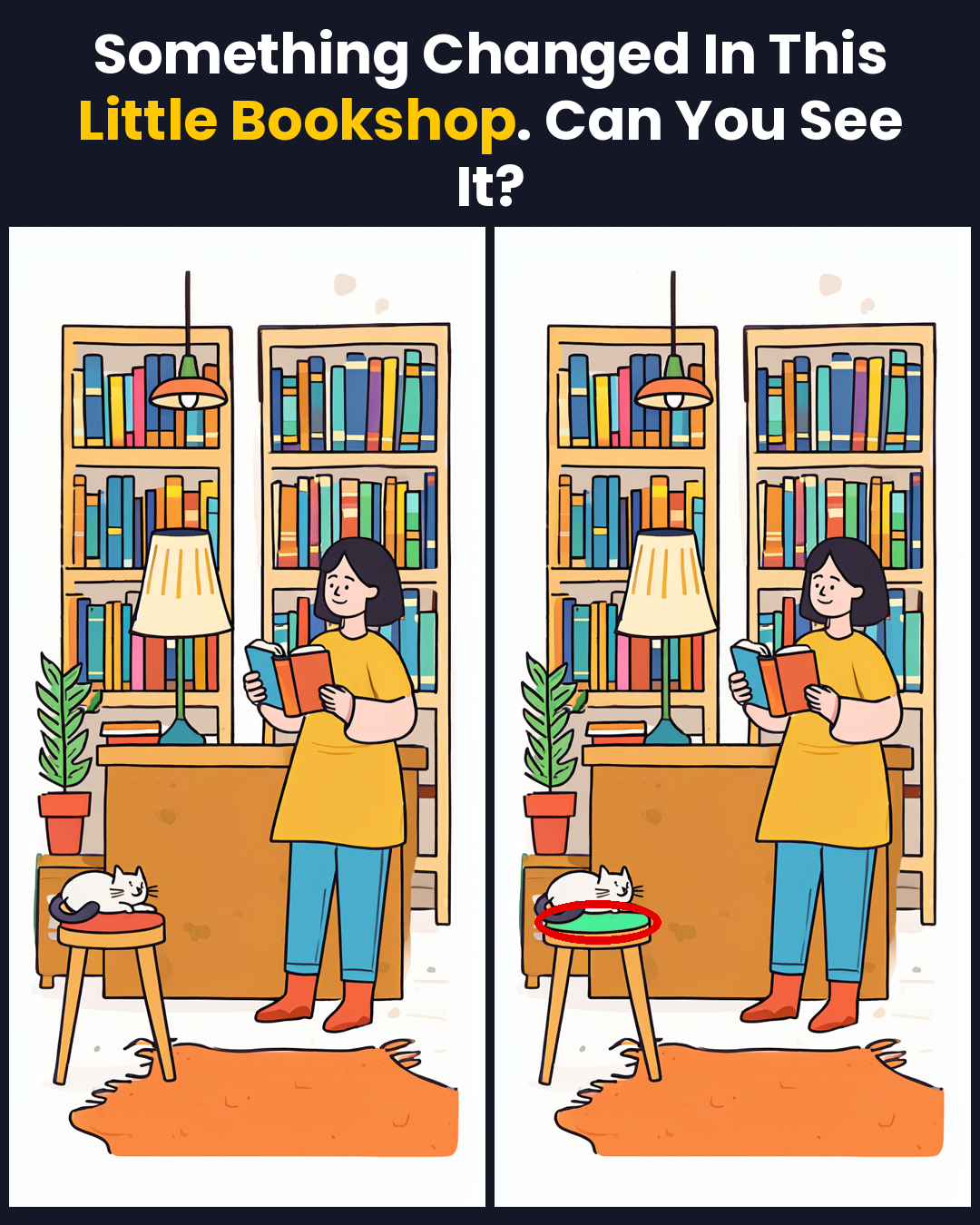
ANSWER: The cushion on the stool changed colour – it is orange-red in the first picture and green in the second.
The Answer Was Under The Cat
Look at the little three legged stool on the left side of the shop, the one the white cat has claimed for its nap. In the first picture the round cushion on that stool is a warm orange-red, matching the rug and the customer’s boots. In the second picture the very same cushion is green.
The cat has not moved a whisker. The stool, the plant, the counter, the lamp and every book on every shelf are identical. Only that one circle of fabric has changed its colour.
Why It Stays Hidden
The cushion is small, it sits low in the picture, and it is partly covered by a sleeping cat. A cat is far more interesting than a cushion, so our attention lands on the animal, confirms that it is the same cat in the same pose, and moves straight on.
There is also competition for our eyes. The big orange rug in the foreground and the bright lamp above the counter both shout for attention, and while we are busy comparing those two obvious things, the quiet little seat between them escapes inspection entirely.
How Did You Do?
Under ten seconds is outstanding, and it means you naturally scan low as well as high.
Ten to thirty seconds is a strong, sharp result. Thirty to sixty seconds shows a careful eye working through the scene in order, which is exactly the right habit.
If you needed longer, or you looked at the answer first, do not be discouraged. The method you practised here, working from the floor upwards and comparing in pairs, will make the next puzzle noticeably easier.