Hello, puzzle friends, and welcome to a sunny autumn garden.
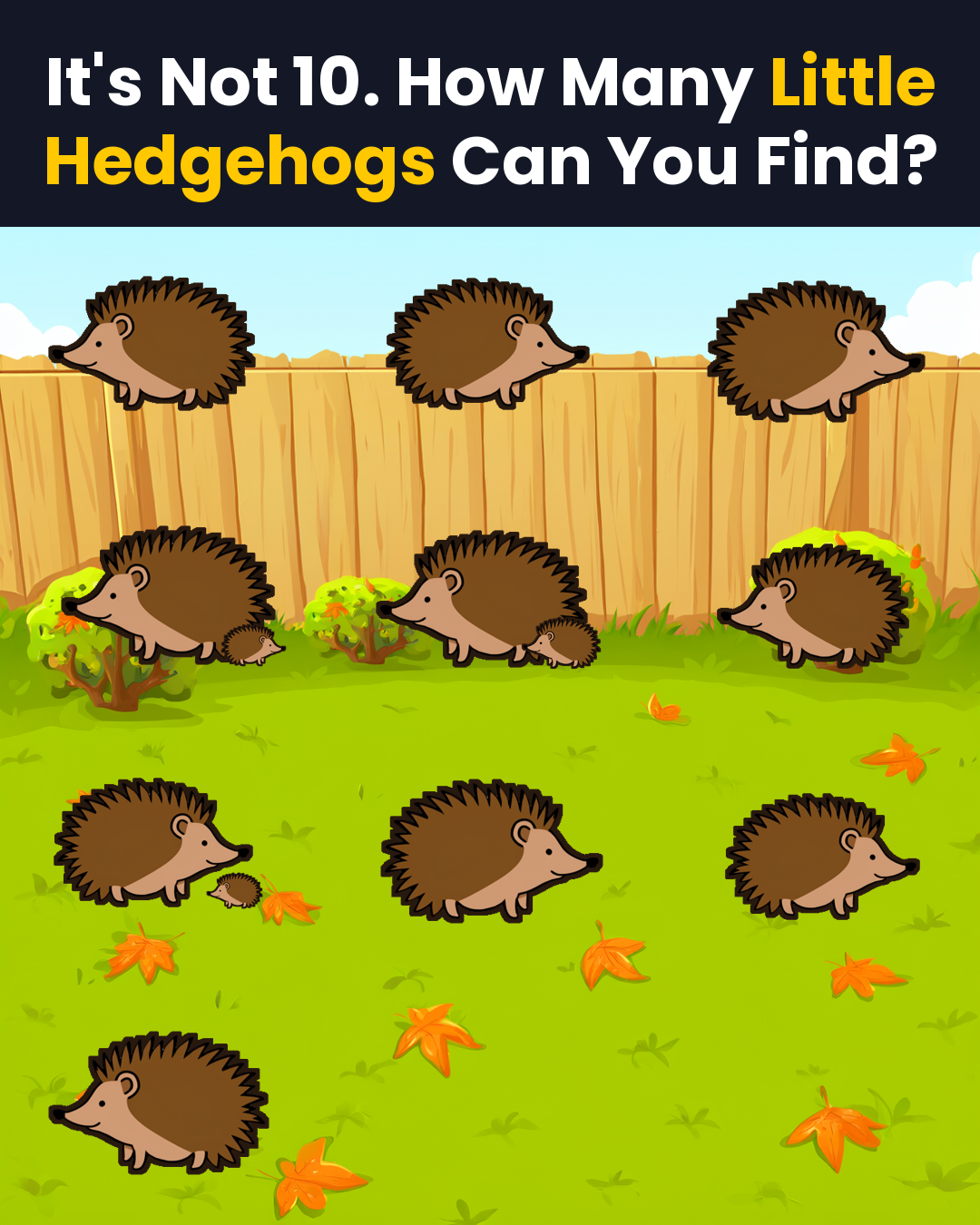
A family of little hedgehogs has come out to enjoy the fallen leaves.
Your task today is a simple one to say and a hard one to do: count them all.
Most people give their answer in a few seconds, and most people get it wrong.
The trouble is that not every hedgehog is the same size.
Some of them are very small indeed, and they like to stay close to the big ones.
Look at the lawn, the bushes, the fence and the shadows between the leaves.
Count slowly, count twice, and then decide on your number.
Take your time and look closely before you scroll down!
How To Count Without Losing Your Place
Counting looks easy until the objects are scattered. The usual mistake is to jump from one hedgehog to another wherever the eye happens to land, which means some get counted twice and others not at all.
The cure is to give yourself a route. Treat the picture like lines of text: start at the top left, move straight across to the right edge, then drop to the next band and sweep back. Count out loud, or at least mouth the numbers, because speaking keeps your place far better than thinking does.
Then do it a second time in bands, and write your two numbers down. If they match, you can be fairly confident. If they do not, the difference tells you that something small slipped past you, and it is almost always something small.
Why Counting Puzzles Trick Us
Our minds are very good at recognising a pattern and very bad at checking it. Once we have seen a row of evenly spaced hedgehogs, the brain decides it understands the arrangement and stops inspecting the gaps between them.
Size plays a part too. We expect the members of a group to be roughly the same, so a creature at half the size does not read as another one of the same thing. It reads as part of the background, like a stone or a leaf, and the counting hand skips it.
And then there is the number in the title. Once a figure has been placed in your mind, it becomes a destination. You count towards it, and the moment you reach it there is a quiet feeling of arrival that makes you stop looking.
A Fun Fact About Counting
People can take in very small quantities at a glance, without counting at all. Show someone three or four objects and they will know the number instantly. This instant sense is called subitising, and it runs out at about four.
Above that, we have to count one by one, and that is where errors creep in. Our working memory can only hold a handful of things at a time, so the longer the count, the more likely it is that something falls out of the bucket.
That is exactly why a picture with more than ten scattered animals is such good sport. It sits just beyond the comfortable limit of the human eye.
The Challenge
Most people answer in under ten seconds and are wrong, then take another thirty seconds and get it right. Being slow here is not a weakness, it is a strategy.
So settle on your number before you scroll, and then ask a friend to count too, without telling them what you found. If you both arrive at the same figure, one of you is probably still missing the same little fellow as the other.
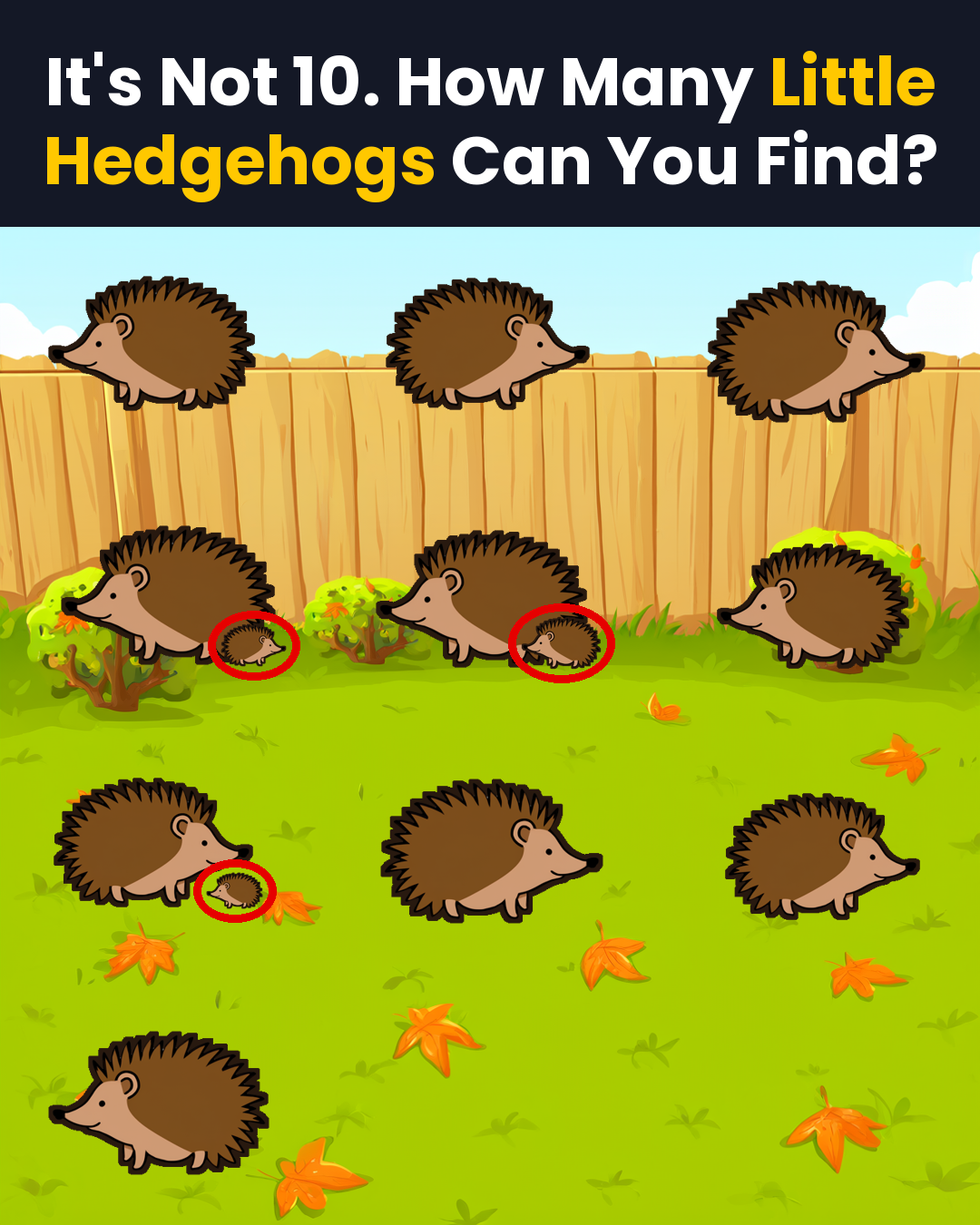
ANSWER: 13 hedgehogs – ten big ones and three tiny babies tucked close beside them.
Where The Little Ones Are
There are thirteen hedgehogs in the garden. Ten of them are the big, easy ones that everybody counts: three along the top by the fence, three in the middle band near the bushes, three on the open lawn and one on its own in the bottom left corner.
The other three are babies, and each one is tucked right beside a grown up. One is nestled against the big hedgehog on the left of the middle row, one is just behind the hedgehog in the centre of that row, and one sits on the grass beside the large hedgehog on the left of the lower row, half covered by an orange leaf.
Why The Babies Disappear
Two things hide them. First, they stand right next to a larger animal, and our eye tends to treat a big shape and a small shape that touch as one single object. We see a hedgehog with something beside it, not two hedgehogs.
Second, they are the same colour as the fallen leaves and the shadows on the lawn. Brown on brown gives no contrast, and without contrast there is no edge for the eye to catch on. Add the title’s number, which tells your brain where to stop, and three small creatures can sit in the open and never be seen.
How Did You Do?
Thirteen on the first try, in under twenty seconds, means genuinely excellent eyes and a very disciplined way of counting.
Thirteen on the second try is the most common good result, and it shows you did the sensible thing and checked your work. Twelve means you found two of the three babies and were very close indeed.
Ten means you counted the obvious ones perfectly and fell for the trap, which is exactly what the puzzle was built to do. Try the next counting picture and look for the little ones first.