Hello, puzzle friends!
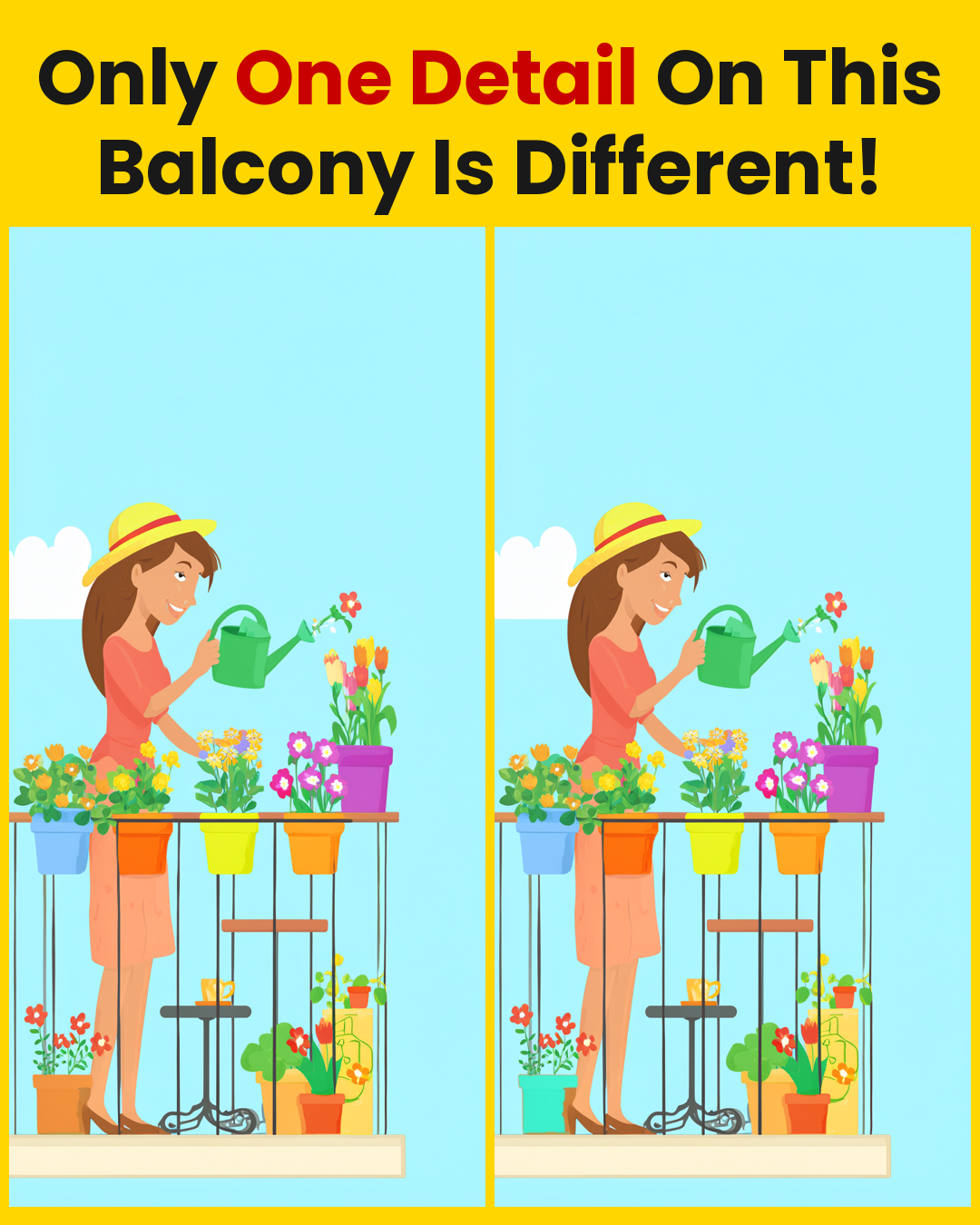
Today we are stepping out onto a sunny little balcony full of flowers.
A kind lady is watering her plants, and at first glance the two pictures look exactly the same.
But they are not. One single detail has been quietly changed.
Your job is simple: look at both pictures side by side and find that one change.
Take your time, there is no clock running here.
A small tip before you start: do not stare at the lady. Changes love to hide in the quiet corners.
Ready? Let us see how sharp your eyes are today.
Take your time and look closely before you scroll down!
Where To Look First
The smartest way to solve a spot-the-difference picture is to stop looking at the whole thing at once. Our eyes naturally jump to the biggest, brightest, friendliest shape in the image, and here that is the smiling lady with her yellow hat. That is exactly where the change almost never is.
Instead, try working like a window cleaner. Divide each picture into four parts in your mind: top left, top right, bottom left, bottom right. Compare one quarter at a time, left picture against right picture, and only then move on to the next quarter. It feels slower, but it is much faster in the end.
Another helpful habit is to compare by category rather than by place. First check all the flower pots. Then check all the flowers. Then the railing, then the little table, then the clothing. When your brain is looking for one type of thing, it notices differences in that thing much more easily.
Why Our Brain Finds This Hard
There is a well known effect that scientists call change blindness. When two very similar images sit next to each other, our brain does not store every detail of the first one. It stores a quick summary: a lady, some flowers, a blue sky. When it looks at the second picture, it compares summaries, not details. And the summaries match perfectly.
Colour changes are especially sneaky. A shape that stays in exactly the same place, at exactly the same size, simply does not trigger the alarm bell in our visual system. Our eyes are built to notice movement and new shapes, not a quiet change of shade in a corner.
This is not a weakness. It is a clever shortcut that saved our ancestors a great deal of effort. It just happens to make puzzles like this one delightfully difficult.
A Little History Of Spot The Difference
Side-by-side picture puzzles have been entertaining families for well over a hundred years. They first appeared in newspapers and children’s magazines in the late nineteenth century, when printing two nearly identical drawings became cheap enough to do every week.
They were never only for children. Doctors and teachers noticed early on that these puzzles are a pleasant way to train visual attention, patience and careful looking. Today they are still used in that friendly way, and millions of people solve one with their morning coffee.
The charm has not changed in all that time. There is something wonderfully satisfying about that little click in your head when the difference finally jumps out at you.
Your Challenge Today
Most people need between twenty and forty seconds to find the change on this balcony. A few lucky souls spot it in under ten.
So here is the challenge: give yourself thirty seconds, scan calmly from the bottom corners upward, and see whether you can beat the average. If you do not find it at once, look away for a moment and come back with fresh eyes. That trick works surprisingly often.
And when you have found it, show the picture to a friend or to someone in your family without saying a word. Watching them hunt for it is half the fun.
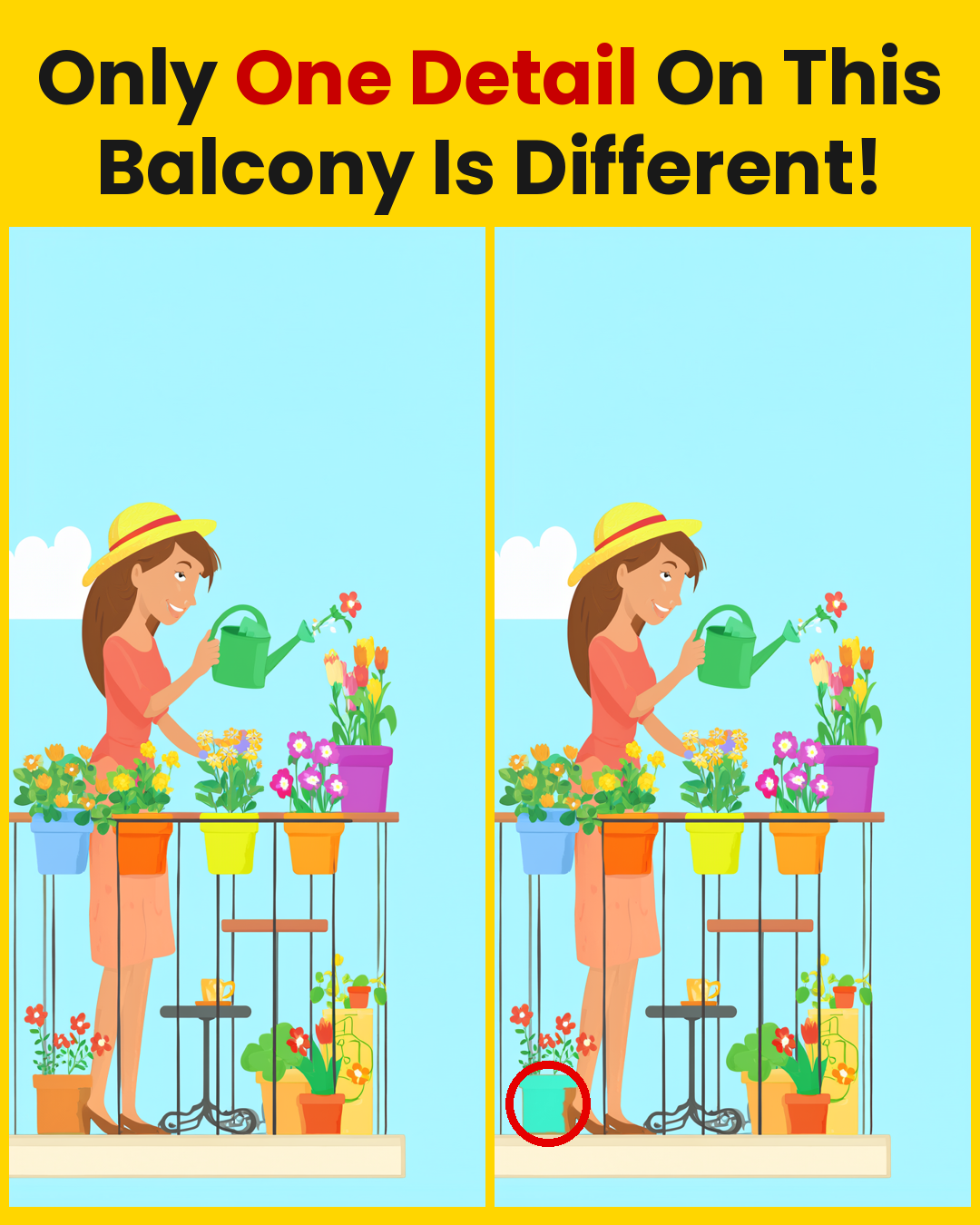
ANSWER: The flower pot in the bottom left corner changed colour – it is turquoise instead of terracotta orange.
Where The Change Is Hiding
The difference is down in the bottom left corner of the picture. In the first image, the flower pot standing on the balcony floor beside the lady’s shoes is a warm terracotta orange, just like the other clay pots in the scene. In the second image, that very same pot has turned a cool turquoise blue.
Nothing else moved. The red flowers above it are identical, the pot is the same size and in the same spot, and even the shadow is unchanged. Only the colour is different.
That is precisely why so many people walk straight past it. The pot sits at the very edge of the picture, below the railing, in the area our eyes treat as background. We are busy admiring the lady, the watering can and the bright tulips up on the shelf, and the quiet corner never gets a proper look.
Why Most People Miss It
There are three clay pots in similar warm colours in this scene, so when one of them changes shade our brain simply files it under the heading of pots and moves on. It does not count them or compare them one by one unless we ask it to.
The lower part of the picture is also visually busy, with the railing bars, the little table, the cup and several plants all crowded together. Busy areas are wonderful hiding places. The more detail there is, the less attention each single item receives.
How Did You Do?
Under 10 seconds: eagle eyes. You looked at the corners before the people, and that is the mark of a real puzzle veteran.
10 to 30 seconds: excellent. You are well above average and clearly used a proper search method.
30 to 60 seconds: very good. You stayed patient and you got there, which is what counts.
Over a minute, or you needed the answer: no harm done at all. Now that you know how this trick works, the next balcony will not fool you so easily.