Welcome back, puzzle friends!
This afternoon we are sitting on a quiet porch with a lovely older couple.
There is tea on the table, a knitting basket by the chair and golden autumn leaves all around.
It is a peaceful scene, and the two pictures look identical at first.
They are not. Somewhere in there, one single detail has been changed.
Nothing was removed and nothing was added, so do not waste time counting objects.
A friendly hint: the smaller the object, the better it hides.
Settle in, take a breath, and see whether you can find it.
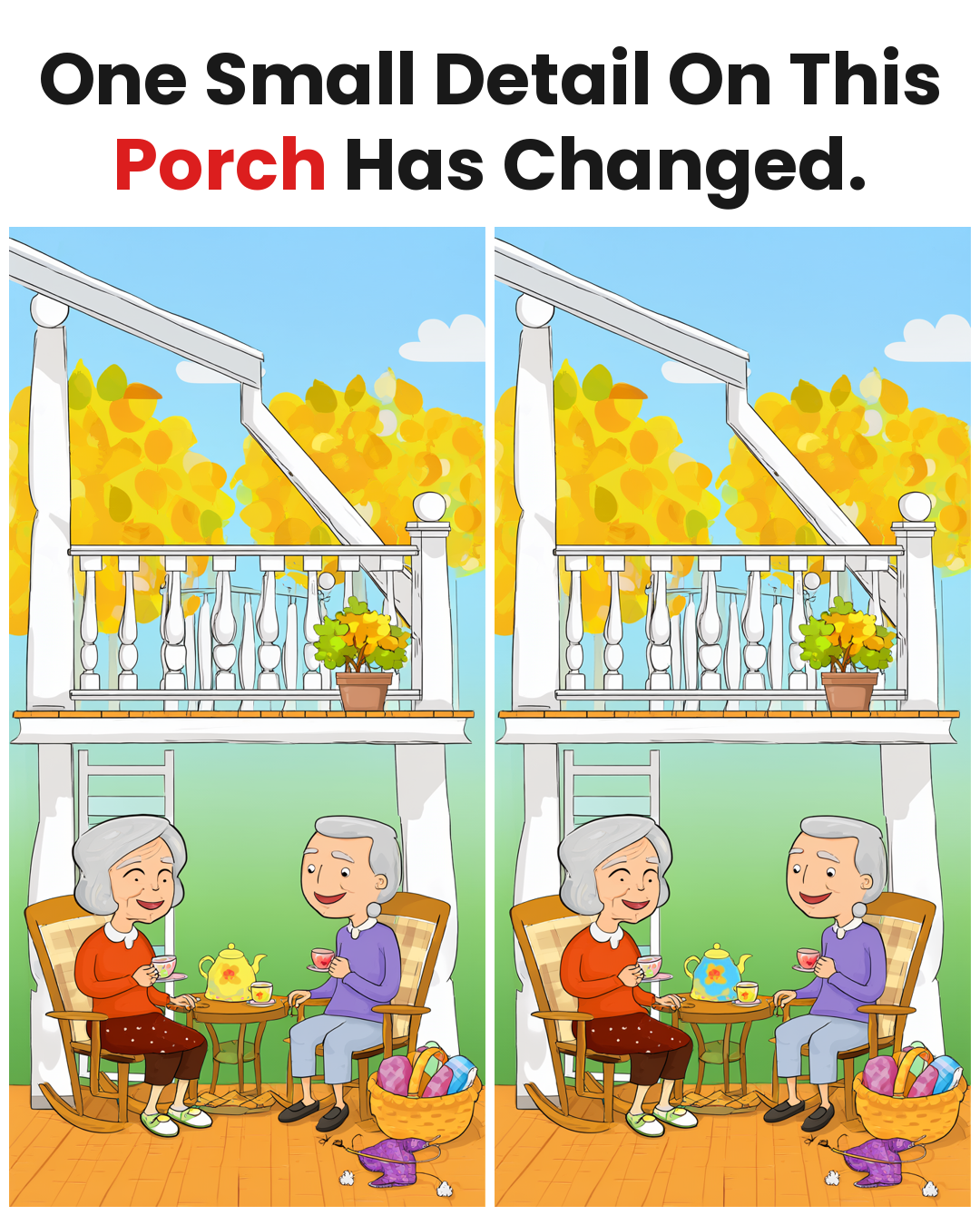
Take your time and look closely before you scroll down!
The Best Way To Start
Most people begin a puzzle like this by looking at the two people, because faces are the first thing human eyes seek out. It is a lovely instinct and a poor strategy, because puzzle makers know about it and they hide their changes elsewhere.
A better approach is to compare the picture in layers. First the sky and the trees in the background. Then the white railing and the staircase in the middle. Then the porch floor, the chairs and the small objects in the front. Three passes, each one quick and focused.
Within each layer, look for things that come in pairs or sets: two chairs, two cups, several railing posts, a row of leaves. Our eyes are quite good at noticing when one member of a pair does not match, but only when we deliberately compare them. Left shoe against left shoe, right cup against right cup.
Why Small Objects Win
There is a simple rule in these puzzles: the amount of attention an object gets has almost nothing to do with how important it is, and everything to do with how big and bright it is.
A teapot on a small table takes up a tiny fraction of the picture. The two people, the big white staircase and the mass of golden leaves take up nearly all of it. So our gaze visits the large shapes again and again while the small objects on the table receive barely a glance.
There is also the matter of expectation. We know what a porch tea table looks like. The brain recognises the arrangement, ticks the box marked tea things and does not bother to check the individual colours. Recognising is fast; inspecting is slow, and the brain always chooses fast.
Puzzles And A Sharp Mind
Picture puzzles of this kind have a long and friendly history in family magazines, and they have aged very well. They ask nothing of you except calm attention, which makes them welcome at any age.
Researchers who study attention like them because they show so clearly how selective our vision really is. We do not photograph the world; we sample it, and we fill in the rest with reasonable guesses. Most of the time those guesses are right, which is why we rarely notice how much we are inventing.
And there is the simple pleasure of it. A few quiet minutes, a cup of tea of your own, and a small victory at the end. That is a good way to spend part of an afternoon.
Your Challenge
The average reader finds this change in about thirty seconds. Those who go straight to the table rather than to the faces often manage it in under fifteen.
Give yourself half a minute and work from the front of the picture backwards, small things first. If you get stuck, blink, look away at something else for five seconds and come back. Fresh eyes really do catch what tired eyes miss.
Then share it with a friend and see who is faster. A little friendly competition makes every puzzle better.
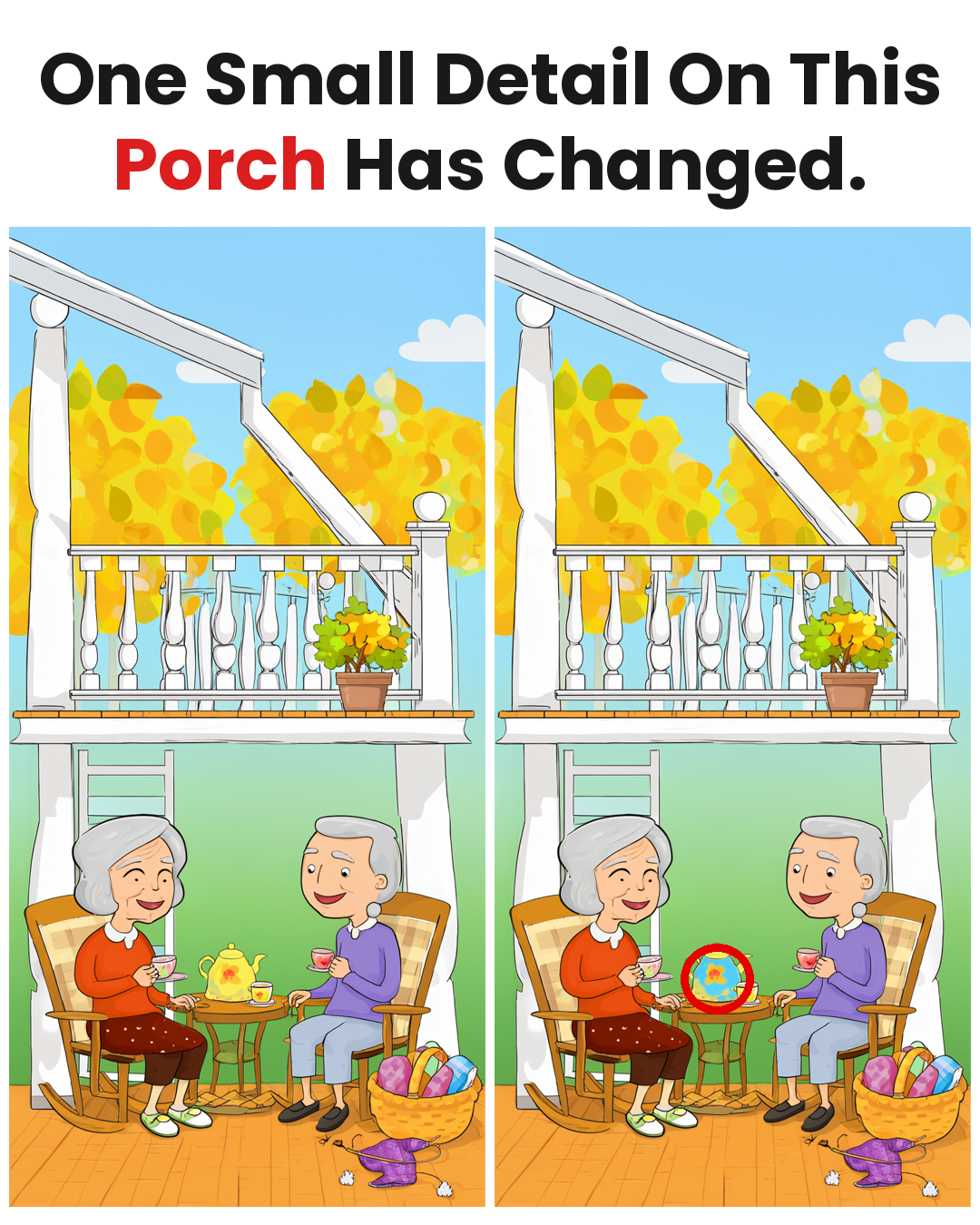
ANSWER: The teapot on the little table changed colour – it is blue in the second picture instead of yellow.
It Was On The Tea Table
The change is the teapot standing in the middle of the small round table between the two rocking chairs. In the first picture it is a warm sunny yellow with a little flower painted on its side. In the second picture that same teapot has turned a soft blue.
Everything else is exactly as it was. The two teacups still have their pink patterns, the saucer has not moved, the table is in the same place and both people are holding their cups in the same way.
The teapot sits right in the middle of the picture, which sounds as if it should be easy. In practice the middle of the lower half is a blind spot here, because our eyes bounce between the two smiling faces above it and never stop in between.
Why The Eye Skips It
The scene is full of warm colours already: orange floorboards, a red cardigan, golden leaves, a wicker basket. A yellow teapot belongs perfectly in that family of colours, so when it becomes blue, the change registers as just another colourful object rather than as something new.
The second reason is the company it keeps. The teapot is surrounded by cups, a saucer and the table edge, all small items packed closely together. Clutter is camouflage. The more little things sit side by side, the less attention each one receives, and the easier it is for a changed object to pass as part of the crowd.
How Did You Do?
Under 10 seconds: eagle eyes indeed. You went for the small objects first and that is exactly right.
10 to 30 seconds: very good work, better than most people manage on this one.
30 to 60 seconds: a solid result. Patience paid off and you found it.
Longer than a minute: you are in excellent company, because this teapot fools a great many readers. Remember the rule for next time: check the small objects before the faces.