Hello, puzzle friends!
A family of friendly owls has gathered around a big green oak tree today.
They are sitting everywhere: in front of the leaves, beside the branches and down in the grass.
Your task is to count them all, and that is harder than it sounds.
Most people answer far too quickly and get it wrong.
The big owls are easy. The question is whether you see every single one of them.
A small tip: some of these owls are much smaller than the others.
Count carefully, then count again. Are you sure of your number?
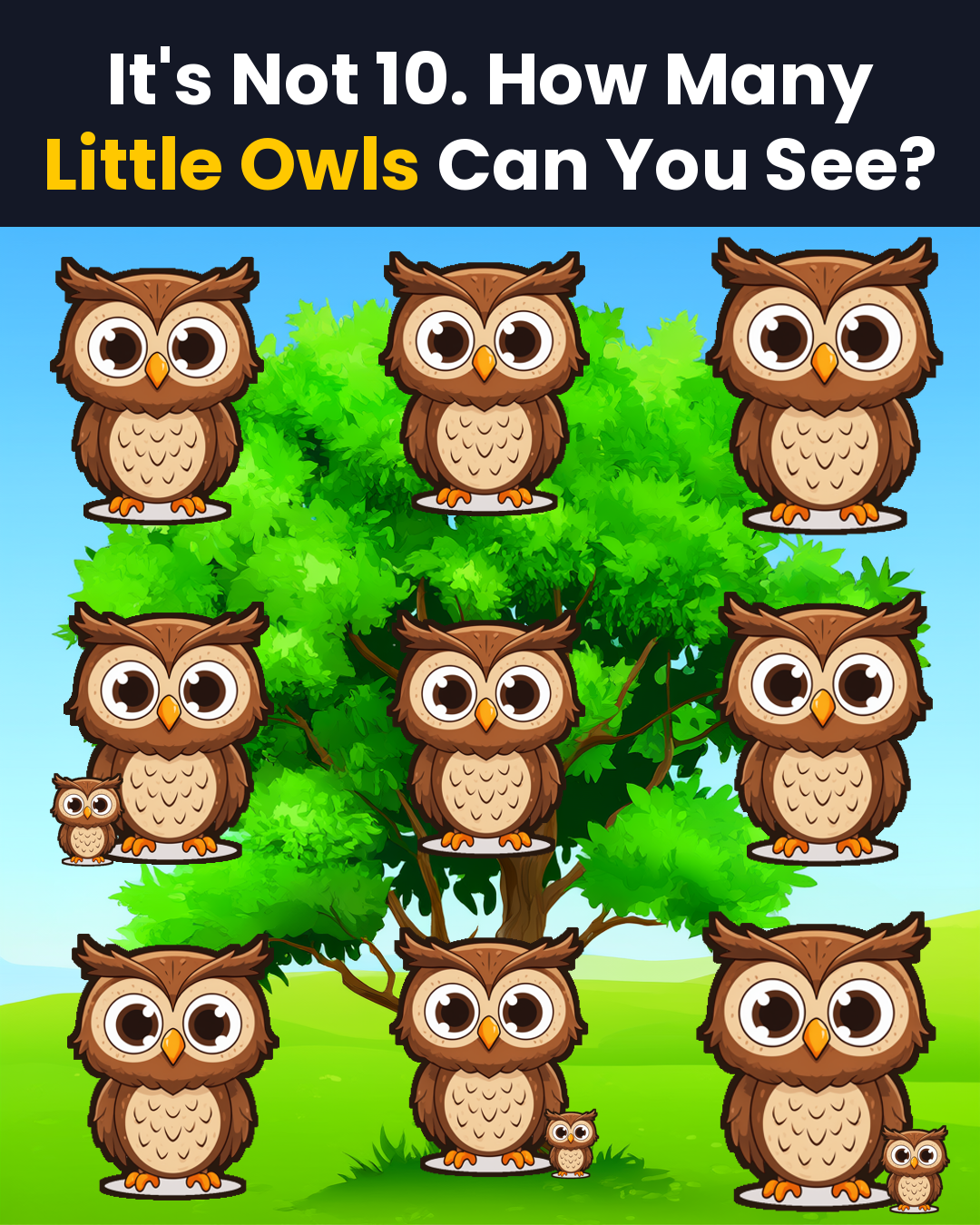
Take your time and look closely before you scroll down!
How To Count Without Losing Your Place
Counting puzzles look easy and then trip almost everyone up. The reason is simple: we count the same object twice, or we skip one, because our eyes do not travel in a straight line unless we tell them to.
The cure is to give yourself a fixed route. Read the picture like a page of a book: left to right along the top row, then left to right along the middle row, then left to right along the bottom. Never jump back. If you lose your place, start the whole row again rather than guessing.
It also helps to count out loud, or to tap your finger on the screen as you go. Saying the number gives your brain a second anchor, and a counted object you have spoken about is much harder to count twice by accident.
Why We Always Count Too Few
There is a lovely quirk in human vision called size blindness. When several objects of the same kind appear together, we judge them as a group, and small members of that group often do not get counted at all. The brain sees a crowd of owls and estimates, rather than counting one by one.
The second trap is where we look. Our eyes are drawn to the centre of a picture and to the largest shapes in it. Anything sitting at the very edge, or down low near the grass, receives far less attention. That is where a clever puzzle hides its extras.
And then there is the number in the title. Once a number has been put in your head, it is surprisingly hard to let go of it. Researchers call it anchoring, and it explains why so many people stop counting the moment they reach a number that feels about right.
A Word About Owls And Puzzles
Owls have been the stars of visual puzzles for a very long time, and it is easy to see why. Those big round eyes are instantly recognisable, even in the smallest drawing, so an artist can make an owl tiny and it still reads clearly as an owl.
Counting games themselves are far older than magazines. Shepherds counted flocks, market traders counted baskets, and the same mental skill is at work here. It is one of the first things we learn as children and one of the skills that stays with us longest.
There is good evidence that keeping that skill exercised with small daily challenges is pleasant and useful at any age. A couple of minutes of careful counting is a gentle workout for your attention.
The Challenge
Here is the test. Count the owls once, quickly, the way you normally would. Write that number down or say it out loud.
Now count a second time, slowly, row by row, and look very carefully right beside the big owls and down near the grass.
If your two numbers are the same, you have excellent attention. Most people end up with two different answers, and the second one is usually the correct one. Then pass the picture to a friend and ask for their number before telling them yours.
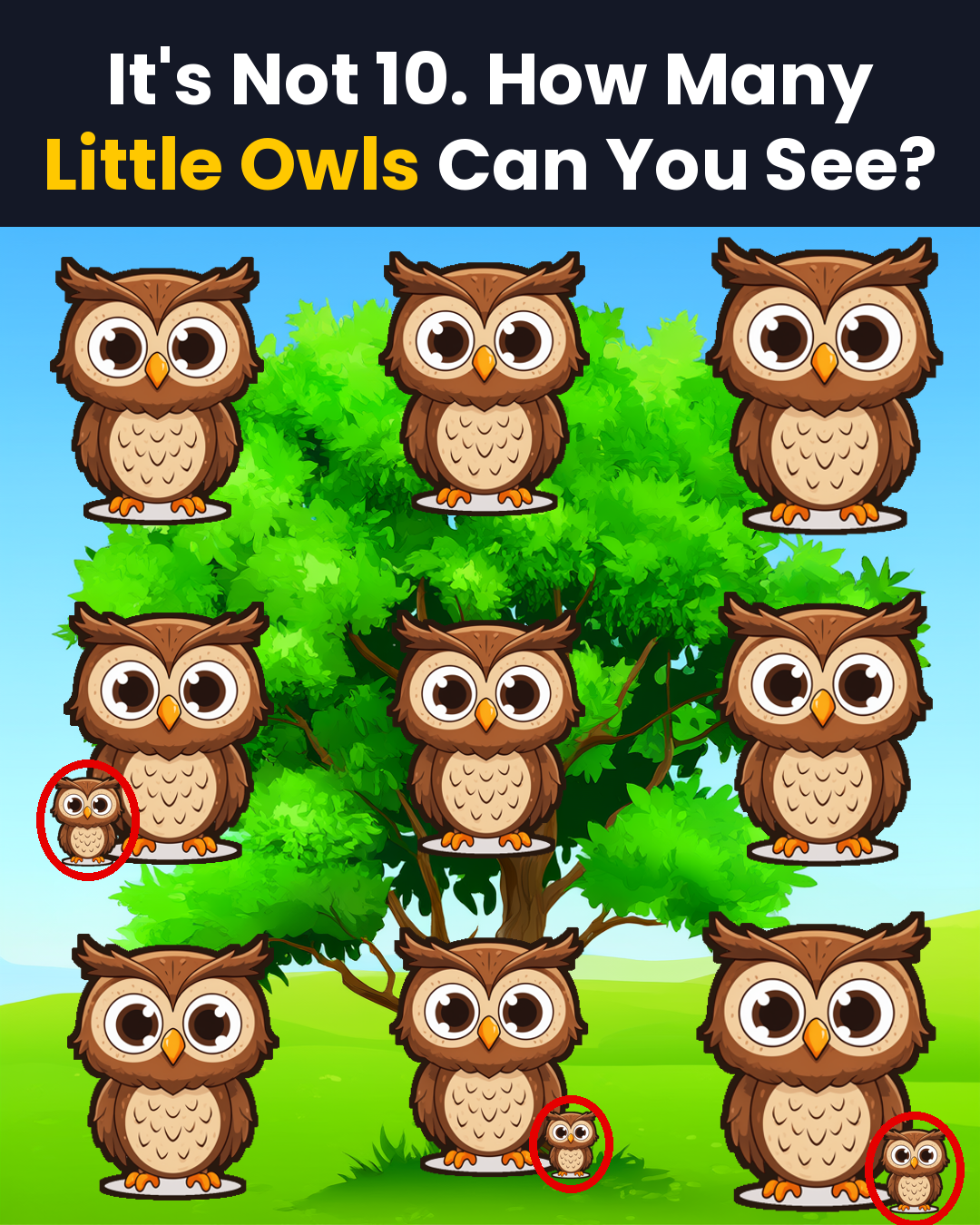
ANSWER: 12 owls – nine big ones and three tiny baby owls hiding right next to them.
Where The Extra Owls Are
The full answer is twelve. Nine large owls are easy to see: three across the top, three in the middle and three along the bottom. Almost everybody finds those.
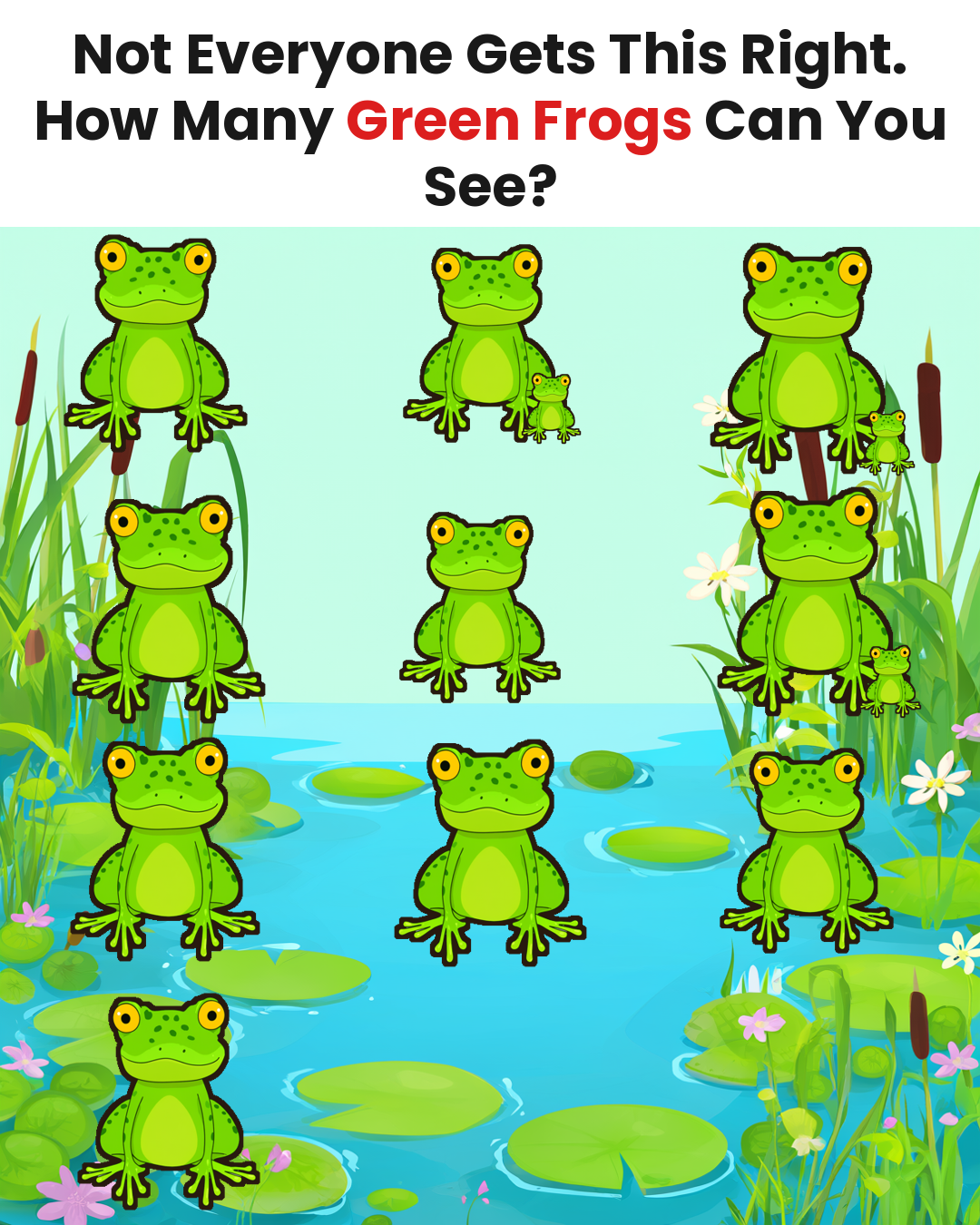
The other three are babies, drawn much smaller than their parents, and they are tucked in tight beside the big ones. One tiny owl is on the left side of the picture, standing just below and beside the middle owl on the left. A second little one sits at the foot of the owl in the bottom middle, half in the grass. The third is in the bottom right corner, peeking out next to the leg of the big owl there.
Each of the small owls touches a big owl. That is the whole trick. When a small shape overlaps a large one of the same kind, our eyes read the pair as one object.
Why Most People Say Nine Or Ten
Nine is the number of big owls, and nine is what you get if you count shapes instead of creatures. Ten or eleven is what you get if you spot one or two of the babies and assume you have found them all.
The bottom edge of the picture is the real problem area. Two of the three little owls live down there, close to the grass, where the green background and the dark feet of the big owls break up their outlines. Add the gentle suggestion in the title, and most readers settle on a number before they have finished looking.
How Did You Do?
Twelve on your first try, in under fifteen seconds: remarkable. You have the eyes of a hawk, which is an odd thing to say about owls.
Twelve after a careful second count: excellent. That is exactly how a good puzzle solver works.
Ten or eleven: very respectable. You found at least one of the hidden babies, which many people never do.
Nine: you are in the majority, and now you know the secret. Next time, look right next to the big ones.