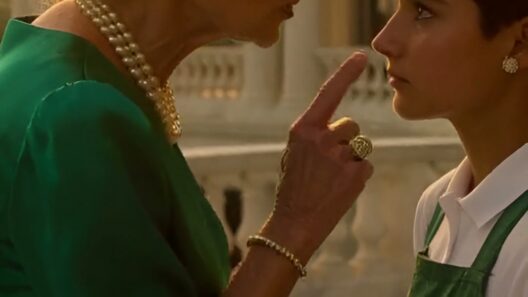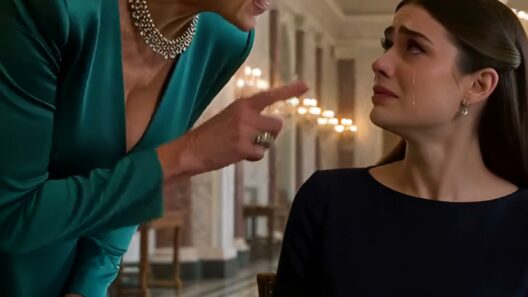
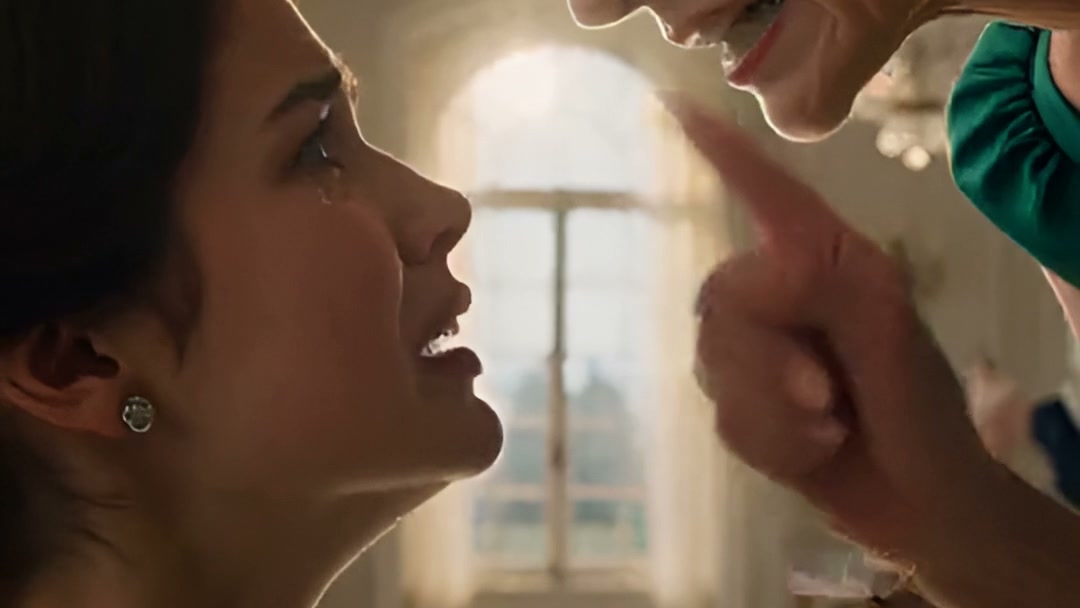
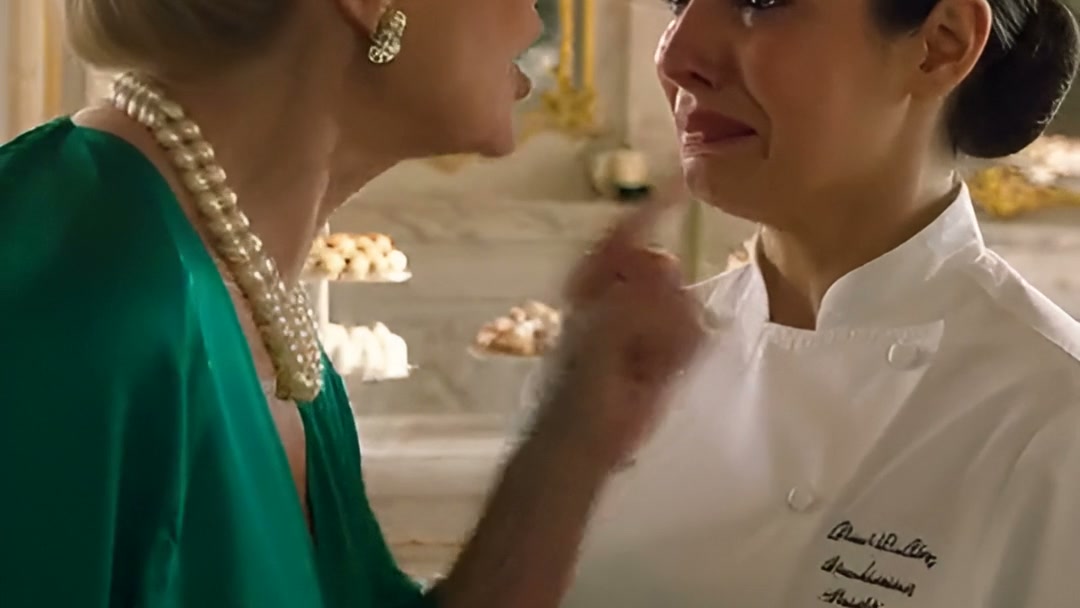
The palace hotel’s owner watched a socialite smash a little pastry chef’s wedding cake onto the marble floor… But when the girl held up a small silver spoon, he went completely still.
The Bellmere Palace Hotel had hosted royalty, presidents, and the kind of weddings that ended up in glossy magazines. Elena Marsh, twenty-two, had been awake since four in the morning making sure this one would be perfect.
The three-tier cake stood on the marble counter like a small cathedral. White fondant, sugar roses the size of thumbnails, three weeks of work.
“It’s extraordinary,” said the hotel’s sous chef, Marco, standing back with his arms folded. “Best thing to come out of this kitchen in a year.”
Elena wiped her hands on her apron and smiled. She didn’t say anything. She never did.
The mother of the bride arrived at half past ten.
Her name was Constance Whitmore. Emerald silk dress, a double strand of pearls the size of grapes, the particular posture of a woman who had never waited for anything in her life.
She walked the length of the glass cabinets without speaking, then stopped in front of the cake. She tilted her head. She pursed her lips.
“Who made this?” she said.
“I did,” Elena said. “Elena Marsh, ma’am. I’m very happy to—”
“You.” Constance said the word as though it tasted wrong. “You’re the one they sent me.”
“I’ve been here three years. I trained in Lyon and—”
“I can see what you are.” Constance’s voice dropped, smooth and cold as the marble counter. “A girl from nowhere, touching my daughter’s wedding cake with your little nowhere hands.”
The kitchen staff stood completely still. Marco looked at the floor.
“Ma’am,” Elena tried again, “if there’s something about the design you’d like changed, I can absolutely—”
Constance reached out with one hand and pushed the top tier off the counter.
It hit the marble floor in a soft, catastrophic collapse. Sugar roses broke apart. Cream spread across the tile in a white circle. Three weeks of work.
Elena’s hands came up to her mouth.
“You will not be present at my daughter’s wedding,” Constance said, stepping over the wreckage as if it were nothing. She leaned forward and jabbed one manicured finger toward Elena’s face. “You will pack your things, leave this kitchen, and—”
A hand shot in from the right.
It closed around Constance’s wrist, firmly, before her finger could make contact. Not rough. Just final.
The kitchen went silent in a different way.
The man standing there was in his mid-fifties, a cream linen suit, grey at his temples, the kind of quiet that fills a room without asking. No one had seen him come in. He had a habit of that — moving through his own hotel like a guest who’d been there forever.
His name was Thomas Hale. He owned the building, the kitchen, the marble, and the mirrors.
“Mrs. Whitmore,” he said. His voice was very low. “I think you’re finished here.”
Constance stared at him. For one moment something flickered behind her eyes, like a woman calculating odds she hadn’t expected to calculate.
“Mr. Hale,” she said carefully, “this is a private matter between me and your staff. I’m simply ensuring that the standard of service at my daughter’s—”
“You destroyed a three-week project,” he said. “In my kitchen. In front of my staff.” He released her wrist. “Your wedding is cancelled at this venue. I’ll have accounting process a full refund. Someone will escort you out.”
Constance’s chin came up. “Do you know what my family—”
“I do,” Thomas said. “Goodbye, Mrs. Whitmore.”
She left. The emerald silk dress swept through the door and was gone. Marco let out a long, slow breath. Someone at the back of the kitchen started picking up the broken sugar roses from the floor.
Thomas crouched down beside Elena, who was already on her knees, gathering what could be gathered. He didn’t say *let me do that* or *don’t worry about it.* He just picked up a piece of broken fondant and set it gently to one side.
“I’m sorry,” Elena said. Her voice was steady, which was harder than crying. “I should have — I don’t know what I should have done differently.”
“Nothing,” Thomas said. “You should have done nothing differently.”
They worked quietly for a moment. The cream was going to need a mop. The bottom two tiers were intact; someone said so from across the room, and Elena nodded without looking up.
Then her hand found something in the wreckage. A small, plain silver spoon, the kind used for coffee service, that had been sitting on the marble next to the cake. It was bent slightly now, cream on the handle, but whole.
She picked it up and looked at it.
She turned it over in her palm.
“Mr. Hale,” she said.
Something in her voice made him stop.
“Before I came to this hotel,” she said slowly, “I was at a shelter. In Dayton. I was sixteen, and there was a woman there who helped me get into culinary school. She helped a lot of us.” Elena looked at the spoon. “She died two years ago. But before she did, she gave me this. She said — she said that if I ever made something beautiful enough to work in a palace hotel, I should find the man who owned it. She said I should show him this spoon.”
Her hand was shaking slightly. She held it out toward him.
“She said he’d know what it meant.”
Thomas Hale looked at the spoon.
The color went out of his face.
He sat back on his heels on the marble floor of his own kitchen, surrounded by his staff and the ruins of a wedding cake, and he looked at that small bent silver spoon like a man who had just heard a name called from a very long way away.
His hand came up slowly and closed around Elena’s hand, around the spoon, not taking it. Just holding.
“Her name,” he said. His voice had changed entirely. “What was her name?”
“Ruth,” Elena said. “Ruth Calloway.”
The silence in the kitchen was different from every silence before it. Softer.
“She was my sister,” Thomas said.
Elena stared at him.
“She left home when I was nineteen. We lost track of each other. I looked for her for — I looked for a long time.” He closed his eyes for one moment. When he opened them they were wet, but his voice held. “She knew where I was. She always knew. She just—” He stopped. “She sent you.”
“She said you’d take care of the ones she couldn’t stay to take care of herself,” Elena whispered.
Thomas Hale sat on the marble floor of his palace hotel, holding the hand of a twenty-two-year-old girl who smelled like sugar and had cream on her apron, and for the first time in years the searching feeling he carried like a stone in his chest was simply, completely gone.
“She was right,” he said. “I will.”
He stood up. He helped Elena to her feet. He turned to Marco, who was watching with the careful expression of a man who understood that something large had just happened very quietly.
“The bottom two tiers,” Thomas said. “What do we need to rebuild the top?”
“Two hours,” Marco said immediately. “Maybe ninety minutes.”
“Then let’s start.” Thomas set Ruth’s silver spoon carefully on the clean section of the marble counter, beside the surviving base of the cake. “Elena stays on this project. She stays on every project she chooses, for as long as she wants to work here.” He looked at his staff, one face at a time. “Any questions?”
There were none.
Elena looked at the spoon on the counter, shining under the kitchen lights.
“Thank you,” she said. “For catching her wrist.”
“Thank you,” Thomas said quietly, “for finding me.”
He rolled up the sleeves of his cream linen suit and reached for a piping bag.
They rebuilt the cake in eighty-five minutes. It was better than the first version.