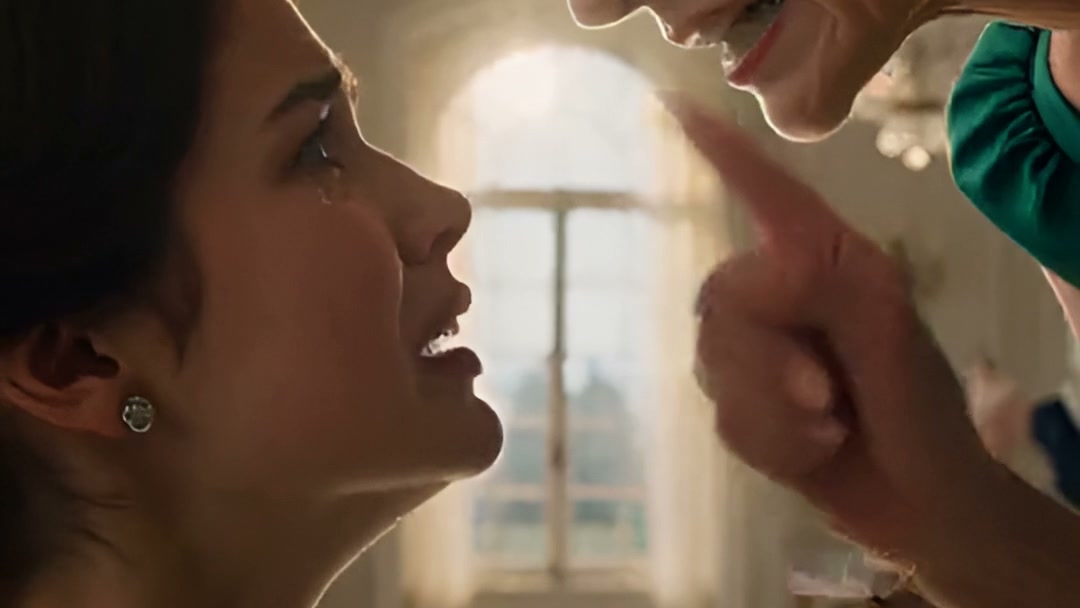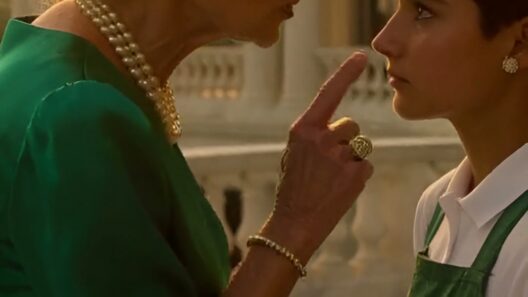
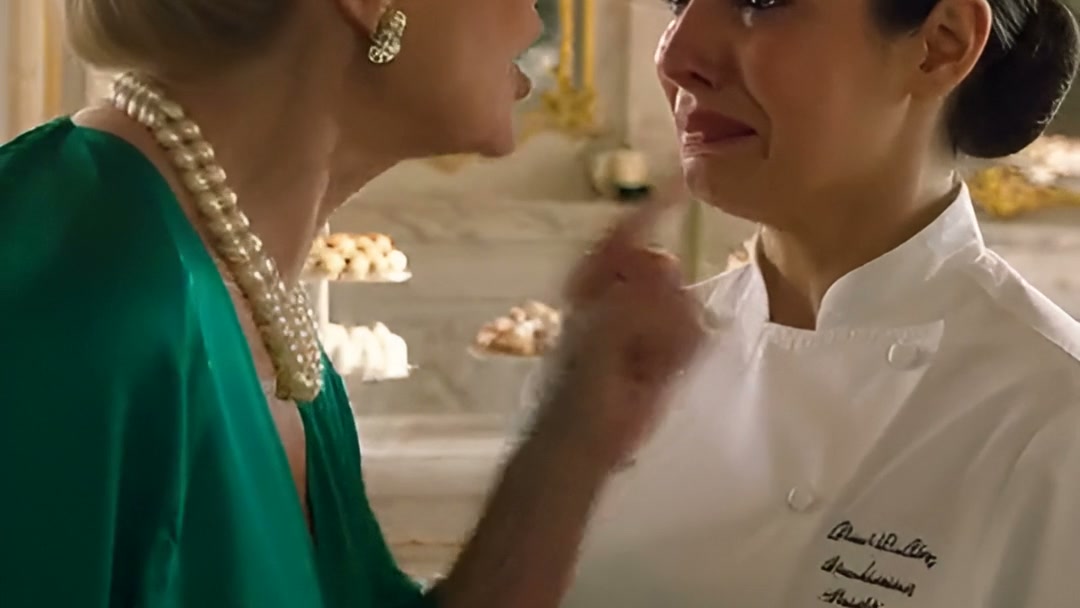
At his harvest lunch, wine-estate owner Callum Reade watched his chairwoman hurl wine into a young sommelier’s face… But when the trembling girl named the barrel she’d poured from, he went perfectly still.
The white canopies over Reade Hill Estate snapped softly in the September breeze. Every table was set with crystal and autumn flowers. Two hundred guests lifted their glasses toward the ridge where the vines grew gold.
Nora Voss was twenty-three, a first-season sommelier, and she had been awake since four in the morning preparing the decanter. It held a Reade Hill Reserve that had not been opened in seven years. She carried it to the head table on a silver tray, both hands steady.
“Put that down.” The voice cut across the lawn.
Dorothea Stahl, chairwoman of the Reade Hill Wine Club, rose from her seat. Her emerald silk caught the sun like a blade. She was sixty, broad-shouldered, and accustomed to being the last word on everything that happened at this estate.
“You were told the Reserve stays locked. Who gave you a key to the cellar?”
“Mr. Reade approved the selection this morning,” Nora said, keeping her voice level. “I have it in writing.”
“You have nothing.” Dorothea reached for her own glass, still half-full of a pale rosé, and threw the contents into Nora’s face.
The table went silent. The wine ran down Nora’s cheeks and dripped from her chin onto her white shirt. For one second the whole hillside seemed to hold its breath. Then Dorothea’s hand shot out and knocked the silver tray. The decanter tilted. Nora caught it against her chest with both arms, the tray clattering to the grass, but the wine was saved.
“Get off this property,” Dorothea said. “You’re finished here.”
Dorothea’s hand closed around Nora’s upper arm.
“Let her go, Dorothea.”
Callum Reade had not stood up dramatically. He had simply moved. He was fifty-one, lean, with grey at his temples and a pale linen suit that looked like he’d worn it in the vineyard that morning, which he had. He placed one hand over Dorothea’s and removed it from Nora’s arm with the quiet efficiency of a man used to untangling things.
Dorothea stepped back. “Callum, this girl went into the locked cellar without—”
“I know where she went.” He was already kneeling on the grass in front of Nora. “Are you hurt?”
Nora shook her head. Her eyes were wet but her grip on the decanter had not loosened. “I’m sorry about the tray. I didn’t want to drop the Reserve.”
“You didn’t.” He pulled a folded linen square from his breast pocket and offered it to her. “Which barrel did this come from?”
She blinked at the directness of the question. “Row seven. Barrel thirty-one. The coopered oak one with the initials carved on the head.” She hesitated. “M.A.R.”
The colour left Callum Reade’s face.
He sat back on his heels in the grass. Around them two hundred people were pretending not to watch and failing completely. Dorothea had gone very still, her hands clasped in front of her emerald skirt.
“Who filled it?” His voice was barely above a murmur.
“The intake log says it was filled the autumn before I was born,” Nora said carefully. “But there’s a secondary notation. Added later, in different ink.” She reached up to the chain at her throat and unclipped a small silver cup, the kind given at a christening, worn smooth by decades of handling. She held it out on her palm. “I found this inside the barrel when I drew the sample. It was resting at the bottom. I don’t know how it got in there.”
Callum did not take the cup. He looked at it for a long time, the way a man looks at something he had convinced himself no longer existed.
The cup had initials engraved on the base. M.A.R.
“My sister,” he said quietly. He said it to the grass, not to anyone in particular. “Margaret Anne Reade.”
Dorothea’s composure cracked for the first time. “Callum, I can explain—”
“You told me she abandoned the estate. You told me she broke the partnership and left without a word.” He rose slowly to his feet and turned to face her. His voice was still quiet. That, more than anything, frightened Dorothea. “You were the one who locked that cellar. You have held the only key for seven years.”
“She chose to leave. I simply—”
“She left her christening cup in a barrel of wine she filled herself and locked inside a cellar she knew you controlled.” He looked at her without blinking. “That is not someone who abandoned anything. That is someone who was trying to leave a record.”
The guests were no longer pretending. No glass clinked. No chair shifted.
“The secondary notation in the log,” Callum continued. “What does it say?”
Nora read from the folded paper she had brought from the cellar and tucked into her pocket that morning, not knowing why, only knowing it felt important. “It says: ‘Reserved for the year someone finally pours it.'”
A sound moved through the crowd, not quite a gasp.
Callum picked up the fallen silver tray himself and set it on the table. He took the decanter gently from Nora’s arms and placed it in the centre of the head table, where everyone could see it. Then he turned to the estate’s events manager, who had been frozen at the edge of the canopy.
“Get me my lawyer on the phone. And call the land registry.” He glanced at Dorothea. “Margaret’s name is on the original partnership deed. It never came off, did it.”
It was not a question.
Dorothea said nothing, which was its own answer.
“Her share of this estate has been generating profit for seven years under your sole administration.” He straightened his cuffs. “That conversation is going to be very expensive for you.”
Within the hour, Callum’s lawyer had confirmed what the deed showed: Margaret Reade had never formally dissolved her partnership. She had simply vanished from the estate’s daily life, her name removed from the letterhead, her photograph taken down from the tasting room wall, her barrel locked away. Dorothea had run the club as though sole authority were hers by inheritance. It was not.
By evening, with the guests still seated and the harvest lunch turned into something stranger and more important than anyone had planned, Callum reached his sister by phone. She had been living two hours north, in a small town, working at a co-operative winery that had given her a corner and a title and not much else.
“I found your cup,” he said, when she picked up.
A long silence. Then: “I didn’t know if you’d ever open it.”
“I didn’t. A young sommelier named Nora Voss opened it. Dorothea threw wine in her face for it.” He paused. “You would have liked watching what happened next.”
He heard Margaret laugh for the first time in seven years.
Dorothea Stahl resigned the chairmanship before sunset, tendering it in writing to avoid a scene, though the scene had already happened and had been witnessed by two hundred people. The estate’s board met the following week. Margaret’s share was restored with full back payment, calculated from the date she had been effectively pushed out. The sum was significant.
Nora Voss received a formal apology in writing, a permanent position as head sommelier, and a small raise that she protested was unnecessary, until Callum told her the barrel she had carried to the table that afternoon would now be served at the estate’s anniversary dinner every year, with her name in the program notes as the one who finally poured it.
Barrel thirty-one, row seven. M.A.R. Reserved for the year someone finally pours it.
It had waited seven years. It had not waited in vain.