
Army Colonel Garrett saw a club wife drag a young caddie off a sunlit terrace in front of everyone… But when the girl’s brass medal hit the marble, he went white as a sheet.
The Pineridge Country Club charity tournament was the kind of event that made the wealthy feel generous while spending nothing of their own. The terrace gleamed in the afternoon sun, champagne in crystal, linen tablecloths snapping in the warm breeze, and two hundred people pretending the caddies who’d carried their bags all morning were part of the furniture.
Lily Marsh was twenty-two, with a single light brown braid over her left shoulder and a completely blank white cotton polo she’d tucked neatly into her navy trousers before her shift. She’d been on the course since seven. Her feet ached. She smiled anyway.
She was not, as Mrs. Diane Colton later claimed, drinking from a guest’s champagne flute.
She was handing one to a guest.
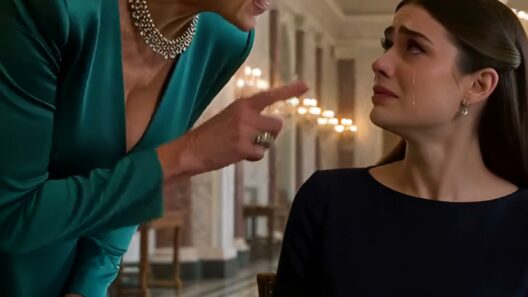
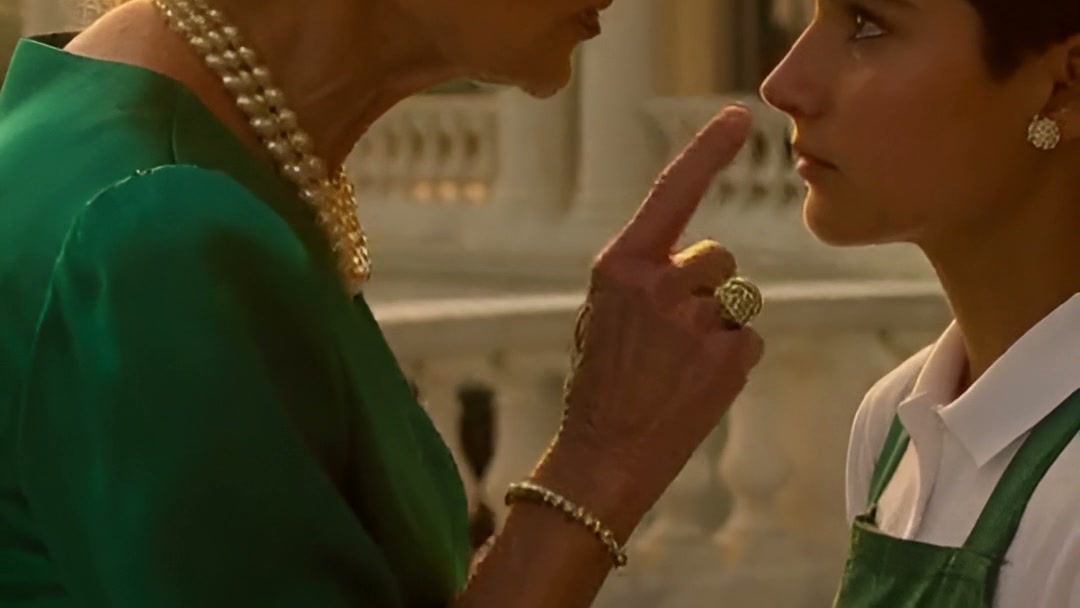
Mrs. Colton saw what she wanted to see. She was fifty-three, platinum hair pinned severely back, an emerald satin day dress with a strand of real pearls, and the particular certainty of a woman who had never once in her adult life been wrong in public.
She crossed the terrace in six strides.
“You little thief,” she said, loud enough to cut through every conversation within thirty feet.
Lily turned. “Ma’am, I—”
Mrs. Colton knocked the tray clean out of her hands.
The crystal exploded on the marble with a sound like a gunshot. The whole terrace went still. Champagne pooled in the gaps between the stones. Lily stood there in the sudden silence, hands empty, her face going pink and then red, tears already rising because she couldn’t stop them and she hated herself for not being able to stop them.
“Get off this terrace,” Mrs. Colton said. She grabbed Lily’s wrist. “I’ll have you fired and prosecuted, do you understand me?”
Lily was too shocked to pull back. Mrs. Colton yanked, and Lily stumbled forward a step.
“Let go of her.”
The voice came from the far end of the terrace. It was not loud. It did not need to be.
Colonel James Garrett of the United States Army was forty-one, tall, in full dress uniform, the dark blue jacket sharp with ribbons and brass, grey threading at his temples. He had been standing with the tournament sponsor when the glass shattered. He was now four feet away from Mrs. Colton, moving with the particular calm of a man who had given orders in rooms where the wrong word got someone killed.
Mrs. Colton’s hand dropped from Lily’s wrist as though it had been unclipped.
“Colonel, I don’t think this is your—”
“Let me be clear, Mrs. Colton.” He stepped between them. “In about thirty seconds I’m going to call the club manager over here. What story he hears is entirely up to you.”
Mrs. Colton’s mouth opened and closed. She looked around at two hundred witnesses, all of whom had watched her knock the tray to the ground, and she made the only intelligent decision she’d made all afternoon. She walked away.
Garrett turned to Lily. She was pressing her hands against her eyes, trying to hold herself together, and not quite succeeding.
“Hey,” he said, quietly. He crouched down to pick up two of the unbroken stems, setting them upright on the edge of a table. “You’re all right. Take a breath.”
“I didn’t take it,” she said. “I wasn’t drinking it. I need this job, I wasn’t—”
“I know,” he said. “I was watching. I saw exactly what happened.”
She exhaled, a shaky, grateful thing. She bent to gather the larger shards and that was when it slipped out. A small brass medal on a ribbon so old the fabric had gone the color of dry sand. It hit the marble with a small, flat sound, rolled two inches, and stopped.
Garrett’s hand moved before he thought about it. He picked it up.
He had seen this medal before. He had held this exact medal before, or one so close to identical that his chest tightened like someone had taken a fist to it.
It was a valor citation. Ranger-issued. The kind they gave out in the second rotation, when the citations got smaller because the budgets did, but the dying didn’t.
He turned it over. The engraving on the back was worn but legible.
Cpl. R. Marsh. 2nd Bn. 75th Ranger Rgt.
He stayed crouched on the marble for a moment longer than was natural.
“Miss.” His voice came out different. Even he noticed. “Where did you get this?”
Lily looked at the medal in his hand. Her chin went. “It was my dad’s,” she said. “I carry it for luck. I know that probably sounds—”
“Robert Marsh.” It wasn’t a question.
She blinked. “How do you know his name?”
Garrett’s hand was not entirely steady when he pressed the medal back into hers. He closed her fingers around it carefully. He stayed crouched in front of her, eye level, and he looked at her face the way a man looks at something he is only now understanding.
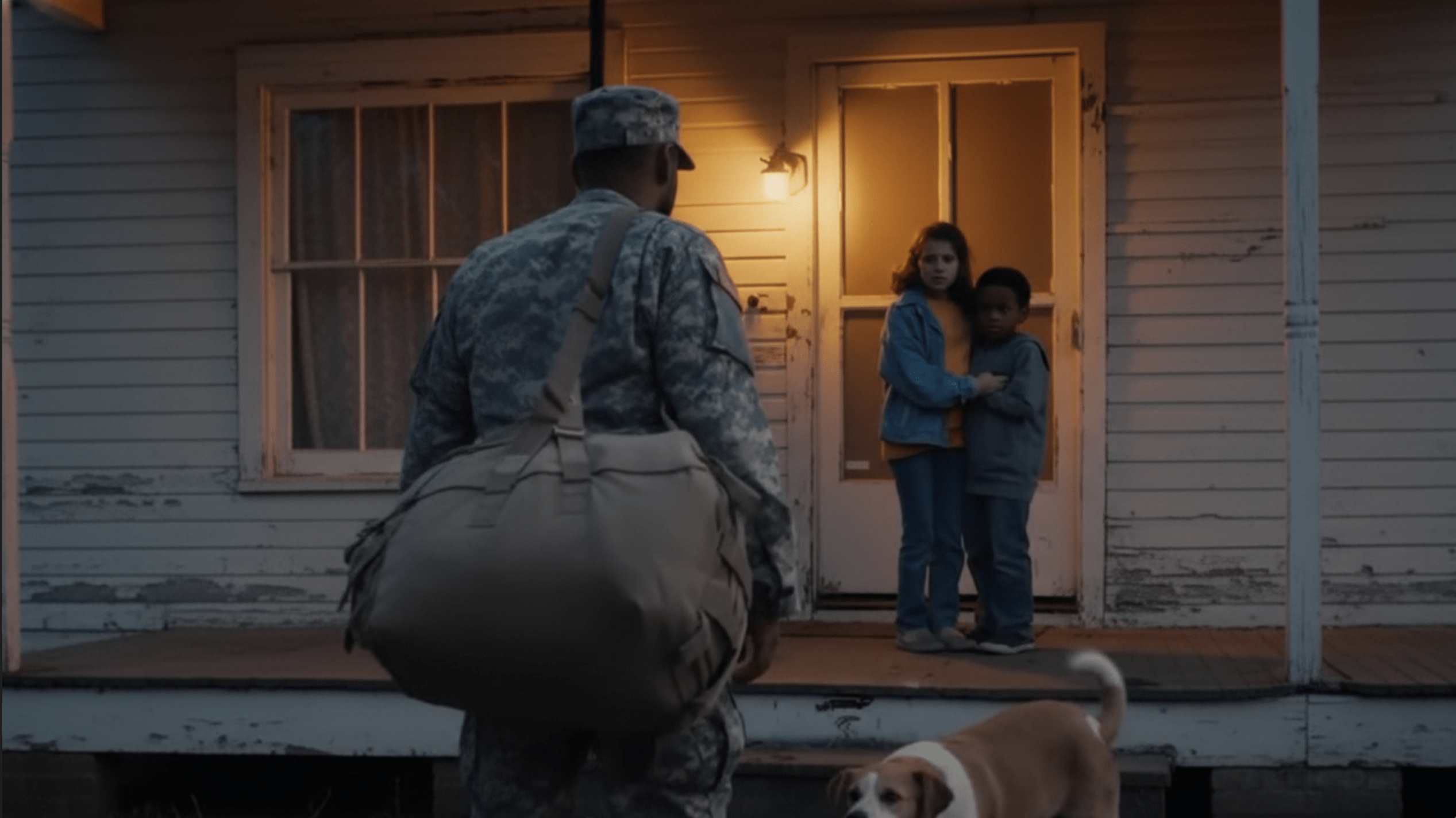
“Your father served under my command,” he said. “In Kandahar. 2008.”
Lily’s breath left her. “He died in 2008.”
“Yes.” A pause. “He did.”
“They sent back his cap,” she said. Her voice was very small. “His dress cap and two letters. That was all. We never— nobody ever told us what happened. My mom wrote three times to the department and nobody wrote back.”
Garrett stood up slowly. He looked out at the terrace, at the champagne and the silk and the silver trays, and he was quiet for long enough that Lily almost apologized for saying it.
“I owe you a conversation,” he said. “Not here. A proper one.”
“You knew him.”
“I did.”
“Then tell me.” She wasn’t asking permission. She was twenty-two and she had carried that medal for fourteen years and she was done being polite about it. “Tell me what happened to him.”
He looked at her. He nodded once, the kind of nod that means I will not get out of this and I do not intend to.
He asked the club manager, who appeared at that moment, if there was a private room. There was.
He asked Lily if she had someone who could cover the rest of her shift. She texted a friend. She did.
They sat at a small table in the club’s reading room with the door closed and two glasses of water between them, and Colonel James Garrett told her everything. He told her about the ambush. He told her what her father had done and why the citation was small and the letters were thin, because the operation was classified for three years afterward and the Army had hidden behind that classification instead of picking up the phone. He told her that Robert Marsh had died making sure four of his unit came home, and that two of those four men still called Garrett on the anniversary. Every year.
Lily didn’t speak for a long time after he finished.
Then she said, “He would have hated that they never told us.”
“He would have been furious,” Garrett agreed.
She almost smiled at that. Then she did smile, and there were tears on her face, and she pressed the medal flat against her sternum the way you press something you are never going to put down.
“He would have been furious,” she said again, like it helped.
Garrett contacted the Department of the Army the following week. He called in a debt from a general he’d served alongside in ’12, and he was not gentle about it. The formal letter of citation, the full account of Corporal Robert Marsh’s actions on the fourteenth of September 2008, and the posthumous commendation that had been sitting unsigned in a backlog for sixteen years arrived at the Marsh family’s door on a Tuesday morning in a heavy envelope with the Army seal on the front.
Lily’s mother sat at the kitchen table and read it four times.
Then she called Lily.
Then she called the two men whose names were listed in the account as the soldiers Robert Marsh had pulled from that building, and both of them answered, and one of them had been waiting a long time to say thank you to someone who would understand why it needed to be said.
Mrs. Diane Colton was quietly removed from the club’s membership committee the following month. The minutes recorded it as a resignation. Everyone present knew better, and no one said otherwise.
Lily kept the caddie job through the fall, then took a full scholarship to a state university on a veteran-dependent grant that Garrett had not applied for on her behalf but had, with one carefully worded email to the right office, made sure she knew existed. She studied public administration. She wanted to work in veterans’ affairs.
She kept the medal in her pocket every single day.