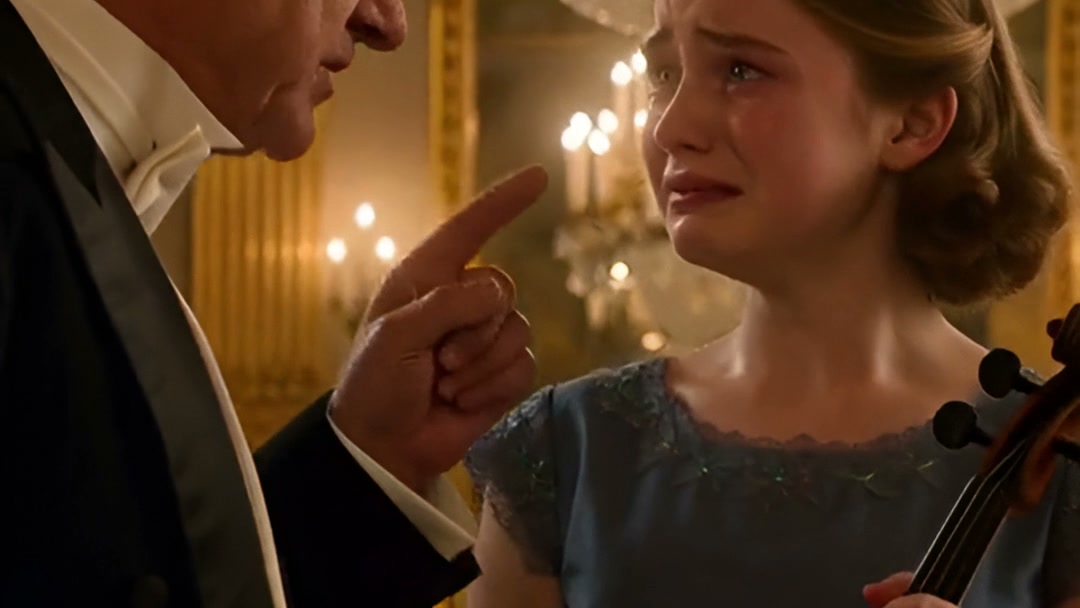
The gala host, Eleanor Voss, watched a teenage girl in a plain blue dress freeze as her sheet music hit the ballroom floor… But when the girl whispered the name carved inside the violin, Eleanor’s champagne glass shattered against the marble.
The golden ballroom of the Voss Foundation Gala hummed with the clink of crystal and the low murmur of old money. Chandeliers threw warm light over two hundred guests in black tie and couture.
Nobody noticed the girl standing at the edge of the stage.
Maya Chen, sixteen, in a plain blue cotton dress, held a violin case to her chest like it was the last solid thing in the world. She had earned her place here through the Bridgeway scholarship—a program that gave kids from the city’s roughest shelters a single night to perform for the donors who funded their futures.
One night. One chance.
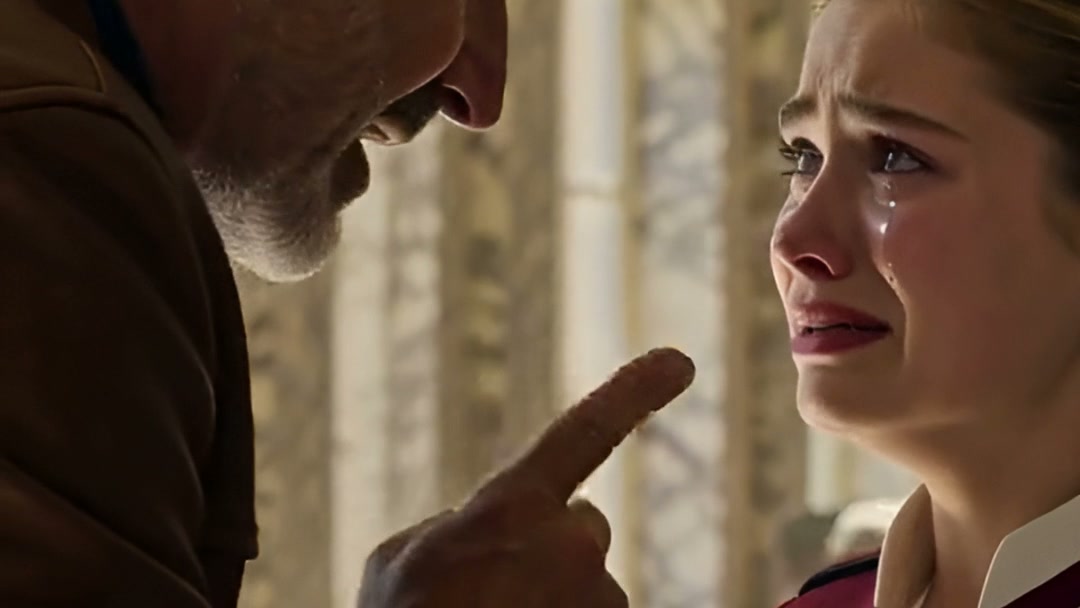
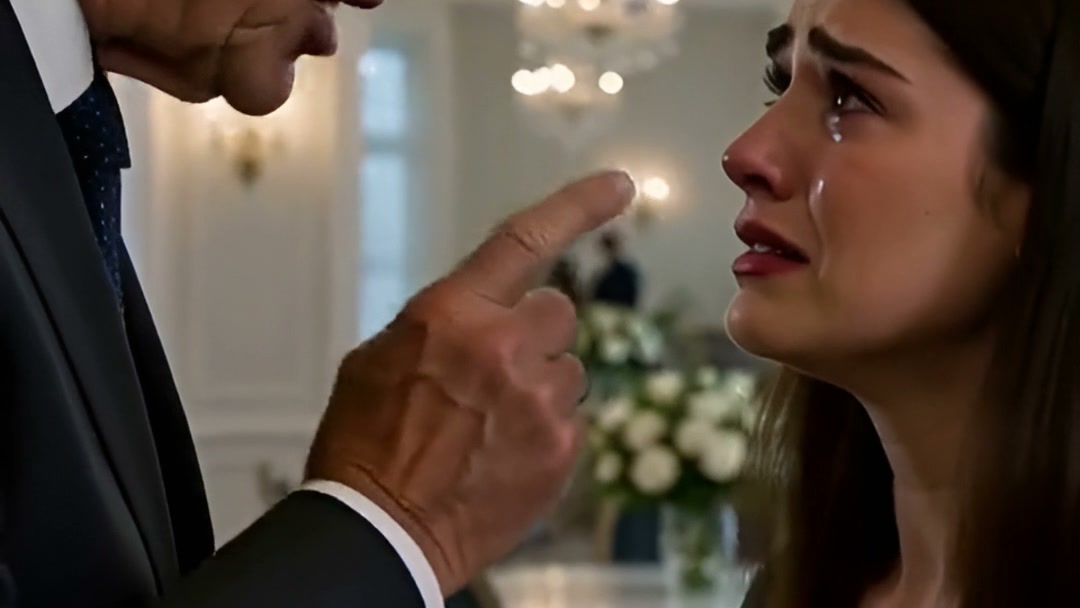
“You’re in my spot,” said the orchestra’s conductor, a barrel-chested man named Harlan Briggs. He stood at the podium, silver baton tucked under his arm, looking at Maya the way people look at a scuff on a clean floor. “Move to the back.”
“I’m scheduled to open,” Maya said quietly. She held up her printed program slot.
Harlan stared at the paper, then at her dress, then at the violin case. Something hardened behind his eyes.
“Charity cases,” he said, loudly enough that the nearest table went quiet, “do not play for real money.”
He reached over and ripped the sheet music from her hands.
The pages scattered across the stage like pale birds. One floated off the edge and landed on the ballroom floor below. Maya stood very still, her jaw tight, her eyes burning. She would not cry. She had promised herself.
Then a hand caught Harlan Briggs by the wrist.
It came from the right, fast and certain, fingers closing before he could pull back. Eleanor Voss, fifty-four, the woman whose family name was carved above the ballroom door, stood at the side of the stage in an emerald gown. Her silver hair was swept up, her posture perfect, but her eyes were cold and absolute.
Harlan blinked. He opened his mouth.
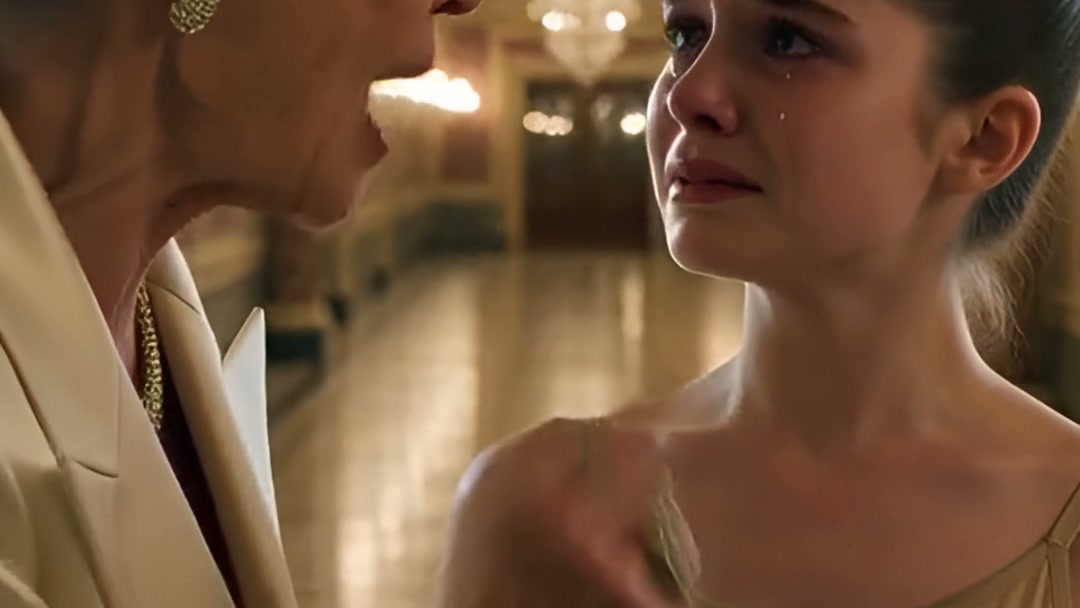
“Leave this stage,” Eleanor said. Her voice was not raised. That was worse.
Harlan stumbled back and disappeared into the wings. Two musicians exchanged a look. Nobody else moved.
Eleanor crouched down on the stage and began gathering the pages. Her gown pooled around her on the floor. She didn’t seem to care.
“These are numbered,” she said, sorting them. “Good. Nothing missing.” She rose and held the stack out to Maya. “Your opening piece. You have the stage.”
Maya took the pages. Her hands were steady now.
“Thank you,” she said.
“Don’t thank me yet,” Eleanor replied. “Play something worth defending.”
She turned to step away, and then she saw the violin.
Maya had unlatched the case while Eleanor was gathering the pages, and now the instrument lay in the velvet interior under the chandelier light. It was old—very old—with a warm amber varnish worn thin at the shoulders and a small paper label just visible through the f-hole.
Eleanor stopped.
She leaned closer without touching it. Her face did something complicated.
“Where did you get that violin?” she asked. Her voice was careful, the way you speak when you are trying not to break something.
“It was left to me,” Maya said. “At the shelter, when I was eight. A woman brought it in a case just like this one and said to give it to the girl who played by ear.”
Eleanor’s eyes did not leave the instrument. “What was her name?”
Maya met her gaze. “She said her name was Ruth Voss.”
The room had been quieting already, the nearest guests turning to look. Now the silence fell completely, spreading outward from the stage like a stone dropped into still water.
Eleanor Voss did not move for a long moment.
Ruth Voss had been Eleanor’s younger sister. She had died eight years ago—a quiet death, no headlines, no announcement, because Eleanor had kept her grief the way their family kept everything: locked behind a door with no handle on the outside.
Ruth had been the musician. Eleanor had been the foundation. Ruth had said once, half joking, that if she ever had anything worth giving, she’d find a child who could use it more than a shelf.
Nobody in that room should have known her name.
“She came to the shelter herself?” Eleanor asked.
“Yes. She stayed one afternoon and listened to me play. She never told me why. She just left it.” Maya paused. “There’s something carved inside the upper bout. I couldn’t read the whole thing, but it says *R.V. — For the one who hears it right.*”
Eleanor’s hand went to her own throat. She pressed her fingers there for a moment, feeling her own pulse.
“May I?” she asked.
Maya held the violin out.
Eleanor lifted it with both hands and tilted it carefully until she could see the inscription through the f-hole. The lettering was small and old, in a hand she knew as well as her own. She had watched Ruth carve it in their father’s study on a Sunday afternoon twenty years ago, when Ruth had said she didn’t know yet who it was for, only that she would know when she heard her.
*R.V. — For the one who hears it right.*
Eleanor set the violin back in Maya’s hands. Her composure was intact, but just barely—the way a wall is intact right before you realize the cracks go all the way through.
“She heard you play at that shelter,” Eleanor said. It was not a question.
“She sat in the corner and listened for two hours,” Maya said. “She didn’t say much. She just looked—” Maya stopped, choosing the word. “Satisfied.”
Eleanor nodded once. She turned to face the room.
Two hundred guests stood in perfect silence. The conductor was gone. The orchestra sat with their instruments in their laps. A waiter near the far wall had stopped mid-step and simply stayed there.
“This young woman,” Eleanor said clearly, “was selected by someone with better judgment than anyone currently on this stage. She will open the program.” She looked at the orchestra. “You will follow her lead.”
She stepped down from the stage.
Maya stood alone in the chandelier light, the old violin in her hands, the sheet music in order, the room completely still.
She brought the violin to her shoulder.
She played.
She opened with the Chaconne—Bach, D minor, eight minutes of everything a human being can hold and still stand up. She played it from memory. She had always played it from memory, since she was eight years old in a shelter common room with a donated instrument that was too big for her, because something in the notes had felt like an answer to a question she hadn’t known how to ask.
The room did not move.
By the third variation, a woman in the second row had tears on her cheeks and was not bothering to hide them. By the fifth, three of the orchestra musicians had set their own instruments down on their chairs and were simply listening.
Eleanor stood near the back of the room with her arms at her sides, watching.
She was not crying. She was doing the harder thing, which was staying very still and letting it land.
When Maya finished, she lowered the bow.
The silence held for one full second.
Then the room broke open.
The applause started at the front and rolled back like a wave. People were on their feet before they’d decided to stand. Someone near the side wall said something that got lost in the sound. The orchestra musicians were clapping with the rest.
Maya stood on the stage and looked out at it, blinking.
Eleanor did not applaud. She walked forward through the standing crowd, directly to the foot of the stage, and waited until Maya looked down and found her face.
“After this is over,” Eleanor said, just loud enough to carry, “I’d like you to come to my office. There’s a music program at the foundation that has been waiting eight years for someone to run it properly.”
Maya looked at her for a moment. “I’m sixteen.”
“To be the first student in it,” Eleanor said. “Not to run it. I’ll run it.” A pause. “With considerably more sense than I’ve shown until tonight.”
Maya almost smiled. Then she did smile, fully, the way teenagers do when they’ve been holding it back—sudden and complete.
“Okay,” she said.
Eleanor nodded. She looked at the violin one more time.
“She chose well,” she said quietly. “She always did.”
She walked back through the crowd. Behind her, Maya raised the violin again and, without being asked, began the encore—something lighter, dancing, the kind of thing that makes a room breathe out.
The guests settled back into their seats.
The gala continued.
But the program that launched that night—the Ruth Voss Music Initiative, announced at the end of the evening, funded entirely by Eleanor’s personal endowment—placed thirty-four shelter children in formal music education within its first year.
Maya was its first scholarship student and, six years later, its first instructor.
She kept the violin.
It still carried the inscription inside: *R.V. — For the one who hears it right.*
She had heard it right.