A Decade of Golden Buzzers: From a Singing Bunny to a Lioness Army
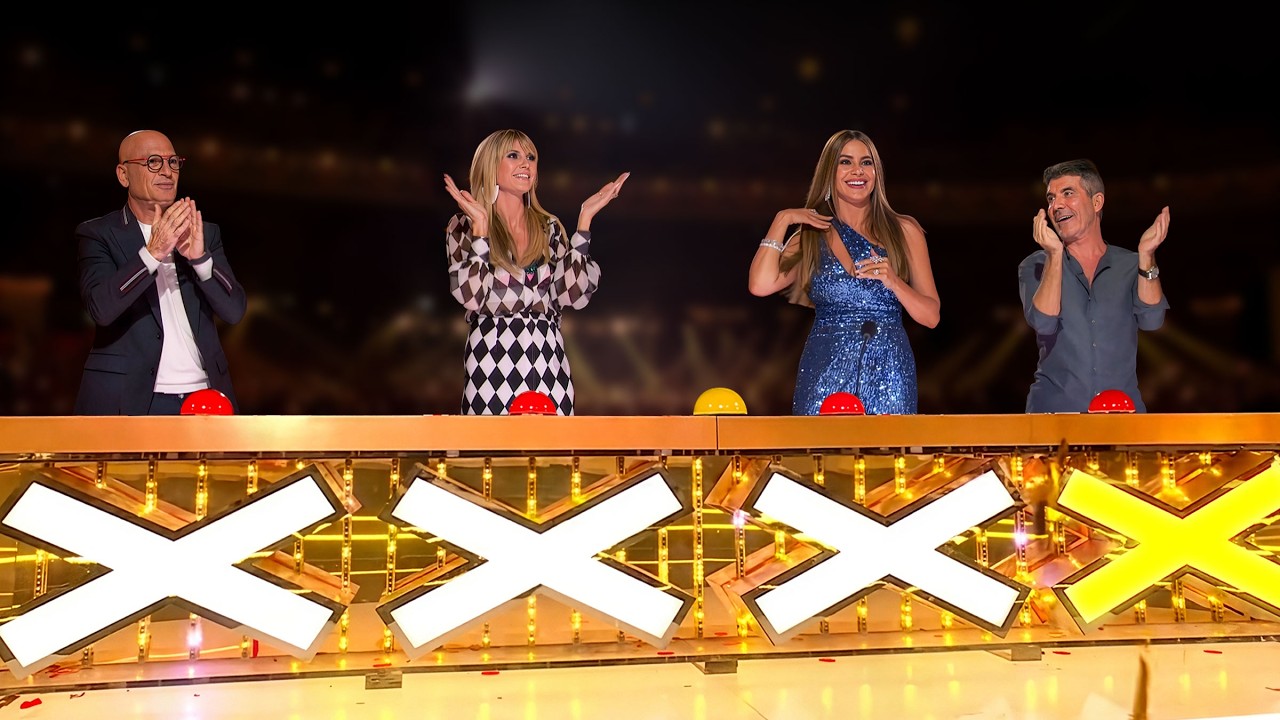
There is a split second on America’s Got Talent when the air changes—when a room packed with strangers leans forward as one, and a judge reaches for that button. In a decade of Golden Buzzer moments, you learn that surprise is only the entry fee. What comes next is grit, grace, and a flash of destiny. As one voice put it before anything even began, “Words aren’t necessary.” Sometimes, the moment explains itself.
The night a bunny sang—and an art form felt new again
She walked out smiling and shy. Then the questions started flying as soon as the ears appeared.
“It talks.”
“Is it a bunny?”
“Yes. Oh. Is that a real bunny?”
Darci Lynne and her rabbit Petunia didn’t just offer a neat trick; they staged a tiny miracle of character and control. The panel marveled at the illusion—“I believe that that rabbit is a real separate person”—but it was the warmth that turned technique into theater. A judge’s verdict cut through the noise like a promise you could frame on a wall:
“I’m gonna remember you in a week, in a month, in a year. You’re both brilliant.”
When the confetti decision came—“you are going straight to the live show”—it wasn’t just approval. It was a handoff of responsibility. As another judge put it, “When you’ve got it, you’ve got it.” She did.
Gravity bends for the brave
Later, a troupe introduced themselves with unvarnished humility:
“We do acrobatic and gymnast… We are not professionals.”
It hardly mattered once the motion started. Bodies turned into punctuation marks. You could hear the disbelief stacking up on the panel as momentum tightened into trust.
“There’s kids flying all over the air. I can’t even believe how you caught them… It was absolutely incredible.”
“I’ve done this a long time, and this is honestly one of the most incredible things I’ve ever seen… I am absolutely honored that you’ve come on our show.”
Breathlessness became its own review—“I need some oxygen right now”—and that’s the tell with a true buzzer moment: when the only reasonable response is awe.
At a piano, a mother’s faith and a son’s voice
Sometimes the courage rests in a chair at center stage. Cody arrived with his mom and a history she did not hide.
“Cody is blind and autistic… It actually has saved his life playing music.”
Then he played. The room stood before anyone could explain why. The judges tried anyway.
“Everybody needs a voice and an expression… I heard you and I felt you, and that was beautiful.”
“What just happened there was extraordinary.”
One judge’s voice trembled into a decision framed as a parent’s wish:
“You just want to give your kids the moon, the stars, the rainbows. And tonight, I’m gonna give you…”
The sentence didn’t need finishing. The button spoke.
A ten-year-old faces the world—and the bullies
She was small enough that the microphone looked oversized in her hands. Her idol on the panel put her at ease right away.
“You look nervous. How old are you?”
“I’m 10 years old.”
She sang “Shallow” and made the word premature feel foolish. The panel scrambled for footing.
“It was breathtaking… That’s impossible to sing like that at 10 years old.”
Then came the line that many kids and parents in the audience needed to hear just as much as the music.
“Sometimes I do get bullied.”
“Well… there’s one way you win over bullies. It’s by being happy and successful… Let’s see who is going to bully you after this.”
In that instant, a Golden Buzzer becomes more than a pass. It’s a shield.
They chose a stage over the Olympics
When the World Taekwondo Demonstration Team bowed in, the premise sounded like a detour—and turned out to be destiny.
“We are invited to perform at the Olympics… Unfortunately, we cannot do it due to COVID.”
Their answer was to vault higher than fear. By the end, a host summed up the spirit of the sport and the night in one breath.
“World Taekwondo, this is not about fighting. It’s about courage. It is about confidence and respect. I respect what you guys did out here today like no one else… I am going to give you something golden.”
Respect met reward. Glass gave way to gold.
A lioness pride rewrites the stage
When the Mayyas assembled in shadow, the promise came before the first step.
“It’s a word in Arabic that means the proud walk of lioness.”
“Being a dancer as a female Arab is not fully supported yet.”
They moved as a single, breathing instrument—synchrony made edge. A judge tried to reach for language and found the limits of it.
“There are no words to explain to you what we were feeling over here… the most beautiful, creative dancing I’ve ever seen.”
“You said you’re going to hypnotize us… we were hypnotized by what you did.”
Before they walked out, they had invoked a sentence that now felt like the piece’s quiet spine:
“We can’t wait until life isn’t hard anymore before you decide to be happy.”
They didn’t wait. They decided—and they conquered.
The janitor who held a note—and a nation
Elsewhere in this span of years came a blue-collar pro with a night-shift heart and a daydream he’d never quite put down.
“I’ve been a janitor 23 years.”
The advice from the table sounded like something you tape to the fridge before a big interview:
“Shake off those nerves, Richard.”
He did, then tore the roof off a familiar anthem. One judge knelt into gratitude.
“Richard, you are my hero.”
Another summed up what the room felt, simple and absolute.
“We all loved you so much.”
Gold was a formality. The point was recognition.
The button as a promise
Across these moments, the Golden Buzzer isn’t just spectacle. It is a binding oath offered in public: You are seen, you are heard, and you won’t be forgotten. The words echo that ethic again and again.
“This is what I’m gonna do for you because I love you.”
“You deserve this. Oh my gosh.”
“You stole my Golden Buzzer!”
The squabble over who gets to change a life says as much about the judges as it does about the acts. They are keepers of a gate that opens onto a different kind of future—one where a 10-year-old can say, through tears, “It was always my dream to be on AGT” and watch the room answer that dream in real time. Where a global team turns setback into apex. Where a young man at a piano shows a continent what it looks like when support and talent hold hands.
What we remember—and why it matters
Talent shows are built on elimination, but the golden moments endure because they work like origin stories. A ventriloquist who wanted to “keep ventriloquism alive because it’s not common” makes children everywhere look twice at a puppet shelf. A kid who admits, “Sometimes I do get bullied,” carries away a line that can double as armor: “Bullies… are always threatened about talented people.” A host reframes martial arts not as combat but as character. And an ensemble from Lebanon steps through fear to prove, in their own words, “what Arab women can do.”
Every time a judge says, “I’m going to remember you,” they’re not just making a prediction. They’re baptizing a path. The buzzer is loud, the lights are blinding, and the confetti gets in your shoes. But what actually travels is the sentence you tell yourself the next morning: maybe I can.
That’s why the tiniest details stick: a judge offering water to a trembling child; another whispering, “If you’re nervous, you’re alive.” A proud dad reminding his daughter, “Sometimes it’s hard to hear the truth, but that should just give you more drive.” These are the bricks you lay between the instant and the after.
A decade of Golden Buzzers adds up to a gallery of thresholds. Some arrived with polished choreography, others with scuffed work boots. All crossed into a fuller version of themselves in public, with millions of witnesses and four people close enough to see the tears.
Ready to relive the confetti and the courage? Watch the full video and meet every artist whose moment made a judge reach for gold—so you can hear, in their own words and voices, how a life-changing second truly sounds.