Britain’s Got Talent’s Greatest Magic: Vanishing Rings, Witchcraft and a Golden Dream

When the Impossible Walks Onstage
Britain’s Got Talent has always been a stage where nerves, skill, and story crash together. In this all-time showcase of the show’s most unforgettable magic, we meet performers who cross oceans, flip odds, and turn doubt into applause. It starts simply, as it often does, with a question and a promise.
“What’s your name?” a judge asks. “Darcy,” comes the answer. “I’m from Canada.” He adds, almost shyly, “I came here just for this.” He jokes that as a kid he dreamed of becoming a doctor, but “my parents insisted that I become a magician.” The line gets a laugh, but what follows is no joke at all. His routine is polished, precise, and full of those sharp, impossible moments that make you squint. The judges lean in, the audience holds its breath, and the room lands on a verdict.
“Darcy, I think you’re the best magician I’ve ever seen on this show.”
Another judge adds, “I think the most important thing about magic is making us believe the impossible is possible,” and then, as if stating a fact, “You just did that.” Four approvals seal it—“100% yes”—and the tone for this collection is set. This is a parade of wonder, but also a portrait of what it takes for belief to bloom in a crowded theater.
Shadows, Cages and a Heartbeat of Risk
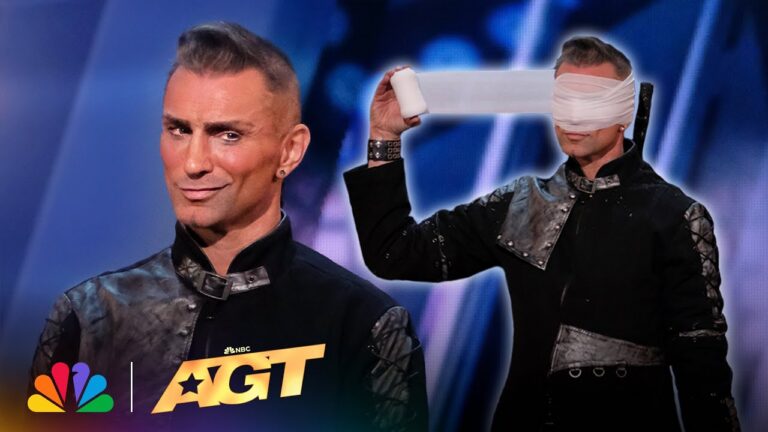
From there, the mood tilts darker. A self-described “fantasy illusionist” takes the stage and won’t play by simple rules. The house lights fall, a shape appears where he wasn’t, and a steel cage becomes a threat, a promise, and maybe a misdirection. From the seats, a plea cuts through the hush: “Don’t cut the cage.” It’s the kind of moment that makes your heart knock against your ribs—not for danger, but because you don’t yet know the story he’s telling.
The result is elegant fear. “That was freaky,” a judge says, still thinking it over, and the applause lands more like a sigh after a held breath. Magic doesn’t have to be kind to be good; it only has to be true to its own mood.
Two Minds, One Touch
The next turn is breathtaking in a quieter way. A performer arrives who speaks about connection instead of chaos. He doesn’t ask for shouts. He asks for stillness. “Are all the same. Are one,” he intones, setting the scene for a test that will be felt, not seen. Two people close their eyes. A touch lands on one. A hand rises on the other.
“If you felt a touch, please raise your right hand.”
Hands go up. Then, even stranger, both point to the same place. It’s not a jump scare. It’s a slow, careful building of evidence, brick by invisible brick. He moves them to a final challenge. Pens appear. “Begin drawing now,” he says, counting down as if timing a storm. When they open their eyes, the drawings match like a private echo. “When two people are truly connected, the impossible is possible,” the performer declares. A judge can only say what everyone else is thinking: “Wow. That was freaky.”
Small Moves, Giant Impact
Not all astonishment roars. One of the most elegant passages in this showcase comes from a magician who lets his hands, and time, do the talking. “It was just so subtle and so perfect,” a judge says, almost protective of the quiet skill they just witnessed. Another calls it “an absolutely brilliant idea. Perfectly executed… so simple and yet so complex.”
“There’s… no jive, just raw, brutal, unbelievable skill. Those hands, they are the best I’ve seen.”
There are no big boxes here, no sparks or smoke. It’s a master class in turning seconds into surprise. A waistcoat glints a different color, a deck reads like a diary, and the audience realizes the fireworks have been in the fingers all along.
A Witch, Three Apples, and a Theater Holding Its Nerve
Then the lights dip again. A witchy figure emerges and offers a choice that feels mythic. “Between the good and the evil, which will you choose?” she asks, urging a judge to “Take a bite.” A second bite follows. With a wicked pause, the line lands like a needle.
“You know why they say the beauty’s only skin deep? Because we’re all rotten to the core.”
It is sinister and theatrical, even a little gleeful. “Well, that was horrific,” one judge admits, but the panel can’t look away. “I thought the act was actually brilliant,” another counters. Four yeses show that fear and fascination often share the same seat.
Comedy, Clarity, and a Golden Promise
When Keiji Wasaki steps out, the room shifts again, this time to joy. He greets the judges with a bow of gratitude and the most unlikely dream. Asked what he’d do with the prize, he smiles: “I want to across the Atlantic Ocean by rowing a boat, so then I want to buy the boat.” It’s such an earnest, left-field answer that the crowd melts before the tricks even start.
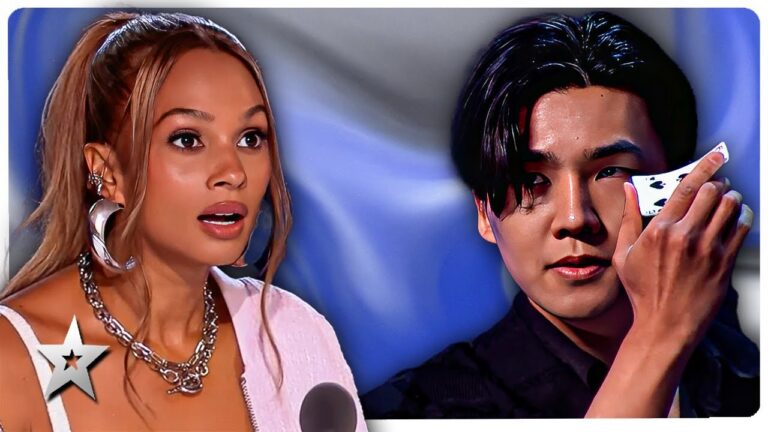
He plays with rhythm and silence, with the shared awkwardness that makes great comedy tick. He offers a card—“Please check this card. It’s normal. Normal? Normal.”—and somehow turns a pocket routine into a running joke about trust. He riffs on what he calls the Japanese way to suffering, then turns to money, “20 pounds,” turning a simple bill into a little conspiracy. When he closes with “for ladies”—a ring bit that balances sweetness and surprise—the cheers feel personal.
“You are funny. You are quirky. You are very, very charming, and your magic was absolutely… excellent. I mean it’s faultless. Faultless.”
“You’re a superstar,” another judge tells him. And then comes the moment he’s only ever watched online. Overwhelmed, he tries to put it into words later: “I never expected that Golden Fleurs.” He can only laugh and bow. He’d seen people get that life-changing nod “in, like, YouTube,” he says, and now here he is—drenched in disbelief, a dream catching up to him in real time.
Books, a Box, and a Word That Shouldn’t Be There
In a softer key, a young reader steps into the center of the theater and builds a miracle from paper. Three books. Three judges. Simple instructions: “Could you look through the book and see if each page is different?” She’s precise but playful, directing where each volume goes. Then she asks Simon to help with something heavier. “Could you pick up my box and put it on the floor for me, please?” he tries, then stares: “I can’t lift it.” The laugh is half-comfort, half-cover. In that big, bossy box sits the punchline they won’t see coming.
It ends with a prediction that shouldn’t be possible: a single word from a freely seen page, revealed on a board that’s been in plain sight. It’s tidy, charming, and devastating in its confidence. The audience doesn’t roar so much as whoop. That’s what strong book tests do—they make the smartest path look simple.
The Ring, the Watch, and “Sleight of Thought”
A classic close-up routine becomes a showstopper when a volunteer hands over a ring. “Please,” he asks politely, and it’s given. He tucks it into a handkerchief and lets Alesha—“You can still feel it. Yes?” “Yes.”—hold her own jewelry for one last second. A tug on the corners and the weight is gone. “It’s vanished,” he says, grinning.
Then he pivots to Simon. It’s a birthday tease—“I brought you a gift”—and out comes a watch. He unscrews the back with the care of a locksmith. Inside, impossibly, sits the ring. The theater erupts. Then, breaking the old rule, he dares to try it again. “They say to never do the same trick twice… today, I feel like a rebel.” He offers a new frame for it all: “I’m gonna do something completely different. And I call this sleight of thought.”
To cap the sequence, he launches into a lecture that is both parody and promise. “By now, you must be absolutely sick to death of card tricks,” he jokes, swapping pasteboards for a red handkerchief and an egg. He explains the gimmick as if telling trade secrets: there’s “a hole in the back of the egg,” he says, where the silk hides. He warns never to show “this side of the egg,” or the whole thing collapses. Then he smiles.
“Unless, of course, you’re a real magician… and you can simply remove the hole.”
He does, and the joke turns into a miracle. The audience, duped and delighted, cheers not just the trick but the tone: a little cheeky, very smart, and perfectly aware of the line between exposure and art.
What Great Magic Leaves Behind
Across this collection, the judges keep returning to one idea. Magic is about belief made visible. “You weren’t corny,” one says early on, praising craft over cliche. Another calls a performer “an absolute natural.” Someone worries about birds, laughs about waistcoats, and still, behind it all, there is the same measure: did this artist change the air in the room?
The answers arrive in many shapes: a cage that might close, a whisper that turns into a second sight, an apple with a lesson buried under a bite, a child with a heavy box and a light touch, a watch that hides a promise until it’s ready to sing. Some acts thrill because they feel dangerous. Others because they feel tender. Some because they’re funny. The best do all three.
“We want to see you in the next round,” a judge says at one point, speaking for the crowd as much as the panel. And that’s the lasting magic of these performances. They don’t end when the music fades or the confetti settles. They linger in your head, asking you to replay the steps and, failing that, to smile at the fact that you can’t.
If you think you’ve seen every kind of BGT astonishment, watch this all-time showcase start to finish. It’s a crash course in surprise—how to build it, bend it, and, when the moment is right, let it loose so completely that an entire theater forgets to breathe.