
Hello, puzzle friends!
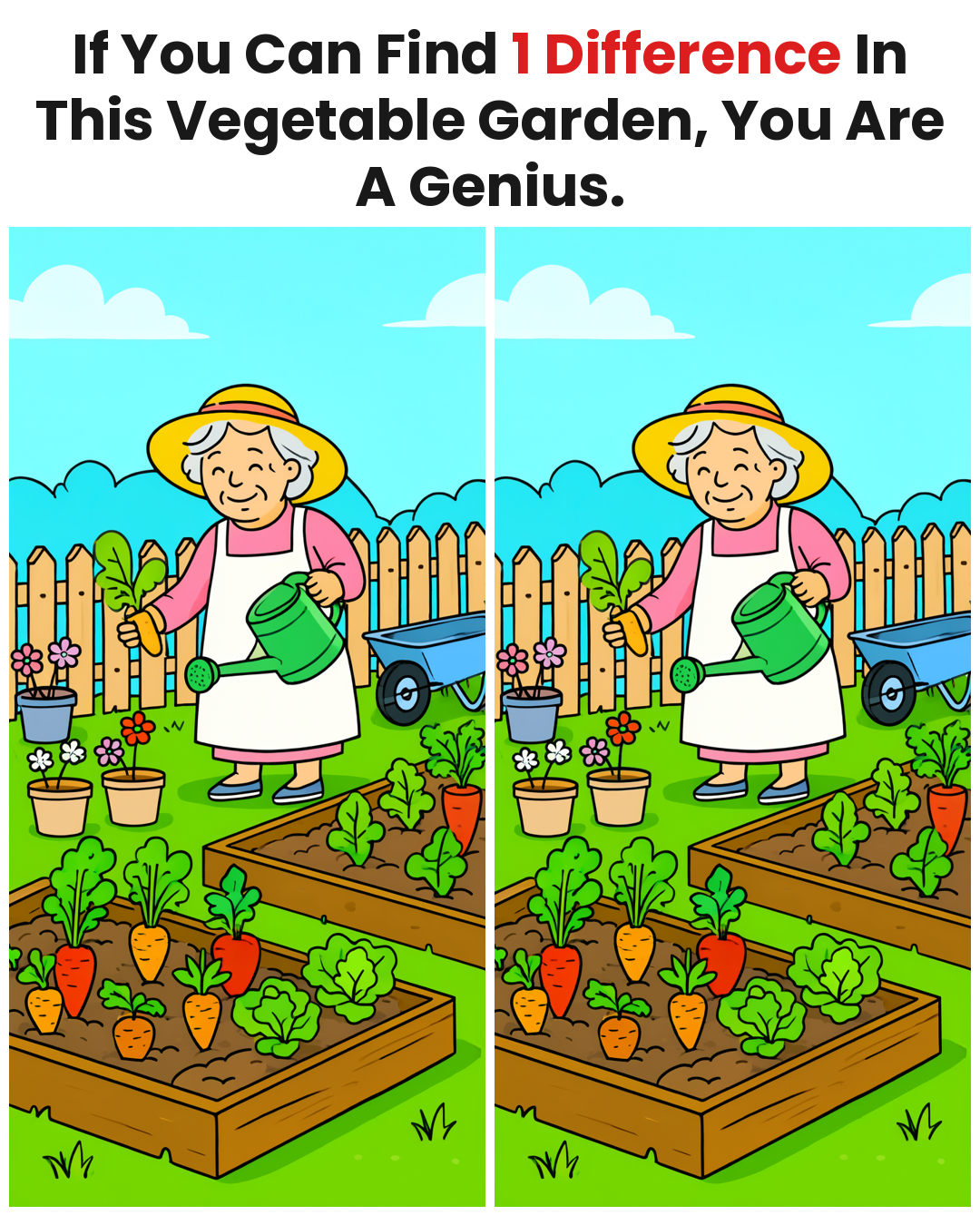
Today we are spending a quiet morning in a sunny vegetable garden.
A kind lady in a straw hat is watering her carrots, the lettuce is coming along beautifully, and her flower pots are full of colour.
The two pictures below look exactly the same at first glance.
But they are not. Somewhere in the picture on the right, one small thing has quietly changed.
Take your time and look at the pots, the fence, the wheelbarrow and the vegetable bed.
A gentle tip: compare the two pictures in small squares instead of staring at the whole scene at once.
Ready when you are. Good luck, and enjoy the sunshine!
Take your time and look closely before you scroll down!
Where To Look First
The best way to start a spot-the-difference puzzle is to stop looking at everything at once. Our eyes naturally jump to the biggest, brightest thing in the picture, and here that is the friendly gardener herself. That is exactly why the change is almost never on her.
Instead, divide each picture into four imaginary squares: top left, top right, bottom left, bottom right. Compare one square with the matching square in the other picture, then move on. It feels slower, but it is far quicker in the end, because your eyes stop wandering in circles.
When you have done the four big squares, go back and check the small things you skipped: the handle of the wheelbarrow, the slats of the fence, the little flowers in the pots, the leaves poking out of the soil. Small details are where these puzzles like to hide.
Why Our Brain Finds This So Hard
It seems strange that two pictures can sit side by side and still fool us. The reason is that our brain does not store a photograph of what it sees. It stores a quick summary: a lady, a watering can, some carrots, a few flowers. Once that summary feels complete, the brain stops paying attention to the fine print.
There is even a name for it. Researchers call it change blindness, and it works on everyone, young and old. A colour can shift, an object can move, and if the change happens outside the exact spot we are staring at, we simply do not notice.
Colour changes are the sneakiest of all. A shape that stays the same size and in the same place still looks familiar, so our eyes tick it off the list and move on, even when its colour is not the one we saw a moment before.
A Little History Of These Puzzles
Spot-the-difference pictures have been making people squint since the days of the first family magazines. Newspapers printed them beside the crossword, and whole households would gather around the page after Sunday dinner, arguing happily about who had found the most.
They have lasted all this time for a good reason. You do not need to know anything to play, there is no vocabulary to learn and no arithmetic to do. You just need patience and a pair of eyes, which makes them one of the fairest games ever invented.
Doctors and therapists like them too, because they gently exercise visual attention and short-term memory, the same skills we use to find the car keys or spot a friend in a busy street.
Your Friendly Challenge
Most people need between twenty and forty seconds to find this one, and a surprising number give up at the fifteen-second mark, convinced the pictures are identical.
So here is the challenge: give yourself a full minute before you scroll down. Then show the picture to a friend or to your grandchildren and time them. It is always fun to watch somebody else stare straight at the answer without seeing it.
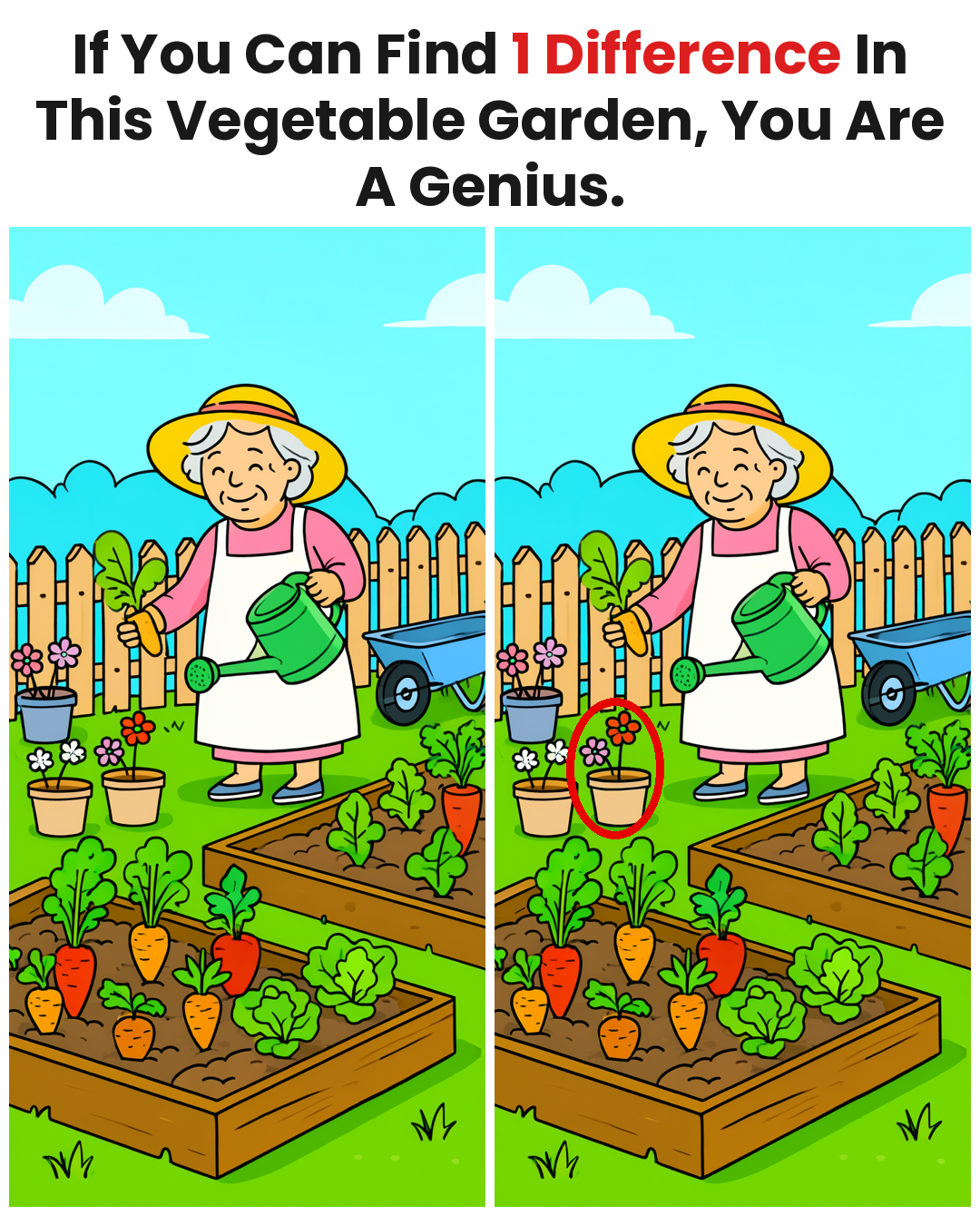
ANSWER: The white flower in the little clay pot has turned pink.
Where The Change Is Hiding
Look at the two small clay flower pots standing on the grass, just to the left of the gardener. In the first picture, the taller pot holds a bright red flower and a white one beside it. In the second picture, that white flower has turned soft pink.
It is a small, quiet change, and it sits in a part of the picture that most people glance at for only a fraction of a second. The red flower right next to it acts like a magnet for the eye, so the little white blossom never gets properly looked at.
Why Almost Everyone Misses It
There are already pink flowers in the other pot at the edge of the garden. Once your brain has decided that this corner of the picture is simply flowers in pots, pink and white and red all blend into one friendly summary.
On top of that, the change is near the bottom left, and our eyes are trained from reading to sweep across the middle of a picture. The corners are the last places we check, and by then we have usually convinced ourselves that we have already looked everywhere.
How Did You Do?
Under 10 seconds: eagle eyes. You have a natural talent for detail, and people probably ask you to proofread things.
10 to 30 seconds: excellent. That is a sharp, patient pair of eyes working exactly as it should.
30 to 60 seconds: very good, and completely normal. You found it the honest way, square by square.
Over a minute, or you needed the answer: do not worry at all. This one was designed to be stubborn, and now you know the trick for next time.