Hello again, puzzle friends!
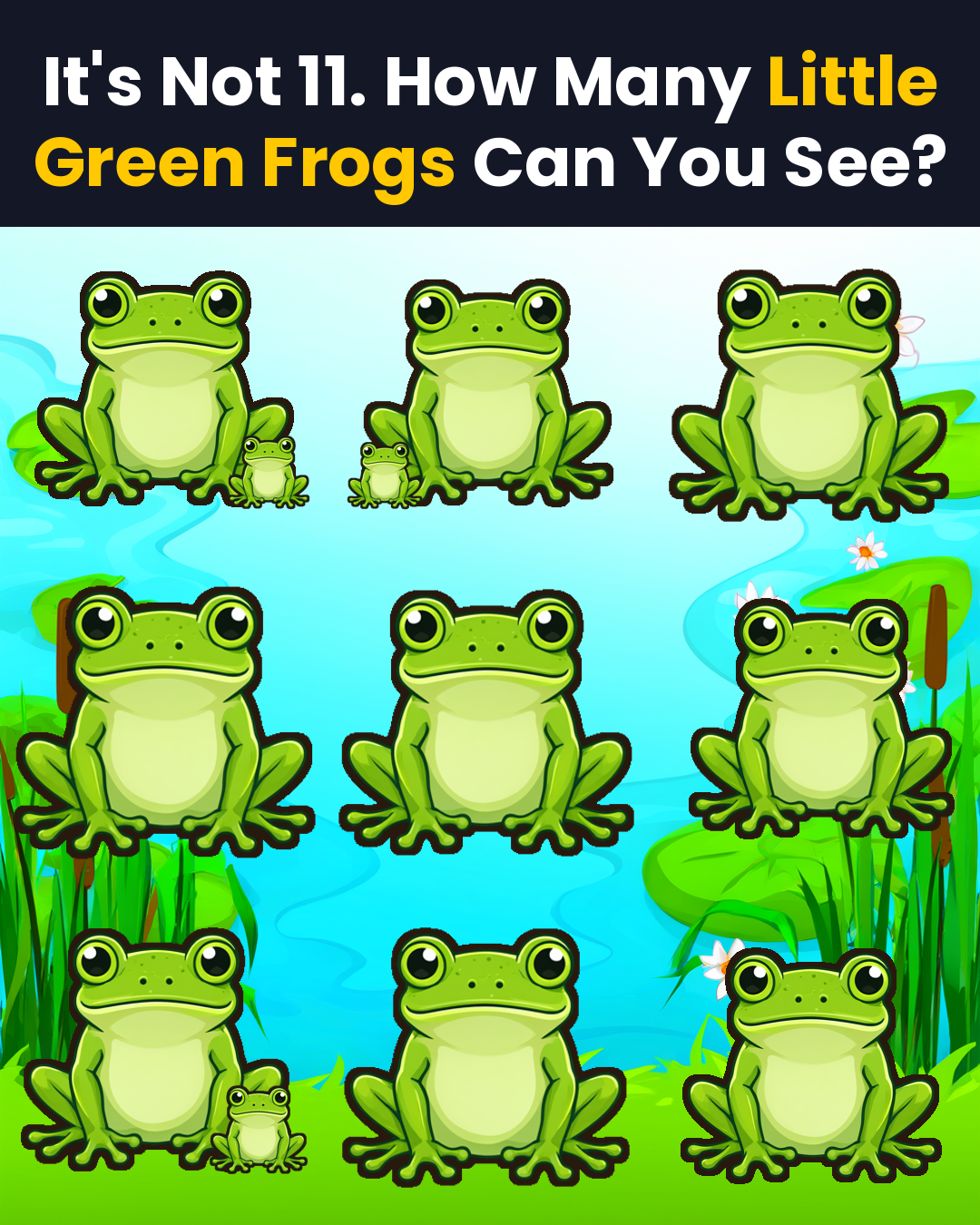
A whole family of ladybugs has landed on the big green leaves in our garden today.
Your job is simple to explain and surprisingly hard to do: count every single ladybug you can see.
The big ones are easy. They sit there in their shiny red coats and almost count themselves.
But the big ones are not the whole story.
Take your time and look along the edges of the wings, where something small could be resting.
Write down your number before you scroll, and then see whether you were right.
No peeking – that is the honest way to play!
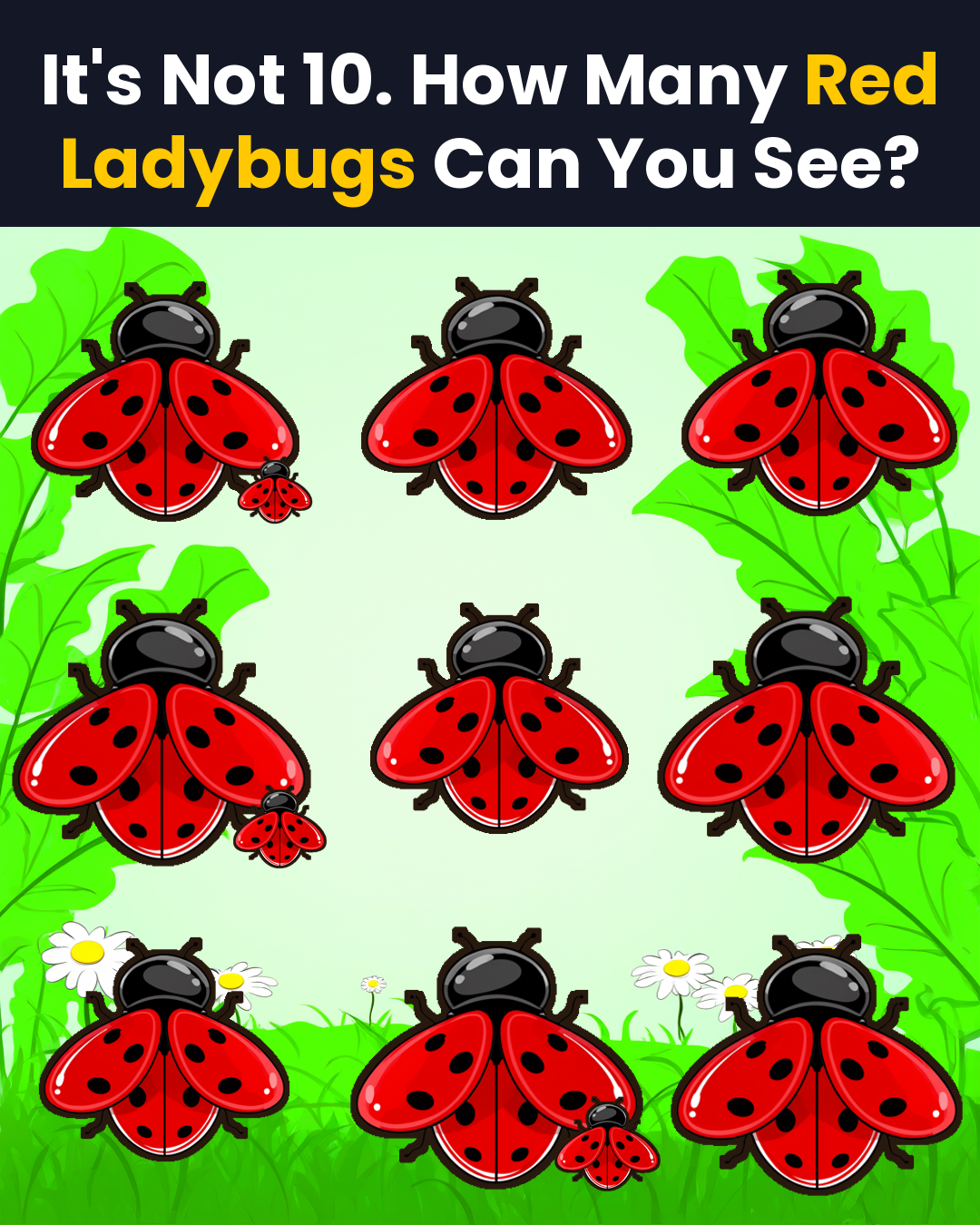
Take your time and look closely before you scroll down!
Count In Rows, Then Count Again
The first rule of any counting puzzle is to give yourself a system. Do not let your eyes wander about the picture picking up ladybugs here and there, because you will count some twice and skip others completely.
Instead, go row by row. Count the top row from left to right, say the number in your head, then do the middle row and add it on, then the bottom row. Three small sums are far easier to trust than one big guess.
Then do something most people never do: count a second time, and this time go from right to left. If both answers match, you can be fairly confident. If they do not match, the difference will show you exactly which row needs another look.
The Trap Hiding In Plain Sight
Here is the part that catches nearly everybody. Our brain does not really count objects when they are arranged in a neat pattern. It recognises the pattern instead. Three neat rows of three is such a familiar shape that we see nine and feel finished before we have truly checked anything.
This mental shortcut has a name: subitising, which is our ability to know how many things are in a small group without counting them one at a time. It is fast, it is useful, and it is exactly what a good counting puzzle is designed to defeat.
So once you have your tidy number, pause. Ask yourself whether every ladybug in the picture really is the same size. That one question is usually enough to break the spell.
Where Small Things Like To Hide
A clever picture never hides a small object in an empty space, because an empty space is where we look when we are searching. It hides it right next to a big object of the same colour and shape.
The eye treats red beside red as one single thing. A little ladybug tucked against the wing of a large one almost becomes part of that wing, and our attention slides over both as though they were one. The same trick works with leaves, with grass and with shadows.
So on your second pass, do not look at the middle of each ladybug. Look at its outline, especially the lower edges of the wings and the places where one shape overlaps another.
A Friendly Little Challenge
Most people give their first answer in about five seconds, and most of those first answers are wrong. The ones who get it right are the ones who look twice.
So be honest about your first number, then look again and see whether it changes. And do pass this one along – counting puzzles are at their very best when two people are sitting side by side, each certain that the other has made a mistake.
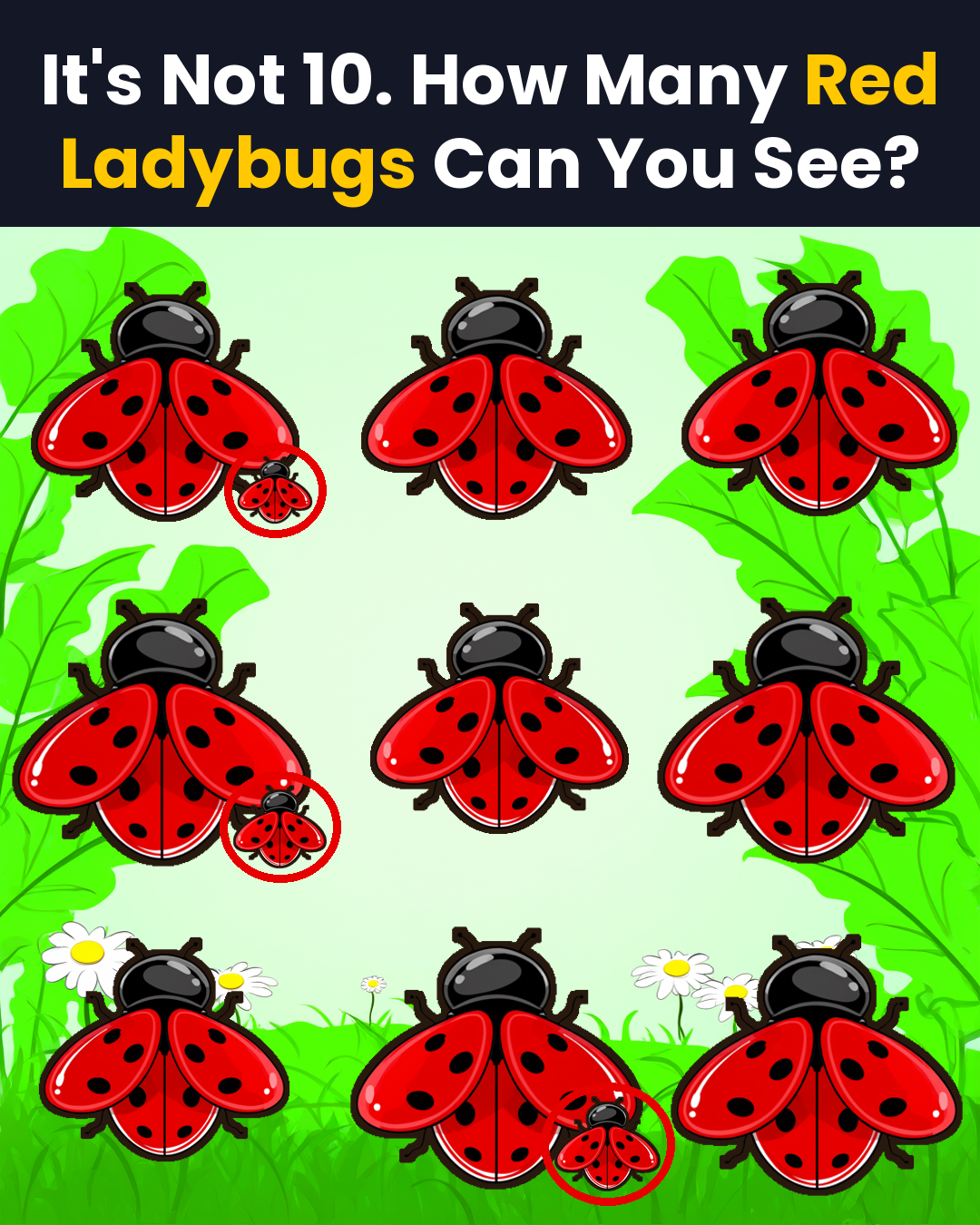
ANSWER: 12 ladybugs – three tiny ones are tucked up against the big ones.
Twelve, Not Nine
The correct answer is twelve ladybugs. Nine of them are the large ones, arranged in three tidy rows of three. The other three are tiny, and they are the reason this picture fools so many people.
The first small ladybug is tucked against the lower right wing of the big ladybug in the top left corner. The second is in the middle row, pressed up against the lower right side of the ladybug on the left. The third is at the bottom of the picture, resting against the right wing of the ladybug in the middle of the bottom row. All three sit in the same place relative to their big neighbour, which makes them wonderfully easy to overlook.
Why The Number Nine Feels So Right
Three rows of three is one of the most comfortable shapes our brain knows. It is the pattern on a window, a noughts and crosses board, a box of chocolates. As soon as the eye sees that arrangement, it announces nine and stops working.
The little ladybugs then face a second problem. They are the same red, with the same black spots, and they touch the big ones. Our vision is built to join touching shapes of the same colour into a single object, so the small ones are quietly absorbed into their large neighbours. You did not fail to see them. Your brain simply decided they were part of something else.
How Did You Do?
If you said twelve within ten seconds, you have truly exceptional eyes and you clearly do not trust neat patterns. Twelve after a careful second look is an excellent result and the mark of a patient counter.
If you said nine, you are with the great majority, and you have just learned the most useful rule in counting puzzles: whenever a picture looks perfectly tidy, something is hiding in it. Try the next one with that thought in mind.