He Knocked Her Daughter Off A Bike — Mom Couldn’t Drop The Sign
A senior boy shoved a girl off her bike and laughed as she hit the asphalt… But the woman in the yellow vest holding traffic twenty feet away was her mother — and she couldn’t move.
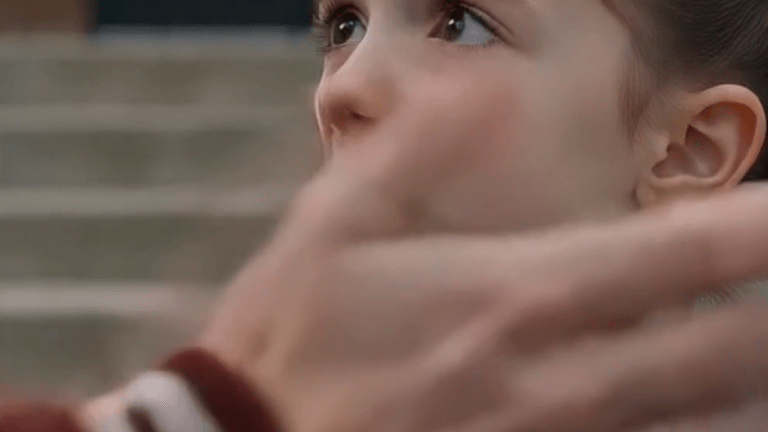
Maya Reyes rode her bike to school every single morning, same route, same time, same blue backpack bouncing on her shoulders. She was twelve, careful, and proud of the fact that she’d never been late once this year.
Her mother, Diane, was already at the crosswalk when Maya turned into the parking lot. Yellow vest, orange cones, the red stop-sign paddle raised high. Six kids were crossing. Traffic waited.
It was a Tuesday like every other Tuesday.
Until it wasn’t.
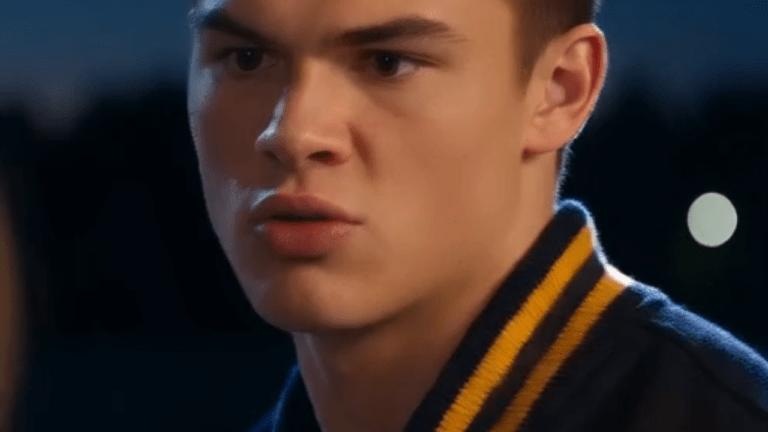
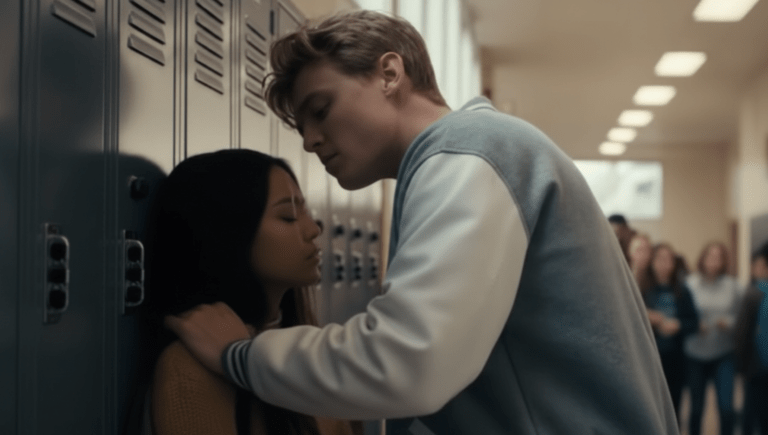
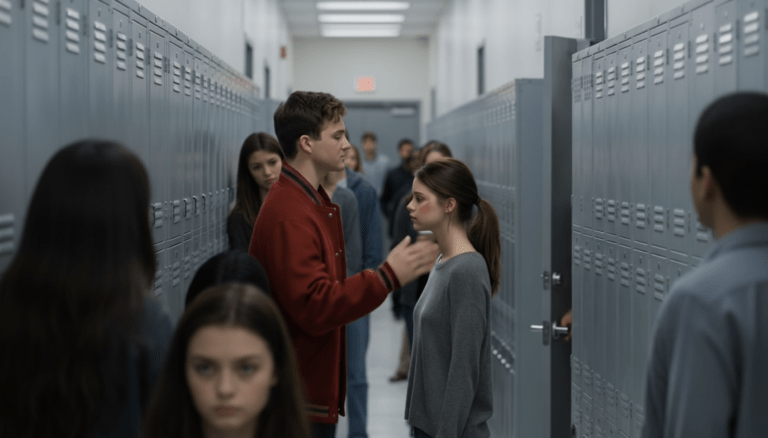
Connor Walsh was seventeen, broad-shouldered, and the kind of boy who had never once been held accountable for anything. He stood with two friends near the bike rack, watching Maya pedal toward the parking lot entrance. He said something low to the boys beside him, and they laughed before he even moved.
He stepped directly into Maya’s path and shoved her handlebars hard to the left.
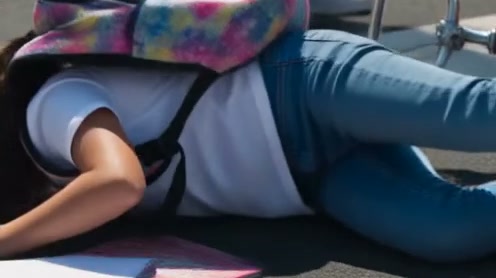
The bike went sideways instantly. Maya had no time to brake, no time to catch herself. She went down onto the asphalt with her full weight on her right arm and shoulder, the bike clattering on top of her, her backpack splitting open at the zipper and scattering notebooks, pencils, and a thermos of orange juice across the blacktop.
Connor didn’t stop walking. He stepped over her spilled notebooks and kept moving.
“Move your bike next time,” he said, without looking back.
His friends laughed. Someone nearby — an eighth grader — took out a phone.
Twenty feet away, Diane saw everything.
She saw the shove. She saw Maya go down. She saw the way her daughter’s body hit the pavement and didn’t get up right away.
Her hand tightened around the stop-sign paddle.
Six children were in the crosswalk. A line of cars was idling, engines running, waiting on her signal. A kindergartner was holding the hand of a third-grader in the middle of the road. A little boy with a dinosaur backpack was only halfway across.
Diane could not move.
She raised the paddle higher and stood perfectly still, and her face did something her body would not allow.
It took forty-three seconds to get the children across. Diane counted every one of them.
She stepped the last child — the boy with the dinosaur backpack — to the curb. She turned to the nearest car and held up her hand.
Then she ran.
“Maya.” She was on her knees before her daughter finished sitting up. “Maya, look at me. Look at my face.”
“Mom, I’m okay—”
“Your arm. Show me your arm.”
Maya’s right elbow was scraped raw, gravel embedded in the skin, her uniform sleeve torn at the shoulder. She was not crying, which told Diane she was about to.
“He just — he walked right into me,” Maya said. Her voice cracked on the last word. “He just laughed, Mom.”
“I know.” Diane’s voice was flat and controlled in the way that meant the opposite of calm. “I saw.”
She helped Maya to her feet, collected the notebooks from the ground, and picked up the thermos. She handed everything back to her daughter piece by piece, and the whole time her jaw was set like concrete.
“Can you walk?”
“Yes.”
“Go straight to the nurse. Tell her you fell. I’ll be there in twenty minutes.”
“Mom—”
“Twenty minutes.” She squeezed Maya’s good shoulder once, hard. “Go.”
Diane went back to the crosswalk.
She stood at her post and did her job for the next eighteen minutes, and every single minute of it she was composing what she was going to say to the principal.
At 8:14 a.m., she walked into the front office of Jefferson Middle School and asked to speak to Principal Hartley.
The secretary, Mrs. Odom, started to say he was in a meeting.
“I’ll wait,” Diane said. She sat down in one of the chairs along the wall and set her stop-sign paddle across her knees like she had nowhere else to be on earth.
Mrs. Odom looked at her face and picked up the phone.
Principal Hartley came out in four minutes.
He was a tall man, mid-fifties, the kind of administrator who had mastered the art of looking concerned while committing to nothing. He extended his hand.
“Mrs. Reyes—”
“My daughter was assaulted in your parking lot at 7:52 this morning,” Diane said. She did not shake his hand. “A senior named Connor Walsh shoved her off her bicycle. She hit the asphalt. Her elbow needs attention. Someone filmed it.”
Hartley’s face shifted slightly. “I understand you’re upset—”
“I’m not upset. I’m reporting an assault. There’s a difference.” She set her phone on the counter between them. On the screen was a video, forwarded to her by another parent eleven minutes ago. Connor’s shove, Maya going down, Connor stepping over the notebooks, the laughter.
Fourteen seconds, start to finish.
Hartley watched it once. Then again.
“I’ll need to look into this,” he said.
“You can look into it right now,” Diane said. “Because I’m not leaving until you’ve pulled Connor Walsh out of class and called his parents. And I need you to know that I’ve already sent this video to the district superintendent and to Officer Greer at the school resource office. So you’re not the only one looking into it.”
A silence opened up in the front office.
Mrs. Odom was staring at her keyboard and not typing anything.
Hartley cleared his throat. “Mrs. Reyes, I want you to know this school takes—”
“I know what this school takes seriously,” Diane said. “I stand outside it every morning for two hours. I have watched Connor Walsh for three years. I have seen what he does when he thinks no one is watching.” She picked up her phone. “Today, someone was watching. Today, it’s on video. And today, I have time.”
Connor Walsh was pulled out of third period at 9:05 a.m.
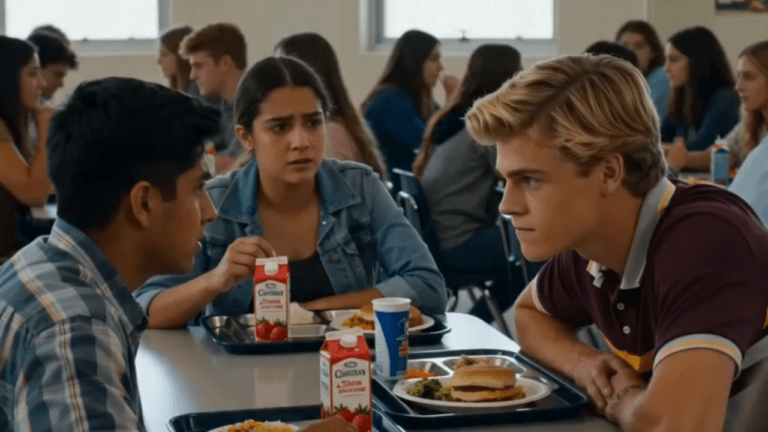
He came into the principal’s office with the easy confidence of a boy who had been called in before and always walked out fine. He saw Diane sitting in the chair across from Hartley’s desk and his face rearranged itself into something more careful.
“Do you know why you’re here?” Hartley asked.
Connor shrugged. “Not really.”
“I have a video,” Hartley said, “of you intentionally pushing a student off her bicycle in the parking lot this morning.”
“She came out of nowhere—”
“You stepped into her path,” Diane said. She didn’t raise her voice. “You shoved her handlebars. She was carrying her backpack and wearing a helmet, and you deliberately knocked her down and walked away laughing.”
Connor looked at her. Something in his expression shifted, reassessing.
“I was joking around,” he said.
“She has gravel in her elbow,” Diane said.
“I didn’t mean for her to actually—”
“Do you know where I was when you knocked my daughter off her bike?” Diane asked. The word *my* landed in the room like something dropped from a height.
Connor’s mouth closed.
“I was twenty feet away,” she said. “At the crosswalk. Holding six children in the middle of the road so they wouldn’t get hit by a car. I watched you shove her. I watched her go down. And I stood there with my sign up because I couldn’t leave those kids in the road.”
The room was very quiet.
“I had to keep doing my job,” Diane said. “While my daughter was on the asphalt. Because that is what I do every single morning — I keep children safe.” She looked at Connor steadily. “Including you. Every morning you walk through that crosswalk, I hold that sign up for you.”
Connor Walsh, for possibly the first time in his life, had nothing to say.
Officer Greer reviewed the video at 9:30 a.m. and filed a report.
Connor was suspended for five days pending a disciplinary hearing, with a notation in his record that would follow his college applications. His parents were called. His mother cried on the phone. His father asked, twice, if the video could be confirmed as authentic.
Hartley told him it had been confirmed.
By noon, the video had been seen by most of the school. By 2 p.m., it had been shared in three parent group chats, and two of them had sent messages to Diane directly. One said: *I’ve been watching that kid for years. Thank you for being the one who actually did something.*
Maya was in the nurse’s office when Diane arrived at 8:34, elbow cleaned and bandaged, holding a cold pack against her shoulder. She looked up when her mother walked in.
“Did you yell at him?” Maya asked.
“No,” Diane said.
“Did you yell at the principal?”
“No.”
“Then what did you do?”
Diane sat down next to her daughter and took her good hand. “I showed them the video,” she said. “And I told them what it felt like to watch and not be able to come to you.”
Maya looked at her. “You couldn’t leave the crossing.”
“No.”
“Because of the other kids.”
“Yes.”
Maya was quiet for a moment. Then she said, “That must have been really awful, Mom.”
Diane looked at her daughter’s bandaged arm, at her torn sleeve, at the twelve-year-old face that was trying hard not to make this harder than it already was.
“It was the longest forty-three seconds of my life,” she said.
She pulled Maya carefully into her arms, and Maya finally let herself cry.
Connor Walsh stood in front of the disciplinary board nine days later.
He read a written apology, required as a condition of his return. It was four sentences. He read it in a flat voice to a room that included Hartley, two board members, Officer Greer, his parents, Diane, and Maya.
When he finished, he looked up, and for the first time he looked directly at Maya.
She looked back at him without blinking.
“Is there anything you want to say that isn’t written down?” Hartley asked Connor.
A long pause.
“I’m sorry,” Connor said. And this time it sounded like he meant at least part of it. “I didn’t think about — I didn’t think.”
“No,” Maya said clearly, from across the room. “You didn’t.”
That was all she said. She didn’t need anything else.
On Wednesday morning, ten days after the fall, Maya rode her bike into the school parking lot again. Same route. Same time. Same backpack, new zipper.
She turned the corner and Diane was at the crosswalk, yellow vest, orange cones, stop-sign paddle raised for the line of kids crossing the road.
Maya rolled to a stop at the edge of the crosswalk and waited.
Diane caught her eye.
She gave one small, solid nod.
Maya nodded back.
When the last child reached the curb, Diane dropped the sign to her side and stepped aside, and Maya rode through the crossing and into the school parking lot without stopping, without looking back, without hesitating for even a second.
Her mother watched her until she disappeared through the front door. Then she turned back to the road and raised the sign again for the next group of children.
She was still there. Same as always. Right where she was supposed to be.