He Shoved Her Off The Bus Steps – Her Grandfather Was Driving
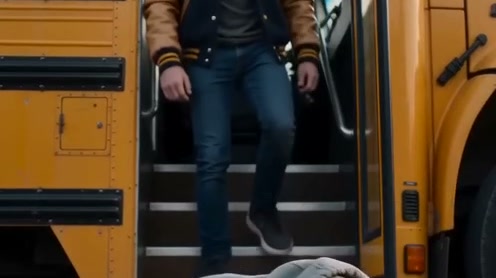
A senior boy shoved a quiet girl off the bus steps in front of everyone… But the old man watching from the driver’s seat was her grandfather.
Maya always sat in the third seat from the front.
Not because she liked it. Because it was the closest seat to her grandfather’s voice when he called out the stops, low and steady, like a metronome she’d grown up counting on.
She was twelve. He was seventy-three. And every single school day for three years, Earl Dawson had driven Route 14.
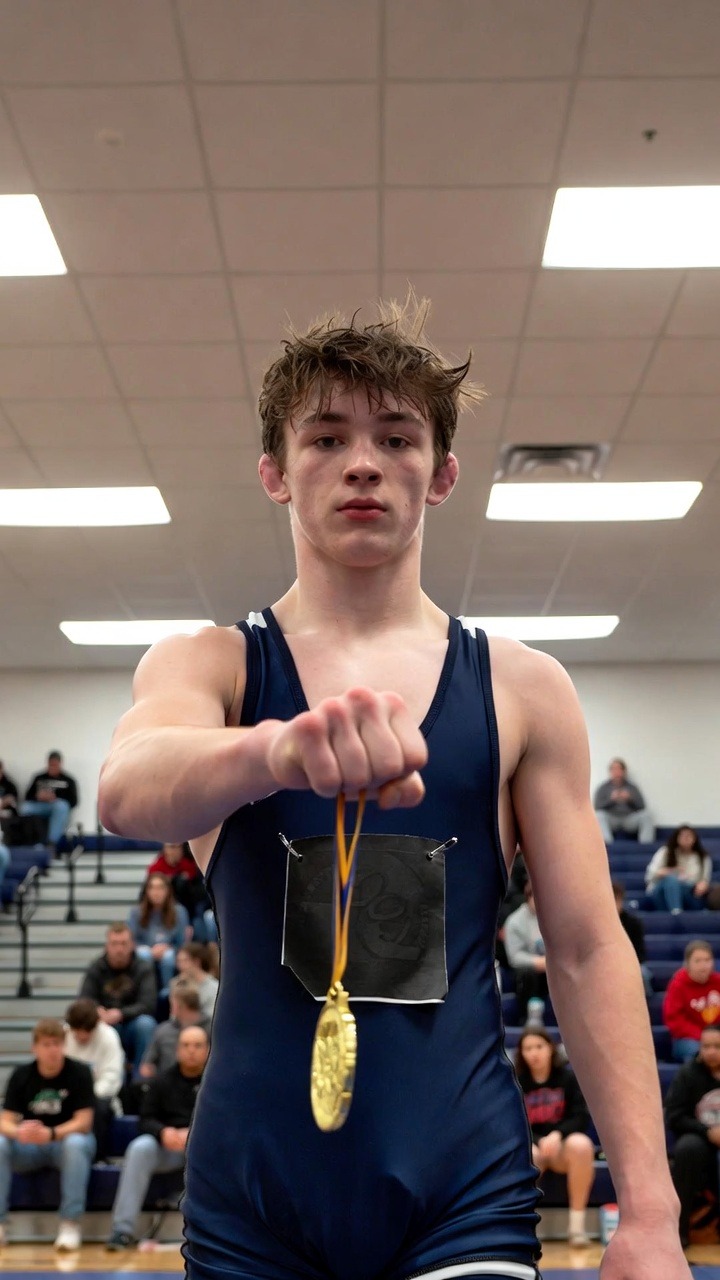
The trouble started in September, when Cody Marsh transferred in from the high school across town.
Cody was sixteen, broad-shouldered, and had decided within his first week that the bus was his. He spread across two seats. He threw things. He made freshmen stand so his friends could sit.
Maya made the mistake of being quiet about it.
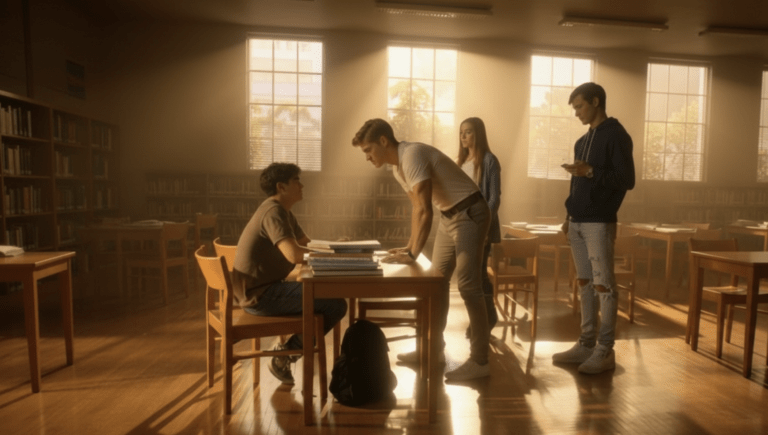
“Hey, Little Miss Third Seat.” Cody leaned over her one afternoon, grinning. “You always sit there because you’re scared of the back?”
She stared at her book. “No.”
“You’re scared of the back,” he said, and his friends laughed.
Earl’s eyes moved to the rearview mirror. He said nothing. But his hands tightened on the wheel.
It got worse through October.
Cody figured out she was the driver’s granddaughter on a Wednesday. He announced it to the whole bus like it was the funniest thing he’d ever discovered.
“The old man driving us is her *grandpa*.” He said it slow, stretching it out. “That’s why she gets to sit up front. That’s why she thinks she’s special.”
“I don’t think anything,” Maya said, very quietly.
“Oh, she speaks.” More laughter. “Grandpa’s little princess speaks.”
Earl’s voice came from the front, calm and measured. “Settle down back there.”
Cody looked straight at the mirror. “Sure thing, *sir*.” He made the last word sound like a joke.
That night, Maya sat at the kitchen table and didn’t eat much.
“Grandpa,” she said finally.
“Mm.”
“Why don’t you say something more? To him?”
Earl set down his fork. He looked at her for a long moment. “Because the day I do, it won’t be just words. And I’m trying to give that boy a chance to be something better than what he’s showing me.”
Maya looked at her plate. “What if he doesn’t take the chance?”
Earl picked his fork back up. “Then I’ll stop trying.”
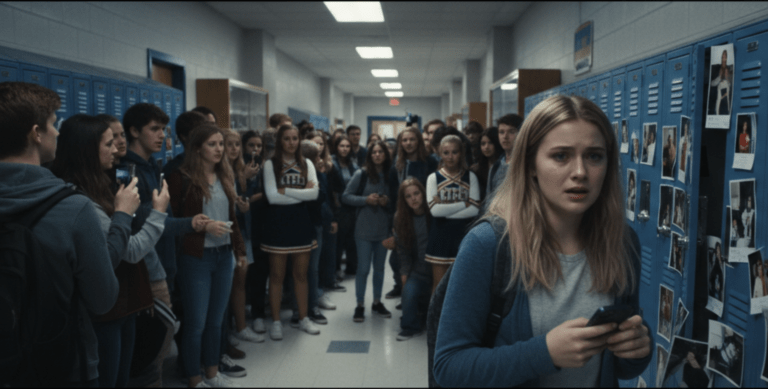
The Friday before Thanksgiving break, the bus was louder than usual.
Everyone was restless, backpacks heavy with overnight bags, kids bouncing off each other, Cody holding court in the back with four of his friends.
Maya kept her eyes on her book.
The first stop came and went. The second. At the third stop — the hill stop, the one with the steep sidewalk — half the bus stood up to get off.
Maya was near the front. She was the second one down the steps, backpack on, one hand on the metal rail.
She was on the second-to-last step when she felt it.
A hard flat palm between her shoulder blades.
She went forward off the last two steps and hit the sidewalk on her hands and knees. The impact was loud. Her backpack skidded six feet ahead of her. The skin on both palms split open and she felt it — that white-hot second before pain catches up to shock.
The kids on the sidewalk froze.
Cody came down the steps behind her, stepping around her like she was a bag left on the ground.
“Watch your step,” he said, and laughed, and kept walking.
Nobody moved.
Maya stayed on her knees for one second, two seconds. Blood was threading down her left palm. She looked up at the other kids standing there, and none of them said a word.
Then the bus door opened again.
Not to let more kids off.
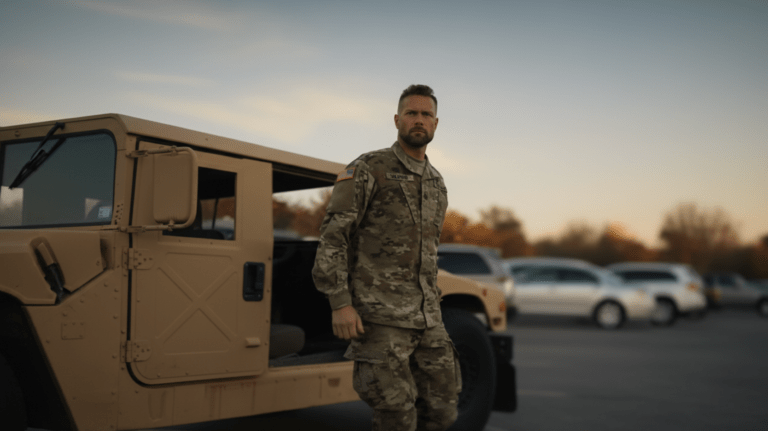
Earl Dawson stepped down onto the sidewalk.
He was a tall man, even at seventy-three. He’d been tall his whole life and the years hadn’t taken much of it. He moved slowly — not because he was old, but because he was choosing every step. He walked past Maya without stopping, just touched her shoulder once, very briefly, then kept moving.
Cody had made it fifteen feet down the sidewalk. He heard the footsteps and turned around.
His smile dropped.
“Hey, I didn’t — ” he started.
“Don’t.” Earl’s voice was the same voice he used on the bus. Quiet. Measured. “Don’t say what you were about to say.”
Cody’s friends were watching. Half the kids from the bus were watching. Nobody laughed.
“She fell,” Cody said.
“I have a mirror,” Earl said. “I’ve had a mirror for thirty-one years of driving. Do you understand what I’m telling you?”
Cody said nothing.
“I saw your hand,” Earl said. “I saw where it was. I saw exactly what you did.” He took one more step forward. He wasn’t shouting. He was somehow worse than shouting. “And every one of these children standing here saw it too.”
Cody looked around. Nobody backed him up. Not one of his friends.
“You pushed a twelve-year-old girl off a moving bus,” Earl said. “Let’s be very clear about what happened here today.”
Earl walked back to Maya. He crouched down — slow, knees protesting — and picked up her backpack. He looked at her hands.
“Can you stand?”
“Yes.” She stood. Her voice was steady. She was twelve and she was Earl Dawson’s granddaughter and she stood up.
He pulled a folded handkerchief from his breast pocket — he always kept one there, always had — and pressed it against her left palm. He held it there for a moment.
“I’m going to need you to sit up front,” he said. “I have some calls to make at the next stop.”
“Okay, Grandpa.”
They walked back to the bus together.
Earl made three calls at the next stop.
First to dispatch, reporting the incident and requesting police documentation.
Second to the school principal, a woman named Carol Adler, who had been principal for eleven years and had never heard Earl Dawson call her directly. She listened for four minutes without interrupting.
Third to his daughter — Maya’s mother — who said two words and then was quiet for a long time.
Cody Marsh finished walking home.
The following Monday, Cody was not on the bus.
He was in Principal Adler’s office when school started, with his parents, across a table from a district transportation officer, a copy of Earl’s written incident report, and three signed witness statements from students who had been standing on the sidewalk.
The students had sent them in over the weekend. Unprompted.
“This is one kid’s word against — ” Cody’s father started.
“It’s one bus driver’s thirty-one-year record,” Principal Adler said, “three eyewitness statements, a documented injury report, and your son’s own history of bus conduct violations this semester.” She set the folder down. “Would you like to keep going?”
Cody’s father did not keep going.
Cody was suspended for ten days and removed from Route 14 permanently.
He had to write a formal apology — not an email, a handwritten letter — which Maya received on a Tuesday and read once and put in a drawer. She didn’t need it. But she kept it.
Because it was proof of something she already knew.
That afternoon, Maya sat in the third seat from the front.
Earl pulled the bus out of the school lot, called the first stop, and the bus went quiet and easy the way it always did when Cody wasn’t on it.
At the hill stop, he paused before opening the doors.
“Maya.”
“Yeah.”
“You did good.”
“I didn’t do anything.”
“You got up,” he said. “That was the whole thing. You got up.”
She looked at the back of his head. His shoulders. The hands on the wheel that had driven her to school and home again every day for three years, the same hands that had pressed a handkerchief against her palm on a sidewalk while thirty kids watched.
“Grandpa?”
“Mm.”
“I’m glad you drive my bus.”
Earl Dawson opened the doors.
“So am I, kid,” he said. “So am I.”
He sat up a little straighter in his seat and called the stop, and the afternoon went on.