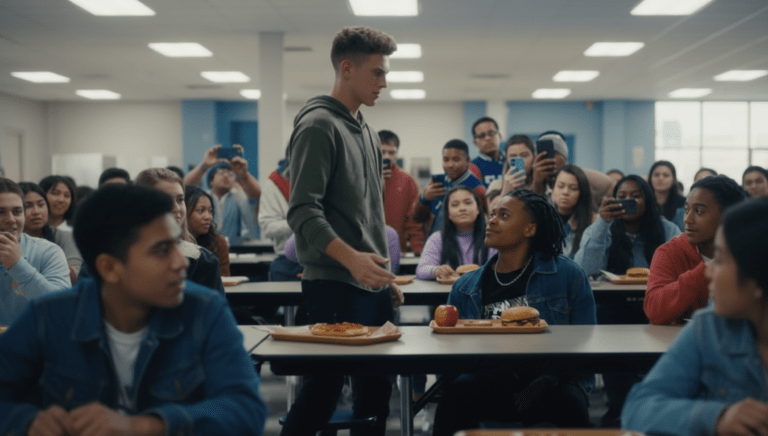
A Teen Slapped an Old Man — Then Saw Who Was Working the Door
A teenager slapped an old man outside school for walking too slowly… But the security guard who stepped out of the booth had been watching that entrance for twenty years — and the old man was holding his coffee.
Every Friday morning, Walter Briggs walked six blocks from his apartment to Jefferson High.
He was seventy-three. He moved slowly. He didn’t apologize for it.
He always brought two cups of coffee from the diner on Maple — one black, one with two sugars — and he always arrived at 7:45, just before the morning rush, so his son could take a real break before the chaos started.
His son, Dennis, had worked the front entrance security booth for twenty-two years.
Walter had been coming every Friday for nineteen of them.
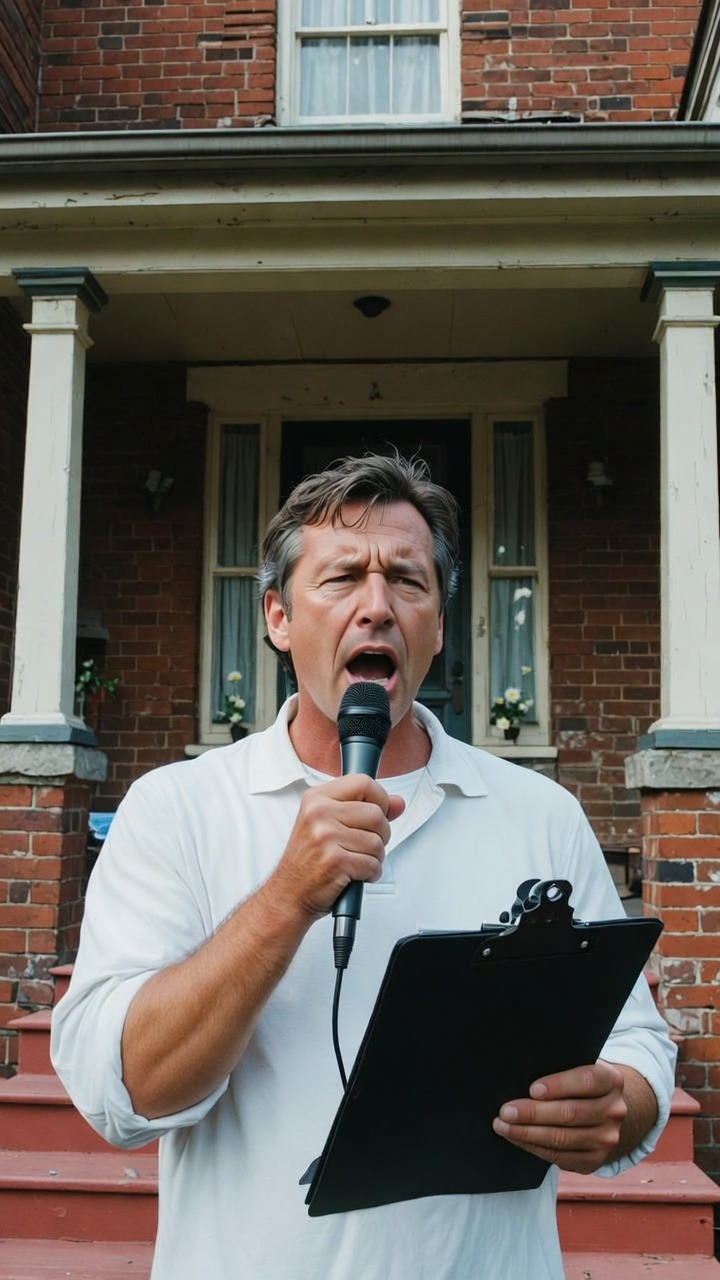
That morning was cold and bright. Walter pushed through the outer gate, both cups held carefully in front of him, steam curling off the lids. He moved to the right of the entrance doors, out of the flow of students, the way he always did.
He knew the routine.
The kids came fast on Fridays.
He pressed close to the wall and waited.
Tyler Mack was seventeen, broad-shouldered, and running late for first period. He saw the old man in his path and didn’t slow down.
He didn’t go around him.
He swung his hand out in an open-palm slap across the side of Walter’s face as he passed — the kind of casual cruelty that only works when the person doing it doesn’t think the other person matters.
“Move, old man.”
Walter’s head snapped sideways.
The left cup tilted. Coffee ran across his knuckles, soaked his sleeve, dripped onto the concrete.
He steadied both cups.
He didn’t drop either one.
Tyler was already walking away, laughing, pulling out his phone to tell someone about it.
Two of his friends near the door laughed too. One of them filmed it for three seconds, then lost interest.
Nobody moved.
Nobody said anything.
Walter stood against the wall, coffee still in both hands, cheek reddening, eyes blinking once, twice. He looked down at the cup in his left hand. Still mostly full.
He straightened his coat with his elbow.
The booth door opened.
Dennis Briggs stepped out in his security uniform — gray jacket, badge on the chest, radio on his hip. He’d heard the sound. He’d heard the laugh. He came out expecting a scuffle between students.
He saw his father’s hand first.
The coffee soaking through the sleeve of his father’s jacket. The red mark rising on his father’s cheek. The way his father was standing — not crumpled, not shaking, just very still, holding both cups, the way he always held them.
Dennis went completely quiet.
Not the quiet of someone about to do nothing.
The quiet of someone deciding how to do something correctly.
Walter looked at his son.
He extended the second cup.
The one with two sugars. The one he’d carried six blocks. The one that had survived the slap and the spill and the cold and the walk.
He held it out toward Dennis.
Dennis looked at his father’s face. At the mark on his cheek. At the cup being offered to him.
He took it.
He held it in both hands for a moment.
Then he looked at Tyler Mack, who was fifteen feet away now, still laughing, still texting, still completely unaware that anything had changed.
Dennis started walking.
“Hey.”
Tyler didn’t turn around right away. The voice was flat and even, and flat even voices don’t register as threats when you’re seventeen and you’ve never had a consequence in your life.
“Hey.” Louder.
Tyler turned.
Dennis was close. Closer than Tyler expected. The badge caught the morning light.
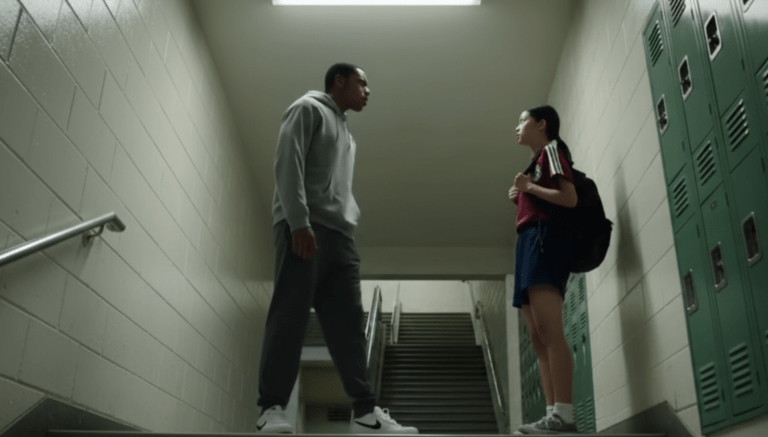
“You want to tell me what just happened?” Dennis said.
Tyler looked at the cup in Dennis’s hand, then at the old man still standing by the wall, then back at Dennis.
Something in his face shifted. Not remorse. Not yet. Just the first flicker of calculation.
“I didn’t do anything,” Tyler said. “He was in the way.”
“You put your hand on him.”
“I barely touched him.”
Dennis didn’t raise his voice. “You put your open hand across the face of a seventy-three-year-old man because he was walking too slowly. In front of thirty witnesses. On school property.” He paused. “That’s assault.”
Tyler laughed — the short, defensive kind. “Assault? Come on, man. It was nothing.”
“Turn around,” Dennis said. “We’re going inside.”
Tyler’s two friends had gone very quiet. The filming had stopped. The thirty students near the entrance were watching now, the way students watch when something real is happening and they don’t know which way it’s going to go.
“You’re serious,” Tyler said.
“I’m serious.”
Tyler looked at his friends. They looked at the ground.
He turned around.
Dennis walked him through the entrance, past the booth, past the front office window where the secretary, Mrs. Garland, was already standing up from her desk because she’d seen it too.
He stopped at the front office door.
“Wait here,” Dennis said.
He walked back outside.
Walter was still at the wall. He’d taken a napkin from his coat pocket and was dabbing at his sleeve, careful and unhurried, like a man who had learned not to let small disasters become large ones.
Dennis stood next to him.
They didn’t say anything for a moment.
“You okay?” Dennis finally said.
“I’m fine,” Walter said. He looked at his son’s face. “Don’t make it bigger than it is.”
“Dad.”
“I mean it.” Walter folded the napkin. “He’s a kid. A stupid kid. You do your job right and it’ll matter more than anything I could say to him.”
Dennis looked at the coffee in his hand.
“This is good,” he said. “You got it from Sal’s?”
“Where else,” Walter said.
Inside, Tyler Mack sat in the front office chair and waited.
The principal, Dr. Harmon, came out of her office with her reading glasses still on, which meant she’d been pulled away from something important, which meant she was not in a patient mood.
“Tell me what happened,” she said.
Tyler started with “I barely—”
“Mrs. Garland saw it from the window,” Dr. Harmon said. “A student filmed it. Mr. Briggs witnessed it directly. So let’s try again.”
Tyler went quiet.
“You struck a visitor on school property,” Dr. Harmon said. “A man in his seventies. In front of students.” She set a folder on the desk. “We’re calling your parents. We’re filing an incident report with the district. And depending on what Mr. Briggs decides to pursue, we may be involving the police.”
“The police?” Tyler’s voice cracked for the first time.
“Assault doesn’t stop being assault because the person you hit is old,” Dr. Harmon said. “It gets worse.”
Tyler’s mother arrived forty minutes later.
She was a composed woman who became very still when she was angry, and she was very still now. She sat across from her son and listened to Dr. Harmon explain what had happened, and she didn’t look at Tyler once during the explanation.
When it was done, she said, “I want to speak to the man he hit.”
Dr. Harmon looked at Dennis, who had come inside to give his statement.
Dennis called his father.
Walter came in slowly, his jacket still damp at the sleeve, his cheek still faintly marked.
Tyler’s mother stood up when she saw him.
“I am so sorry,” she said. “I don’t know what to say to you. I’m genuinely sorry.”
Walter looked at her, then at Tyler, who was staring at the floor.
“Look at me,” Walter said to the boy.
Tyler looked up.
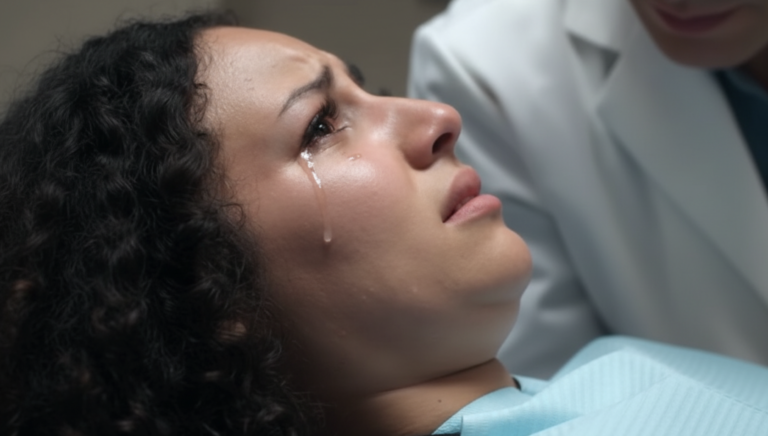
“I’m going to tell you something and I want you to actually hear it,” Walter said. “I’m not angry at you. I feel sorry for you. Because what you did this morning — that comes from somewhere. That kind of careless cruelty doesn’t just appear. Somebody taught you that other people don’t matter. And that is a much bigger problem than anything that happens to you today.”
Tyler said nothing.
“Today’s consequences are the easy part,” Walter said. “The hard part is figuring out why you thought that was acceptable. That’s what you should be thinking about.”
He looked at Tyler’s mother.
“Your son needs more than a suspension,” he said. Not unkindly. Just directly.
She nodded. Her eyes were wet.
Tyler was suspended for five days.
The district filed the incident report. Tyler’s mother, on her own, called the school the following Monday to ask about a community service requirement she could add voluntarily — something with seniors, she said. Something that would make him sit across from elderly people and have to be useful to them.
Dr. Harmon gave her three options.
She chose the one with the most hours.
The following Friday, Walter came back.
Two cups. Sal’s diner. 7:45.
Dennis stepped out of the booth when he saw his father coming up the walk. He held the door open.
“You didn’t have to come back this week,” Dennis said.
“I come every Friday,” Walter said.
He handed Dennis the cup with two sugars.
Dennis took it.
“Cheek okay?” Dennis asked.
“Healed three days ago,” Walter said.
They stood together at the entrance, the way they always did, while the students filed past. Some of them looked at Walter. A few nodded. One girl said, “Good morning, sir,” and meant it.
Walter nodded back.
He drank his coffee.
The morning went on.
Six weeks later, Tyler Mack was on his fourth Saturday at Riverside Senior Center, helping a woman named Dorothy learn how to video-call her grandchildren.
He wasn’t good at it yet.
But he showed up.
And he was learning that slow didn’t mean stopped — it just meant the person had somewhere to be and was still getting there.