Hello there, puzzle friends, and welcome to a brand new picture test!
Today we are stepping into a warm, sunny country kitchen.
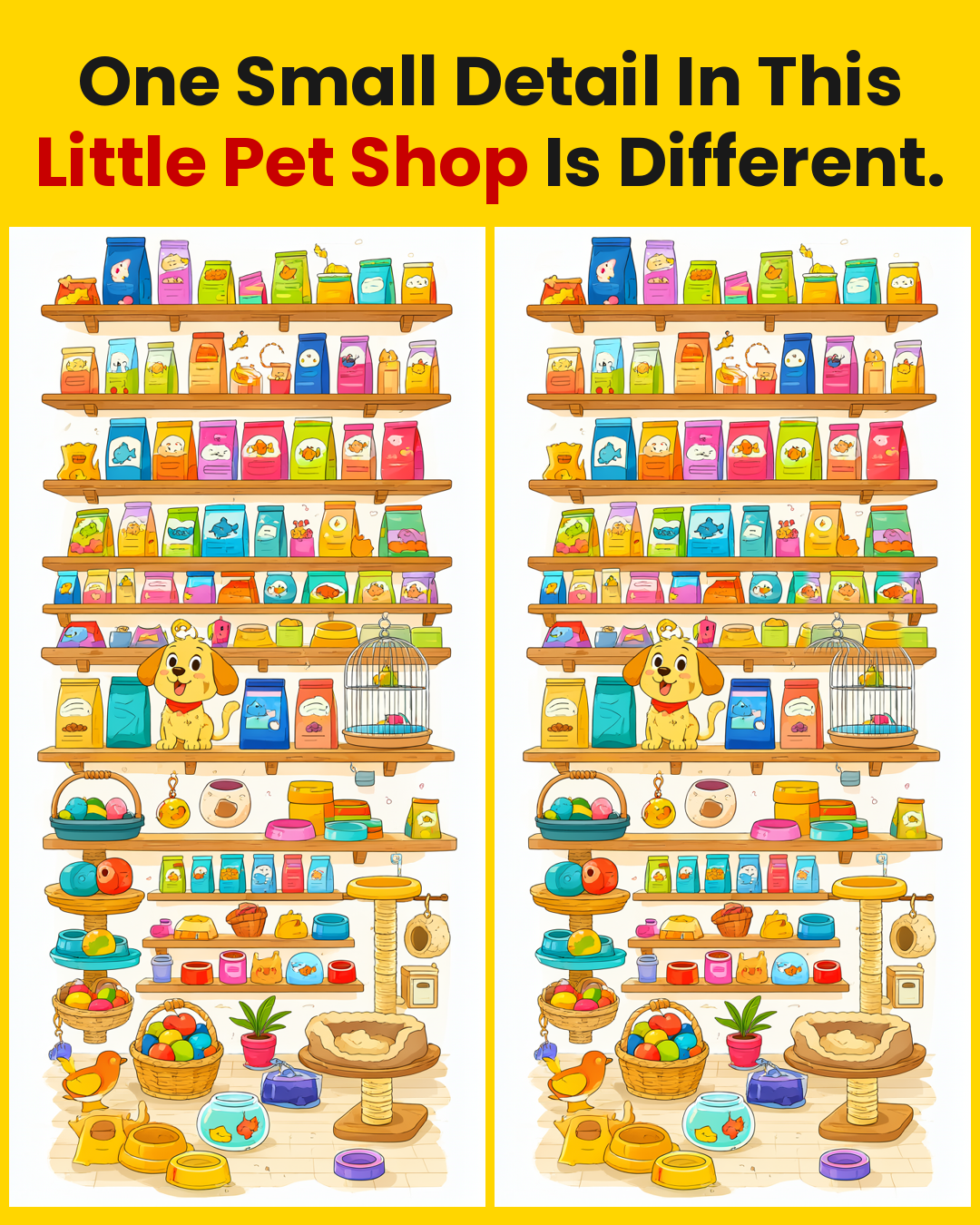
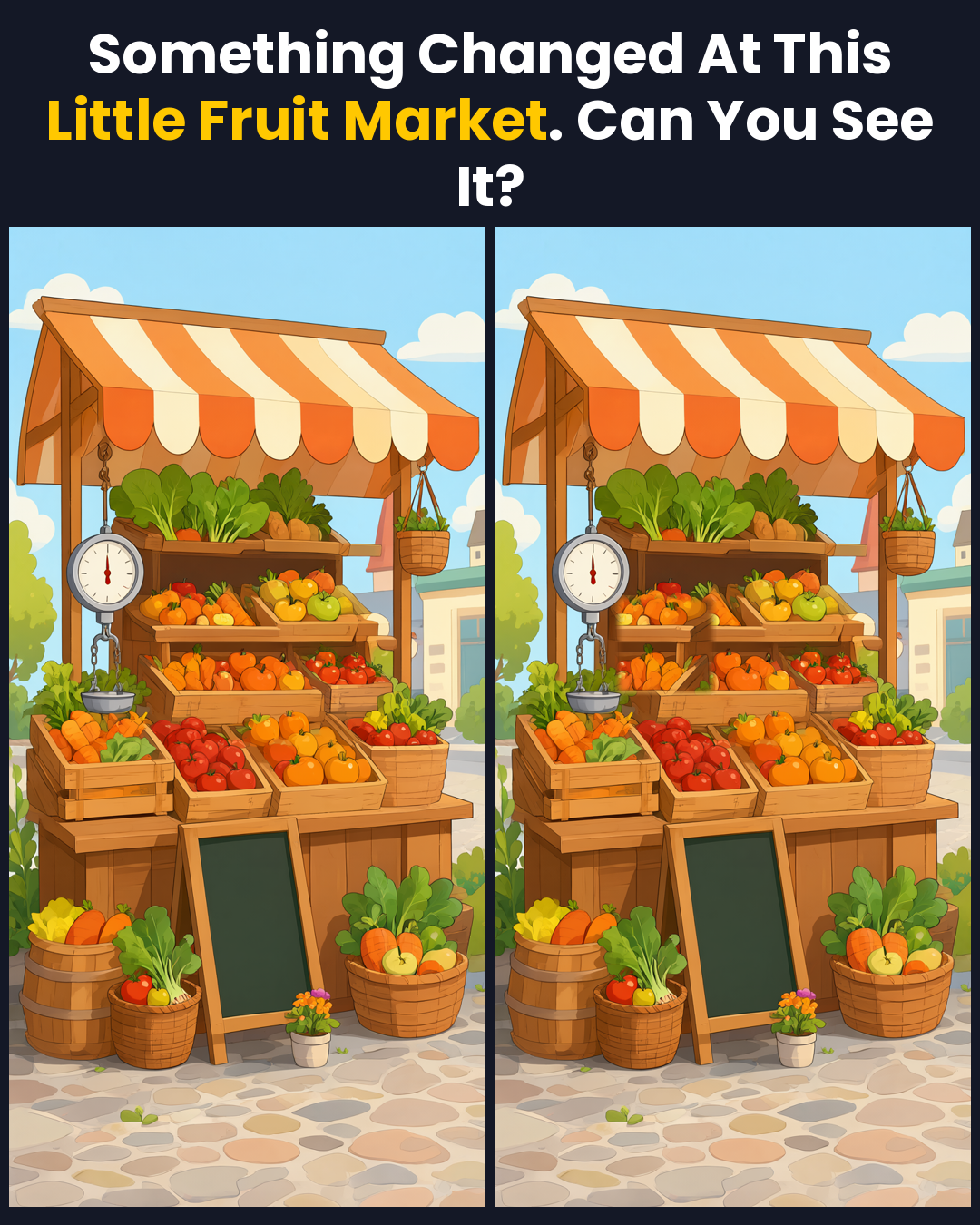
There are two pictures below, and at first glance they look exactly the same.
The shelves hold the same jars, the same plates, the same copper pans.
But one small thing in the right-hand picture is not the same as in the left one.
Only one single detail has been changed, and it is hiding in plain sight.
Here is a gentle tip: do not stare at the bright colours on the top shelf. Bright things grab the eye, and that is exactly why the change is somewhere quieter.
Take a slow breath, look from top to bottom, and see if you can spot it before you read on.
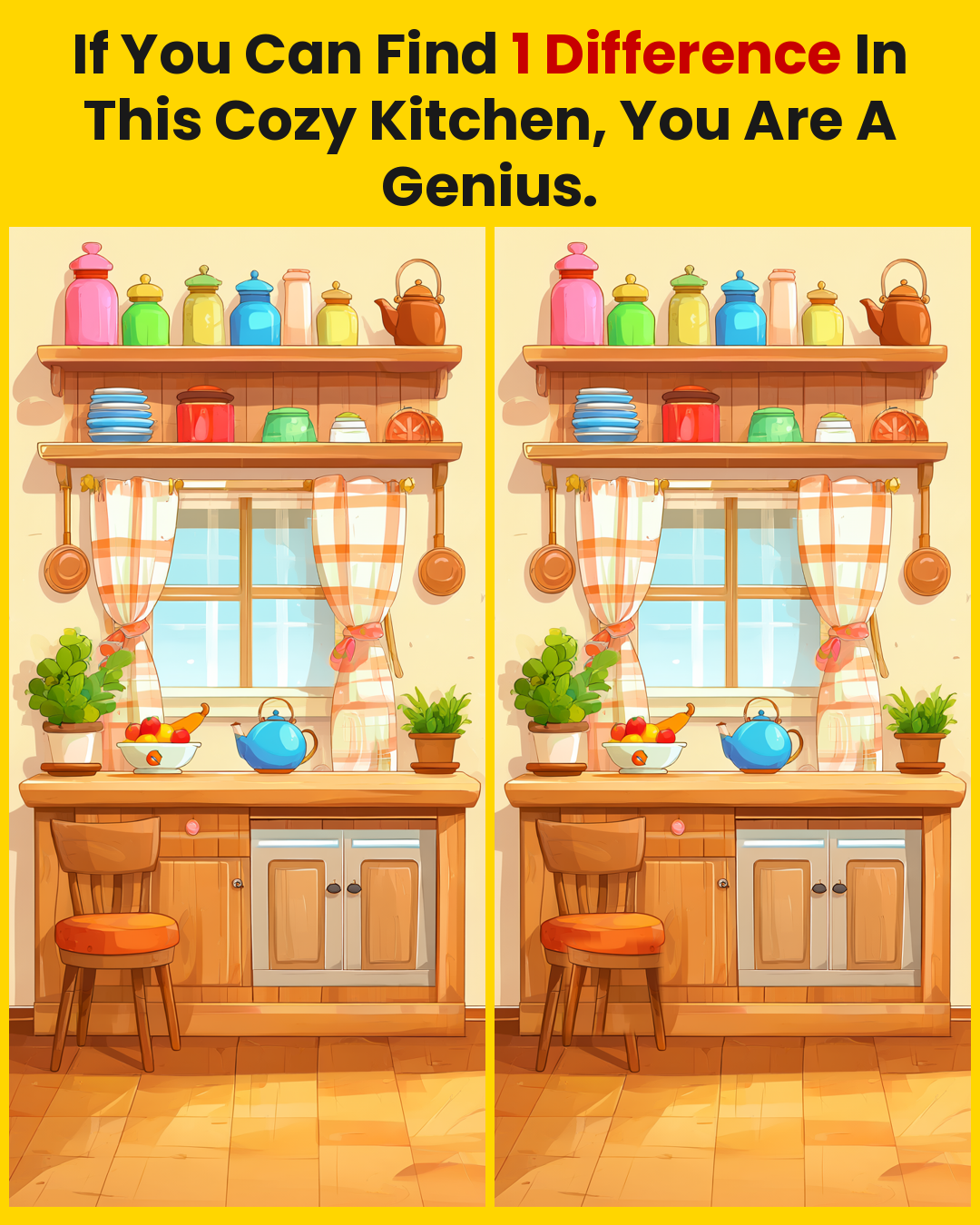
Take your time and look closely before you scroll down!
Where To Look First
The best way to beat a spot-the-difference picture is to stop looking at the whole thing at once. Our eyes naturally jump around a busy image, landing on whatever is brightest or biggest, and then they jump again before we have really looked at anything. That is why people can stare at a picture for a full minute and still see nothing.
Instead, try the band method. Imagine the picture cut into four horizontal bands, like four shelves. Start with the top band in the left picture, then look straight across at the top band in the right picture. Compare only that strip. Then move down to the second band, and so on.
It feels slower, but it is far quicker in the end. Most people who use the band method find the change in well under a minute, while people who hunt randomly can wander for five.
Why Our Brain Finds This So Hard
There is a well known quirk of the mind at work here, and scientists call it change blindness. Our brain does not store a photograph of what we are looking at. It stores a rough summary: shelves, jars, a window, a chair. When something small changes, the summary still fits, so no alarm bell rings.
Colour makes it worse. A kitchen like this one is full of cheerful reds, blues and greens, and colour is the loudest signal our eyes know. While we are busy admiring the pink jar and the blue teapot, a plain wooden object can quietly change shape and we simply do not notice.
That is not a weakness. It is your brain being efficient, keeping the important things and throwing away the rest. It just happens to make you terrible at this particular game.
A Little History Of The Two Pictures
Spot-the-difference puzzles are much older than the internet. They were a favourite in children’s magazines and Sunday newspapers well over a hundred years ago, when printers discovered they could run the same drawing twice and change one line on the second plate.
For many families they became a quiet Sunday afternoon tradition, passed around the table while the kettle boiled. The pictures were usually homely scenes much like this kitchen: a farmyard, a market, a parlour with a cat by the fire.
Doctors and teachers later noticed something useful. People who do these puzzles regularly get noticeably faster at them, and they report that they start noticing small changes in real life too, such as a picture hung slightly crooked or a tool left in the wrong place in the shed.
Your Challenge For Today
Here is the target. Most people need about forty seconds to find today’s change. Anything under twenty seconds puts you in the top group, and under ten seconds is genuinely rare.
If you are still searching after a minute, do not give up. Cover the top half of both pictures with your hand and look only at the bottom half. That single trick solves it for a lot of people.
When you have found it, try it on somebody else before you tell them the answer. Watching a friend search the same picture is half the fun, and it is a lovely way to pass ten minutes over a cup of coffee.
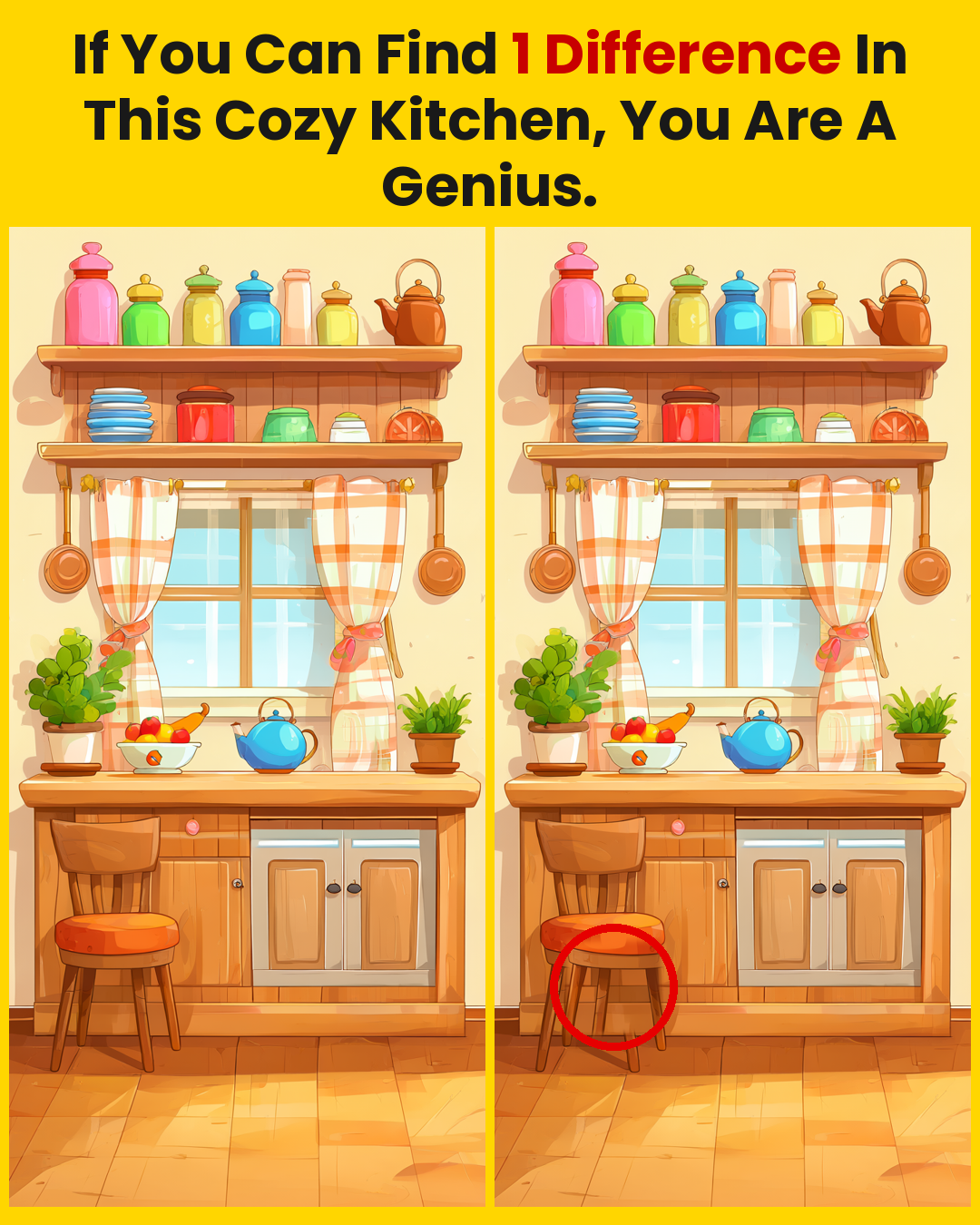
ANSWER: The wooden chair is turned the other way around in the second picture
Exactly Where The Change Is
Look at the bottom left of each picture, at the wooden chair tucked under the kitchen counter. In the first picture the chair sits with its back on the left and its legs stepping away to the right. In the second picture the whole chair has been turned around, so the back and the legs now face the opposite way.
It is a real change, and once you see it you cannot unsee it. The seat, the little round cushion and the four legs all sit at a different angle.
Most people miss it for one simple reason: the chair is plain brown wood in a picture full of pink, blue, red and green. Our eyes treat quiet colours as background and skip straight over them, heading for the colourful jars on the shelves instead.
Why The Bottom Of A Picture Gets Ignored
There is a second reason this one is sneaky. When we look at any picture, our gaze almost always starts near the top and in the middle, then drifts in a rough circle. The bottom corners are the very last place we visit, and often we never get there at all.
Puzzle makers have known this for a hundred years, which is why so many changes are hidden low down and off to one side. Next time you meet one of these pictures, start at the bottom corners on purpose. You will be surprised how often the answer is waiting there.
It also helps to look for shape rather than colour. A turned chair, a flipped crate, a handle pointing the wrong way: these are changes of direction, and direction is something our quick glance almost never checks.
So How Did You Do?
Under ten seconds means you have eagle eyes and a very steady way of looking. Between ten and thirty seconds is excellent and puts you well ahead of most readers. Up to a minute is a perfectly good, normal score, and if it took longer than that, you are in very good company indeed.
Whatever your time, come back tomorrow. These puzzles really do train the eye, and people who do one every morning often cut their time in half within a couple of weeks.