Hello, dear puzzle friends!
Today we are going out into a sunny garden full of cheerful little blue birds.
They are sitting on the lawn, near the wooden fence and among the small white flowers.
Your task sounds easy: simply count them all.
But be careful, because counting is never as simple as it looks.
Nine is the number almost everybody says, and almost everybody is wrong.
A small tip: not every bird in this garden is the same size.
Count slowly, count twice, and the answer will be waiting for you at the bottom.
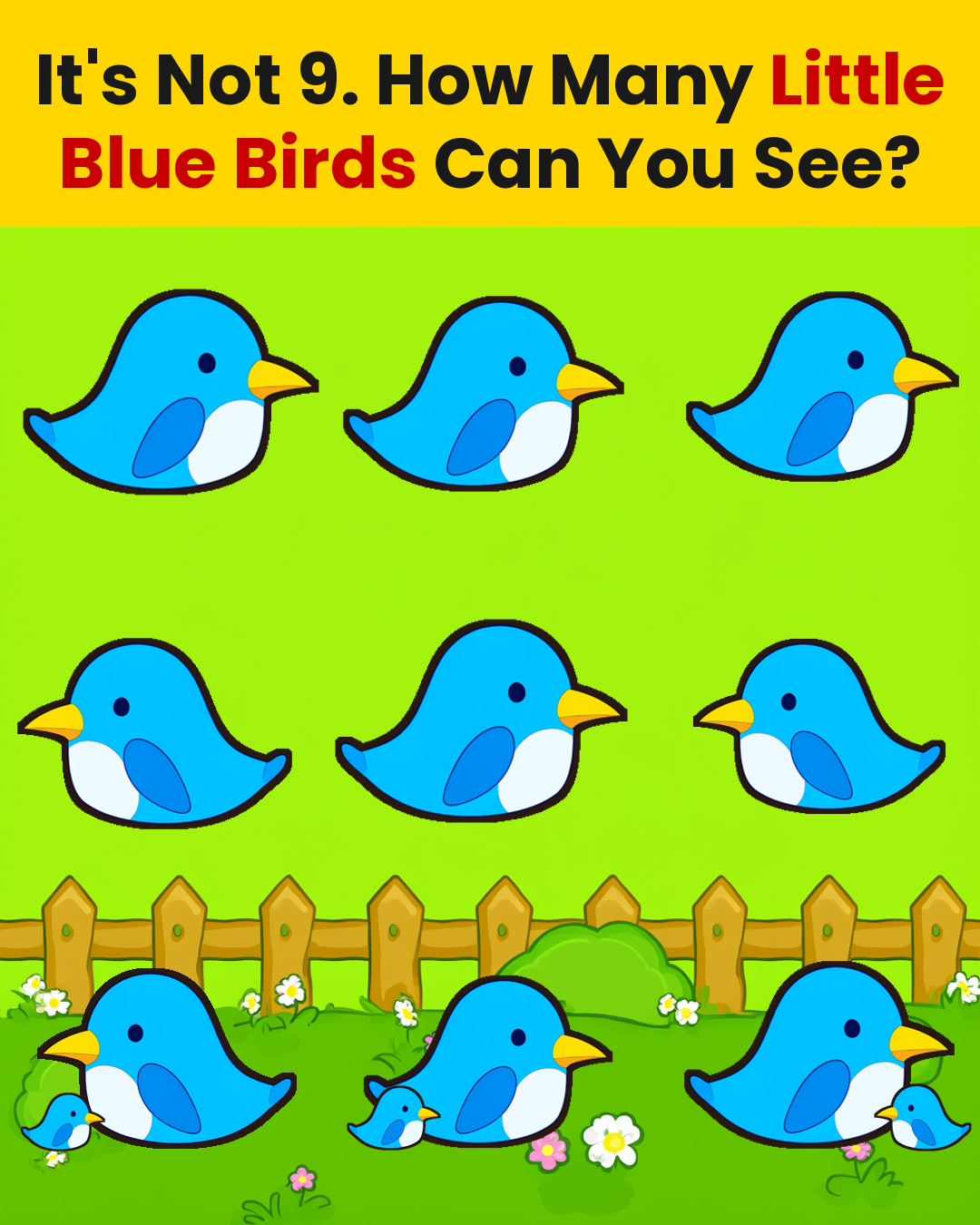
Take your time and look closely before you scroll down!
Count In Rows, Never In Circles
The most common mistake in a counting puzzle is to let the eyes wander. You count a bird here, another one over there, then back to the first side, and before long you have counted the same bird twice or skipped one altogether.
The cure is simple. Read the picture like a page of a book. Start at the top left, move straight across to the right, then drop down to the next row and do the same again.
Use your finger on the screen if that helps, or a pencil tip if you have printed the picture. It feels slow, but it is the fastest way to arrive at the correct number.
Why We Stop Counting Too Soon
Our minds like a tidy answer. The moment the big birds form a neat pattern, something inside us says the job is done, and we announce a number with real confidence.
There is also the matter of size. We expect the important things in a picture to be large, so small objects are quietly treated as decoration. A tiny bird can look like part of the grass to a brain that has already made up its mind.
Colour helps the trick along. When every bird wears the same blue coat, they melt together into a group, and groups are counted by feel rather than one at a time.
A Habit Worth Keeping
Counting puzzles have appeared in children’s books and family magazines for well over a century, and they have never gone out of fashion. Teachers still use them because they train something genuinely useful: careful, patient attention.
In daily life the same habit helps more than we realise. Checking a shopping receipt, counting out change at the market, reading a list of appointments, following a knitting pattern. All of it rewards the person who takes one extra look.
And a puzzle is a far more pleasant way to practise than a receipt will ever be.
Your Challenge For Today
Most people give their first answer in under ten seconds, and most of those first answers are wrong. Those who count a second time almost always do better.
So give yourself two honest rounds before you scroll down. Count once quickly, then once slowly, row by row. Then share the picture with a friend and see whether they fall into the same trap that catches nearly everybody.
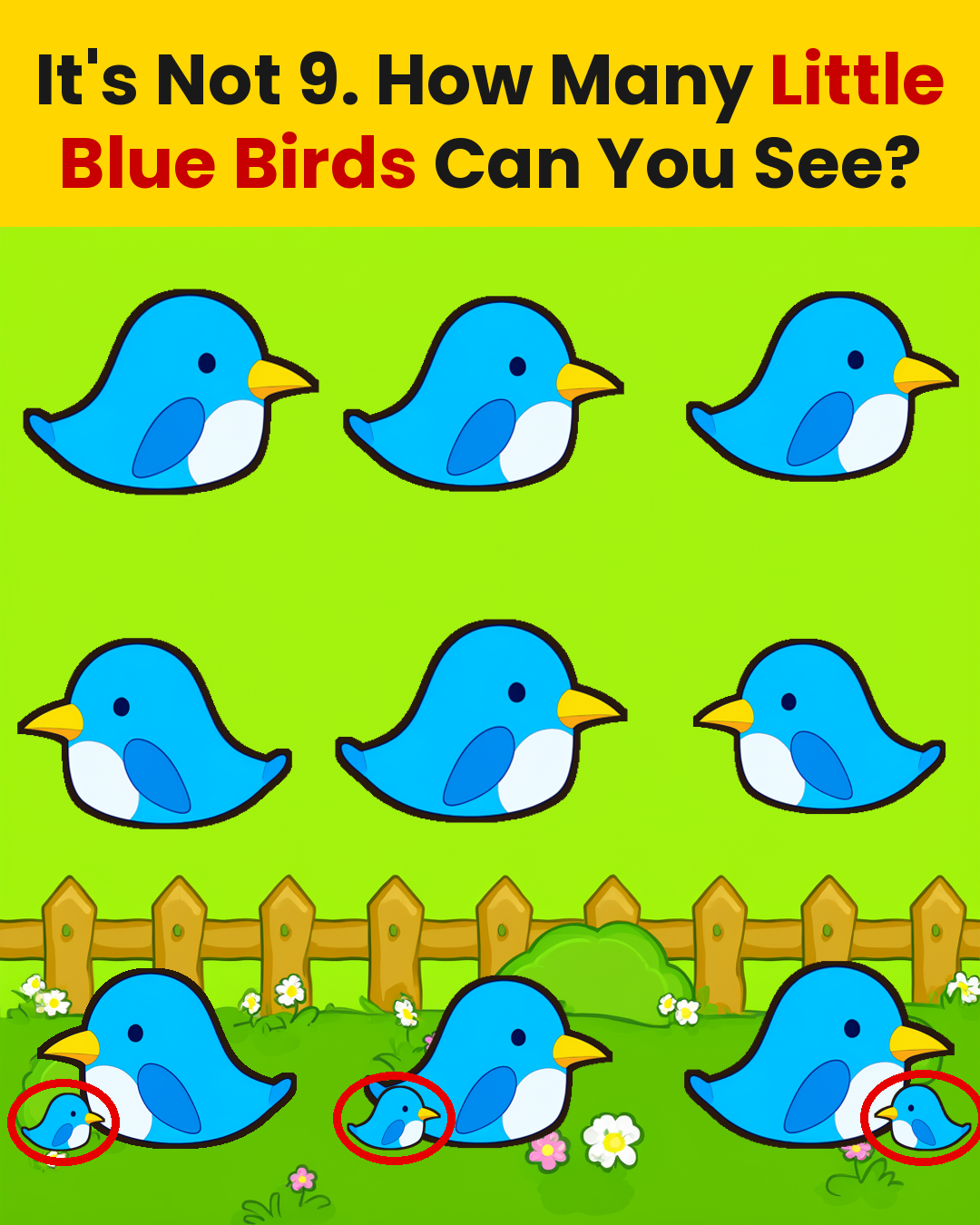
ANSWER: 12 birds – nine big ones and three tiny ones tucked into the grass beside them.
There Are Twelve Birds In The Garden
The correct answer is twelve. Nine of them are the large, obvious birds: three across the top of the picture, three in the middle row, and three sitting on the grass in front of the wooden fence.
The other three are much smaller, and they are the ones that decide this puzzle. Each tiny bird is tucked close beside one of the three big birds at the bottom, nestling in the green grass among the little flowers. One is on the far left, one is in the middle of the lawn, and one is on the right.
Why Almost Everyone Says Nine
The nine big birds are arranged in three tidy rows, and tidiness is deeply convincing. Once your eyes recognise that neat pattern, the brain treats the counting as finished and happily reports nine.
The small birds then face two problems at once. They are low in the picture, where our attention has already faded, and they share their exact shade of blue with their larger neighbours. A small shape in a matching colour, sitting right beside a big one, reads as part of that bigger bird rather than as a bird of its own.
How Did You Do?
If you said twelve on your first try, you have genuinely sharp eyes and a very careful way of looking. Finding eleven means you spotted most of the hidden ones and deserve a round of applause as well.
If you said nine, welcome to the biggest club of all. Nearly everybody starts there. Now look at the picture one more time, this time along the bottom row only, and you will see how neatly the little ones were hidden in plain sight.