Hello, puzzle friends, and welcome back!
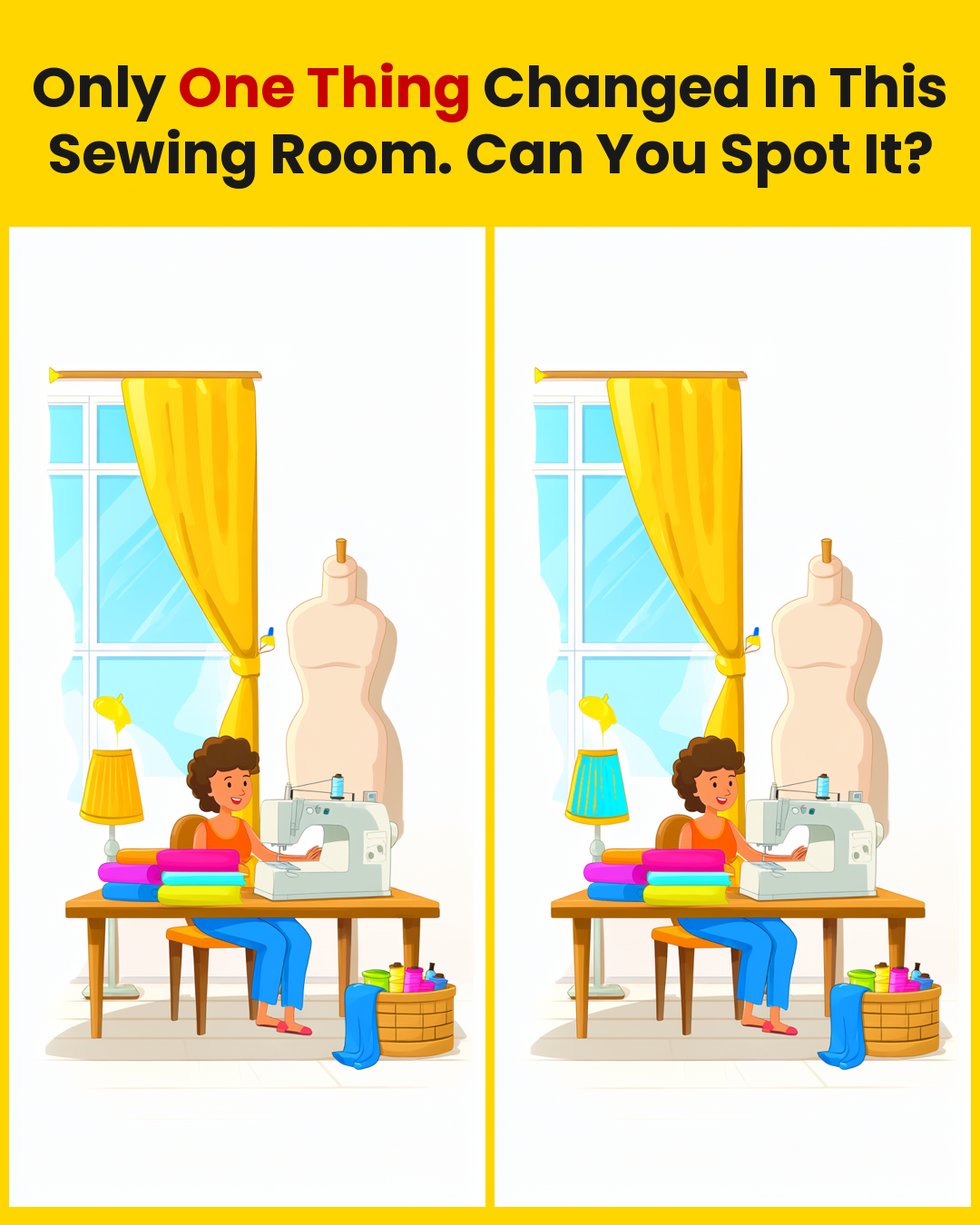
Today we are visiting a bright little sewing room on a sunny morning.
A cheerful lady is busy at her sewing machine, with folded fabrics piled up beside her.
The two pictures seem identical, right down to the yellow curtain and the basket of threads.
But one detail has quietly changed between them.
Start at the window, then move slowly along the table and down to the floor.
A gentle tip: things that give light are easy to look at and surprisingly easy to forget.
Good luck, and remember the answer is waiting at the bottom of the page.
Take your time and look closely before you scroll down!
Name Every Object Out Loud
Here is a simple method that works beautifully with pictures like this one. Instead of letting your eyes drift, make a list. Window, curtain, curtain rod, lamp, mannequin, lady, chair, sewing machine, folded fabrics, table, basket, spools, floor.
Now take that list and check the objects one by one in both pictures. Say the name quietly to yourself as you compare each item.
Putting a name on something forces your mind to look at it properly, instead of waving it through as part of the background. Many readers tell us this little trick cuts their solving time in half, and it works just as well on a crowded photograph.
Why Colour Changes Are So Sneaky
When a whole object disappears from a picture, we usually notice quickly, because the shape of the scene changes and the gap feels wrong. A change of colour is far quieter, since every shape and every line stays exactly where it belongs.
Our eyes also adjust to the overall mood of a picture. This sewing room is full of warm yellows and soft creams, so a new colour can slip in and feel almost at home.
There is one more reason. We rarely store colour in memory with any precision. Try to recall the exact shade of your neighbour’s front door. You will remember that it has a door, and perhaps that it is darkish, and there the picture usually ends.
Where These Puzzles Came From
Picture puzzles like this one grew up alongside printed newspapers. Once papers could carry good illustrations, editors needed something to keep readers lingering on the page, and a pair of almost identical drawings did the job perfectly.
They proved popular with every age at once. Children loved the hunt, grown ups enjoyed the challenge, and families often solved them together at the kitchen table on a Sunday.
That family feeling is the reason these puzzles are still here today. They ask for no special knowledge, no reading speed and no clever vocabulary. All they ask for is a pair of eyes and a little patience.
Take The Challenge
Most people need between twenty and forty seconds to find the change in this sewing room. Readers who name the objects as they go are often finished much sooner.
So give it one good, honest try. Then pass the picture along to a friend or a grandchild and time them. There is nothing quite as satisfying as watching someone else search for a detail you have already found.
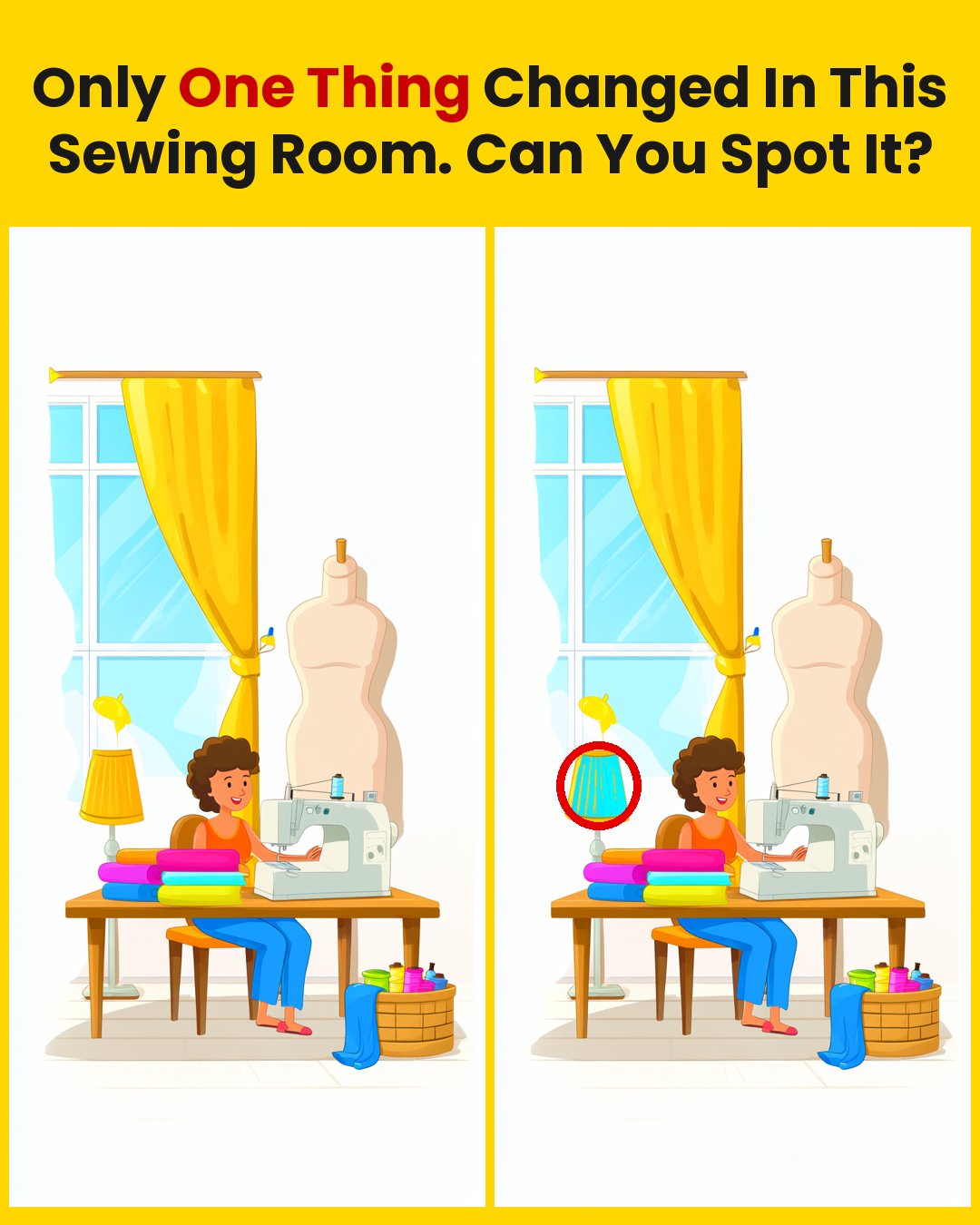
ANSWER: The lampshade changed colour – it is yellow in the first picture and light blue in the second.
The Little Table Lamp Holds The Secret
On the left side of the room, just behind the pile of folded fabrics, stands a small table lamp. Its shade is the answer to today’s puzzle.
In the first picture the lampshade is a warm, sunny yellow that matches the curtain hanging at the window. In the second picture the very same shade has turned a cool, light blue. The little bulb above it, the slim stand and the base all remain unchanged, which is exactly what makes the swap so quiet.
Why The Lamp Fools So Many People
The lamp sits right at the edge of the scene, and the eye naturally slides past the edges towards the busy middle, where the lady and the sewing machine are working away.
There is a second trap. The yellow curtain fills a large part of the picture, so your mind decides early that yellow is the colour of this room. Once that idea settles in, a yellow lampshade feels so ordinary that it never gets a second glance, and a blue one in the same spot can slip past as simply part of the furniture.
How Did You Do?
Found it in under ten seconds? That is truly excellent, and it means you look at the whole frame rather than only the centre. Ten to thirty seconds is a strong, steady score and the one most of our readers achieve.
If it took you more than a minute, do not worry for a moment. These puzzles are a skill, and skills grow with practice. Try the next one tomorrow and you may surprise yourself with how much quicker you have become.