Hello, puzzle friends, and welcome to the seaside!
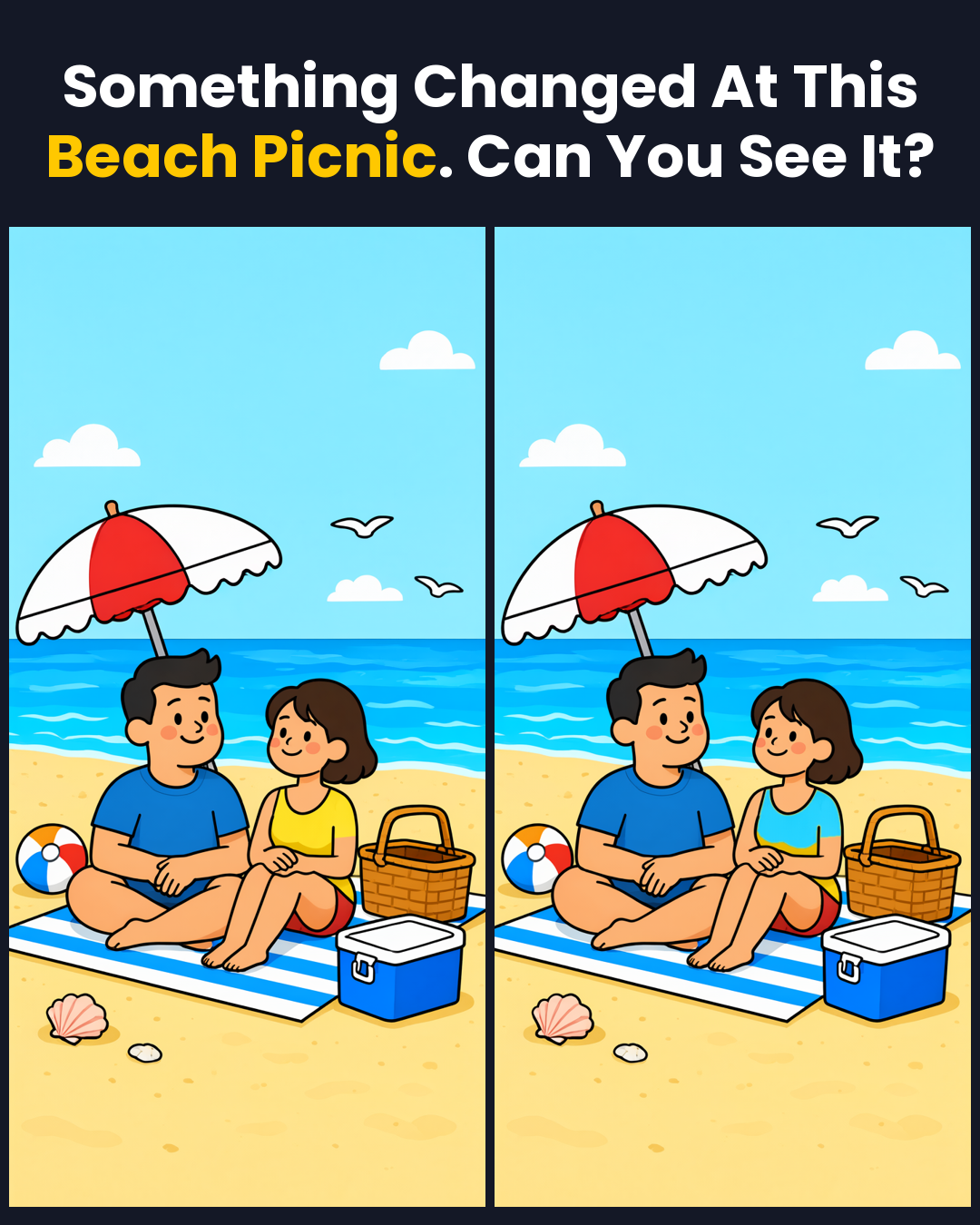
Today we are joining two friends on a quiet stretch of sand, with a striped blanket, a picnic basket and a red and white umbrella to keep the sun off.
The two pictures were taken a moment apart, and they look identical. The waves are the same, the seagulls are the same, even the little shells on the sand have not moved.
But somewhere in this peaceful afternoon, one single thing has changed.
It is not hidden behind anything and it is not microscopic. It is right there in the open, which is exactly what makes it so slippery.
A gentle tip before you begin: start at the water line and work downward toward the blanket.
There is no hurry at all. Settle in, look carefully, and enjoy the sea air.
Good luck!
Take your time and look closely before you scroll down!
Where To Look First
When two pictures sit side by side, the eye naturally flies to the biggest and brightest thing. Here that is the red and white umbrella, so almost everybody checks the umbrella first, and almost nobody finds the answer there.
A better method is to make a short list before you start, and then tick it off one item at a time. Sky and clouds. Seagulls. Sea and waves. Umbrella. The two friends, head to toe. The blanket. The basket. The cooler. The beach ball. The shells on the sand.
Ten items, ten quick comparisons, and you have covered the whole picture without wandering. Puzzlers who work from a list almost always beat puzzlers who simply stare, and they do it with far less frustration.
The Trick Our Attention Plays
There is a well-known effect in psychology called change blindness. Show somebody two nearly identical scenes and they will often miss a surprisingly large difference, sometimes even when it is pointed out to them in advance.
The reason is that we do not store a photograph in our heads. We store a summary. The summary of this picture is something like two friends on a beach blanket under a striped umbrella. That summary is true of both pictures, so the brain happily declares them a match and stops working.
Bright sunlight adds another layer. Strong colours sitting next to each other, blue sea, yellow sand, red umbrella, tire the eye quickly, and a tired eye becomes a careless eye. That is why looking away for two seconds and then looking back is such a useful trick.
A Little Puzzle History
Spot-the-difference pictures have been entertaining families for well over a century. They were a regular feature of illustrated weeklies long before television, drawn by hand in pairs by artists who had to copy their own work line for line and then make one careful change.
That hand-drawn stage is why the old puzzles so often hid their differences in a hat ribbon, a shoe buckle or a teapot lid. Those were the small, fiddly details an artist could alter without redrawing the whole picture, and readers learned to hunt there first.
Modern puzzles like this one are made on a computer, but the spirit has not changed at all. Someone still chooses one quiet thing and alters it, hoping you will look everywhere else.
The Challenge
On a beach scene like this, the average reader needs about thirty to forty-five seconds. The busy background of sand and sea slows most people down more than they expect.
Try this: set yourself forty seconds, use the list method from above, and do not let your eyes drift back to the umbrella once you have checked it.
If you beat the clock, make it harder. Show the picture to a friend, keep quiet, and count how long they take. There is a particular joy in watching somebody look straight at the answer three times in a row without seeing it, and then burst out laughing when they finally do.
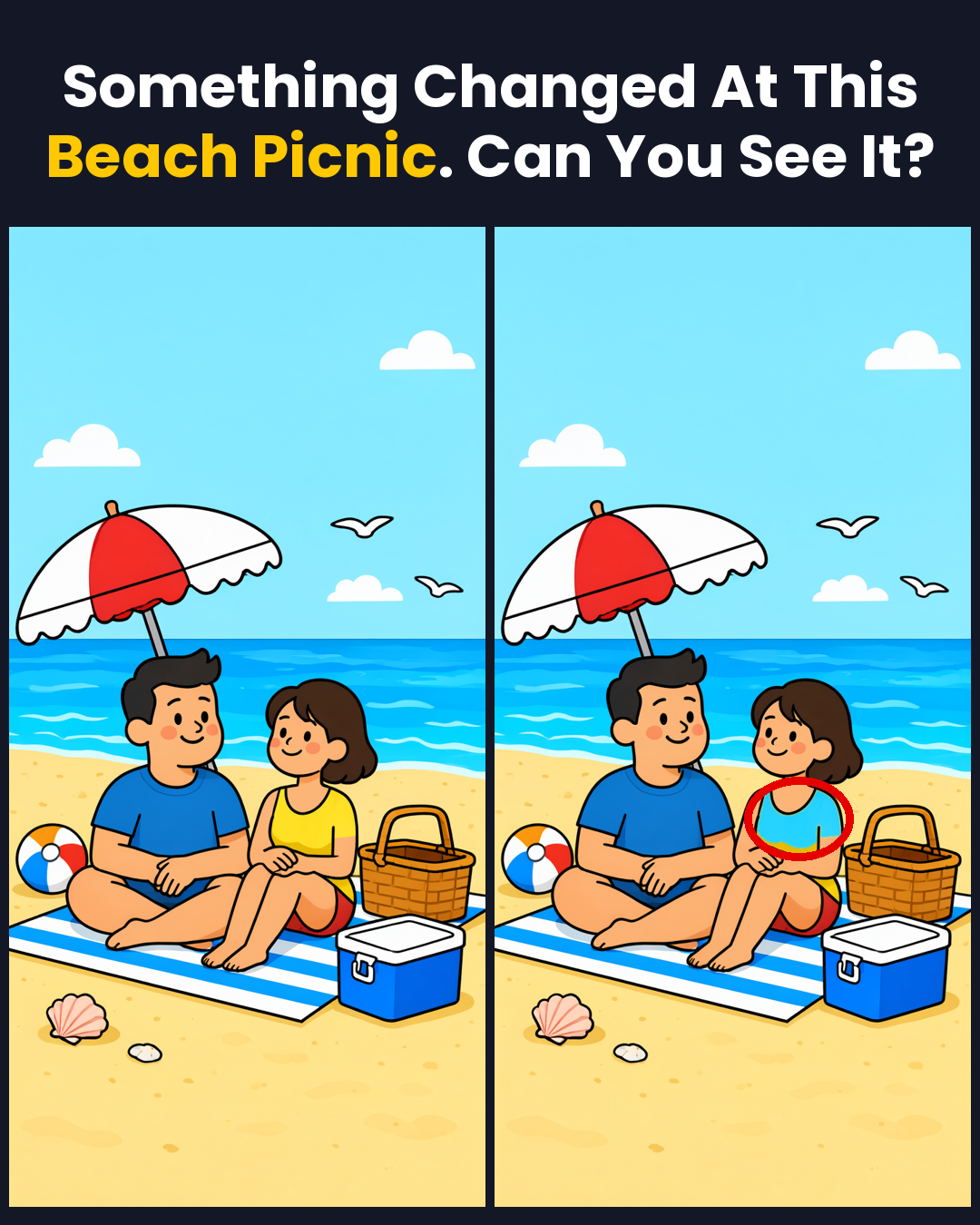
ANSWER: The woman’s top changed colour – it is yellow in the first picture and light blue in the second.
Where The Change Is Hiding
Look at the two friends sitting on the striped blanket, and then look only at the woman on the right, the one with the short brown hair.
In the first picture she is wearing a bright yellow sleeveless top. In the second picture that same top has turned a soft light blue, close to the colour of the sky above her. Her hair, her face, her red shorts and the way she is sitting are all exactly the same, which is what makes the swap so easy to overlook.
Everything else on the beach matches perfectly. The umbrella has the same red panels, the basket has the same handle, the cooler is the same blue, the beach ball shows the same stripes, and the two shells lie in exactly the same place on the sand.
Why It Slips Past Almost Everyone
The new colour is the problem. A light blue top on a bright beach, with blue sky above and blue sea behind, blends into the general feeling of the picture. Nothing about it shouts for attention. If her top had turned purple or black, most people would have seen it at once.
There is also a habit working against us. We look at faces first, decide the people are the same people, and then move on to the objects. Clothing sits in a strange middle ground: it is part of the person, so we feel we have already checked it, when in truth we only checked the face.
Next time, make a point of looking at every person twice. Once for the face, once for the clothes.
How Did You Do?
Under ten seconds: remarkable. That is eagle-eye territory, and in a busy scene like this one it is genuinely rare.
Ten to thirty seconds: very sharp indeed. You clearly looked at the people properly instead of being hypnotised by the umbrella.
Thirty to sixty seconds: a fine result, and exactly where most readers finish.
More than a minute, or you needed a peek: that is perfectly normal, and you are in very good company. Come back tomorrow, try the list method from the start, and watch your time drop.