Hello, puzzle friends!
Today we are stepping into a warm little pottery workshop.
A kind lady is shaping a clay pot on her wheel, and the shelves behind her are full of vases, mugs and tools.
The two pictures look exactly the same at first glance.
But one small detail is not the same in both of them.
Take your time, look shelf by shelf, and trust your own eyes.
Here is a gentle tip: the biggest things in a picture are almost never where the change is hiding.
Can you find the single difference before you reach the bottom of the page?
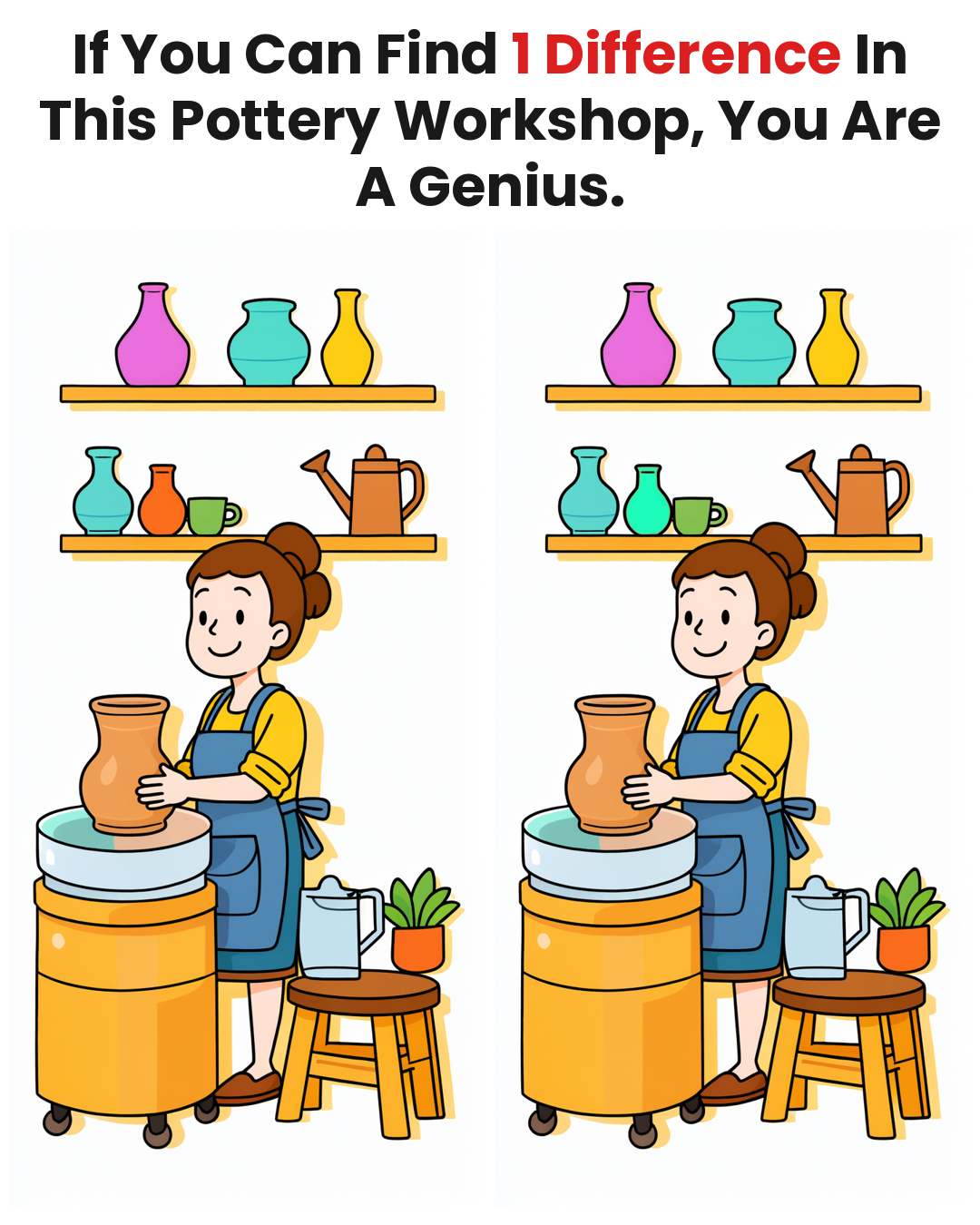
Take your time and look closely before you scroll down!
Start With The Shelves, Not The People
When two pictures sit side by side, most of us begin with the biggest thing in them. Here that is the lady at the wheel, and that is exactly what the puzzle maker hopes you will do. Large shapes are easy for the eye to compare, so a difference is almost never hidden in them.
A better method is to work in strips. Cover the lower half of both pictures with your hand and compare only the top shelf, item by item: first vase, second vase, third vase. Then move down one shelf and do the same. Then the wheel, then the floor. Small, slow steps beat one long sweeping stare every single time.
It also helps to compare colours before shapes. In a flat cartoon drawing like this one, a changed outline is rare. A changed colour is far more common, and colour is something your eye can judge in a fraction of a second, as soon as you actually look straight at it.
Why Our Brain Finds This So Hard
Our eyes take in a great deal, but our attention is surprisingly narrow. Researchers call the effect change blindness: when we are not looking directly at something, a change can happen right in front of us and we simply will not notice it.
There is a second trap in this picture. The workshop is full of pottery, and all of it is brightly coloured. When a scene already holds pink, yellow, turquoise and orange, one more bright colour just melts into the crowd. The brain files the whole shelf away as a row of colourful pots and stops checking the details one by one.
That is not a weakness. It is a clever shortcut that saves us energy all day long, every day of our lives. A puzzle like this one is simply a friendly way to switch the shortcut off for a minute or two.
A Puzzle With A Long History
Spot the difference puzzles are much older than the internet. They were a favourite in family magazines and Sunday newspapers for well over a hundred years. An artist would draw the scene once, then draw it again by hand with a few small changes made on purpose, and readers would send in their answers by post.
Today the pictures are made on a computer, but the idea has not changed one bit. Teachers and eye doctors still use the same kind of exercise, because comparing two images patiently trains careful looking and steady concentration. Those are two good habits that serve us well far away from the page.
Take The Friendly Challenge
Most people need about thirty seconds to find this one. If you spot it in under fifteen, you have a very sharp pair of eyes indeed.
Give yourself one quiet minute before you scroll down. And if you enjoy it, show the picture to a friend or to the grandchildren and see who finds it first. Half the fun is watching somebody else stare at exactly the same shelf you did.
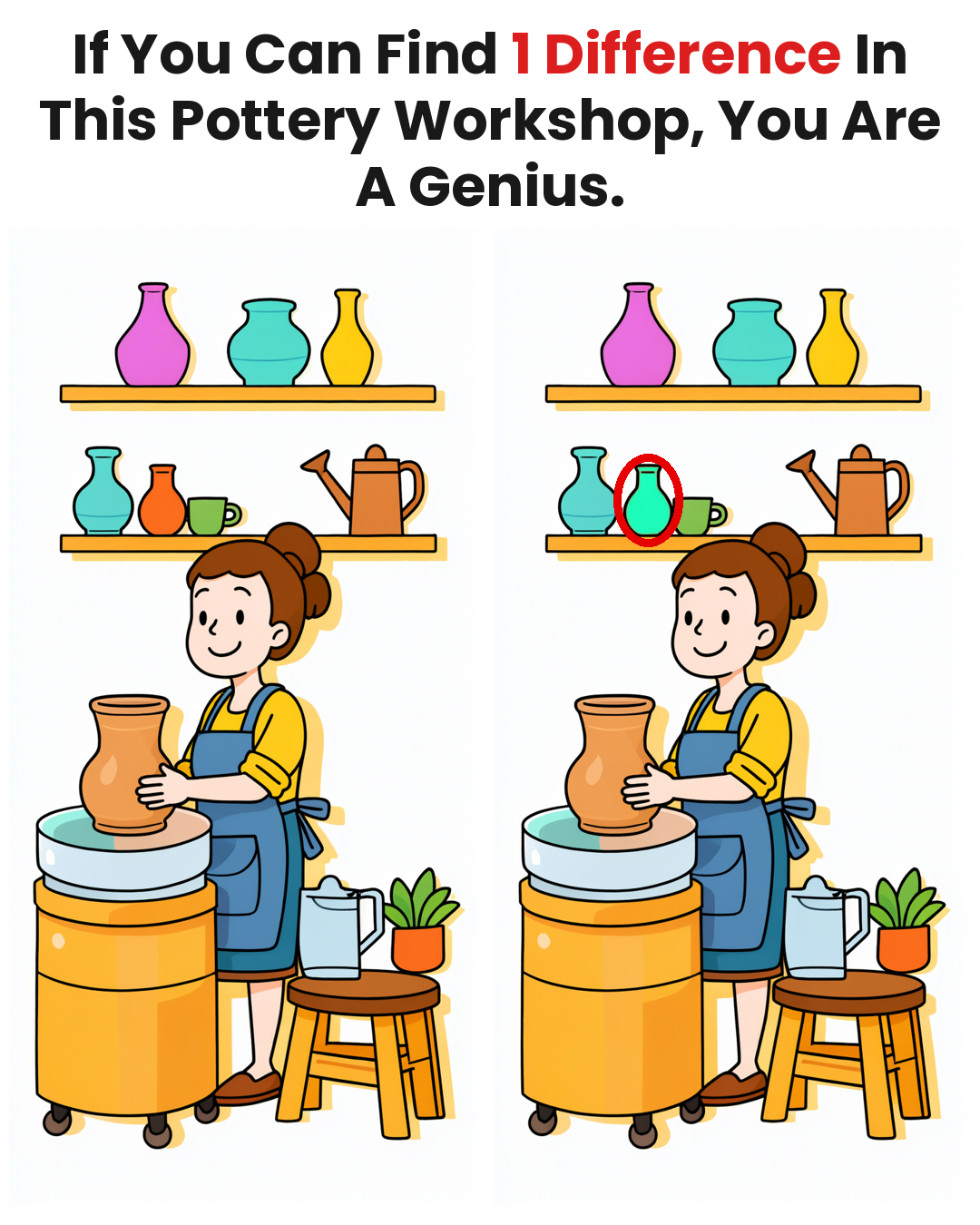
ANSWER: The small orange vase on the lower shelf has turned green.
Where The Change Is Hiding
The difference sits on the lower shelf, just behind the lady’s head. In the first picture, the small round vase standing between the tall turquoise jug and the little green mug is a warm orange. In the second picture that very same vase has turned bright green.
Nothing else moved. The upper shelf, the watering can, the big brown jug, the wheel, the stool and the little plant pot are all exactly as they were, and the lady is shaping the same clay pot in both pictures.
Why Most People Walk Right Past It
Two things make this one stubborn. First, the vase is small and it sits close to the lady’s head, so the eye slides past it on the way to her face. Faces pull our attention like a magnet, and the puzzle quietly uses that against us.
Second, the green it turns is almost the same green as the mug standing right beside it. Your brain sees green next to green, decides the two belong together, and moves on without a second look. If you scanned the picture from the outside in, you may also have reached that shelf late and already been in a hurry.
How Did You Do?
Under ten seconds: eagle eyes. You compare pictures like a professional proofreader. Ten to thirty seconds: excellent, that is quicker than most people manage. Thirty to sixty seconds: a very good score, and your method clearly works.
Over a minute, or you needed the answer? Do not worry at all. This one was built to be stubborn, and now you know the trick: work in small strips and check the colours first. Try the same method on the next picture and watch your time drop.