Hello again, puzzle friends, and welcome to a sunny day in the park!
A couple has spread out a blanket, the basket is full, and the little dog is waiting patiently for a crumb.
The same happy scene is shown to you twice, left and right.
They look like perfect twins, but one single detail in the picture on the right is not the same.
Nothing has been added and nothing has been taken away, which is exactly what makes this one tricky.
Look slowly, compare one small area at a time, and see how fast your eyes can catch it.
Ready? The clock starts now.
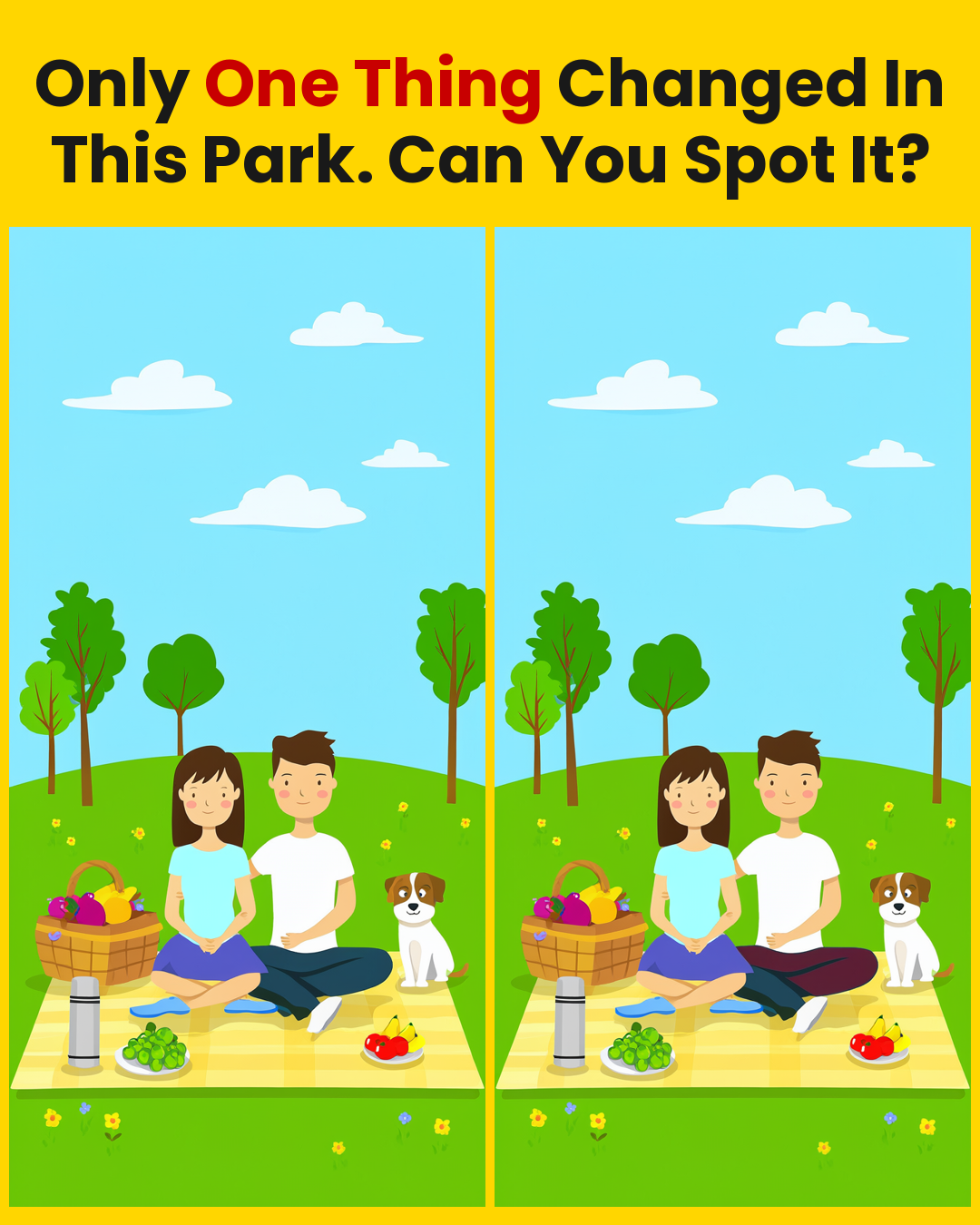
Take your time and look closely before you scroll down!
A Smart Way To Compare Two Pictures
The worst way to solve a puzzle like this is to let your eyes jump around at random. You end up checking the same corner four times and never look at the middle at all.
The method that works is to divide the picture into a few simple zones and take them one by one. Here you could use five: the sky, the trees, the two people, the blanket with the food, and the dog. Compare the sky on the left with the sky on the right, decide that it is the same, and then forget about it completely. Move to the next zone and repeat.
It sounds slow, but most people find the answer in half the time this way, because nothing gets checked twice and nothing gets skipped. And when you have gone through every zone without success, you know the change must be in the one place you called background without really looking.
Why Clothes Are Such Good Hiding Places
There is a reason this picture fools so many people. Our brain is extremely good with faces and extremely careless with everything else. We look at the two faces, decide they are the same friendly couple, and our attention moves straight to the colourful things: the fruit in the basket, the grapes on the plate, the dog with its brown ears.
Clothes fall into a strange middle ground. We register them as a shape, not as a colour. If you had to describe this picture from memory a minute from now, you would probably say a man in a white shirt sitting on a blanket, and you would be quite unsure about anything below his waist.
That is why a quiet change of colour in a dark area works so well. Dark blue and dark red are close cousins at a glance, and in a busy sunny scene neither one shouts for attention.
A Puzzle With A Long History
Spot the difference has been printed in newspapers and children’s magazines for well over a century, usually beside the crossword and the word search. Artists drew the two pictures by hand, twice, which took real skill and a steady wrist.
The reason the game never went out of fashion is that it needs nothing from the player. No reading, no vocabulary, no mathematics. A ten year old and a ninety year old can play the same puzzle and have an equal chance, and both of them get the same small rush of pleasure at the moment of discovery.
The Challenge
Most people need about thirty seconds here. Under fifteen seconds puts you well ahead of the crowd, and under eight means your attention is in excellent shape today.
Have one more careful look before you scroll. Then pass the picture to a friend, say nothing at all, and simply enjoy watching them search.
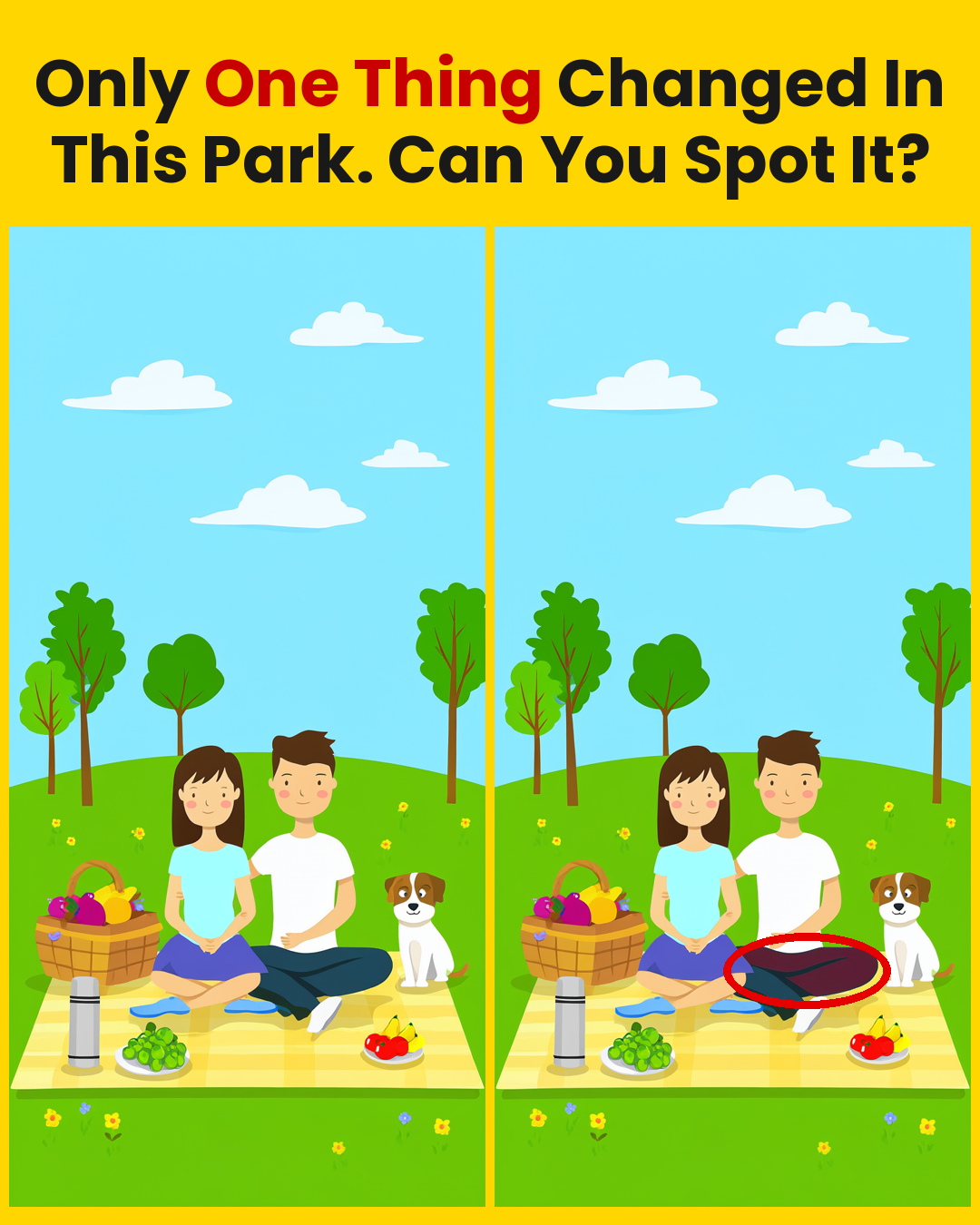
ANSWER: The man’s trousers are dark red in the second picture instead of dark blue
Where The Change Is
Look at the man sitting cross legged on the blanket. In the first picture his trousers are a deep navy blue. In the second picture that same pair of trousers has become a dark reddish brown, closer to wine than to blue.
Everything else stayed exactly as it was: the white shirt, the white shoe peeping out, the fold of the fabric, even the shadow on the blanket. Only the colour of the cloth was swapped, which is why nothing about the picture feels wrong until you look straight at it.
Why Almost Everyone Walks Past It
Two things work against you here. The first is that both colours are dark. In bright sunlight our eyes are busy with the greens, the yellows and the blue sky, and dark areas are the places we examine last.
The second is the company the trousers keep. They sit right next to the woman’s bright purple skirt and the blue shoes, so that part of the picture already contains several deep colours. One more dark patch slips in among them without raising any alarm.
If you want to catch this kind of trick faster next time, try squinting until the picture goes blurry. Shapes disappear, colour blocks remain, and a swapped colour suddenly stands out like a flag.
How Did You Do?
Under 10 seconds: eagle eyes, and a rare talent for colour.
10 to 30 seconds: very good indeed. You searched in an orderly way and it paid off.
30 to 60 seconds: completely normal, and the most common result by far.
Over a minute: no shame at all. This one is designed to be quiet. Your eyes will be quicker on the next puzzle, because now you know where these little tricks like to hide.