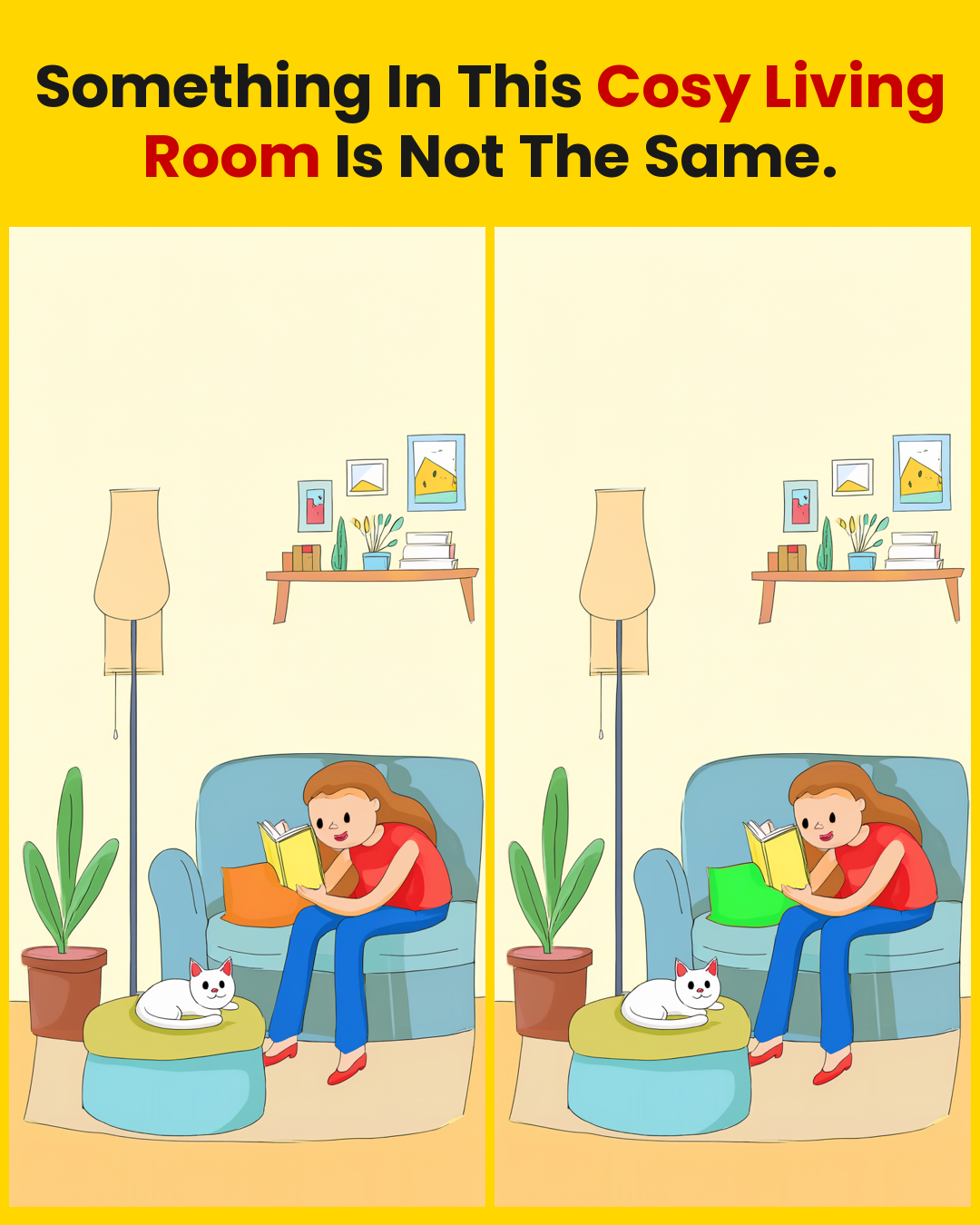
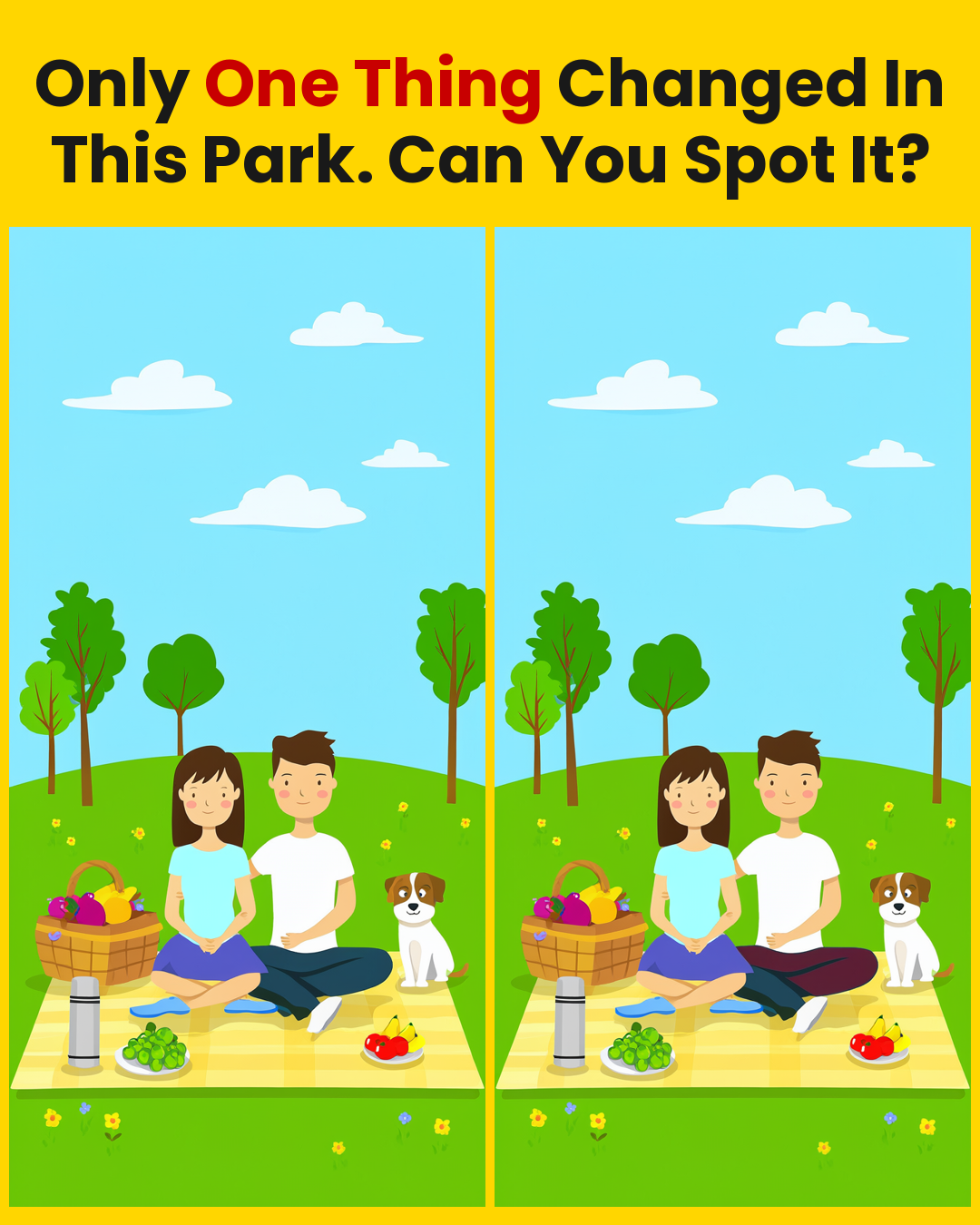
Hello, puzzle friends, and welcome to today’s little eye test!
The picture above shows the same cheerful bakery twice, side by side.
At first glance the two halves look exactly the same: the same baker, the same warm bread, the same tray of pretty cupcakes.
But one single detail has quietly changed in the picture on the right, and it is waiting for a sharp pair of eyes to catch it.
Take your time, look slowly from one side to the other, and trust your first feeling if something seems a little off.
When you think you have found it, scroll down and see whether you were right.
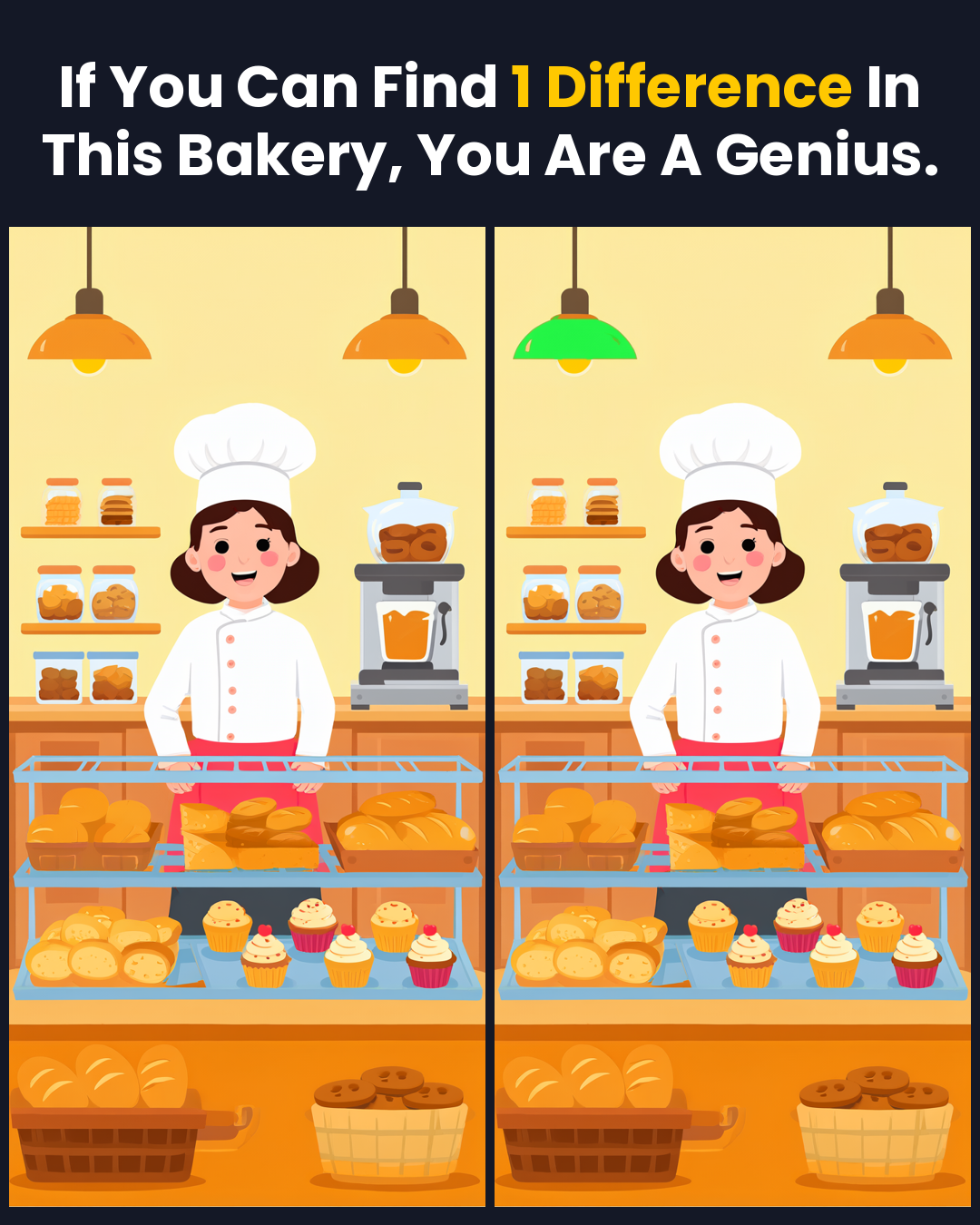
Take your time and look closely before you scroll down!
Start At The Edges, Not In The Middle
When most of us look at a picture like this, our eyes go straight to the face. The friendly baker in her white hat is the warmest thing in the scene, so she pulls our attention like a magnet. That is exactly why so many people search for a long time without finding anything.
A better method is to forget the middle for a moment and work around the frame instead. Start in the top left corner of the first picture, compare it with the top left corner of the second, then move slowly along the top, down the right side, along the bottom and back up. It feels slower, but it is far more reliable, because the maker of a puzzle like this loves to hide the change where nobody is looking.
If that does not work, try the opposite trick: let your eyes go soft and look at both halves at once, without focusing on anything in particular. A change in colour or shape often jumps out all by itself when you stop hunting for it.
Why Our Brain Makes This So Hard
Our eyes are wonderful, but our brain is lazy in the nicest possible way. It does not store every detail of what we see. Instead it builds a quick summary: bakery, happy woman, bread, cupcakes, lamps. Once that summary is made, the brain is quite sure it already knows the picture, and it stops looking closely.
Scientists have a name for this: change blindness. In famous experiments, people watched a short film in which whole objects, and even the actors themselves, were swapped between shots. Most viewers never noticed. The same thing happens here on a smaller scale. We remember that there were lamps above the counter, but we never saved the colour of each one.
There is a second trap in this picture. A busy scene full of bread, jars and little cakes gives the eye so much to chew on that one calm detail up in the corner feels like part of the background rather than part of the puzzle.
A Little History Of Spot The Difference
Side by side puzzles like this one are much older than the internet. They were a favourite of newspaper and magazine artists more than a hundred years ago, printed next to the crossword for readers to solve with a cup of coffee. Children’s weeklies loved them too, because they needed no reading and no special knowledge, just patience.
Today the same simple idea is used as a gentle way to keep visual attention sharp. Comparing two pictures and holding both in mind at once is good exercise for the brain, and unlike most exercises it is actually fun.
Your Friendly Challenge
Here is the test. Most people need between twenty and forty seconds to find the change in this bakery. Anything under fifteen seconds is genuinely impressive, and if you spotted it within five, you have the eyes of a hawk.
Give yourself one last slow look, then share this picture with a friend and see how long they need.
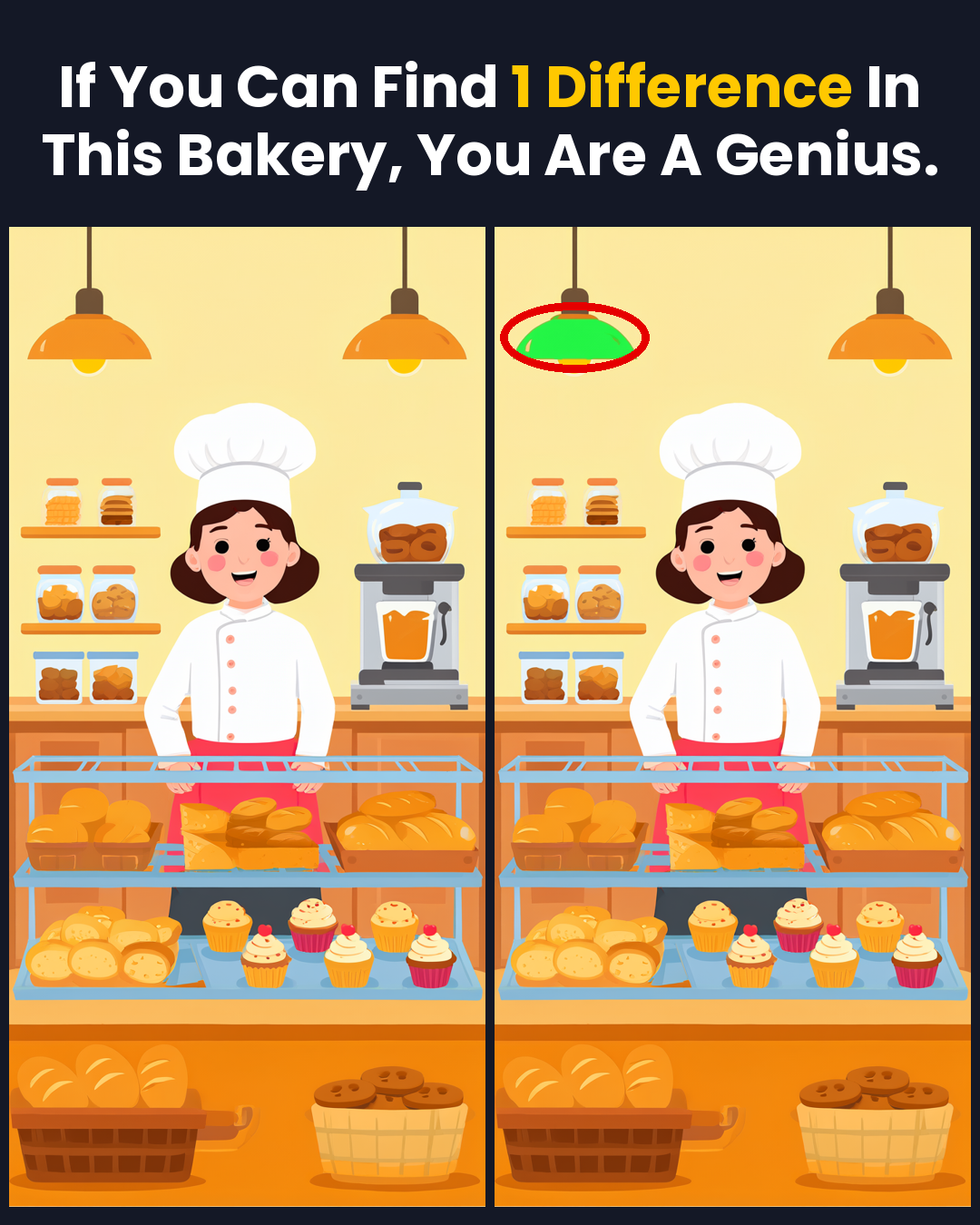
ANSWER: The hanging lamp on the left has a green shade in the second picture instead of an orange one
Where The Change Is Hiding
Look up. High above the counter, two round lamps hang from the ceiling. In the first picture both lampshades are the same warm orange. In the second picture the lamp on the left has turned green, while its twin on the right has stayed orange.
It is a clear change once you know, yet it fools almost everybody, and there is a good reason for that. The lamps sit in the top corner, far away from the baker, and they are part of what our brain files under background. We notice that the room is lit and then we move on.
Why Most People Miss It
Colour is also a sneaky thing to change. If the artist had removed a cupcake or added a loaf of bread, your eye would have felt the gap in the pattern straight away. A colour swap leaves everything in its place: the lamp is still a lamp, the same size, in the same spot, glowing the same way.
On top of that, the whole scene is already full of warm yellows and oranges. A green shade should shout, but surrounded by so much colour it simply becomes one more bright patch in a bright picture, at least until you compare the two sides properly.
How Did You Do?
Under 10 seconds: eagle eyes. You compared the corners before anything else, which is exactly how the professionals do it.
10 to 30 seconds: excellent. That is a sharp, patient pair of eyes and a well trained sense of detail.
30 to 60 seconds: perfectly normal, and in very good company. Most people land right here.
Over a minute, or needed the answer: no harm at all. Your brain was busy enjoying the bakery, which is a very sensible thing to do. Try another puzzle and you will be faster already.