Hello, puzzle friends, and welcome to a happy little garden!
It is bath day for the family dog, and he does not seem to mind one bit.
There is a blue tub full of foam, a towel folded on a wooden stool, and a watering can resting on the lawn.
Two pictures of the very same moment are waiting for you, but one small detail in the second one has been changed.
Nothing is missing and nobody has moved, which makes this one a real test of patience.
Look at the big things once, then forget them and give your attention to the small ones.
Take a deep breath, start at the top and work your way down to the grass.
We think you can do it. Off you go!
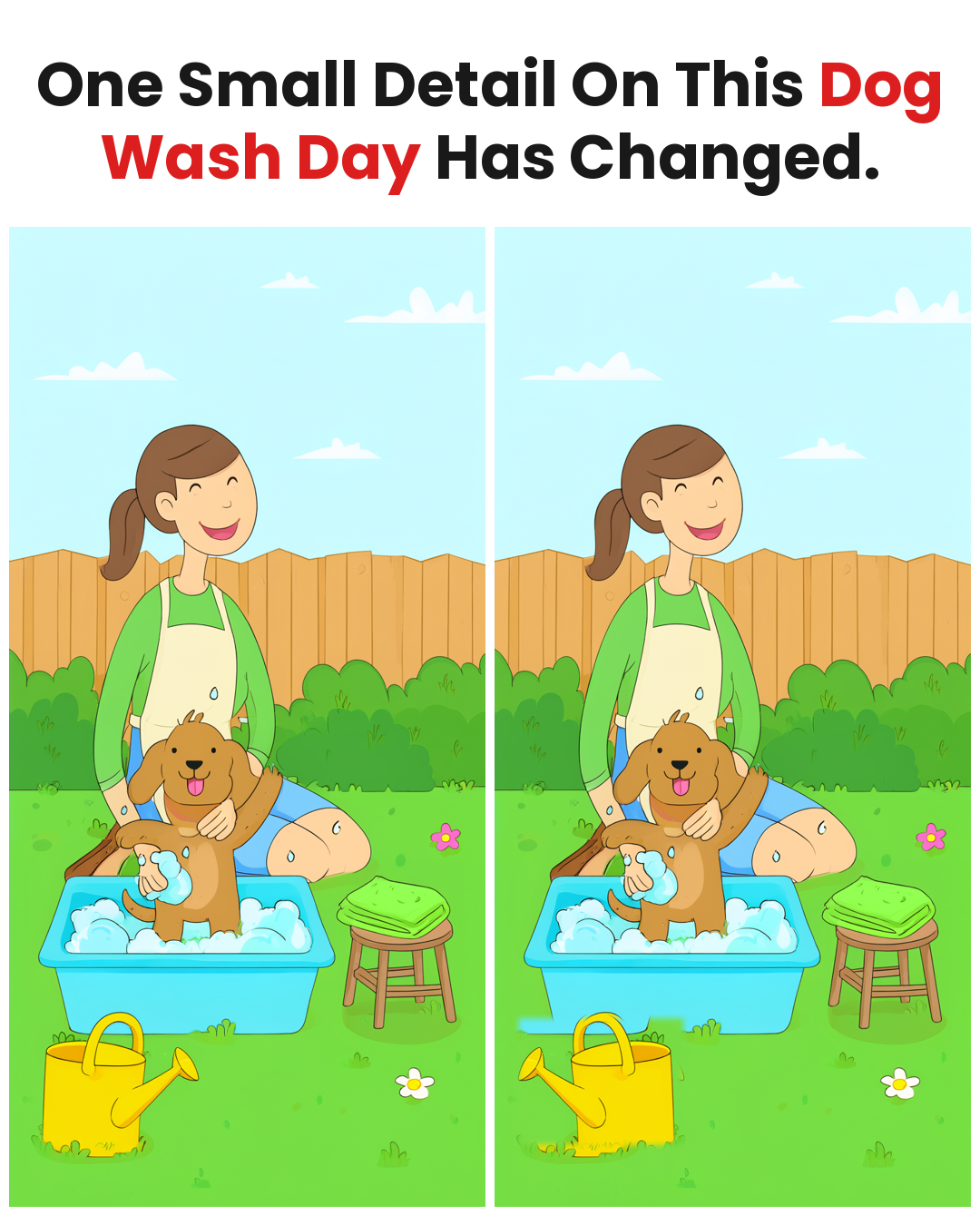
Take your time and look closely before you scroll down!
A Simple Method That Really Works
Almost everybody starts a spot-the-difference puzzle in the same way: eyes jumping from one picture to the other as fast as possible, hoping that something will shout for attention. It rarely does, and after a minute of jumping most people feel tired rather than clever.
There is a calmer method. Cover the lower half of both pictures with your hand and compare only what is left: the sky, the fence, the bushes, the top of the woman’s head. When you are satisfied that this band is identical, move your hand down and compare the next band. Then the next one. You are not searching any more, you are checking, and checking is far more reliable than searching.
Finish with the loose objects lying around the edges of the scene, because that is where puzzle makers love to hide their changes. The stool, the towel, the watering can, a flower in the grass. These objects are small, they are easy to draw twice, and our eyes treat them as decoration rather than information.
Why Your Brain Takes A Shortcut
Think about how much your eyes take in during a single second. A whole garden, a dog, a person, dozens of colours. If your brain stored all of it in detail, you would be exhausted before breakfast. So instead it keeps a short summary: woman, dog, tub, garden, sunny day.
When you look at the second picture, the brain compares it against that short summary, not against the real picture you saw a moment ago. Woman, dog, tub, garden, sunny day. Everything matches, so it reports back that the two pictures are the same. The watering can was never part of the summary in the first place.
Colour makes it worse here. The can is bright yellow and it keeps its bright yellow in both pictures, so the one thing we check most easily, colour, gives us a cheerful green light. We see the same yellow shape in the same place and we tick it off without ever asking which way it is facing.
A Fun Fact About Small Differences
Researchers who study attention have a favourite experiment. They show people two photographs of a street scene, one after the other, with a short grey flash in between. Something big changes, sometimes a whole building or a parked car, and a large number of people simply do not notice.
The same effect explains why a friend can get a haircut and sit opposite you for an hour before you finally say that something looks different. Our eyes are excellent, but our attention is narrow, and it is attention, not eyesight, that these puzzles really train.
Your Friendly Challenge
Most people need between twenty and fifty seconds for this garden scene. Under fifteen seconds is a very fine result and means you went for the small objects straight away.
Show it to someone who shares your morning coffee, say nothing at all, and simply watch. The laughter when they finally see it is the best part of the whole puzzle.
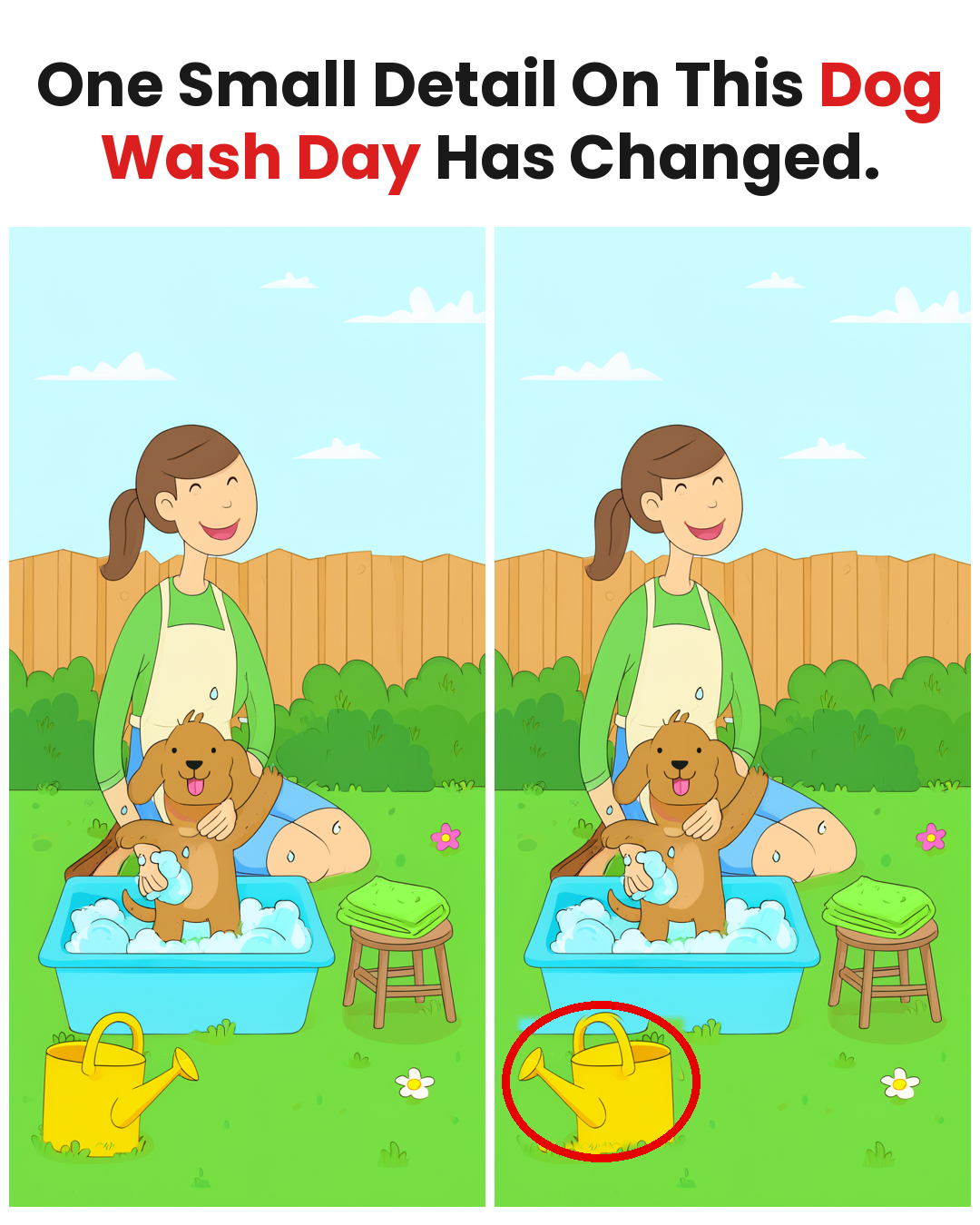
ANSWER: The yellow watering can on the grass – its spout points the other way in the second picture.
Where The Change Is Hiding
The difference is the yellow watering can standing on the lawn at the bottom left of the picture. In the first photo the spout reaches out to one side; in the second photo the whole can has been turned around, so the spout now reaches out to the other side and the handle sits differently against the body.
It is such a natural change that nothing in the scene looks odd. A watering can can stand any way round in a garden, which is exactly why your brain does not raise an eyebrow. The size, the colour and the position on the grass are all untouched.
Most people miss it because of where it sits. The happy dog in the middle of the tub is the heart of the picture, and the soapy foam and the smiling face hold the eye for a long time. By the time your attention finally reaches the bottom corner of the lawn, you have usually decided that you have already looked there.
How Did You Do?
Under 10 seconds: eagle eyes. You must have looked at the corners of the picture first, which is the mark of an experienced puzzler.
10 to 30 seconds: a strong result. You stayed calm and compared instead of guessing.
30 to 60 seconds: perfectly normal, and the result most of our readers report.
Over a minute: nothing to worry about at all. A turned object with the same colour and the same place is the hardest kind of change there is, and it tells you nothing bad about your eyes. Try the next puzzle with your hand covering half the picture and see how much that single trick helps.