Hello, puzzle friends, and welcome to a simple kitchen table with a very tricky little question.
Somebody has laid out a basket of apples, fresh from the tree and shining red.
Your task today is the oldest one there is: count them, and count them properly.
It sounds easy, and that is exactly why so many people get it wrong.
Here is a tip. Do not count in one quick sweep of the eye.
Go row by row, say each number quietly to yourself, and look at the gaps between the apples too.
Not every apple on this table is a big one, so keep your eyes open for the little ones.
Take a deep breath, pick your number, and then read on.
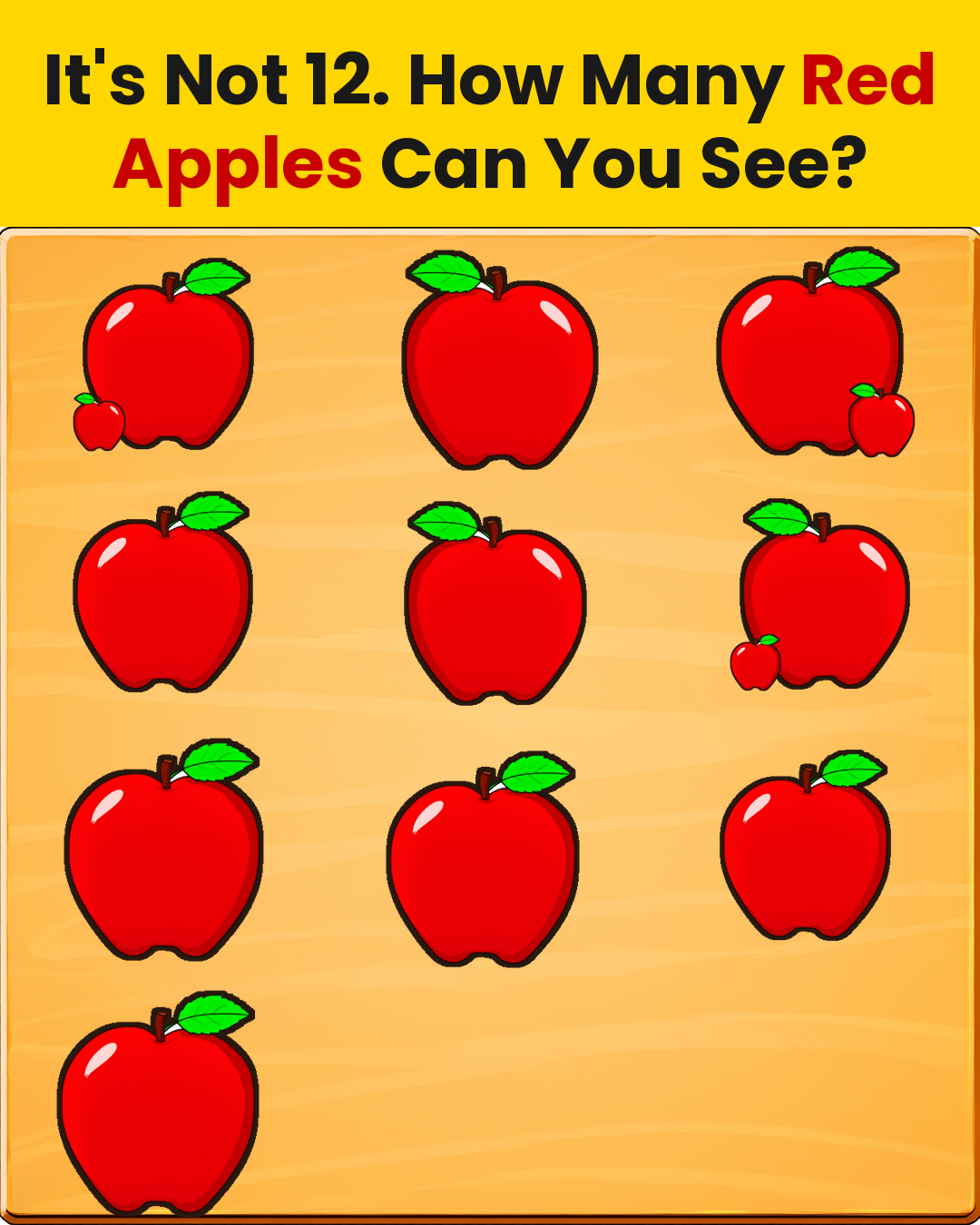
Take your time and look closely before you scroll down!
Count In Rows, Not In Circles
The most common counting mistake is to let the eye wander. It lands on an apple here, another there, drifts back to one it has already counted, and skips another one entirely. The number that comes out at the end feels right, but it rarely is.
The cure is simple and old fashioned. Treat the picture as a page of writing. Start at the top left corner, move straight across to the right, then drop to the next row and do the same. Say each number quietly as you go, because saying a number makes your mind pause on the object for an instant longer.
When you reach the bottom, do not stop. Go back and look at the spaces between the objects, close to the edges, and anywhere one object touches another. That is where the quiet ones like to sit.
Why Our Brains Are Poor Counters
Up to about four items, people can see the number instantly without counting at all. Beyond that we must count one by one, and the moment we do, attention becomes the weak link in the chain.
Size makes it worse. The mind treats big, bright things as important and small things as background, so a little apple beside a large one can be filed away as part of the big apple rather than as an object in its own right. It is not poor eyesight, it is a very sensible shortcut doing its job at the wrong moment.
An Old Kind Of Test
Counting puzzles are older than photography. Market traders used them to sharpen their apprentices, teachers have drawn them on blackboards for generations, and they still turn up in puzzle books today.
What makes them so satisfying is that the answer is not a matter of opinion. The number is right there in the picture, fixed and certain. All it asks of you is patience, and patience is a skill anybody can practise.
A Fair Warning And A Challenge
The title already told you one thing: the answer is not twelve. So if you counted twelve, you know for certain that you have missed at least one.
Most people need about forty seconds to get this right, and many give their first answer in under ten. Count once quickly, then count again slowly, row by row. Then show the picture to a friend and see whether their number matches yours.
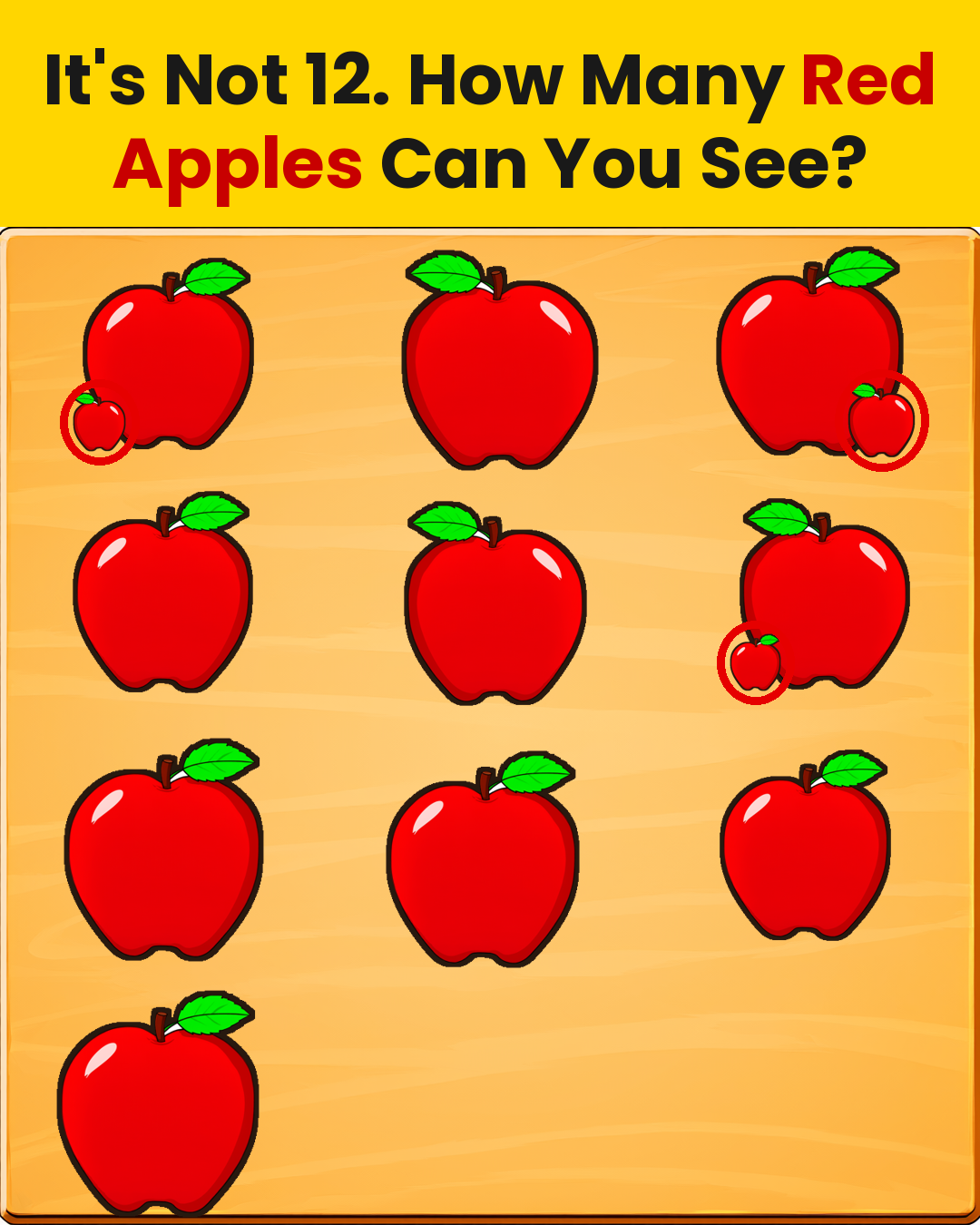
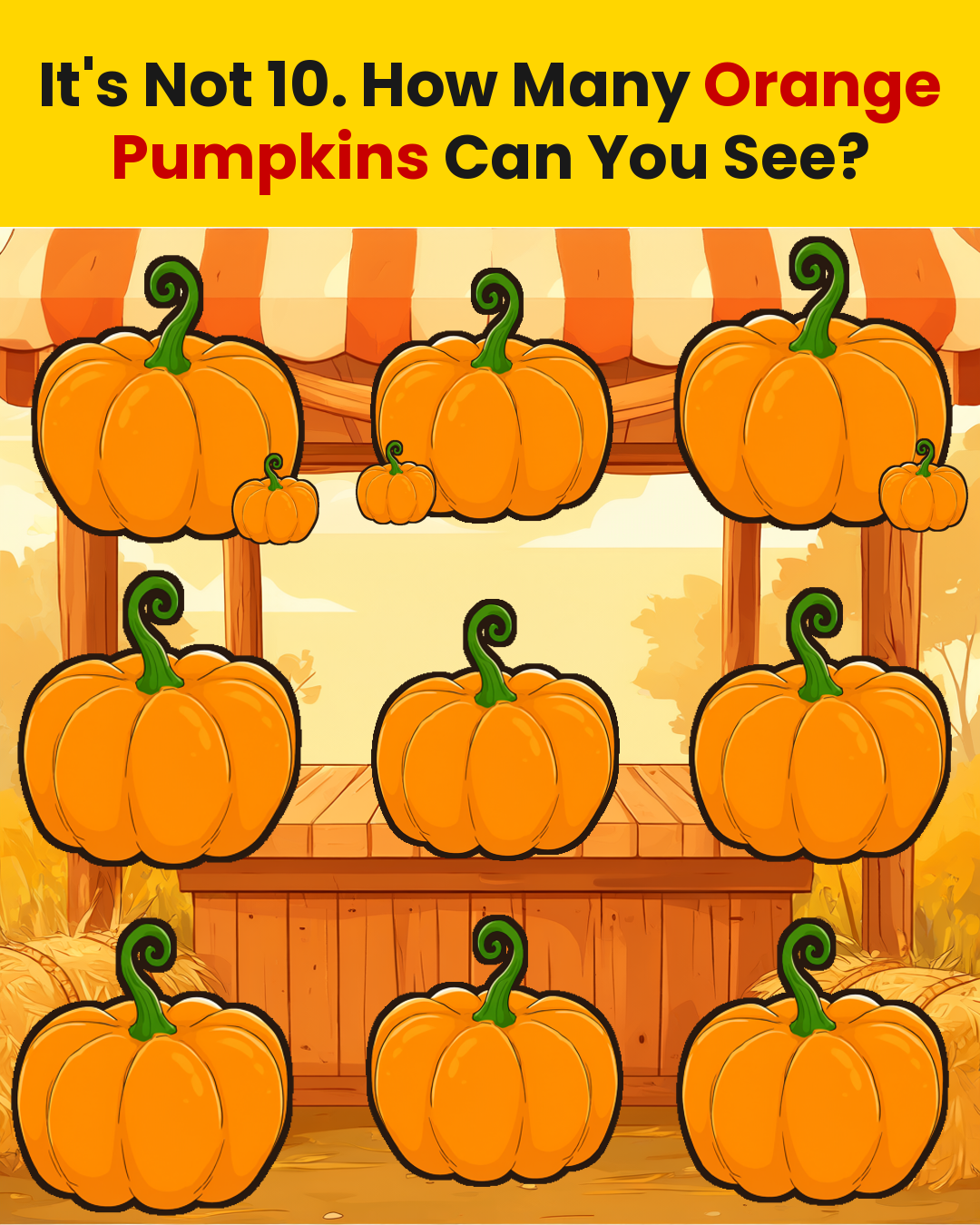
ANSWER: 13 apples – three of them are small ones tucked beside the big apples.
Where The Extra Apples Are
There are thirteen apples on the table. Ten of them are the big, obvious ones laid out in neat rows, and those are the apples nearly everybody counts.
The other three are small. One sits at the bottom left of the very first apple in the top row, partly tucked under its shadow. Another leans against the right side of the apple in the top right corner. The third one hides at the lower left of the apple on the right in the second row. All three are the same bright red as their big neighbours, and each one is touching the apple beside it.
Why Most People Say Twelve
Our eyes follow the grid. Three apples across, three more, three more, and one at the bottom makes a tidy pattern, and tidy patterns feel complete. Once the pattern is counted the mind is satisfied and wants to give an answer.
The small apples also sit in contact with the big ones, so their outlines merge. Instead of reading them as separate fruit, the brain treats them as a bump or a shadow on something it has already counted. Add a touch of impatience and twelve feels like a perfectly good answer.
How Did You Do?
Thirteen on your first try means you have both sharp eyes and real patience, which is a rare pair.
Twelve means you found one of the small apples but not all three, and that is still better than most. Ten or eleven means you counted only the big ones, so give yourself one more slow look and you will see them appear. Next time, remember the rule: count the rows first, then search the gaps.