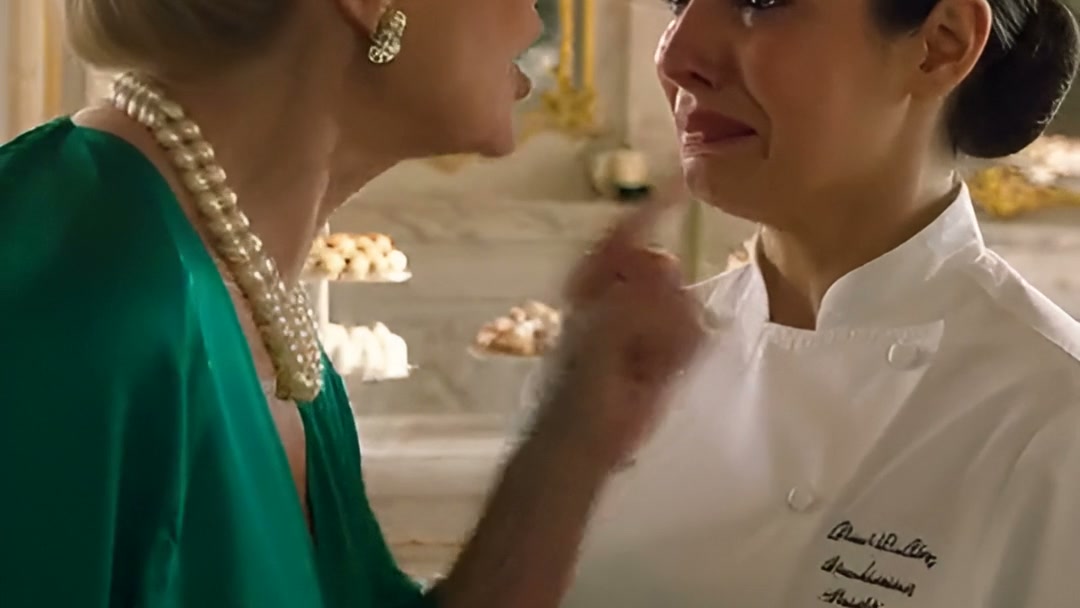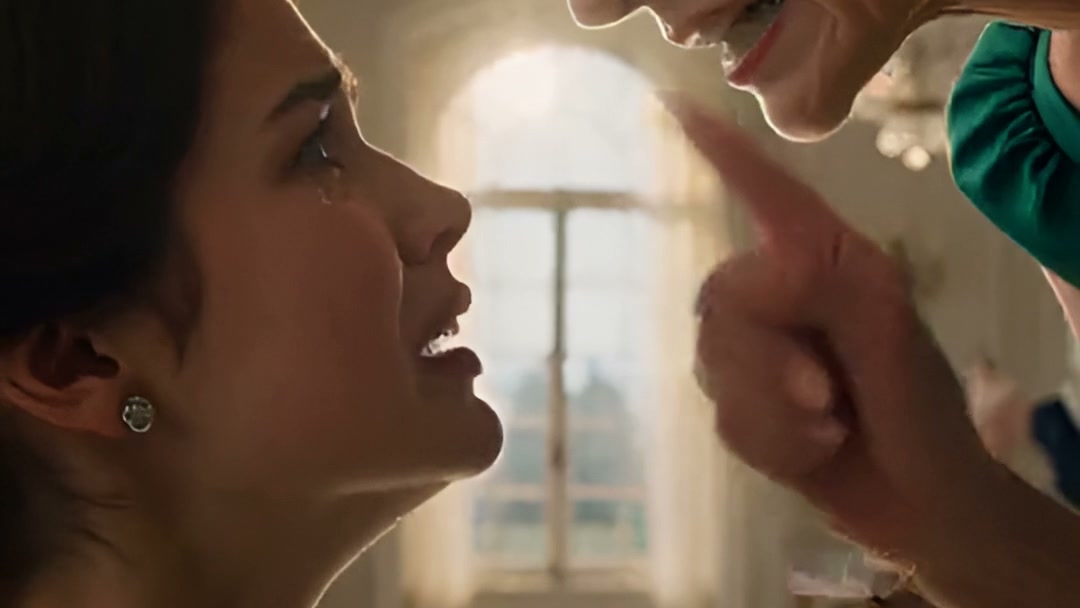

Academy patron Adrian Kovar watched dance mistress Margit Vaskay rip the sash off a sobbing girl and drag her toward the door… But when Elena opened her trembling hand and showed him a silver medal, he dropped to his knees.
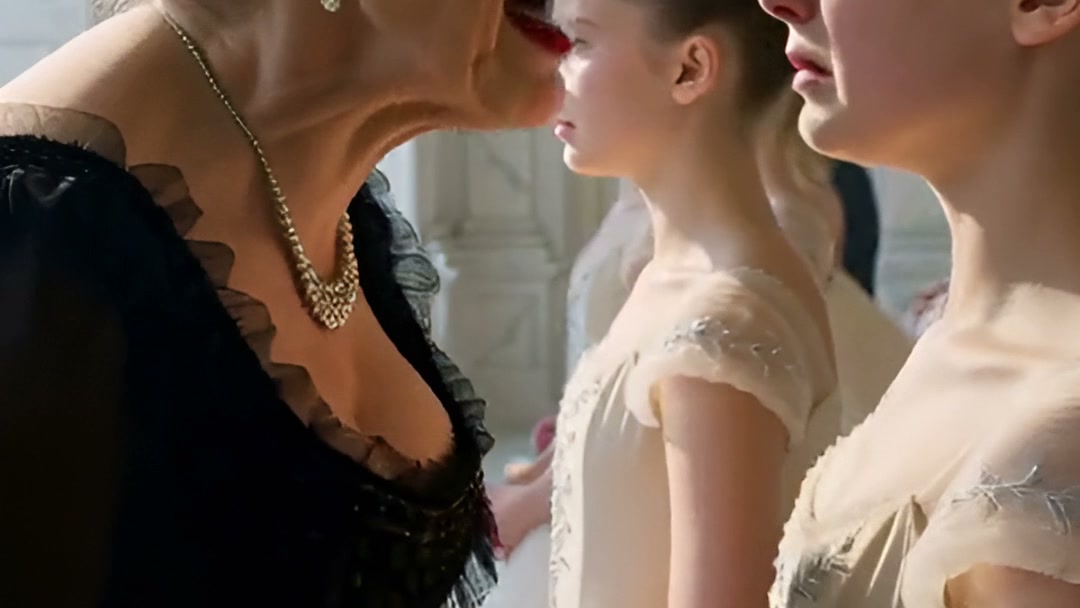
Morning light poured through the tall windows of the Vaskay Academy’s ballroom, cutting white columns across the marble floor. Twelve junior competitors stood in a perfect line, sashes gleaming, shoes polished. Elena Marsh stood at the far end, seventeen, in a plain white practice dress, her white silk sash sitting crooked on her shoulder because she’d tied it herself.
She didn’t belong here and she knew it.
Dance Mistress Margit Vaskay walked the line like a general inspecting troops, pearls clicking against her black dress. She paused at Elena. Her eyes moved from the scuffed dance shoes to the hand-hemmed hem. Then she reached over and ripped the sash clean off Elena’s shoulder.
“Out of the line.” Margit’s voice carried to every mirrored wall. “You are a charity case. You paid for nothing. This sash is for competitors.”
Elena stumbled sideways. The other girls stared straight ahead.
“I qualified,” Elena said, voice cracking. “I passed the placement—”
“Your placement was a courtesy.” Margit seized Elena’s arm above the elbow and began pulling her toward the double doors. “You embarrass this academy by standing in it.”
Elena’s heels dragged on the marble. Tears spilled down her face, and she didn’t bother hiding them because there was no dignity left to protect.
A hand closed around Margit’s wrist.
Firm. Unhurried. Absolute.
“Let her go, Margit.”
Adrian Kovar stood beside them in a dove-grey morning suit, his voice carrying no particular anger, only the certainty of a man who had never needed to shout. He was the academy’s patron, the man whose family name was carved above the entrance in gold letters, the reason this building existed at all.
Margit released Elena and stepped back, mouth pinched. “Mr. Kovar, I was simply maintaining—”
“I know what you were doing.” He looked at Margit for one more second, then looked away, as if she’d already ceased to matter. “Leave us.”
Margit gathered herself and walked to the far side of the ballroom, spine rigid. The other girls quietly found reasons to look at the floor.
Kovar crouched down in front of Elena. Not a polite half-stoop. All the way down, one knee on the marble, grey suit and all, until he was level with her face.
“Are you hurt?”
Elena shook her head. She pressed her lips together and blinked hard and tried to stop crying, which only made the crying worse.
“You don’t have to stop,” he said quietly. “Take a moment.”
She took a breath. Then, without quite deciding to, she opened her right hand.
A small silver dance medal lay on her palm. Plain, no gemstone, no engraving except a tiny stylised figure mid-turn. The ribbon it hung on was faded to the colour of old cream.
Kovar went still.
“Where did you get that?”
“I found it on my pillow,” Elena said. “The matron at the group home said it was already there when I arrived. I was two weeks old.” She looked up past him, at the large oil painting that hung above the main mirror, the one that had always been there, a young woman in a white tutu caught mid-arabesque, dark eyes bright, painted with the kind of attention you only give something you love. “The matron told me the woman in that painting donated the medal the year before I was born. She left it for whoever needed it most.”
Kovar’s face did not fall apart all at once. It broke the way ice breaks on a river: a hairline crack, then another, then everything shifting at once beneath the surface.
He stood. He turned to the painting. He stood there for a long moment saying nothing.
The young woman in the painting had been dead for twenty years. Her name was Lena Kovar. She was his younger sister, gone at twenty-six from a sudden illness that had given them four days’ warning and taken her on the fifth. She had danced in this very ballroom. She had loved it the way some people love breathing. She had also, in the months before she died, spent three afternoons a week volunteering at a city group home for infants in the welfare system, something she had never mentioned to Adrian because she said charity announced aloud was charity performed for an audience.
He had not known about the medal. He had not known about any of it.
He turned back to Elena.
“What is your name? Your full name.”
“Elena Marsh. They gave me the last name at the home.” She looked down at the medal. “I don’t know my family name.”
“How old are you?”
“Seventeen. My birthday is March the ninth.”
Lena had died in June. She had been, in her last months, visibly ill, though the family had not yet understood the severity. She had still been volunteering. She had still been leaving medals on pillows.
Kovar breathed in slowly. He was not a man who made decisions in haste or announced things before he was certain. He was also not a man who could look at that medal, and that date, and that face, and pretend he did not see what he was looking at.
Elena had Lena’s eyes. Dark, quick, missing nothing. He had not let himself register it until this moment.
“I need to make some phone calls,” he said. “Before I say anything more to you, I need to verify something. Will you wait for me?”
“They’ll make me leave,” Elena said.
“No.” He turned, found Margit across the ballroom, and raised his voice just enough. “Margit. Elena Marsh competes today. Her sash is returned, her entry stands, and you will not approach her again. If you do, we will have a very different conversation about the future of your contract.”
Margit’s jaw tightened. She gave a stiff nod.
Kovar looked back at Elena. “Wait for me.”
He stepped into the corridor and made three phone calls. The first was to his family’s solicitor, who had handled Lena’s estate. The second was to the director of the group home, who confirmed the records: an anonymous donation received in the week of Lena Kovar’s death, one medal, with a note requesting it be given to the first infant girl admitted who had no family. The third call was to a private consultant who specialized in birth records and closed adoption files.
It took forty minutes. He stood in the corridor the whole time, back against the wall, watching the light move on the marble floor.
When he came back into the ballroom, the junior competition had begun. Elena was on the floor, dancing in her plain white dress with no sash, because no one had brought it back to her yet, and she had not waited. She was dancing like she’d been dancing since before she could walk, like the floor was the only place she made complete sense.
She was extraordinary.
He watched until she finished. The small crowd applauded. Margit did not.
He walked to Elena as she came off the floor, breathing hard, flushed.
“I spoke with the director of your home,” he said. “And my solicitor.”
Elena looked at him, completely still.
“My sister Lena died twenty years ago in June. She had been volunteering at your home for seven months before she passed. She left specific instructions for that medal.” He paused. “She left other instructions as well. Documents. A sealed letter with a solicitor, to be opened if a girl with a certain birthdate ever appeared and could be identified. March the ninth.”
Elena’s lips parted. She said nothing.
“I cannot tell you everything today, because the records are sealed and the process takes time. But I can tell you that Lena did not simply leave a medal for a stranger.” He looked at her steadily. “I believe she knew exactly whose pillow she was leaving it on.”
The colour drained from Elena’s face, then came rushing back.
“What are you saying?”
“I’m saying that in my sister’s sealed documents, she names a child. A daughter she carried privately and placed through a closed arrangement before she became too ill to believe she could care for her.” His voice stayed even, but only just. “She said she hoped the child would find the medal eventually. She said she hoped the child would dance.”
Elena’s hand closed around the medal so tightly her knuckles went white.
She did not cry again, not right away. She stood very straight in her plain white dress in the center of the mirrored ballroom, the morning light falling across her, and she looked up at the painting of the young woman frozen mid-arabesque, dark eyes bright, gone for twenty years.
“She came from here,” Elena said.
“She learned to dance in this room,” Kovar said. “Same floor. Same mirrors.”
Elena looked at the medal. She looked at the painting. She looked at Adrian Kovar, who had the same dark eyes she saw in the mirror every morning and had never understood why they looked familiar in a face that was supposed to be a stranger’s.
“You’re her brother,” she said. It wasn’t a question.
“I am.” His voice finally broke, just at the edge. “Which makes me your uncle. If the records confirm what I believe, which I expect they will.”
For a long moment, neither of them spoke.
Then Elena stepped forward and Adrian Kovar put both arms around his sister’s daughter and held on, in the middle of the ballroom where Lena had first learned to turn, under the painting that had watched over this girl for every competition she had ever entered without knowing why she always stood a little longer in front of it than everyone else.
Across the room, Margit Vaskay submitted her letter of resignation to the academy board that afternoon. The board accepted it with no negotiation and appointed a new mistress by the end of the week.
Elena Marsh placed first in the junior division that morning. The medal they gave her she put in her pocket without looking at it, because she was already holding the one that mattered.
She wore it every time she danced after that. She wore it at the regional championships, and the nationals, and the international invitational in her twentieth year where she stood on the top step of the podium with her uncle in the front row, hands pressed together in front of his mouth, watching the daughter of the girl in the painting take everything Lena had ever wanted to give her.
She wore it because Lena had left it on a pillow for whoever needed it most. And it had found exactly the right person.