Hello, puzzle friends!
The tide has just gone out, the sand is warm, and a little family of red crabs has come out to enjoy the sunshine.
At first glance the answer looks simple. You see bright red crabs sitting in tidy rows, and the number nine jumps straight into your head.
But nine is not the right answer, and that is exactly why so many people get this one wrong.
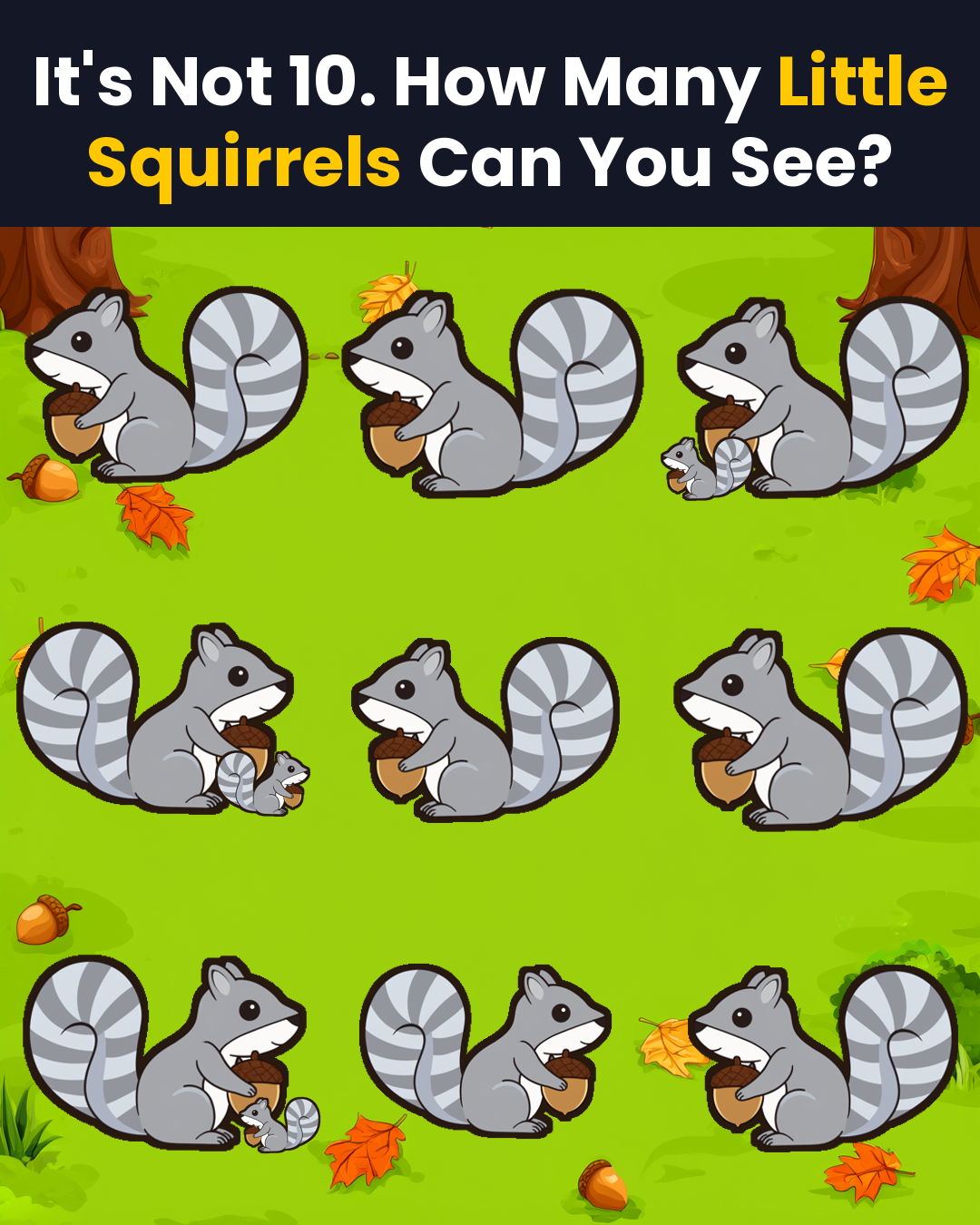
Some of these crabs are very small, and they have tucked themselves right up against their bigger relatives.
Take your time. Look beside each big crab, not just at it, and check the edges of the picture too.
So tell us honestly, how many little red crabs can you really count?
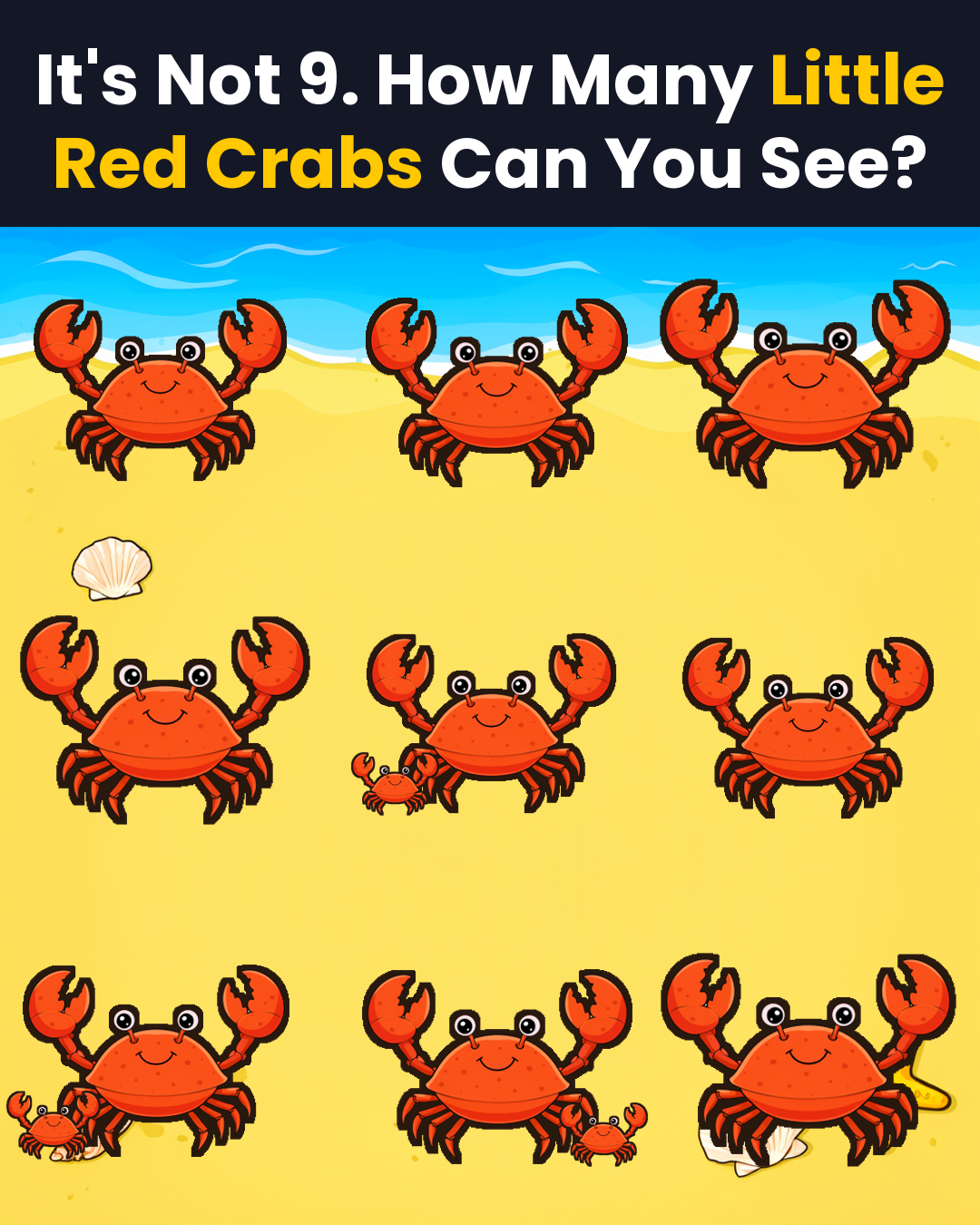
Take your time and look closely before you scroll down!
Count In Rows, Never All At Once
The quickest way to get a counting puzzle wrong is to let your eyes bounce around the picture. You start in the middle, jump to a corner, come back again, and before you know it you have counted the same crab twice and missed another one entirely.
The method that actually works is simple. Divide the picture into horizontal bands, as if you were reading lines of a book. Count the top band and hold that number in your mind. Then the middle band. Then the bottom band. Add the three numbers together at the end.
This takes a few seconds longer, but it is the difference between a guess and an answer. Anyone who counts in bands and still looks carefully will land on the right number almost every time.
Look Beside Things, Not Only At Them
The second trick is about where you point your attention. Most people look at the obvious shapes, the big crabs with their raised claws, and their eyes slide straight past the gaps in between.
But puzzle makers know this. The small crabs are deliberately placed in the shadow of the big ones, overlapping a leg or sitting just under a claw. They are the same colour, the same shape, and simply smaller.
So after your first count, go back and look at the space around each big crab. Check the left side and the right side. Check behind the shells. That is where the extra ones are waiting, and that second pass is usually what turns a wrong answer into a right one.
Why Our Brain Takes The Shortcut
There is a good reason this feels harder than it should. Our brains are wonderful at seeing patterns, and a picture full of identical red crabs on plain sand looks like a pattern straight away. Once the mind decides it has understood the pattern, it stops looking closely and simply estimates.
Scientists call this rapid estimating ability subitising when the number is very small, and we are only truly reliable up to about four items. Beyond that we are guessing unless we deliberately slow down and count one by one.
There is also the matter of size. Something small and partly overlapped by something bigger tends to be read by the eye as part of that bigger thing, not as a separate object. That is exactly the weakness this puzzle is built on, and it is a weakness every single one of us shares.
A Friendly Little Challenge
Most people need somewhere between twenty and forty seconds to arrive at the correct total here, and plenty of sharp-eyed readers say the wrong number on their first attempt.
So here is our challenge to you. Decide on your number before you scroll down, and be honest about it. No changing your mind afterwards.
Then pass the picture along to a friend or a family member and see what they say. It is always entertaining when two people look at the very same beach and come back with two different totals.
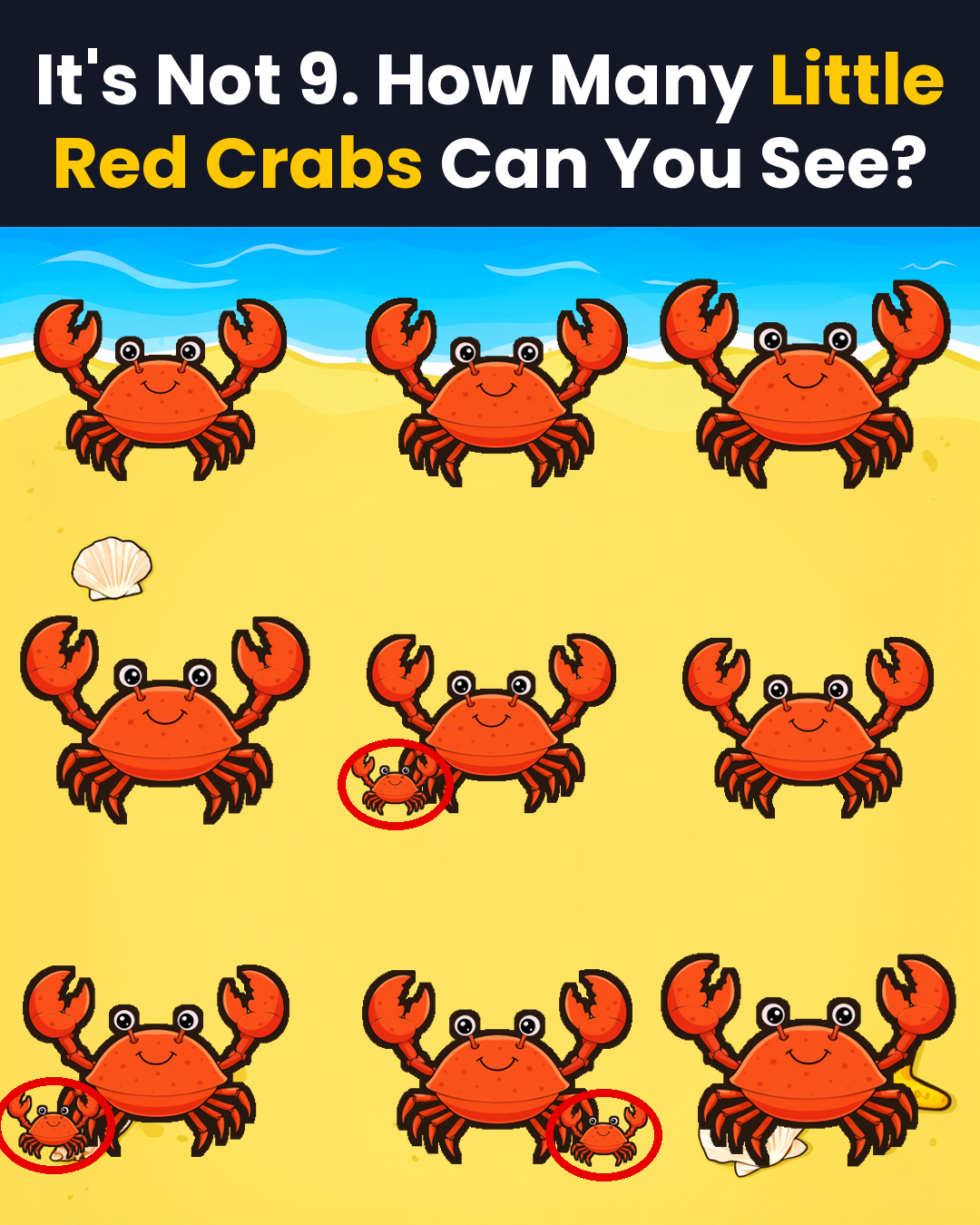
ANSWER: 12 crabs – three tiny ones are hiding right beside the big ones
Where The Hidden Crabs Are Sitting
The nine large crabs are easy, arranged neatly across the sand in three rows of three. Those are the ones everybody finds.
The three small ones are the whole puzzle. One is tucked against the left side of the crab in the centre of the middle row, almost underneath its claw. Another sits at the very bottom left, pressed against the leg of the big crab there and partly cut off by the edge of the picture. The third is down in the bottom row as well, to the right of the middle crab, sitting low in the sand.
All three are the same bright red as the big ones, so there is no colour difference to catch your eye. They are simply smaller and very close to a larger shape, which is enough to make most people’s eyes skip right over them.
Why So Many People Miss Them
When objects touch or overlap, the eye tends to group them together as one unit. A small crab leaning on a big crab reads as part of the big crab, and the brain files it away as already counted.
The tidy arrangement makes it worse. Three neat rows of three practically shout the number nine, and once that number is in your head it is remarkably hard to let go of it. People often recount and reach nine a second time, because they are checking the pattern rather than looking at the sand.
The cure is to stop counting crabs and start scanning space. Sweep slowly across the picture, looking at the empty sand and the edges, and the little ones appear.
So, How Did You Do?
Under fifteen seconds and all twelve found means you have truly excellent eyes, and you did not fall for the neat rows at all.
Between fifteen and forty seconds is a very good result, and it is where most careful readers land. You trusted your second look, and that second look is what counts.
If you said nine at first and then found the rest, you are in excellent company, because that is the most common answer of all. And if you spotted all twelve straight away without counting twice, you should be very pleased with yourself indeed.