Hello, puzzle friends, and welcome back to our favorite corner of the day.
This morning we are standing in a sunny apple orchard, where a cheerful young woman is reaching for the ripest fruit she can find.
Two pictures sit side by side, and at first glance they look exactly the same.
But one small detail in the second picture is not like the first one.
Only a single thing has changed, and it is hiding right out in the open.
A friendly tip before you start: do not stare at her face or her straw hat, because that is where everybody looks first.
Let your eyes travel slowly from the blue sky down to the green grass, the way you would read a page.
Take your time, enjoy the sunshine, and see whether you can catch it.
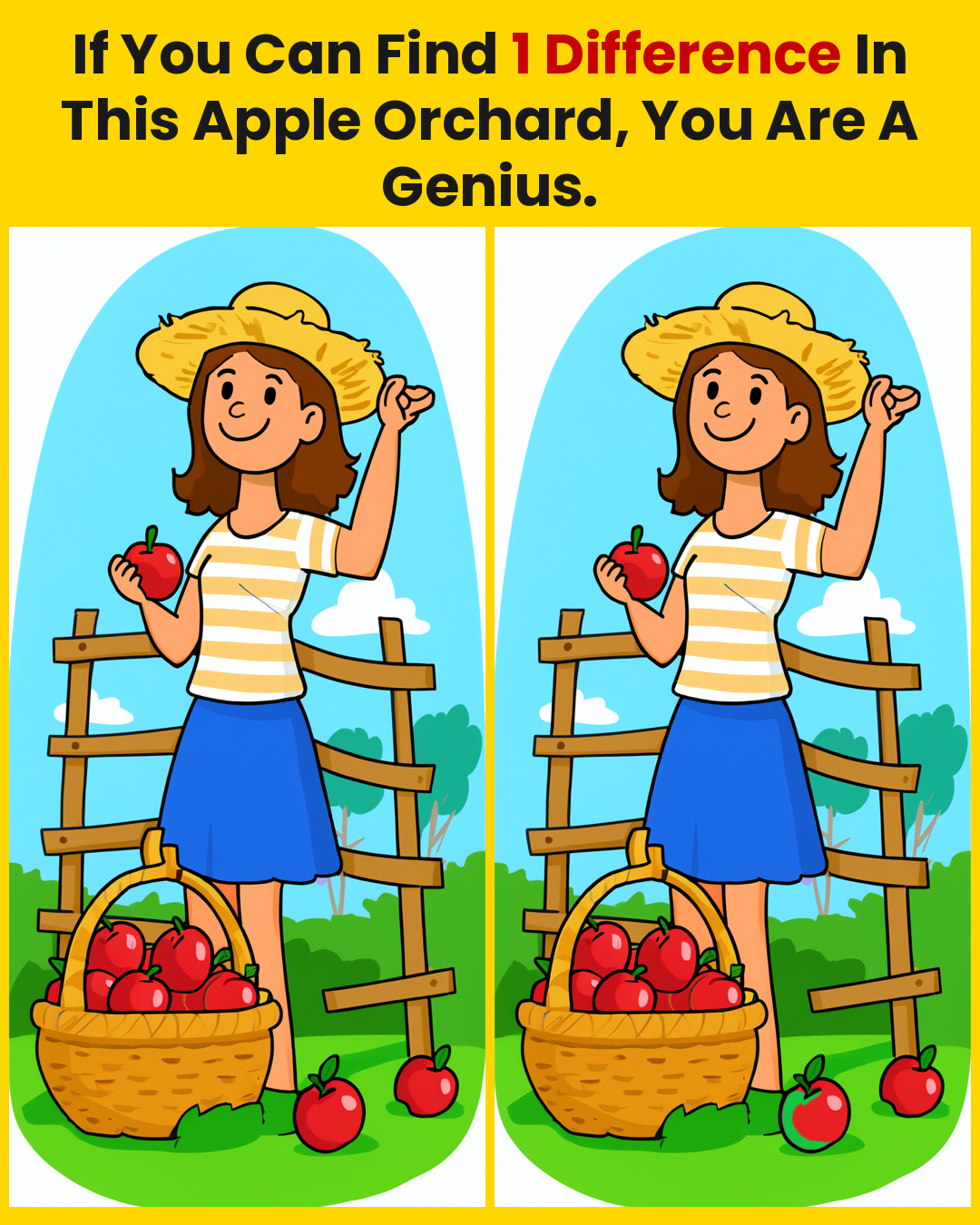
Take your time and look closely before you scroll down!
Where To Look First
When two pictures sit side by side, almost all of us begin in the middle, right where the person is standing. That is exactly what the picture wants us to do. The middle is busy and colorful, so our eyes feel at home there and they stay far longer than they should.
A better method is to work in bands. Cover the lower half with your hand and compare only the top strip: the sky, the clouds, the leaves. Then slide your hand down and compare the next strip, and then the next one.
The second trick is to compare things, not areas. Count the rungs of the ladder in both pictures. Check the stripes on her shirt. Then look at every single apple, one by one, including the ones that are not in the basket.
Why Our Brain Finds This Hard
Our eyes are wonderful, but the brain behind them is lazy in a very clever way. It does not keep a full photograph of what you just saw. It keeps a short summary: a woman, a hat, a ladder, some apples, green grass.
When you move to the second picture, your brain compares it with that summary instead of with the real image. A small change of color slips right past. An apple is still an apple, so the brain nods and moves on. Researchers call this change blindness, and it happens to all of us, no matter how good our eyesight is.
There is another reason too. Bright, crowded areas pull our attention like a magnet, while the quiet corners of a picture are visited last. That is exactly where a good puzzle hides its secret.
A Little History Of These Puzzles
Spot the difference is much older than the internet. These puzzles appeared in newspapers and family magazines more than a hundred years ago, printed as two nearly identical drawings with a short line underneath asking readers to find six or seven changes.
For many households that page was a Sunday morning tradition. Parents and grandchildren leaned over the same sheet of paper with a pencil, arguing happily about whether a chimney had moved. The pictures are in color now and they travel around the world in seconds, but the pleasure is exactly the same.
Your Challenge For Today
Most people need about forty seconds to find the change in this orchard. A few lucky souls spot it in ten. If you are still hunting after two minutes, please do not worry, you are in very good company.
Here is a fair test. Look away from the screen, take one slow breath, then come back and start at the bottom of the picture and work upward, the opposite of what you did the first time. Many people find the answer within seconds of changing direction.
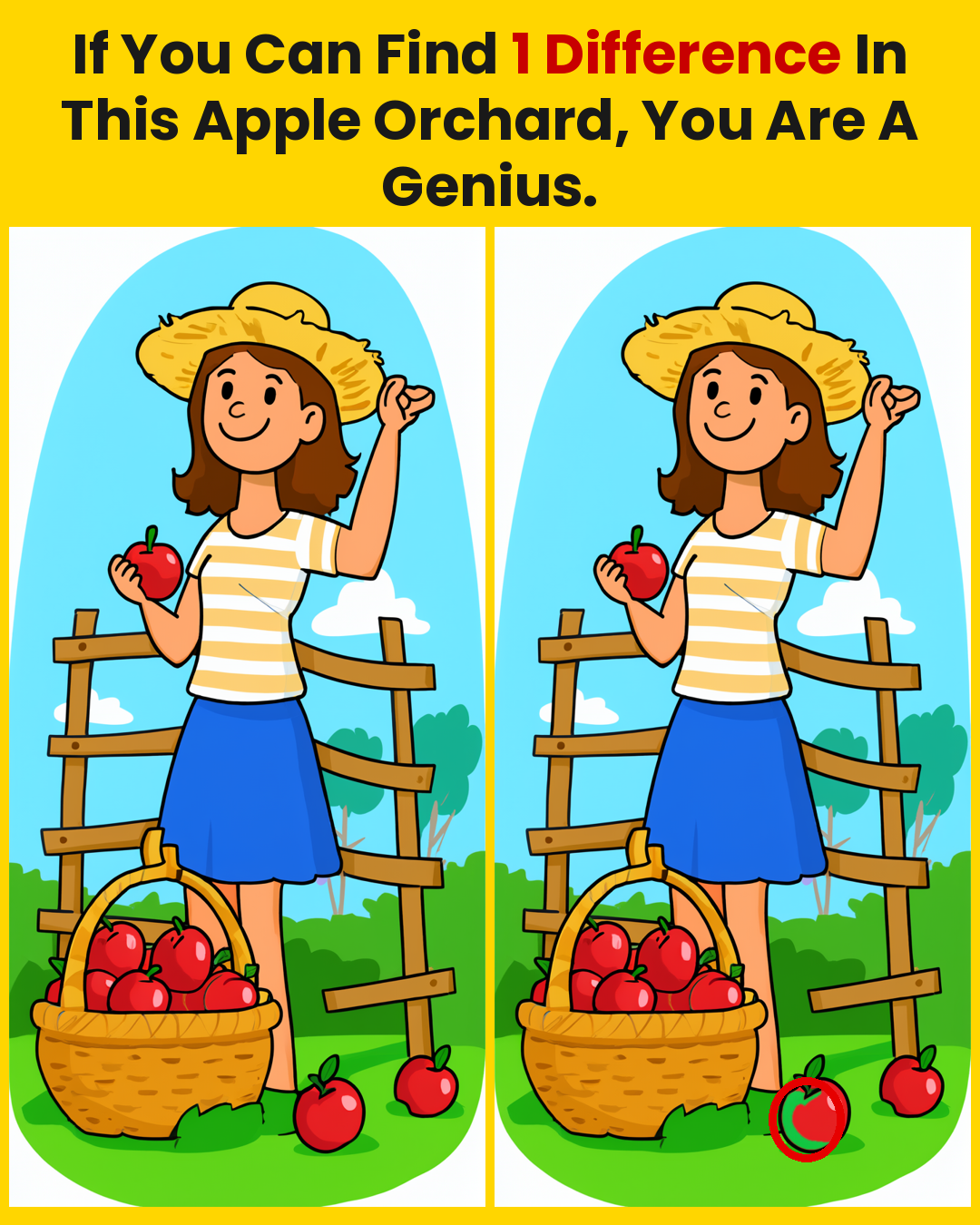
ANSWER: The apple lying on the grass changed color – in the second picture it is half green instead of all red.
Where The Change Was Hiding
The difference is not on the woman at all. Look down at the grass, near the bottom right of each picture, where two loose apples have fallen beside the basket. In the first picture both of them are a deep, even red. In the second picture the apple closer to the basket has turned half green, as if it had been picked a little too early.
It is a quiet change in a quiet corner, far away from the face, the hat and the ladder that keep pulling our eyes back to the center.
Why Almost Everyone Misses It
There are apples everywhere in this picture, which is the whole trick. When we see a group of similar objects, the brain treats them as one lump called apples rather than as separate items. Once something has been filed away as part of a group, we stop examining it.
The fallen apples also sit at the edge of the scene, below the main action. Our attention naturally follows the person and her hands, so the grass gets only a quick glance on the way past.
So, How Did You Do?
Under ten seconds means you have real eagle eyes and a very calm way of looking. Ten to thirty seconds is excellent and better than most people manage. Up to a minute is a solid, steady result worth being proud of. More than that simply means the puzzle did its job well, and your eyes will be quicker on the next one.