She Skipped the Bus Every Day to Buy Coffee for the Janitor — His Retirement Letter Floored Her
A girl skipped the school bus every day for two years to buy coffee for the janitor… But his retirement letter revealed he’d designed the entire building — and had been quietly repaying her kindness for 643 days.
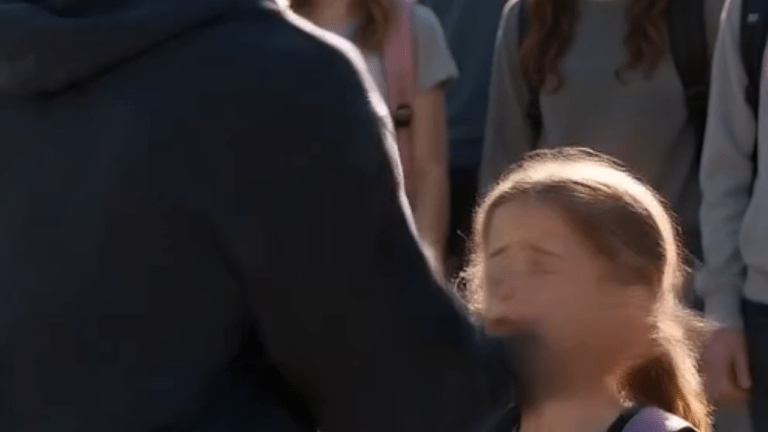
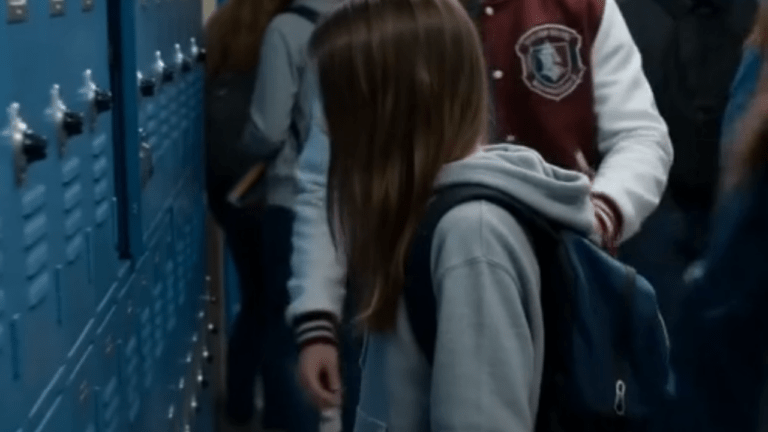
Grace Mitchell had been walking to school for two years.
Not because she couldn’t afford the bus. Because the bus cost four dollars a day, the coffee cart outside Jefferson High opened at seven fifteen, and Frank always arrived at seven twenty. The coffee was three fifty. The math worked out exactly right if she walked four blocks.
She’d never told Frank she was walking.
She didn’t want him to feel responsible for the four blocks.
Frank DeLuca had worked the early shift at Jefferson High for thirty-one years. Same navy work jacket every morning, his name stitched on the chest in white thread. He ordered a large black coffee and drank it standing up in approximately seven minutes before going inside to start his day.
Grace had noticed him during her first week at Jefferson. Not because of anything dramatic.
Because he was always there. Because he said good morning to every single student who passed him — regardless of whether they looked at him. Because he remembered their names.
He’d learned hers by day three.
“Morning, Grace.”
“Morning, Frank.”
She’d bought him the coffee for the first time on a Tuesday in October. He’d been standing at the cart checking his pockets with the specific expression of someone who has reached for something that isn’t there.
She was already at the counter.
“And one large black,” she said.
Frank looked at her. “You don’t have to—”
“I know,” she said.
That had been six hundred and forty-three days ago.
Not every single day. She’d missed thirty-one, which she knew because she’d counted, which she knew because Frank always said “you didn’t have to make up for it” when she came back — which meant he’d noticed it was missing.
Seven minutes of large black coffee. The specific conversation of two people who had decided that seven minutes was enough to know someone properly, if you used them right.
Frank told her about the school. About what it looked like when it was built — the east wing that hadn’t existed yet, the gymnasium that used to be a parking lot, the oak tree in the courtyard that he’d planted himself from a seedling because the architect’s plans had left a corner empty and empty corners bothered him.
“Who plants a tree in someone else’s blueprint?” Grace asked one morning.
Frank shrugged. “Someone who has to look at the corner every day.”
Grace told Frank about her senior thesis. A bridge design. Load distribution she couldn’t solve.
Frank listened. Then said something about lateral force transfer that her engineering teacher later told her was graduate-level thinking.
She never told her teacher where it came from.
In March, Frank announced his retirement.
Thirty-one years. End of the school year. A party in the gymnasium — the one that used to be a parking lot — with a cake and a card signed by eight hundred students and a framed photo of the oak tree.
Grace went to the party.
Frank found her near the photo.
“Six hundred and forty-three coffees,” he said.
Grace looked at him. “You counted.”
“Every one,” he said.
He was quiet for a moment, looking at the photo. At the oak tree — thirty years old now, the kind that made real shade, the kind students sat under without knowing someone had planted it from a seedling because an empty corner had bothered him.
“I have something for you,” Frank said. He reached into his jacket and pulled out an envelope. Her name on the front in careful block letters.
“Open it when you get home,” he said. “Not here.”
Grace opened it at her kitchen table at four thirty PM.
*Grace,*
*Thirty-one years is a long time to work somewhere. You learn things about a place that you can’t learn any other way.*
*I want to tell you something I haven’t told many people.*
*When Jefferson High was built in 1993, I was thirty-two years old and I was the project engineer of record. The east wing. The gymnasium. The structural system of the entire building. My name is on the original drawings in the county records office if you want to look.*
*After the building opened, I took the facilities job. People thought it was strange. I thought it made sense. If you build something, you should understand how it lives. How it ages. What it needs.*
*Thirty-one years later I still know every beam in this building. Every load path. Every place where the lateral force transfer does something interesting.*
*You asked me about lateral force transfer in February. I gave you the answer because you were asking the right question. Engineers who ask the right questions are worth talking to.*
*I spoke to Professor Williams at the state university last week. He was one of my graduate students thirty years ago. He runs the structural engineering program now. I told him about your bridge thesis. He asked me to send him your drawings.*
*I sent them.*
*He called me back the same day.*
*There is a full scholarship waiting for you if you want it. Structural engineering. Starting in the fall. Professor Williams will be your advisor.*
*You bought me coffee for two years out of your bus money. You walked four blocks every morning so the math would work out. You thought I didn’t know.*
*I knew on day three.*
*I didn’t say anything because you were doing something kind and the four blocks seemed like a small thing to let you keep.*
*Build things that hold weight correctly, Grace. You already know how.*
*— Frank*
*P.S. The coffee on day two hundred and eleven was too hot. I didn’t say anything. You were standing in the rain and temperature seemed like a small complaint.*
Grace sat at her kitchen table for a long time.
Then she called the county records office.
His name was there. Francis A. DeLuca. Engineer of record. 1992.
She looked at the letter. At the P.S.
Day two hundred and eleven. She’d been standing in the rain. She hadn’t known he’d noticed.
He’d been counting the whole time. Day three. Day two hundred and eleven. Six hundred and forty-three.
She thought about the oak tree. About the empty corner that had bothered him. About the man who built a school and then stayed thirty-one years to understand how it lived.
She called Professor Williams the next morning.
He answered on the second ring.
“Miss Mitchell,” he said. “Frank sent me your drawings. The lateral force transfer in your bridge thesis is the most elegant solution I’ve seen from an undergraduate applicant in fifteen years.”
Grace was quiet for a moment.
“I had help,” she said.
A pause.
“I know,” Professor Williams said. “Frank told me.”
She accepted the scholarship.
On her last day of high school she went to the coffee cart at seven fifteen.
Frank wasn’t there. He’d retired three weeks ago.
She ordered two large black coffees anyway. Sat on the bench by the cart. Drank one.
Left the other on the bench.
Just in case.
Four years later, Grace Mitchell graduated with a degree in structural engineering.
Her bridge thesis was published in a journal. The lateral force transfer solution was cited fourteen times in the first year alone.
She sent Frank a copy.
He called her the same day.
“The oak tree is still there,” he said. “I went back to check.”
“Of course it is,” Grace said. “You planted it correctly.”
A pause.
“How’s the building holding up?” she said.
“Fine,” he said. “I trained my replacement well.”
Grace looked at the published thesis in her hands. At the citation count. At the solution a man in a navy work jacket had handed her in seven minutes on a cold February morning.
“Frank,” she said.
“Yeah.”
“Day two hundred and eleven,” she said. “I was standing in the rain.”
“I remember,” he said.
“You still didn’t say anything about the temperature.”
“It was cold,” he said. “You were already there. Temperature seemed like a small complaint.”
Grace smiled. “Someone told me once that life is a boomerang.”
A longer pause.
“Who told you that?” Frank said.
“Someone else who knew,” she said.
She heard him laugh — the real one, the one she’d heard exactly three times in six hundred and forty-three mornings because it took something specific to produce it.
“Build good things,” he said.
“I learned from the best,” she said.
She hung up.
Looked out the window at the city — the buildings, the bridges, the specific geometry of things built to hold weight correctly.
Somewhere out there, Frank DeLuca was standing beside an oak tree he’d planted from a seedling because an empty corner had bothered him.
She had a bridge to build next.
She already knew exactly how.