Hello, puzzle friends!
The garden snails have come out after the rain, and they are having a fine morning among the cabbage leaves.
Some are sitting right out in the open, proud as can be. Others are much smaller and have tucked themselves in beside the bigger ones.
Your job is simple: count every snail you can see in the picture.
It sounds easy. It almost never is. Most people answer in five seconds and get it wrong.
A gentle tip: look at the shells, not only at the eyes on stalks. A shell beside a shell is easy to miss.
Take your time, count twice, and only then decide on your number.
Good luck, and enjoy the hunt!
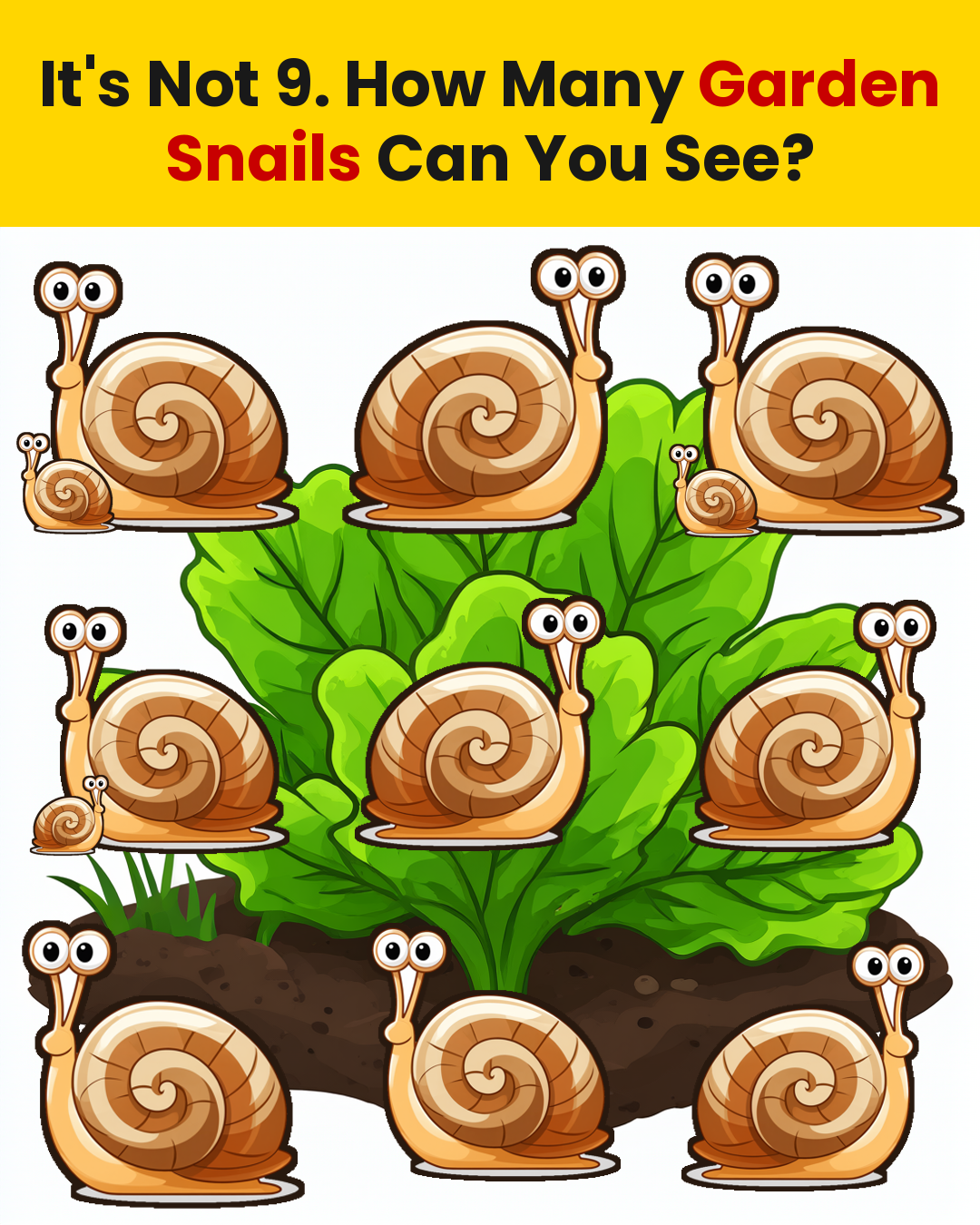
Take your time and look closely before you scroll down!
Count In Rows, Never In Circles
A counting puzzle is not a test of arithmetic. Nobody struggles to add nine and three. The difficulty is in the searching, and that is where nearly everyone goes wrong.
The method that works best is simple. Divide the picture into bands from top to bottom, and count one band at a time. Finish the top band completely before your eyes drop to the next one. The moment you start jumping around the picture, you lose track of what you have already counted and you either count something twice or miss it altogether.
Use your finger on the screen if that helps, and say each number out loud. It feels a little silly, but speaking the number forces your brain to stop and register the object properly instead of skimming past it.
Why Our Eyes Skip The Small Ones
Our eyes are drawn to size and to movement. A big, bold shape grabs attention immediately, while a smaller version of the same shape sitting right beside it is often treated by the brain as part of that larger object rather than as something separate.
There is a name for this habit. Psychologists call it grouping, and it is one of the oldest shortcuts our minds use. When two similar things sit close together, we tend to see one cluster rather than two items. It saved our ancestors a great deal of thinking time, and it costs us points in puzzles like this one.
Colour plays a part too. When the little ones wear the same shades as the big ones, there is no edge for the eye to catch on, so the glance slides straight past.
A Puzzle Older Than You Think
Counting pictures have been entertaining people for well over a century. Victorian magazines printed crowded drawings and asked readers how many faces, animals or hidden shapes they could find, and families would argue over the answer for a whole week until the next issue arrived.
The modern versions on your screen work on exactly the same principle. Nothing is hidden by trickery, nothing is painted invisible. Everything is in plain sight, and the puzzle simply relies on the way human attention behaves when it is in a hurry.
That is also why these puzzles are such good exercise. They ask you to slow down and look properly, which is a skill most of us use less and less.
The Friendly Challenge
Most people land on the right number in about forty seconds. Many answer in ten and get it wrong, then insist they are right until they look again.
So here is the challenge. Give yourself one full minute, count carefully, and settle on your answer before you scroll any further. Then show the picture to a friend or to somebody in the family and watch how quickly they blurt out a number.
Comparing answers is half the fun, and it is a lovely way to pass a few minutes together.
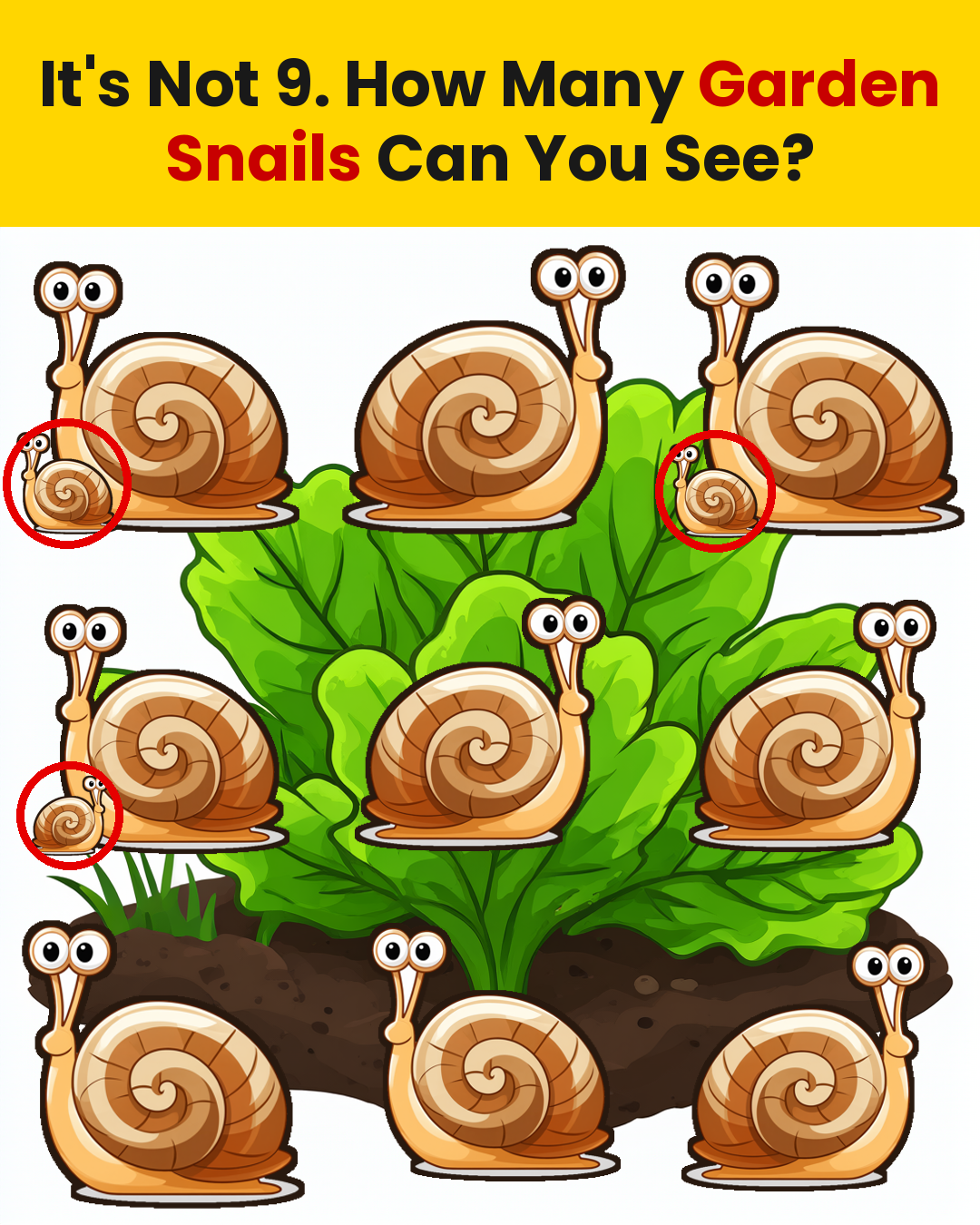
ANSWER: 12 snails – three tiny ones are hiding right next to the bigger shells.
Where The Hidden Snails Are
The correct answer is twelve. Nine snails are easy to see, standing clearly on the leaves and the dark soil. The other three are much smaller, and each one is tucked in close beside a bigger shell.
One little snail sits at the far left of the top row, right at the base of the first big shell. Another is in the top row on the right, nestled against the green leaf next to the larger snail. The third is on the left side of the middle row, pressed up against the big snail there.
All three are drawn in exactly the same warm browns and creams as their bigger neighbours, which is precisely why they disappear. There is no change of colour to make the eye stop.
Why Most People Say Nine
Nine is the most common wrong answer, and it is easy to see why. The nine large snails are spread in a tidy pattern of three rows, and a tidy pattern feels complete. Once your brain has decided it has found the arrangement, it stops searching.
The small snails break that pattern, but they break it quietly. They sit low, close to the ground, and they overlap the bigger shells. Your eye reads the overlap as one object with a bump on it rather than as two separate animals.
How Did You Do?
Under ten seconds with the right answer means you have truly remarkable eyes, and you should be very pleased with yourself.
Between ten and thirty seconds is excellent. You searched instead of guessing, which is exactly the right habit.
Up to a minute is a perfectly good score and puts you with the majority of careful people.
And if you said nine at first, you are in very good company indeed. Nearly everybody does, including people who solve these puzzles every single day.