Hello there, puzzle friends!
Pour yourself a warm cup of coffee, because today we are visiting a cozy village library.
You will see two pictures of the very same reading corner: the bookshelf, the round table, the green lamp, the red armchair, the leafy plant, and the sleepy cat on the stool.
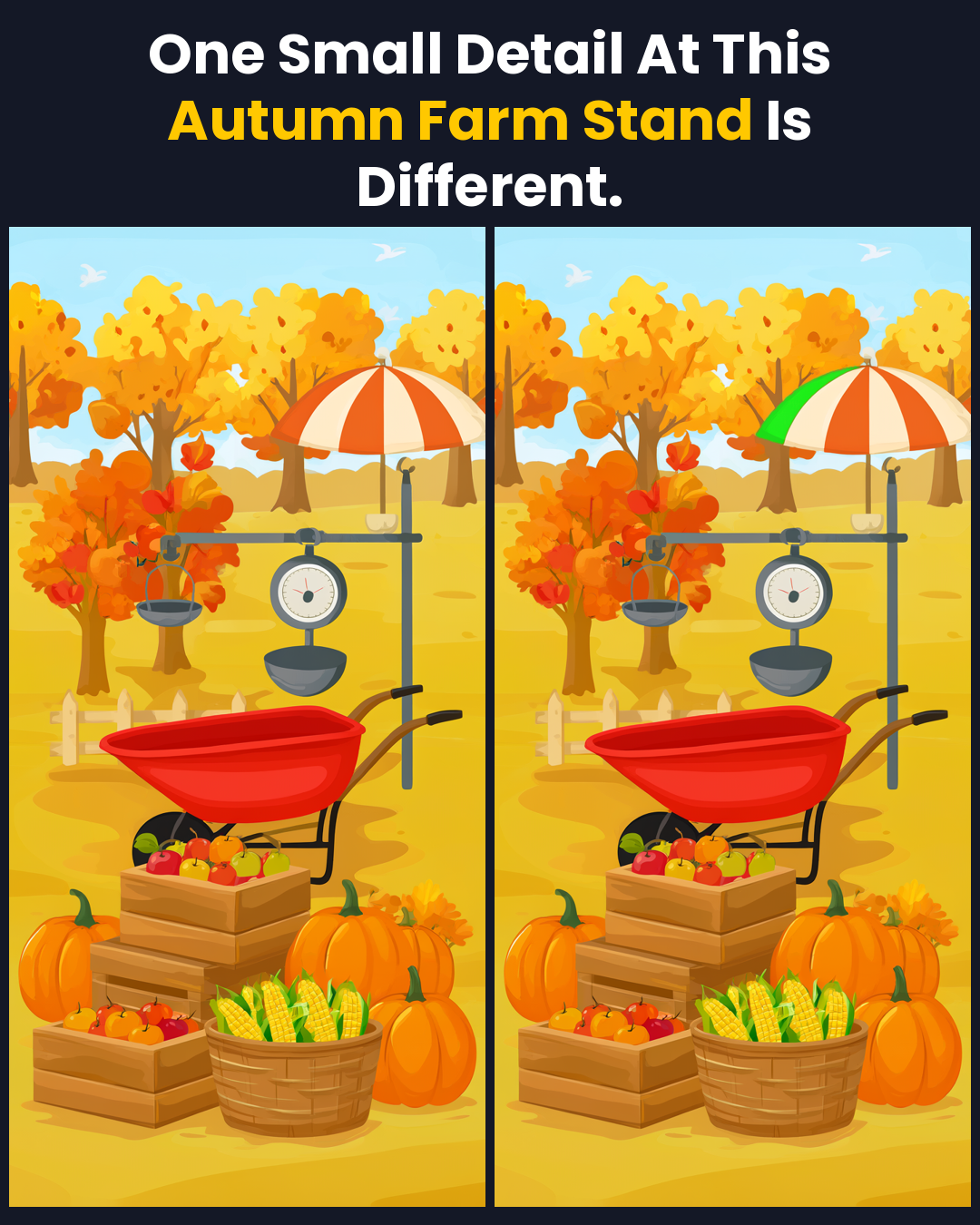
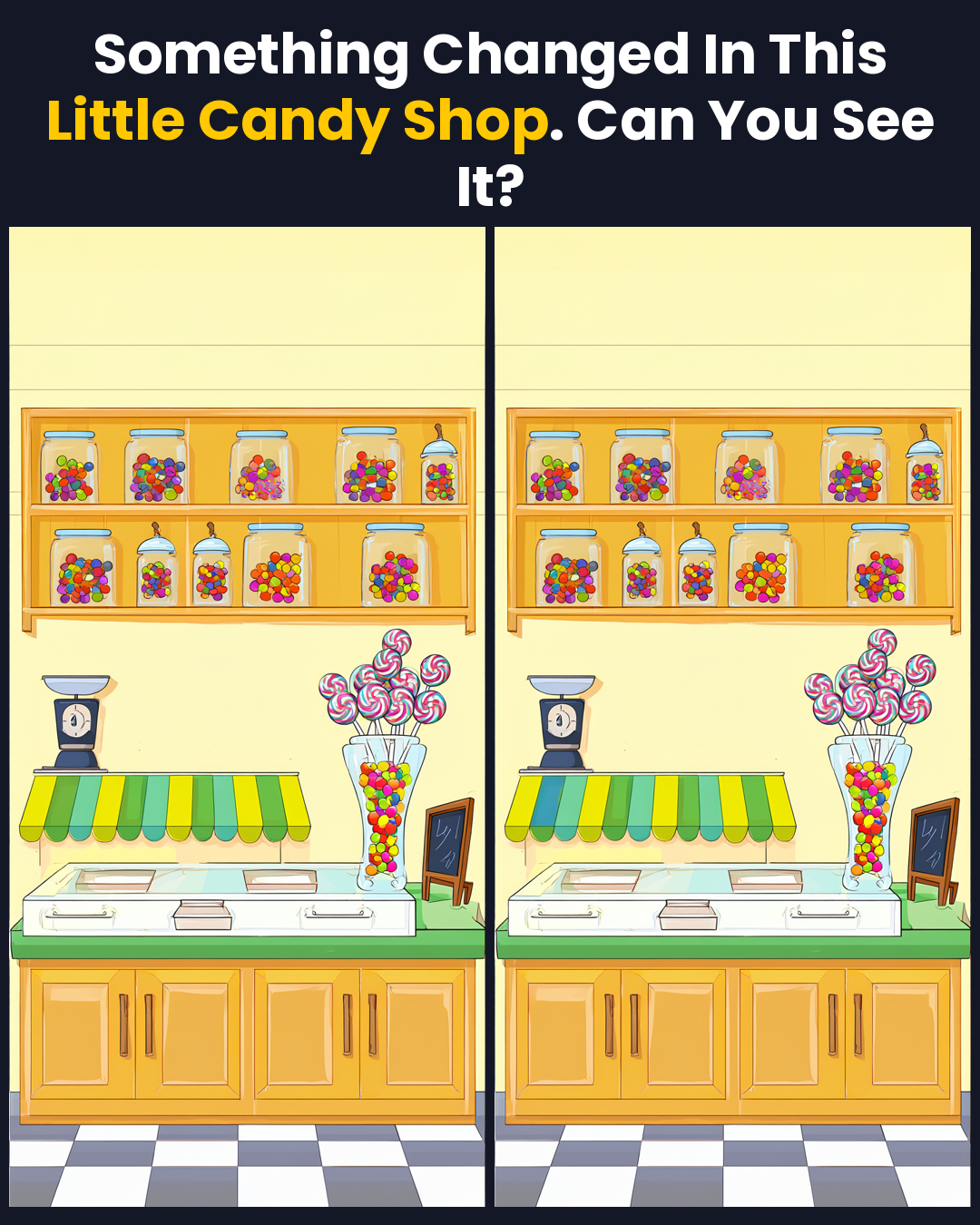
At first glance the two pictures look exactly the same. They are not.
One single detail on the right has quietly changed, and your job is to find it.
Most people need about half a minute, but some sharp-eyed readers spot it in seconds.
The answer is waiting at the bottom, so no peeking until you have given it a real try!
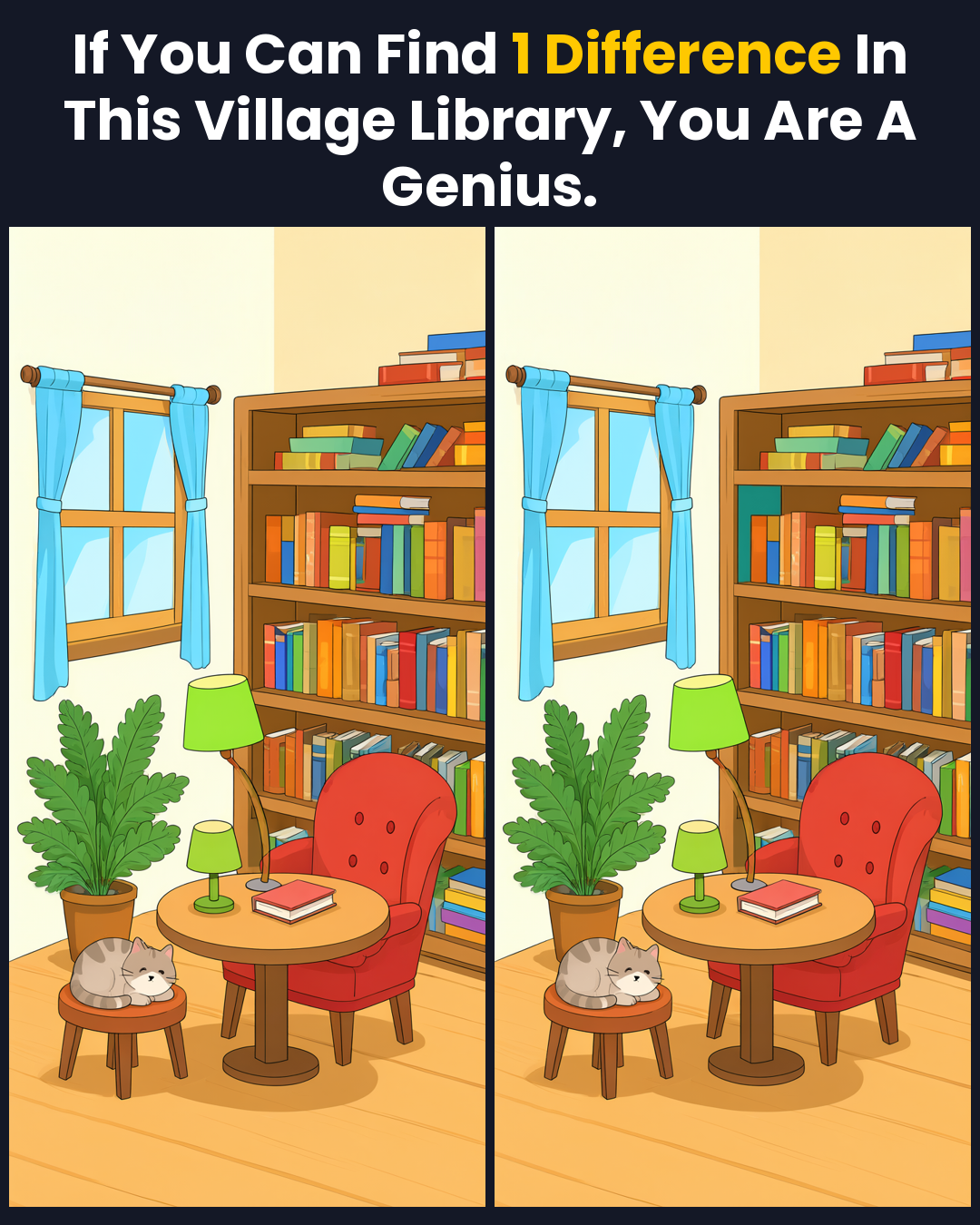
Take your time and look closely before you scroll down!
Start With A Plan, Not A Stare
The biggest mistake people make with a spot-the-difference puzzle is simply staring at the whole picture and hoping something jumps out. Our eyes do not work that way. When we look at a busy scene, we take in the general impression first, and the small details slide right past us.
A much better method is to divide the picture into sections, the way you would divide a garden into beds. Look at the top left of both pictures, then the top right, then the middle, then the bottom. Finish one section before you move on to the next.
Another good trick is to compare like with like. Find the lamp in the left picture, then look straight across at the lamp in the right picture. Then the curtains, the plant, the cat. Object by object, your brain has a far easier job than when it tries to swallow the whole room at once.
Why This Is Harder Than It Looks
Your brain is a wonderful machine, but it is also a little lazy, and for very good reasons. All day long it is flooded with far more detail than it could ever handle, so it learns to keep only what matters and throw away the rest. A shelf full of colourful books becomes, in your mind, simply the idea of a shelf full of colourful books.
That shortcut is called pattern-seeking, and it is the reason you can recognise your own kitchen in a tenth of a second. It is also the reason a single changed colour inside a busy, colourful group can hide in plain sight for a very long time.
Colour makes it harder still. When many bright shades sit side by side, each one borrows a little attention from its neighbours. One more shade in the mix simply blends into the crowd.
A Little History Of The Spot-The-Difference
Puzzles like this one are older than most people think. Pairs of nearly identical drawings appeared in family magazines and children’s weeklies well over a hundred years ago, and they were a Sunday afternoon favourite long before anyone had a television.
Researchers later noticed something interesting: these gentle little games give the brain a genuine workout. They ask for focused attention, patience, and careful comparison, which are exactly the skills we use when reading a map, checking a bill, or finding our keys. Best of all, a spot-the-difference is one of the few games that gets better when two people do it together.
Your Friendly Challenge
Here is the test. Most people find today’s change in about thirty to forty seconds. If you spot it in under fifteen, your eyes are in excellent shape.
When you have found it, do not tell anyone right away. Show the picture to a friend or to someone in your family and quietly time them. Watching another person search the same picture is half the fun.
Ready? Take one more good look, and good luck!
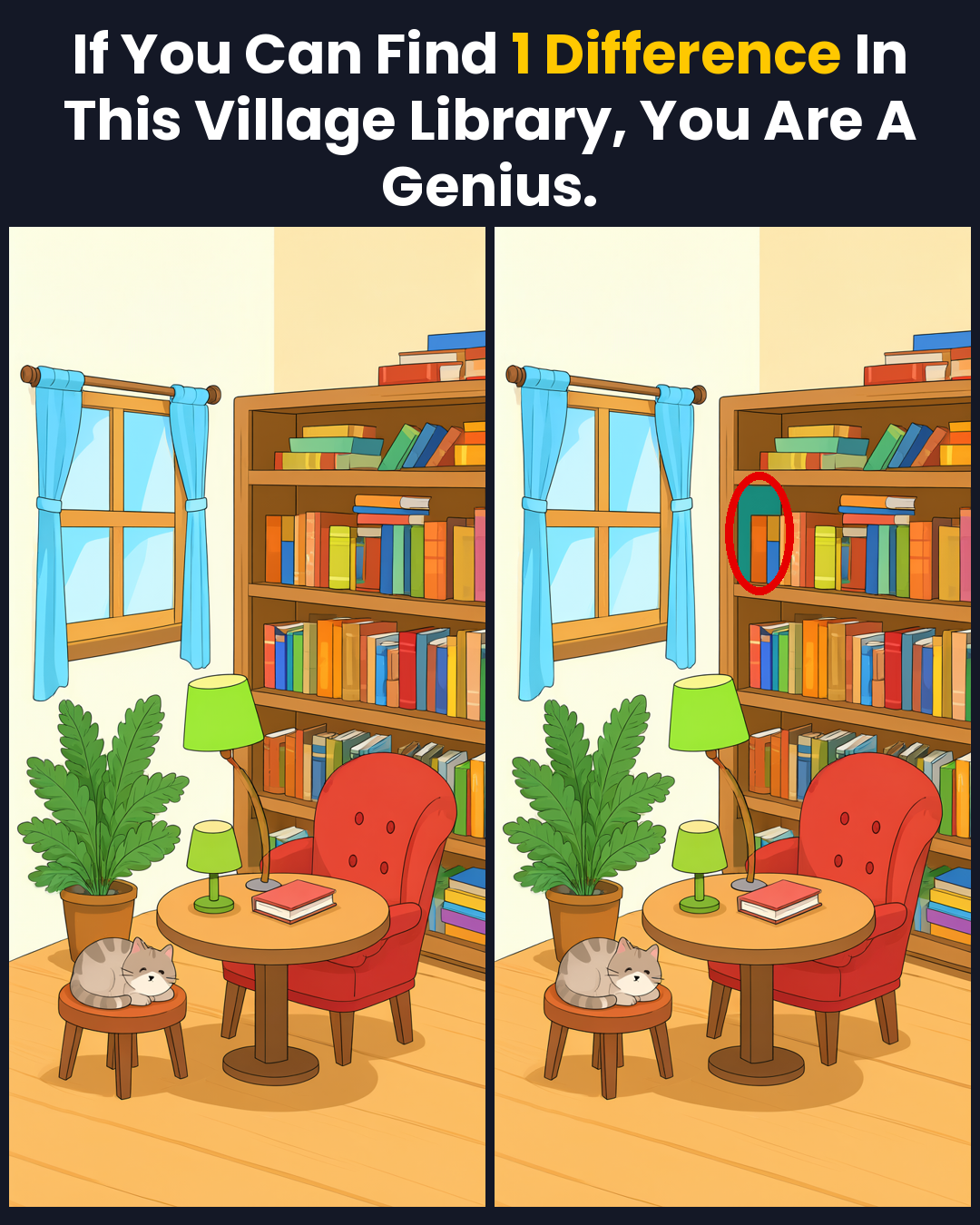
ANSWER: On the shelf above the lamp, two books changed colour – they are orange and red on the left, but blue-green on the right.
Where The Change Is Hiding
Look at the tall bookshelf, on the shelf that sits just above the green reading lamp, a little to the left of centre. In the left picture, that spot holds a pair of books in warm orange and red tones. In the right picture, those same two books have turned a cool blue-green. Everything else, from the curtain tie to the cat’s whiskers, is identical.
The change is a real one and it is not small, yet almost nobody sees it at once. The reason is the company it keeps. That shelf is packed with books in every colour of the rainbow, and when your eye lands on it, it does not read individual books at all. It reads the single idea of colourful books. Two of them swapping shades does not break that idea, so no alarm bell rings.
Why Most People Look Everywhere Else
There is a second reason this one is tricky. The eye is drawn to the big, friendly things first: the sleeping cat, the red armchair, the green lamp, the leafy plant. Those are the objects with personality, and we check them again and again.
The upper shelves feel like background, like wallpaper, so we give them a quick glance and move on. Puzzle makers have known this for a century. The safest hiding place is never the darkest corner; it is the busy, cheerful area that your brain has already filed away as decoration.
So, How Did You Do?
Under 10 seconds: eagle eyes. You scan like a professional proofreader and almost nothing slips past you.
10 to 30 seconds: excellent. You searched with a method instead of hoping, and it paid off.
30 to 60 seconds: right on target. That is where most careful readers land, and it is a very good score.
Over a minute, or needed the answer: no harm at all. This one was built to be stubborn. Come back tomorrow, start with the shelves first, and watch how much faster you get.