Hello, puzzle friends, and welcome back to the farm!
Today we are standing at the fence of a sunny meadow, and the lambs are out enjoying the morning.
At first glance it looks simple. Count the woolly friends, write down a number, done.
But many people give us a number that is far too small, and they are very sure about it.
The big lambs are easy. The whole trick is in the little ones, and they are not where you expect them.
So take your time and search the corners and the tall grass as well as the open field.
Here is a gentle tip: a lamb does not have to be large to count.
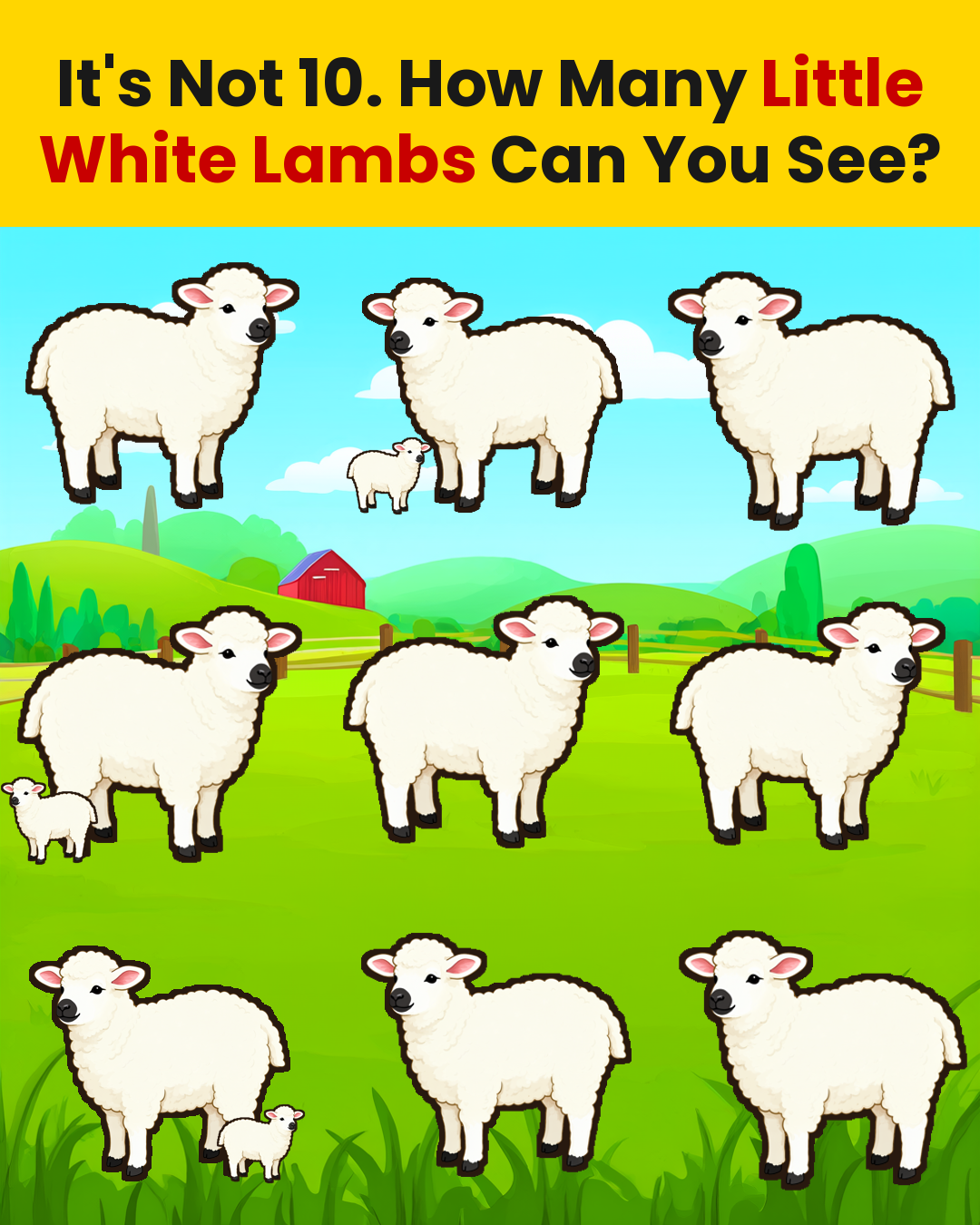
Take your time and look closely before you scroll down!
Count In Rows, Not In Circles
The most common mistake with a counting picture is letting the eye wander. We start somewhere in the middle, jump to a lamb that catches our attention, then to another one, and before long we have counted the same animal twice and missed another one completely.
The cure is simple and it works every single time. Treat the picture like a page of a book. Start in the top left corner and read across to the right. Then drop down to the next row and read across again, until you reach the bottom right corner. One steady sweep, no jumping.
If that is hard to hold in your head, use your finger on the screen. Moving your hand slows your eyes down, and slower eyes see more. Counting out loud helps too.
Why Our Brain Loves To Say Nine
There is a good reason so many people land on a number that is just a little too low. Our brain is built to see groups, not individuals. When it meets a field full of similar white shapes, it does not carefully count each one. It takes a quick sample, notices the pattern, and reports back a rough estimate that feels right.
Size makes this worse. Attention is drawn to whatever is big and bold, so the large lambs are gathered up at once while the small ones are treated as background. Researchers call this a failure of attention rather than a failure of eyesight. The little lambs are perfectly visible. Your eyes land on them. Your mind simply decides they are not the thing you are looking for and moves on.
Colour plays a part as well. White wool against a pale sky, or a small lamb tucked into tall grass, gives the eye very little contrast to hold on to, and low contrast is exactly what the brain likes to skip.
A Little History Of Counting Puzzles
Counting puzzles are far older than the internet. Victorian magazines printed pictures of sheep, cats and birds and invited readers to send in their totals by post, with the correct answer printed the following week. Farmers had their own version long before that, since counting a flock at the end of the day was a real job with a real cost if you got it wrong.
Today the same idea travels around the world in seconds, but the pleasure has not changed.
The Friendly Challenge
Most people need about forty seconds to get this one right, and a good number never manage it on the first attempt. If you want to make it more interesting, count once quickly, write that number down, then count again slowly using the row method and see whether the two agree.
Then pass the picture to a friend or to someone in the family and let them try without any hints. Watching somebody else count confidently to the wrong number is half the fun.
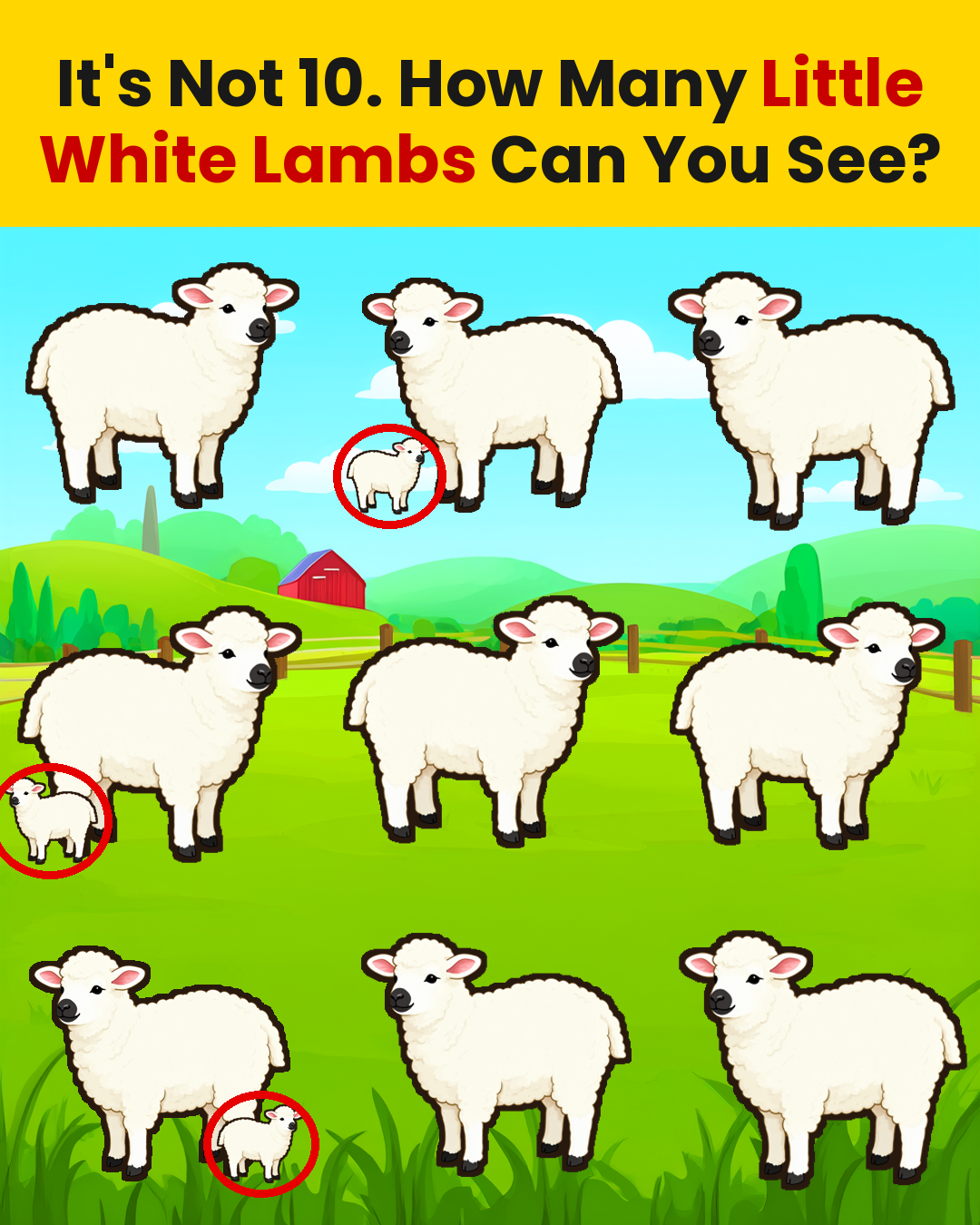
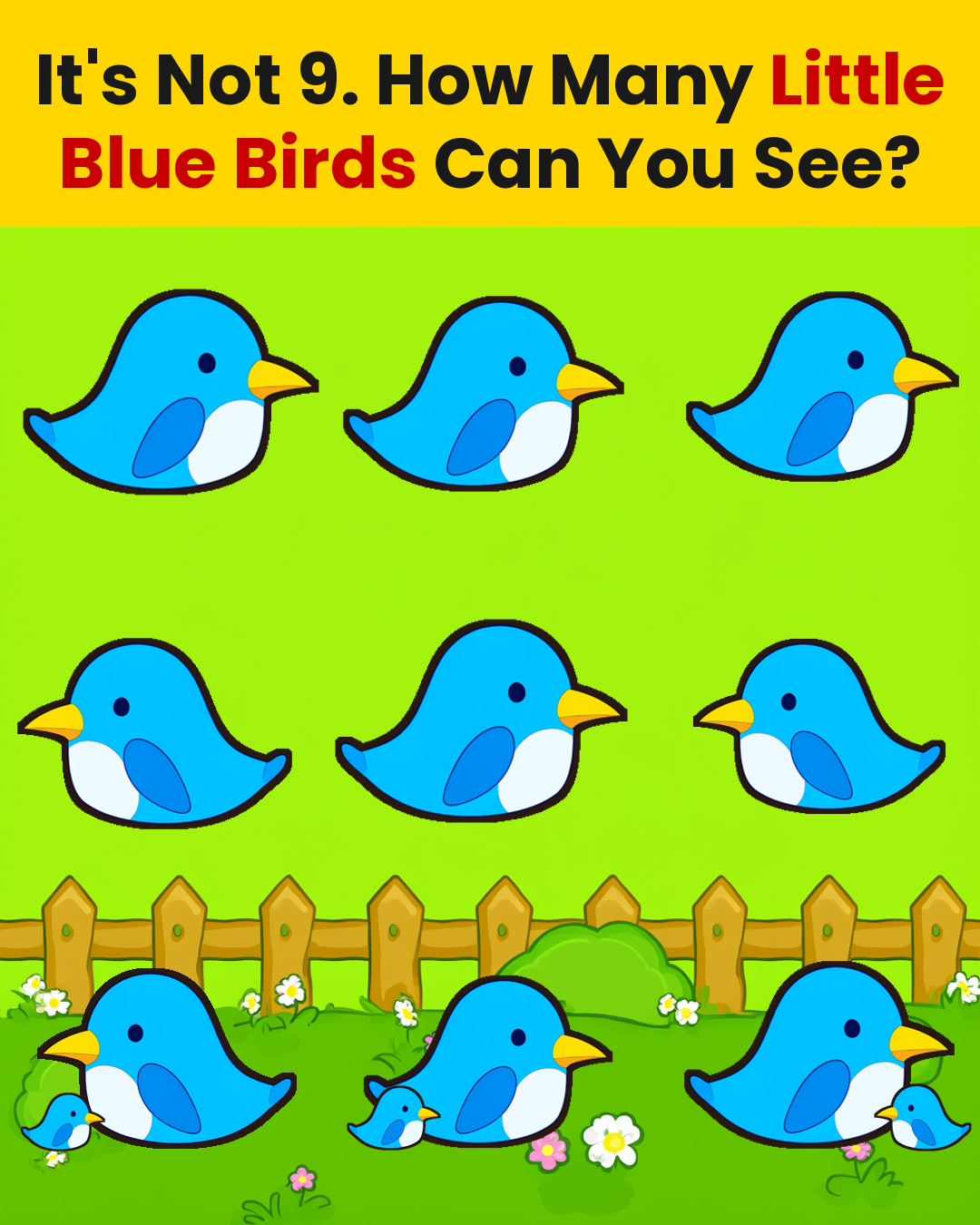
ANSWER: 12 lambs – nine big ones and three tiny ones hiding beside them
Where The Missing Lambs Were Hiding
The nine large lambs are spread out in three easy rows and almost nobody misses those. The three extra lambs are much smaller, and each one is standing right beside a big lamb, which is exactly why they disappear.
One tiny lamb is up in the sky area of the picture, next to the lamb in the top middle. The second is on the far left edge of the middle row, so close to the border that part of our vision treats it as decoration rather than as part of the scene. The third is down in the bottom row, nestled in the grass beside the first big lamb on the left.
When a small shape sits next to a large one of the same colour, the brain groups them together and reads them as a single object, a mother and her baby seen as one. That is why the real total is twelve and not nine.
How Did You Do?
Under ten seconds with the right answer means you have true eagle eyes, and you almost certainly scanned the edges before the middle.
Under thirty seconds is excellent and better than most people manage. Up to a minute is a solid, careful result, and it usually means you counted twice to be sure, which is a very good habit.
If you said nine, do not feel bad for a moment. Nine is the number the picture was designed to make you say, and nearly everyone falls for it the first time. Now that you know to look for the small ones, the next counting puzzle will go much better.