Hello, puzzle friends!
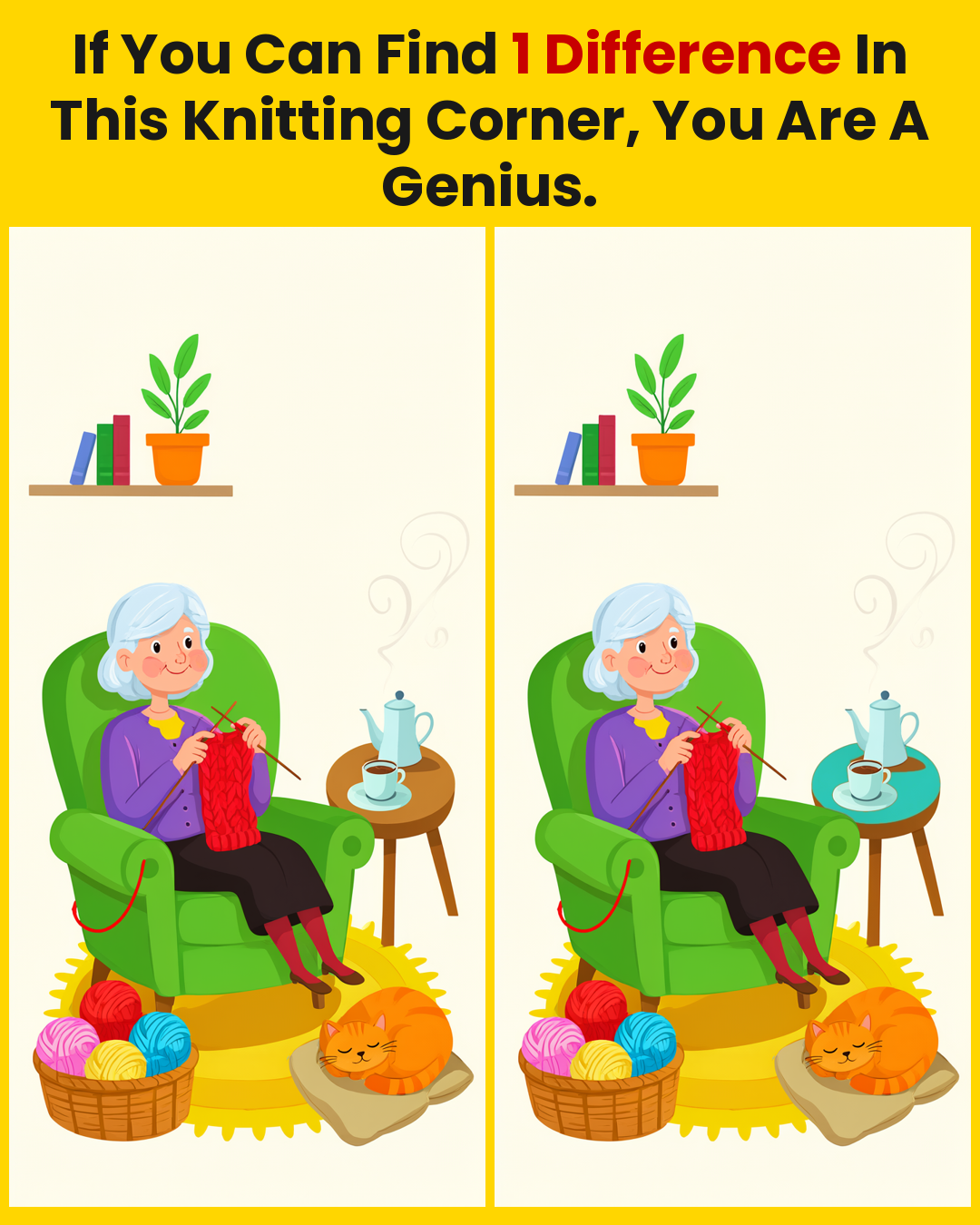
Today we are sitting down for a quiet moment in a cosy knitting corner.
At first glance the two pictures look exactly the same.
The same kind lady, the same red scarf growing on her needles, the same sleepy orange cat on his cushion.
But one single detail is not the same on both sides.
Take your time and look from the shelf at the top all the way down to the floor.
A little tip: do not only look at the lady. The room around her has a story to tell too.
Ready? The answer is waiting for you at the bottom of this page.
Take your time and look closely before you scroll down!
Divide The Picture Into Four Corners
The best way to solve a spot-the-difference puzzle is to stop staring at the whole picture at once. When we do that, our eyes jump around on their own, and they keep landing on the same bright spots over and over again.
Instead, draw four squares in your mind. Look only at the top left corner of both pictures, then the top right, then the bottom left, and finally the bottom right. Compare small areas, never the whole scene at the same time.
When you work corner by corner, every object gets a fair chance. Most people who find the answer quickly are not looking faster than you. They are simply looking in a more organised way.
Why Our Brain Skips The Quiet Details
Our brain is wonderful at noticing people. The moment this picture opens, your eyes run straight to the lady, her gentle smile, the red knitting in her hands and the cat curled up beside her. Those are the warm, living parts of the scene.
Furniture never gets the same welcome. A table, a shelf or a rug is treated as background, and the mind quietly files it away as just the room. It remembers the idea of the object rather than its exact shape and colour.
That is why a small change in a piece of furniture can sit in plain sight for a whole minute. You have already looked straight at it. You simply never asked yourself a single question about it.
A Puzzle With A Long History
Spot-the-difference puzzles are much older than most people think. They were printed in family magazines and weekend papers more than a hundred years ago, usually in a small square near the crossword at the back.
In those days an artist had to draw the same picture twice by hand, which made these puzzles slow and rather expensive to produce. Today a drawing can be copied in a second, so we are lucky enough to enjoy a fresh one every single day.
What has not changed at all is the feeling. That small, happy jump when you finally see it is exactly the same feeling your grandmother had with her magazine and a hot cup of tea.
Your Friendly Challenge
Most people need about thirty seconds to find the difference in this knitting corner. A few sharp pairs of eyes catch it in ten. If you need a full minute, you are in very good company indeed.
Give yourself one honest try before you scroll down to the answer. Then send this picture to a friend and see who wins. It makes a lovely little game to share over a cup of coffee in the afternoon.
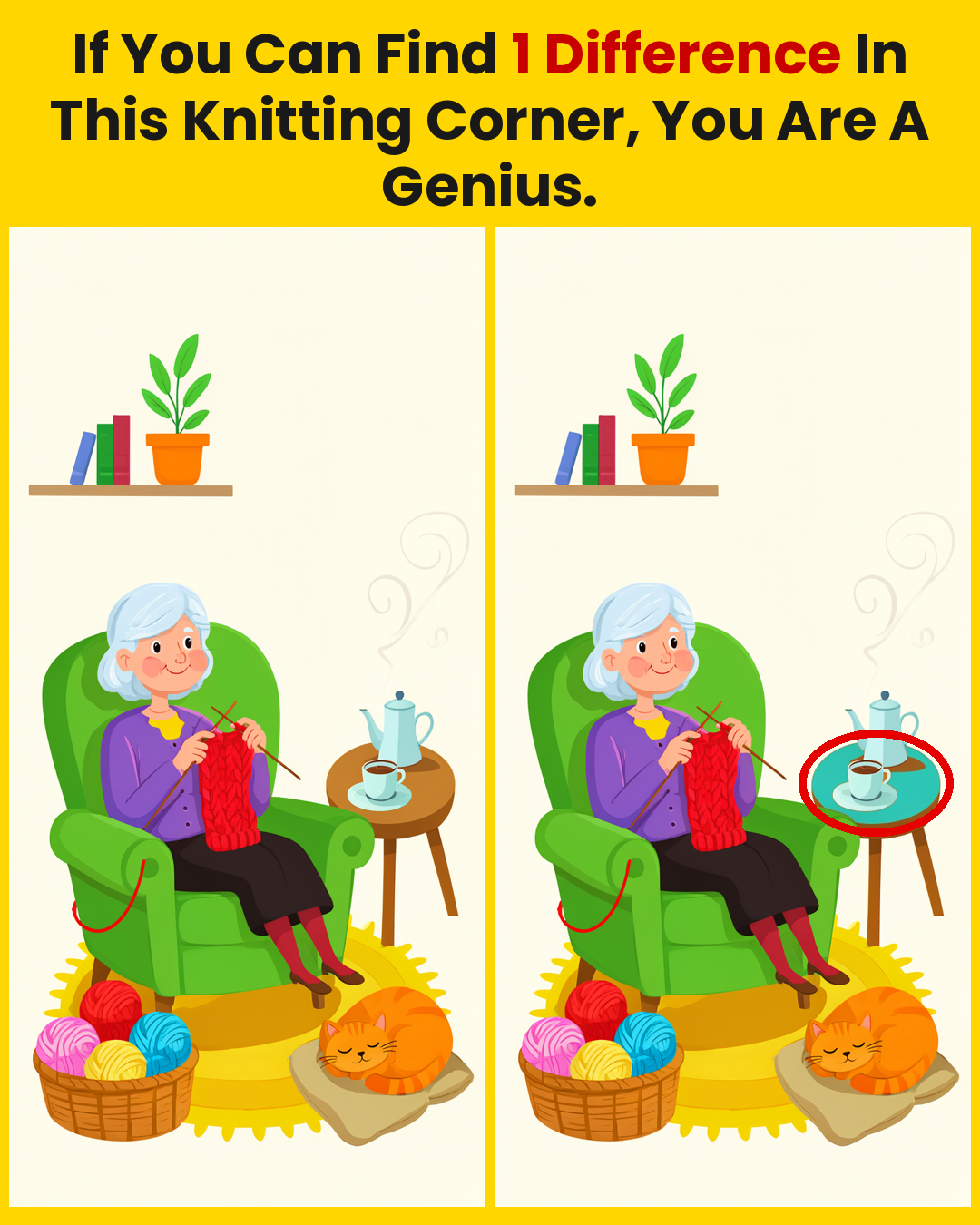
ANSWER: The top of the little side table changed colour – it is warm brown wood in the first picture and soft teal in the second.
The Change Is On The Side Table
Look at the small round table beside the armchair, the one holding the teapot and the cup of tea. In the first picture the table top is warm brown wood, matching its three slim legs perfectly.
In the second picture that same round table top has turned a soft teal, a gentle blue-green shade. Everything else stayed exactly where it was. The teapot is still pale blue, the cup is still in its place, the steam still curls up into the air, and the legs of the table are still brown.
Why Most People Walk Right Past It
The little table sits at the edge of the scene, surrounded by much louder things. The red scarf, the green armchair and the basket of colourful yarn balls all call for attention first, so the eye treats the table as a resting place rather than a clue.
Colour plays its own trick here. Teal and warm brown are both calm, medium tones. Standing next to that strong red and bright green, they feel equally quiet, so the change never shouts the way a change on the scarf would have done.
How Did You Do?
Under ten seconds means you have eagle eyes and a wonderfully patient way of looking. Between ten and thirty seconds is a fine result, and it is the most common one among our readers. Up to a minute still puts you ahead of the crowd, because many people give up long before that.
And if you needed a peek at the answer, nothing at all is lost. Your eyes have just had a good workout, and the next puzzle will feel a little easier.