Good morning, puzzle friends, and welcome to the cosiest kitchen in town!
The kettle is warm, the jam is on the table, and the sun is coming through the checkered curtains.
Here are two pictures of that same peaceful breakfast table.
They look like twins, from the plant on the windowsill to the bowl of fruit in the middle.
But one small thing has quietly changed between the first picture and the second.
A gentle tip before you start: the middle of the table is a wonderful place to get lost.
Give your eyes one slow, calm sweep and let the little things speak to you.
Take your time – this one likes to hide in plain sight.
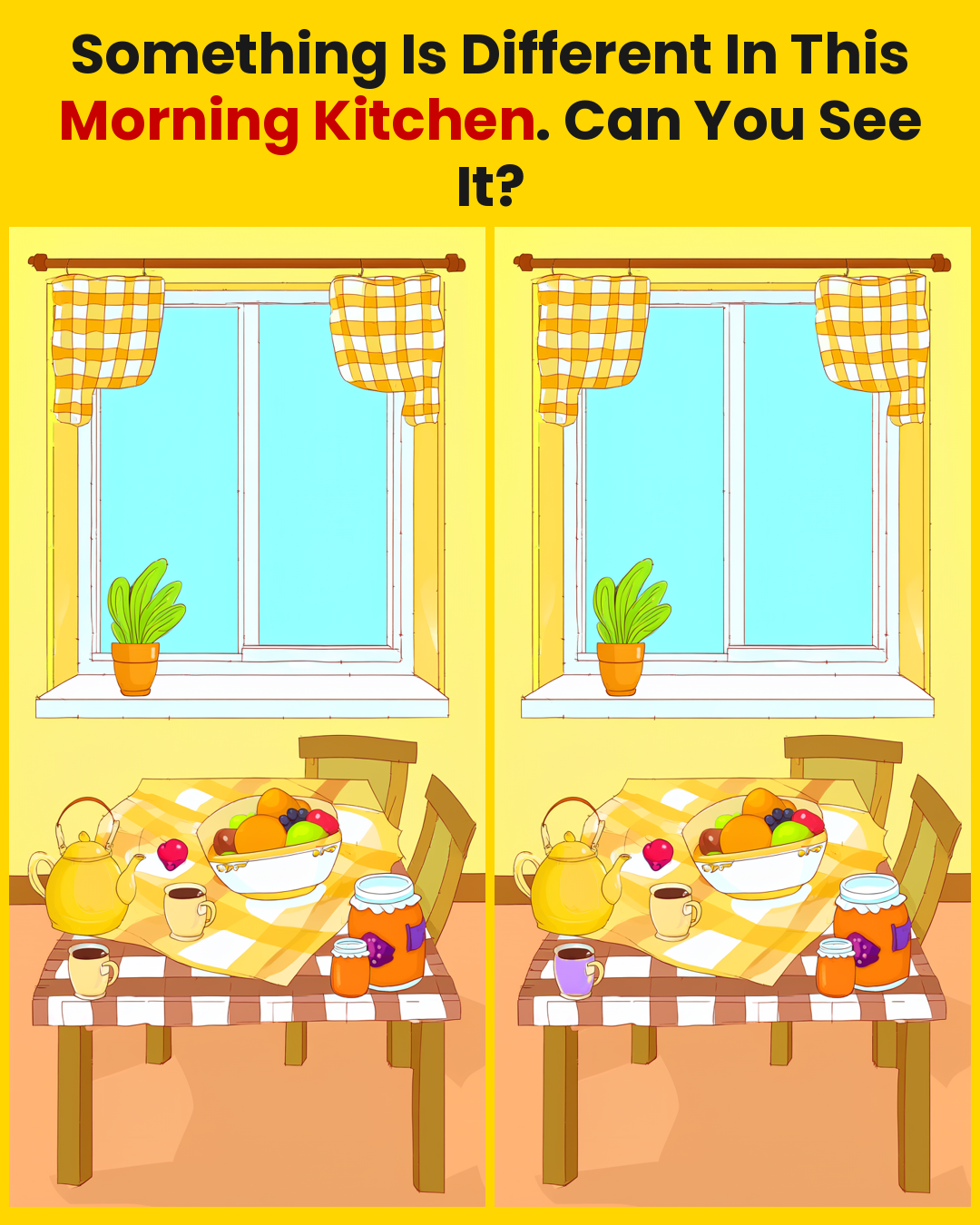
Take your time and look closely before you scroll down!
A Smart Way To Compare
When two pictures sit side by side, most of us look back and forth very quickly, hoping something will jump out. It almost never does. A better method is to pick one object at a time and finish with it before moving on: the teapot, then the fruit bowl, then the jam jars, then each mug, then the plant, then the curtains.
Say the name of each object quietly to yourself as you check it. Naming slows your eyes down just enough for your brain to really look instead of guessing.
And leave the table cloth and the window for last. Patterns and plain surfaces are where our attention goes to rest, not where the puzzle makers like to work.
Why Colour Changes Are So Sneaky
You would think a change of colour would be the easiest thing in the world to see. In fact it is one of the hardest. Our eyes are built to notice shapes, edges and movement first, because those are the things that mattered to our ancestors. Colour comes later, almost as a label we add afterwards.
This kitchen makes it harder still. The whole scene is warm and golden, full of yellows and creams and soft oranges. When a picture has one strong colour family, small shifts inside it feel like part of the mood rather than a change.
There is one more trap. Breakfast tables are busy. The more objects a picture holds, the more your brain leans on its quick summary – mugs, jam, fruit, teapot – and the less it checks each item properly.
The Kitchen Table Through The Years
There is a reason so many picture puzzles are set in kitchens. The kitchen table is the most familiar place most of us know. We can name everything on it with our eyes closed, which makes it the perfect stage for a trick.
Artists in the old Dutch paintings knew this too. They filled their breakfast scenes with jugs, bread, fruit and cloth, and they hid tiny details in the corners for patient viewers to find hundreds of years before anyone called it a puzzle.
So when you lean in to study a cartoon jam jar today, you are doing something people have enjoyed for a very long time.
Your Challenge For Today
Most people need about forty seconds for this one. Those who find it quickly almost always start at the front edge of the table rather than in the middle.
Give yourself one quiet minute, with no hurry and no help. If nothing appears, try covering the top half of both pictures with your hand and looking only at the lower half.
Then pass it on. Share it with a friend over your own cup of coffee and see who is faster. A puzzle shared at breakfast is twice the fun.
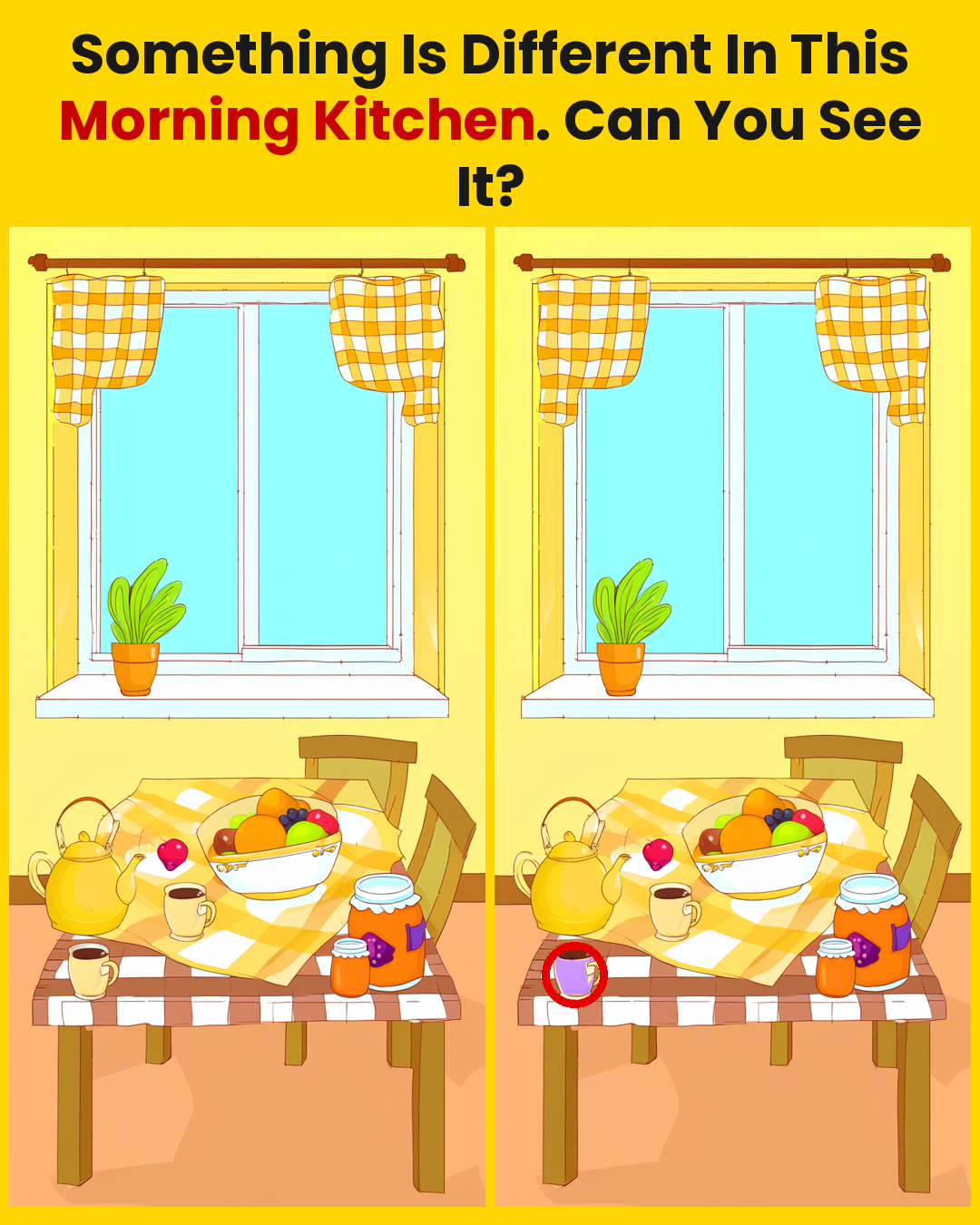
ANSWER: The mug at the front left corner of the table changed colour – it is cream in the first picture and purple in the second.
Where The Change Is Hiding
Look at the very front left corner of the table, at the small mug standing a little apart from everything else. In the first picture it is a soft cream colour, the same gentle shade as the teapot and the second mug. In the second picture that very same mug has turned a light purple.
Nothing else on the table moved. The teapot, the fruit bowl, the jam jars, the little red berry and the plant on the windowsill are all exactly where they were. Only the colour of one small mug is different.
Why Most People Miss It
The mug sits at the edge of the picture, below the eye level of the scene, and that is the part of a picture our eyes visit last. Everything in this kitchen points inward: the window, the curtains, the big bright fruit bowl right in the centre. Your attention is pulled to the middle and happily stays there.
The second reason is that a cream mug and a lilac mug are still, unmistakably, a mug. The shape never changed, so your brain’s quick summary of the table stayed true and raised no alarm. Shape beats colour almost every time, which is why this little mug catches so many people out.
How Did You Do?
Under 10 seconds: wonderful eyes. You went straight to the edge of the table instead of the middle.
10 to 40 seconds: a very good result and a sign of steady, patient attention.
40 to 90 seconds: perfectly normal. This colour change fools almost everybody at first.
Still not sure even now: no trouble at all. Look once more at the two front corners, and next time start there.