Hello, puzzle friends, and welcome to a bright morning on the farm!
Two pictures of the same sunny farmyard are waiting for you today.
A friendly woman in a straw hat is feeding her hens, the barn is open, and the flowers are in bloom.
At first glance the two pictures look exactly the same, right down to the last little daisy.
But one single detail is not the same, and only a sharp pair of eyes will catch it.
Here is a gentle tip: forget the big barn and the pretty sky for a moment.
Take your time, look at the picture row by row, and trust your first feeling.
Ready? Let’s see how fast you can find it.
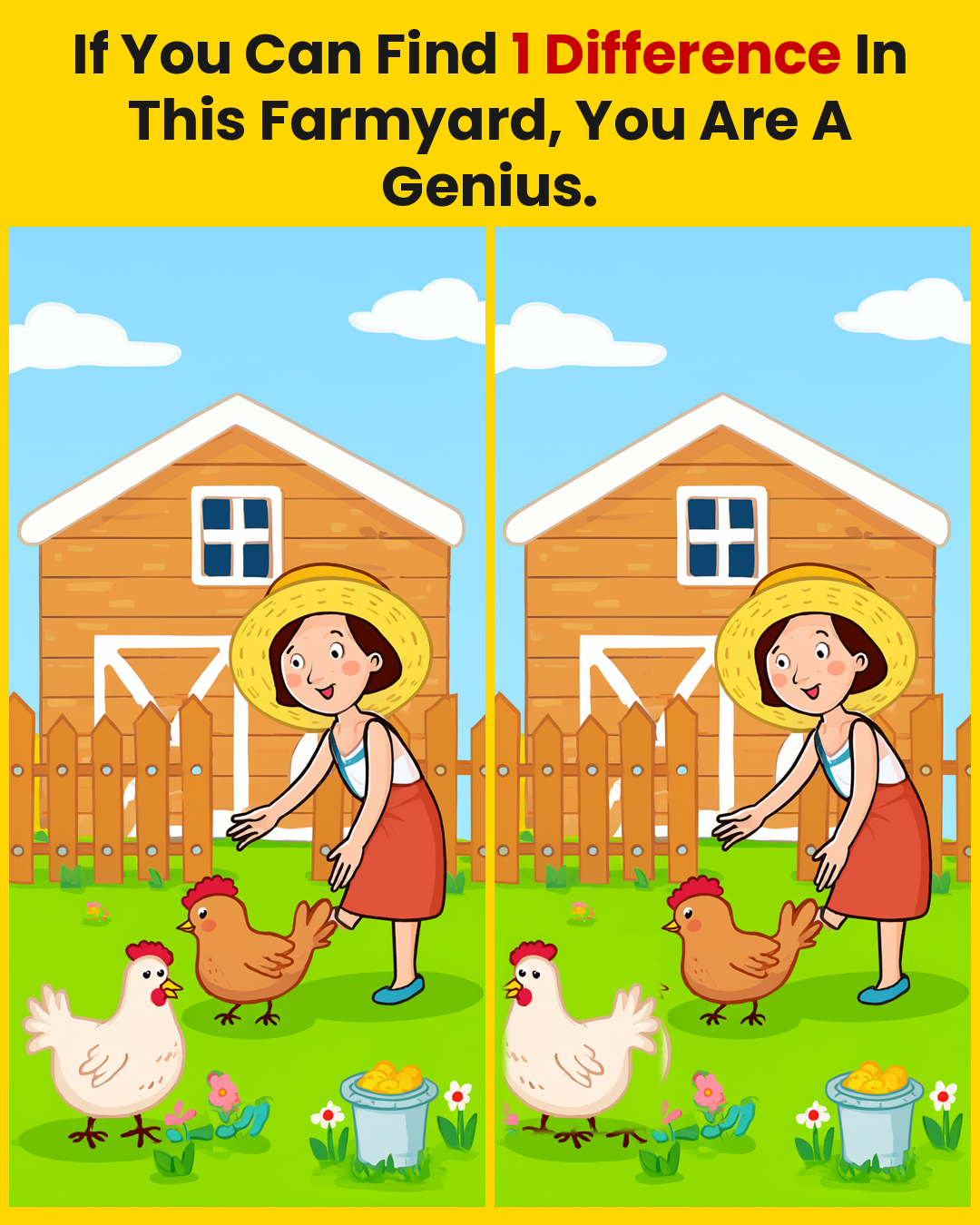
Take your time and look closely before you scroll down!
Where To Look First
The smartest way to solve a spot-the-difference picture is to stop looking at it as one big scene. Our eyes love to wander, and a cheerful farmyard like this one gives them plenty of places to wander to. Instead, divide the picture into four parts in your mind: top left, top right, bottom left, bottom right. Compare one part in both pictures, then move to the next. It feels slower, but it is far faster in the end.
Another good habit is to start at the bottom. Most people begin at the top, where the title points their eyes, and the makers of these puzzles know it. The bottom corners are where small changes like to hide, quietly waiting for somebody patient.
And finally, watch the living things. Animals and people are drawn with many small details, and a change in a wing, a foot or a direction is much easier to miss than a change in a big flat wall.
Why Our Brain Finds This So Hard
Your brain is not a camera. It does not store every detail of what you see. Instead it builds a quick summary: barn, woman, hat, three hens, grass, flowers. When you look at the second picture, your brain compares it with that summary, not with the real picture. If the summary still fits, it tells you everything is the same.
This shortcut is wonderful in daily life. It lets you walk into your own kitchen and know at once that nothing is wrong. But it is exactly what makes these puzzles so tricky. A change that does not break the summary slips straight past you.
Researchers call this change blindness, and it has been tested many times. In one famous experiment, people did not notice when the person they were talking to was quietly swapped for somebody else. So if a hen fools you today, you are in very good company.
A Little History Of Spotting The Difference
Picture puzzles like this one are older than most people think. Newspapers in the early 1900s printed pairs of drawings for readers to compare over breakfast, and children’s magazines have carried them ever since. They were cheap to print, needed no special knowledge, and anyone could join in.
Today doctors and therapists use the very same idea. Comparing two pictures gently trains attention, patience and visual memory, which is why these puzzles are popular in care homes and classrooms alike. It is a small daily exercise for the mind, and it costs nothing but a few quiet minutes.
The best part is that there is no age limit. Grandparents often beat their grandchildren at this game, because experience teaches you to look slowly.
The Friendly Challenge
Most people need between thirty and sixty seconds to find today’s difference. A few lucky souls see it in under ten, usually because they happened to start in the right corner.
So set yourself a little test. Look away from the screen, take a breath, then look back and give yourself one calm minute. No rushing, no squinting.
When you have it, send the picture to a friend or a family member and see how long they need. Half the fun of these puzzles is watching somebody else stare at the very same spot and still miss it.
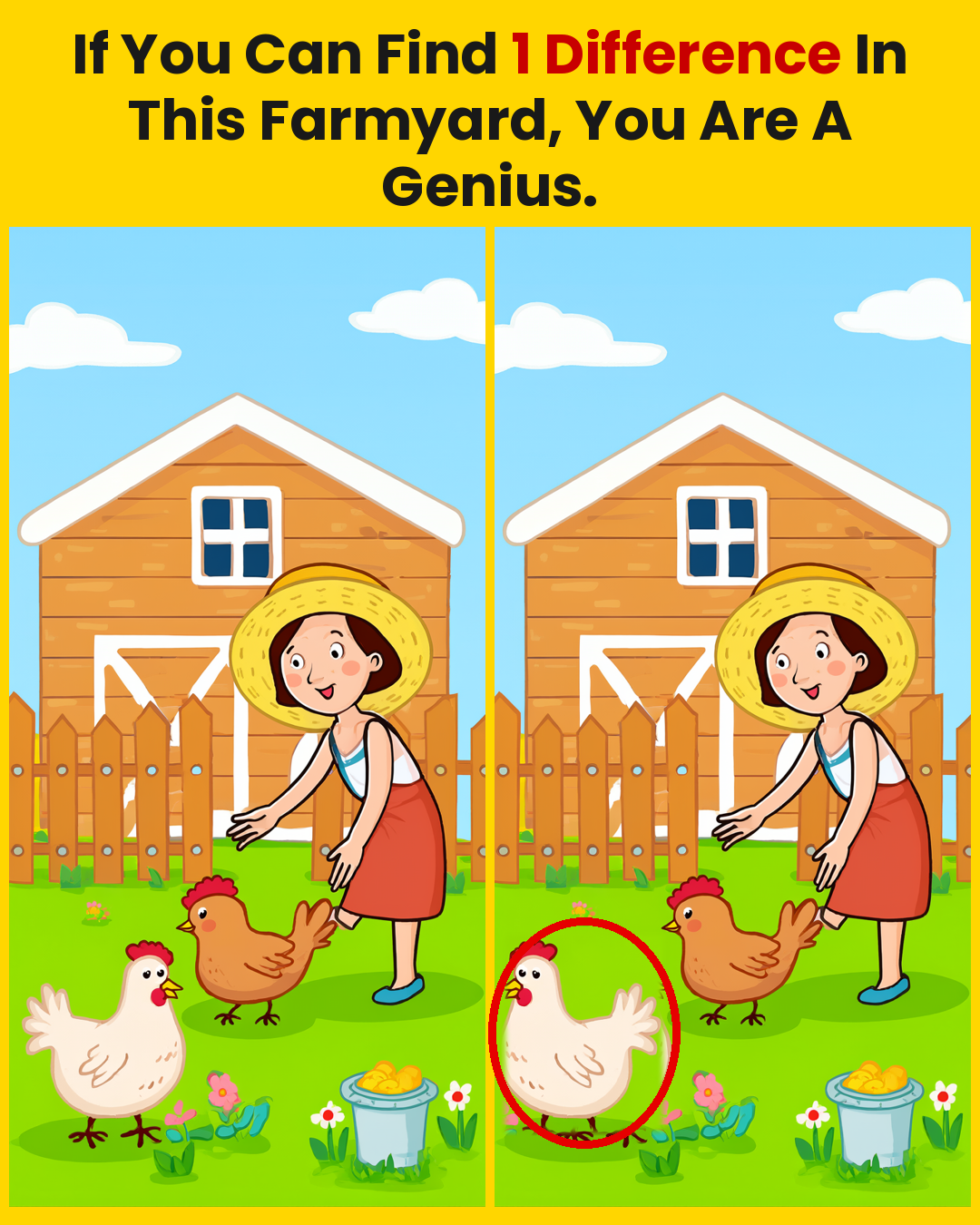
ANSWER: The white hen has turned around – in the second picture she is facing the other way.
Where The Difference Hides
The change is at the bottom left of the picture, with the big white hen. In the first picture she is standing one way, pecking along quietly. In the second picture she has turned right around and now faces the other direction. Her comb, her beak and her tail have all swapped sides.
Most people miss it because the hen is still a white hen in the same place, the same size and the same shape. Nothing about the quick summary your brain made has changed, so your brain happily says the picture is identical. We notice when things appear or disappear far more easily than when they simply turn around.
Why The Barn Fooled You
There is a second trap in this picture, and it is the barn. It is large, it is warm brown, and it sits right in the middle where your eyes land first. Big objects pull our attention and hold it, which is why so many people spend half a minute studying the window and the open door before they ever glance down at the grass.
The woman in the straw hat does the same job. A friendly face is the strongest magnet of all for human eyes. While you were looking at her, a hen quietly turned around behind your back.
How Did You Do?
Under 10 seconds: eagle eyes. You looked at the bottom of the picture first, which is exactly what the experts do.
10 to 30 seconds: excellent. Your attention is sharp and your method is working well.
30 to 60 seconds: right on average, and in very good company.
Over a minute, or needed the answer: no harm done at all. Come back tomorrow, start at the bottom corners, and watch how much faster you become.