Hello there, puzzle friends!
Today we are spending a warm afternoon on a sunny front porch, where two good friends are sharing a cold pitcher of lemonade.
At first glance the two pictures look exactly the same, right down to the red geraniums and the orange cat in the grass.
But they are not the same. One small detail has been changed, and only one.
It is not hidden in a corner and it is not tiny. It is sitting there in plain sight, waiting for a careful eye.
Here is a friendly tip to start you off: most people look at the two ladies first, so try beginning somewhere else and work your way around.
Take your time, there is no clock running and no prize for rushing.
Good luck, and enjoy the search!
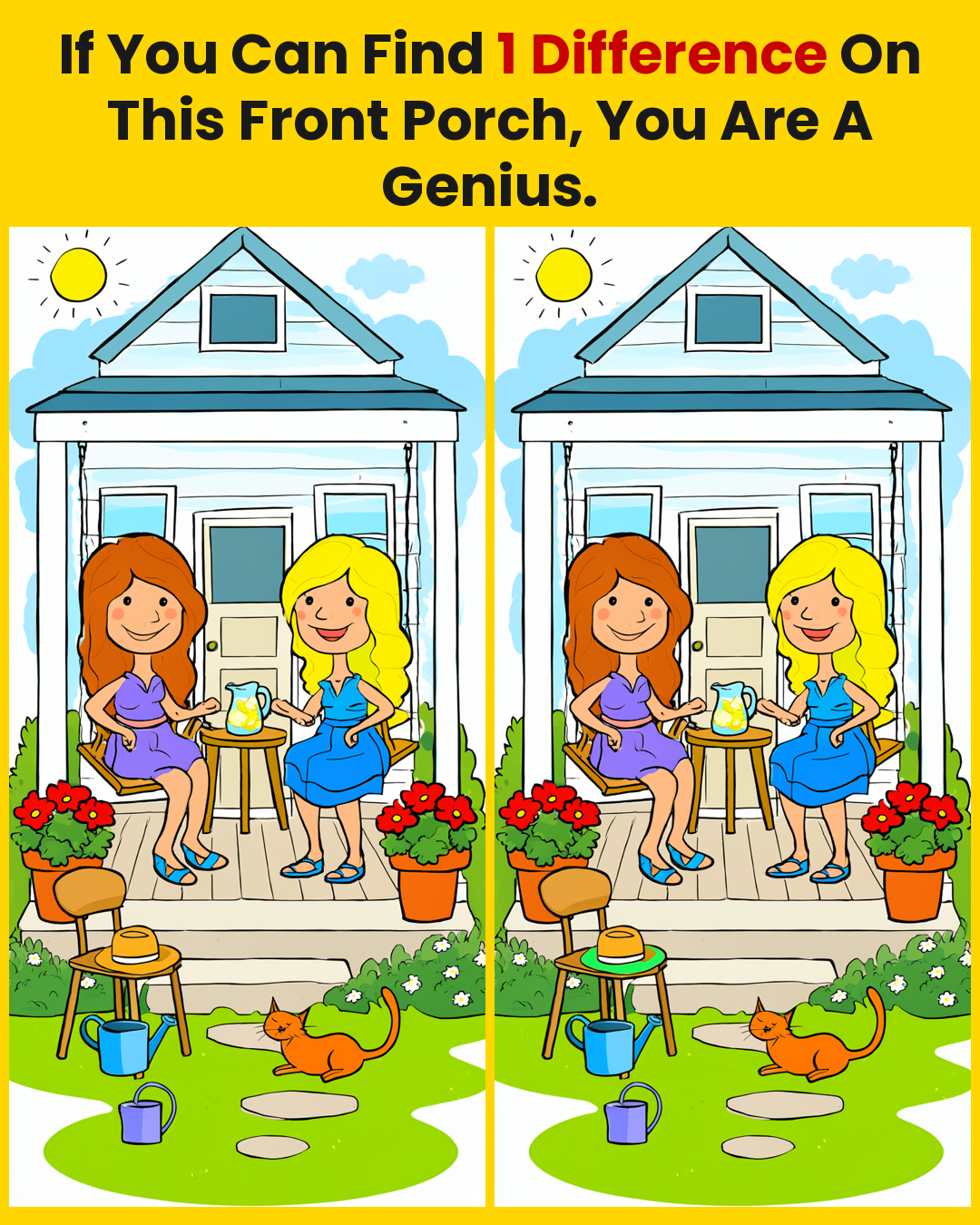
Take your time and look closely before you scroll down!
Start With A Simple Plan
The biggest mistake people make with a spot-the-difference picture is letting their eyes jump all over the page. The eye is drawn to faces, to bright red flowers, to anything that moves or shines. So we look at the same three or four spots again and again, and the one thing that actually changed sits quietly in a part of the picture we never visit.
The cure is a plan. Pick a corner and work across the picture in strips, the way you would mow a lawn. Top strip first: the roof, the sky, the sun, the little window. Then the middle strip: the porch, the door, the chairs. Then the bottom strip: the grass, the flower pots, the cat. Compare each strip on the left with the same strip on the right before you move on.
It feels slower, but it is almost always faster in the end, because you only look at each part once instead of ten times.
Why Our Brain Finds This So Hard
Our eyes take in a great deal, but our attention is a narrow beam. Researchers call the effect change blindness: when two very similar images sit side by side, the brain quietly decides they are the same and stops checking the details. It is a sensible shortcut. In daily life we would be exhausted if we examined every object in a room each time we walked in.
Colour makes it harder still. A change of shade, rather than a change of shape, slips past us easily, because the brain stores the general idea of an object and not its exact tint. You remember that there was a hat on the stool. You do not remember what colour it was.
That is why a puzzle like this feels unfair right up to the second you see the answer, and then feels obvious forever after.
A Puzzle With A Long History
Side-by-side picture puzzles are much older than the internet. They appeared in family magazines and newspaper corners more than a hundred years ago, printed alongside crosswords and riddles for readers to solve at the kitchen table.
For many years they were a favourite in children’s weeklies, but adults were always the keenest players. Doctors and teachers liked them too, because a few minutes of careful comparing is gentle, pleasant exercise for attention and short-term memory. You hold one picture in mind while you examine the other, and that small act of holding is exactly the skill that keeps the mind nimble.
Today the pictures arrive on a telephone screen instead of a paper page, but the pleasure is exactly the same.
Your Friendly Challenge
Most people need somewhere between twenty and forty seconds to find the change in this porch scene. A sharp-eyed few get there in under ten.
So here is the challenge: give yourself thirty seconds, no peeking at the answer, and see where you land. If you find it quickly, try it again with the picture held a little further away. Distance sometimes helps more than squinting.
And when you have it, pass the picture to a friend or to someone in your family and watch them hunt. Half the fun of a puzzle like this is seeing somebody else stare at the exact spot without noticing a thing.
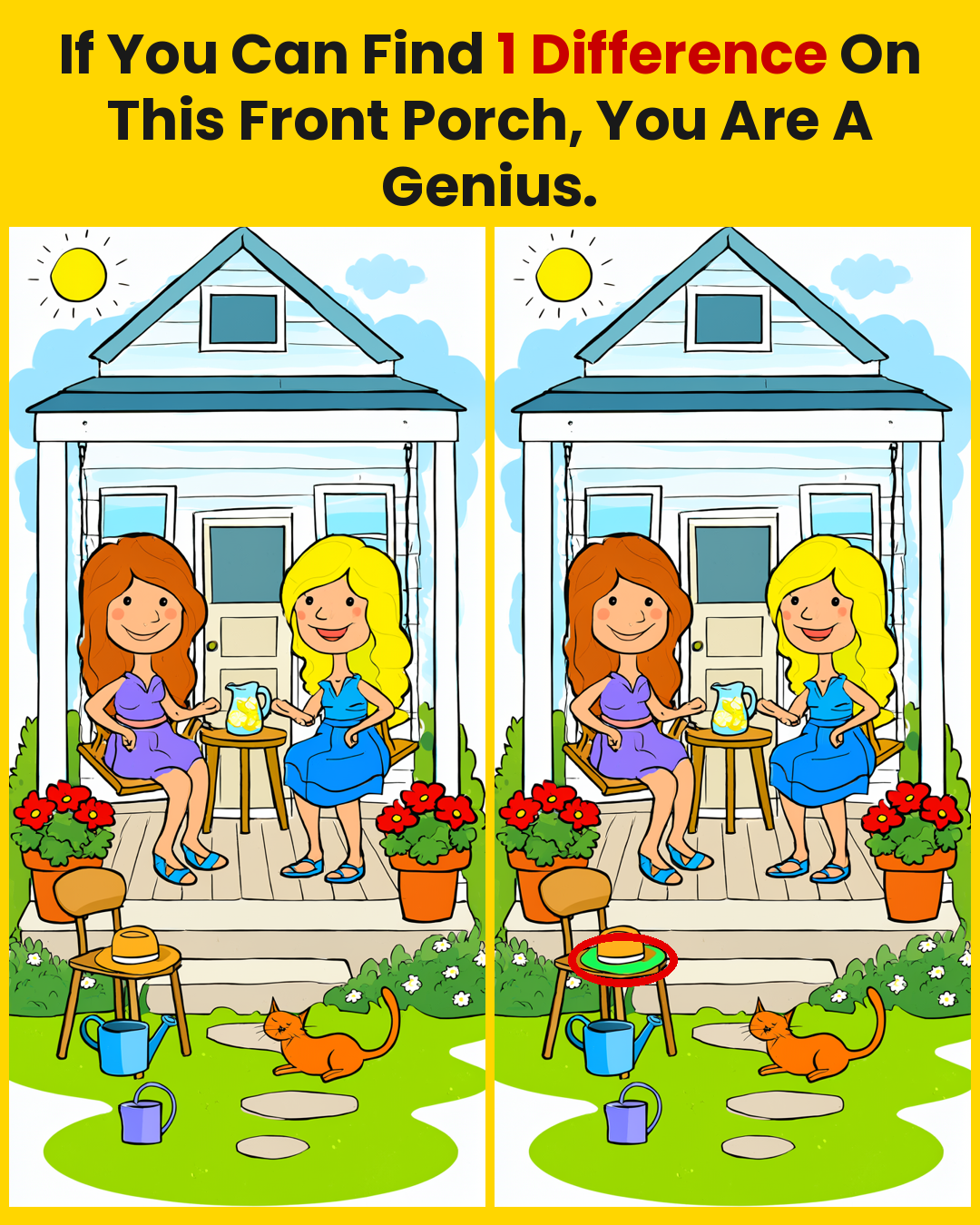
ANSWER: The straw hat on the wooden chair changed colour – its brim turned green.
Where The Change Is Hiding
Look away from the porch swing and down to the wooden chair standing on the grass at the bottom left, the one with the blue watering can beside it.
On that chair rests a wide summer hat. In the left-hand picture the whole hat is the warm golden colour of plain straw, crown and brim together. In the right-hand picture the crown has stayed golden, but the brim around it has turned a soft green, as though somebody had swapped it for a different hat from the hallway.
Nothing else on the porch has moved. The geraniums match, the cat is in the same pose, the lemonade pitcher holds the same slices of lemon, and both ladies are sitting exactly as they were.
Why Most People Walk Right Past It
Two things work against us here. The first is position. The hat sits low and to the side, in the busiest corner of the picture, surrounded by grass, flowers, a watering can and a cat. Our attention goes to the faces and the bright red geraniums long before it goes there.
The second is the kind of change. A green brim against a golden crown still reads as a hat, so the brain files it under hat and moves on without checking the colour. If the hat had vanished entirely, almost everyone would have spotted it in a second or two.
This is the little trick behind nearly every good spot-the-difference puzzle: change the colour of something, not its shape, and hide it among other busy details.
How Did You Do?
Under ten seconds: eagle eyes. You scan a picture the way a bird scans a field, and very little gets past you.
Ten to thirty seconds: excellent. That is a sharp, patient eye and the kind of result most people would be proud of.
Thirty seconds to a minute: right in the middle, where the great majority of readers land. Nothing at all to be sorry about.
Over a minute, or you needed the answer: do not worry for a moment. Your brain was doing exactly what a healthy brain does. Try the next one with the strip method and you will be surprised how much faster you get.