Hello, puzzle friends!
It is a warm afternoon, and a cheerful woman is selling lemonade at her little wooden stand.
There is a big glass jug, a tall stack of paper cups, a bowl of fresh lemons and a shady tree behind her.
The two pictures look identical, but one single detail is not the same.
It is not the lemons, and it is not the striped awning.
A small tip: look at the shape of each object, not only at its colour.
Some changes do not add anything or take anything away – they simply turn something around.
Pour yourself a cool drink and take your time. Good luck!
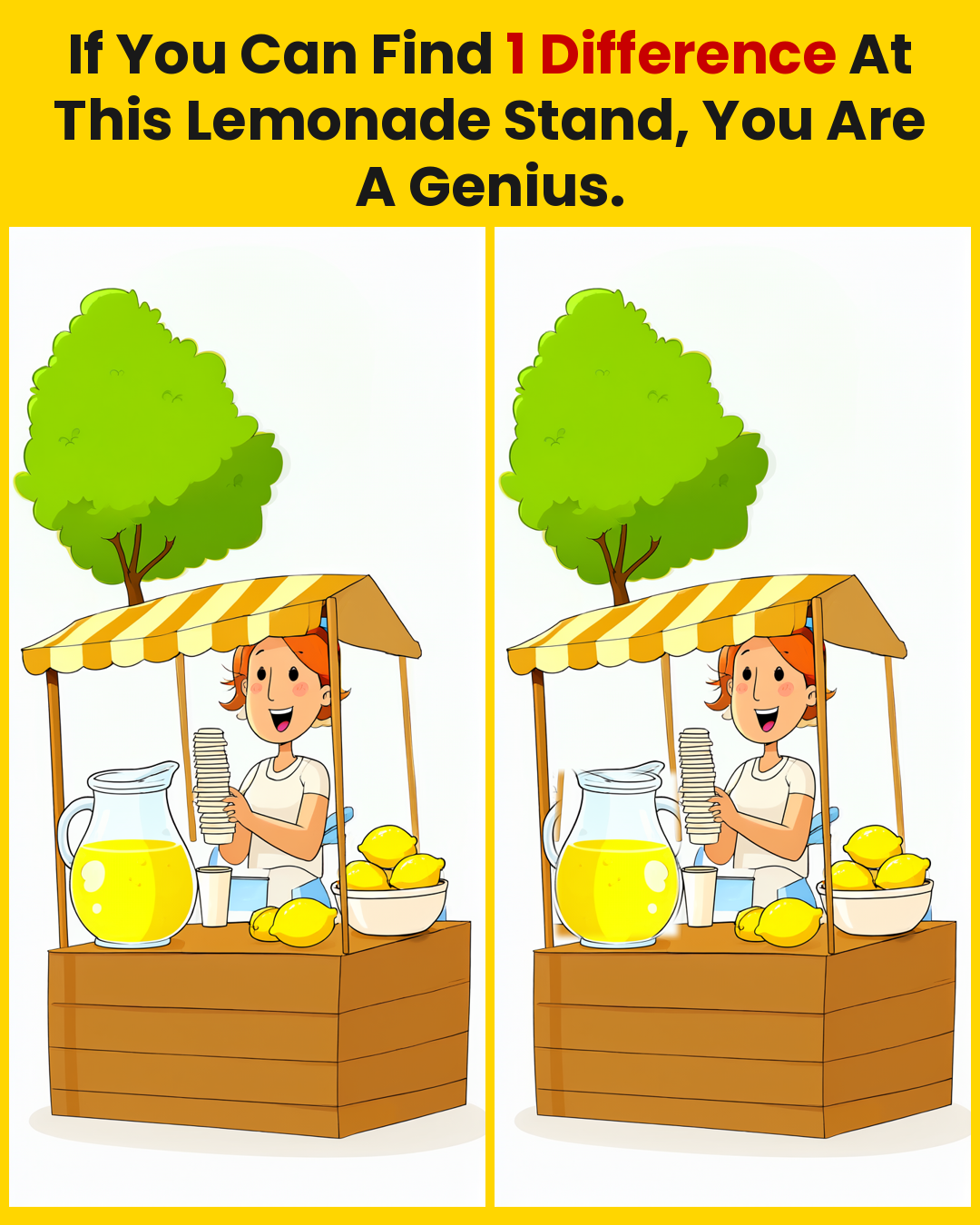
Take your time and look closely before you scroll down!
Where To Look First
With two pictures side by side, the clever move is to pick the biggest objects first and check them properly. We usually do the opposite. We hunt for something tiny, convinced the puzzle maker must have hidden a crumb somewhere, and we leave the large objects completely unchecked because we feel sure we would have noticed.
That feeling is the trap. Large objects are the easiest place to hide a change, precisely because we trust them. So start big: the awning, the tree, the counter, the jug. Then go smaller: the cups, the lemons, the woman’s clothes.
One more useful habit is to compare like with like. Look at the jug in the first picture, then move your eyes straight across to the jug in the second picture, and only then decide. Comparing from memory is much harder than comparing side by side, and memory is where most mistakes are made.
Why Our Brain Says They Are The Same
Our eyes do not photograph the world. They sample it, in quick little jumps, and the brain stitches those samples into something that feels complete and steady. The feeling of seeing everything is a kind of friendly illusion.
Because of this, we store the idea of an object rather than its exact picture. A glass jug of lemonade becomes jug, yellow, full – and a handle on the left or right side is simply not part of that short note. When the handle moves, our stored note still fits, so no alarm bell rings.
Mirror images are famously difficult for human beings. Many of us hesitate for a second when we have to say which hand is which, and a mirrored object plays on the very same weakness.
A Fun Fact About Picture Puzzles
Lemonade stands and picture puzzles both belong to the same gentle tradition of a slow summer afternoon. Spot-the-difference drawings have been printed in family newspapers for well over a century, usually on the page beside the crossword.
Artists in those days drew the two pictures twice by hand, which meant the unplanned differences were sometimes harder to find than the planned ones. Readers wrote in to complain, and the puzzle editors loved every letter.
A Challenge For You
Most people take about twenty-five seconds with this one. Under ten seconds means you compare like a professional, object by object, without rushing.
When you have found it, pass the picture to a friend and keep quiet while they look. Half the fun of a puzzle is watching somebody else fall into the very same trap you did.
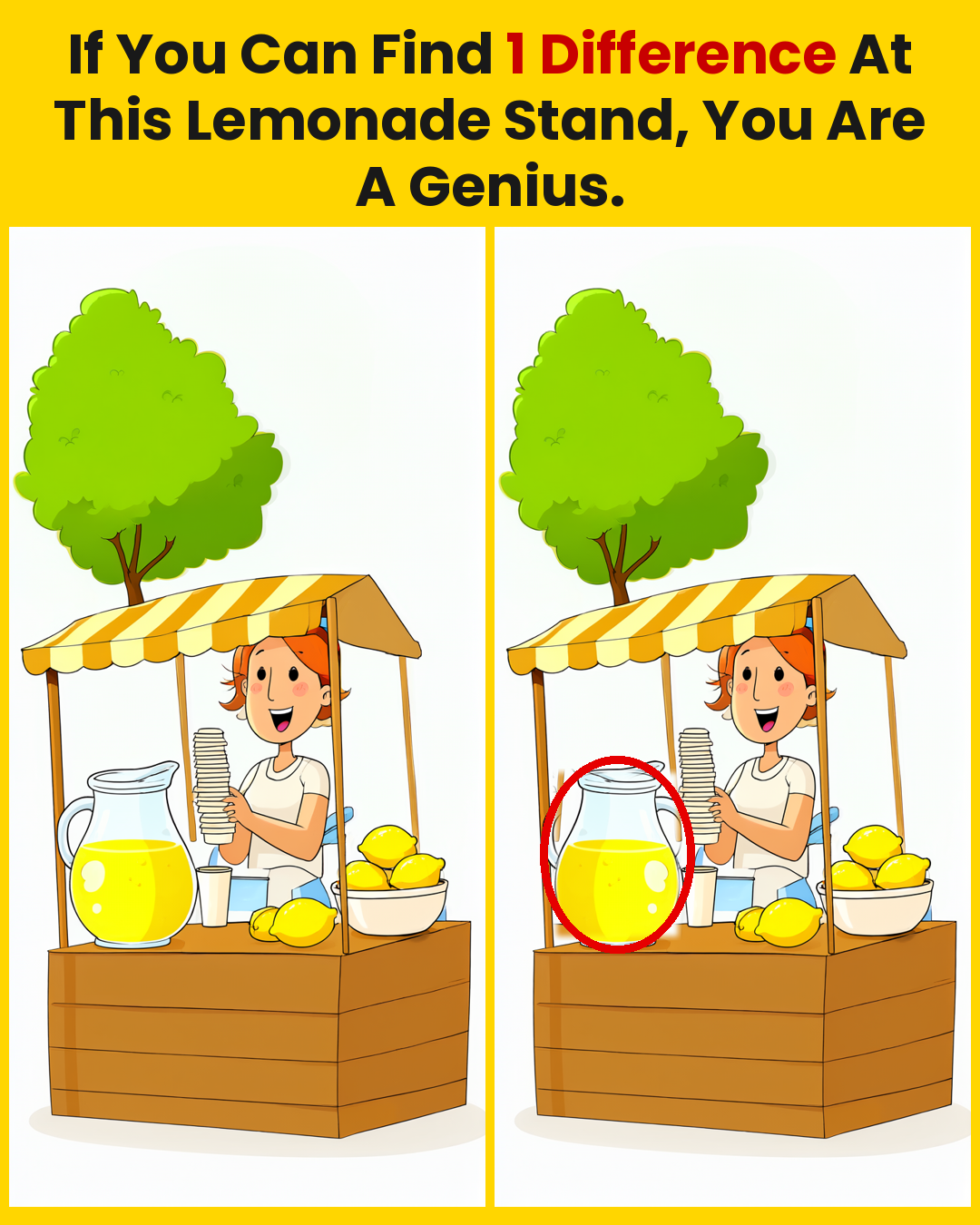
ANSWER: The big glass jug of lemonade is turned around – its handle is on the left in the first picture and on the right in the second.
The Jug Turned Around
The answer is the biggest object on the counter: the tall glass jug full of lemonade on the left. In the first picture its curved handle points to the left, away from the stand. In the second picture the whole jug has been mirrored, so the handle now points to the right, towards the stack of cups.
The jug is the same size, the same bright yellow and in exactly the same place. Only its reflection has changed. That is why nothing looks wrong when you glance at it – and it is also why the difference is so satisfying once you finally see it.
Why Most People Miss It
We tend to trust big, familiar objects. A jug of lemonade is so ordinary that our eye ticks it off the list in a fraction of a second and moves on to hunt for something small and sneaky among the lemons and cups.
There is also the matter of handles. In real life, a handle faces whichever way the last person left it, so a handle pointing the other way does not feel like a mistake. Our brain simply shrugs and accepts it. Only a careful side-by-side comparison brings it out.
How Did You Do?
Under 10 seconds – eagle eyes, truly. Mirrored objects are one of the hardest kinds of change to catch.
10 to 30 seconds – wonderful. You looked at big things as well as small things.
30 to 60 seconds – very good. You kept going when it would have been easy to give up.
Over a minute – you are in excellent company. Now that you know mirrored objects are a favourite trick, you will catch the next one far more quickly.