Hello, friends, and welcome to the garden!
The table is laid, the cake is ready and the bunting is swinging in the breeze.
Two pictures of the same cheerful garden party are side by side below.
Everything seems identical: the same guests, the same balloons, the same bowl of fruit.
But one small detail in the second picture is not what it was a moment ago.
Look carefully at the furniture as well as at the table, and do not rush.
A simple method works best here: sweep from the top of the picture to the bottom, one strip at a time.
Have fun, and may your eyes be sharper than mine were!
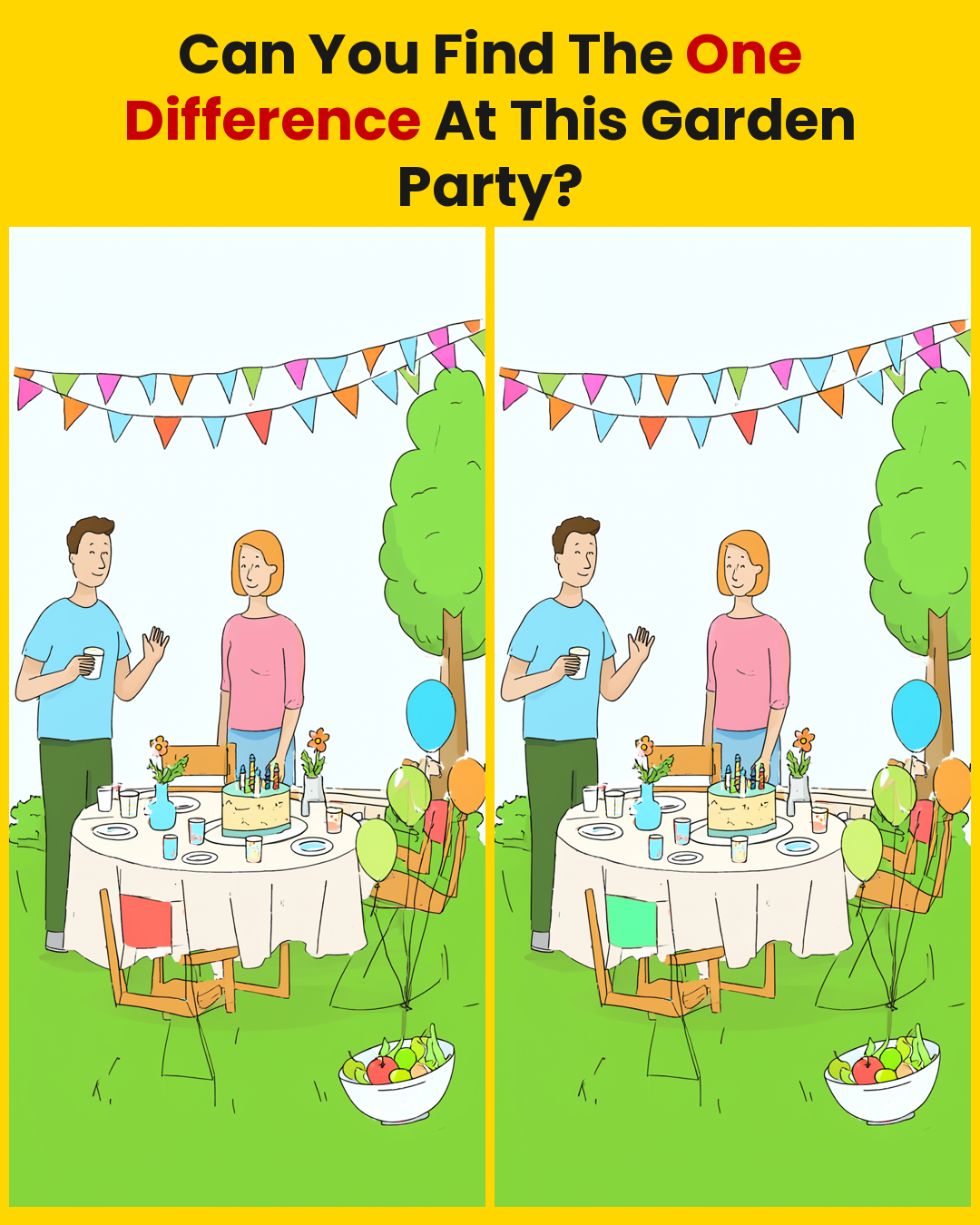
Take your time and look closely before you scroll down!
Where To Begin Your Search
A party scene is busy on purpose. Flags, balloons, cups, plates, fruit and people all compete for your attention, and that is exactly what makes the puzzle work. The cure is a plan.
Start at the very top with the bunting and count the flags in both pictures. Then come down to the two friends and look at their clothes and their hands. Then the table: the cake, the glasses, the flowers, the plates. Then the chairs and the balloons. Finally the lawn and the fruit bowl at the bottom.
If you follow that order without skipping, you will have covered the whole picture in about a minute, and you will know for certain that you have checked every part. Guessing feels quicker, but it leaves holes, and the answer is almost always sitting in one of those holes.
Why A Busy Scene Beats Us
When a picture is full of bright, cheerful shapes, our attention behaves like a guest at a party: it drifts towards whoever is loudest. Balloons, a birthday cake and smiling faces are loud. A chair is not.
There is a second reason too. Our brains are built to find patterns and to group things together. The chairs around a table are read as one single idea, “the seating”, rather than as separate objects with their own colours. Once something has been grouped and labelled, we stop inspecting the parts inside it.
And then there is simple fatigue. After thirty or forty seconds of comparing, the two pictures begin to blur together in memory. This is why a short pause, a blink and a fresh look often works better than pushing on and on.
A Fun Fact About Picture Puzzles
Researchers who study attention use picture pairs very much like this one in their laboratories. They discovered something that surprises almost everybody: people can stare directly at the changed object and still not see it, sometimes for a minute or more.
The effect even has a name, change blindness, and it is not a flaw in your eyesight. It is the price we pay for a brain that summarises the world quickly instead of recording every detail. So when a puzzle defeats you for a while, you are in the company of thousands of volunteers in university studies who did exactly the same.
A Friendly Challenge
Most people find this one in about thirty to forty seconds. Anything under fifteen is genuinely impressive. If you are still hunting after a minute, try covering the table with your hand and looking only at what sits on the grass.
Then share it. Hand the picture to a friend, say nothing at all, and time them quietly. There is no better way to end a puzzle than with two people laughing at how long it took them both.
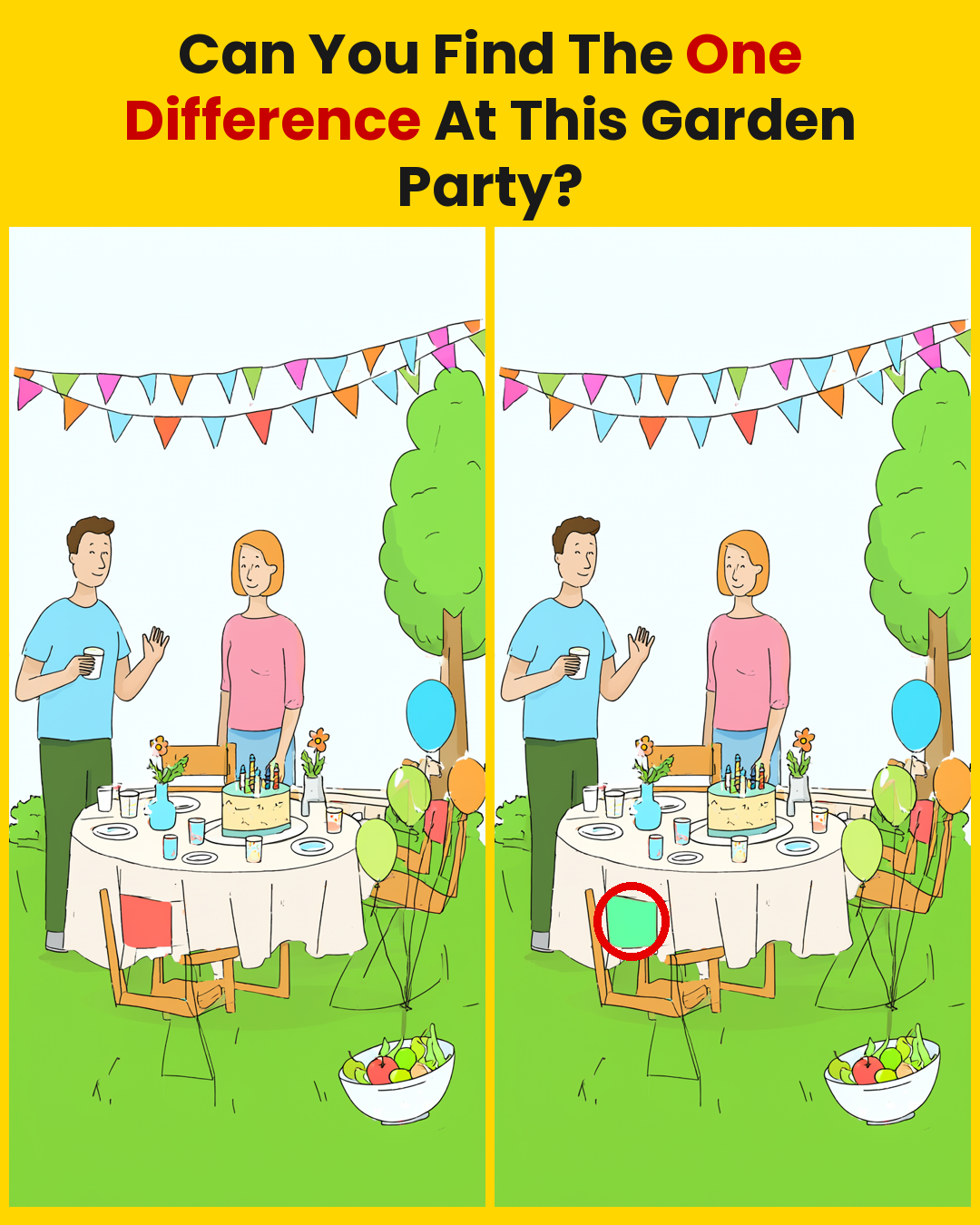
ANSWER: The cushion on the chair in front of the table changed colour – it is red in the first picture and green in the second.
Where The Difference Is
Forget the cake, the balloons and the bunting. The change is on the wooden chair standing in front of the table, with its back towards us.
In the first picture the soft cushion tied to that chair back is a warm red. In the second picture the very same cushion is green. Everything else about the chair is identical: the same wooden legs, the same shape, the same position on the lawn.
Almost nobody checks that chair. It sits low in the picture, it has its back to us, and it is partly hidden by the long white tablecloth, so the brain treats it as part of the furniture and moves on. On top of that, a garden scene is already full of green, so a green cushion blends into the surroundings and never raises an alarm, while the red one in the first picture quietly disappears from memory.
How Did You Do?
Under fifteen seconds: eagle eyes. You looked at the whole picture instead of only at the cheerful parts, and that is a real skill.
Fifteen to forty seconds: excellent work, and a little above the average for this puzzle.
Forty to seventy seconds: exactly where most readers land. Busy scenes are made to slow us down.
Over seventy seconds: you are in very good company indeed. Try the next puzzle by sweeping from the bottom of the picture upwards for a change; starting in an unusual place often breaks the habit that is holding you back.