Hello, puzzle friends, and welcome to the sunniest little cafe terrace in town.
Two old friends have met for coffee under a cheerful yellow umbrella.
There is a teapot on the table, a plate of cookies between them, and red geraniums along the rail.
The two pictures look like a perfect pair, yet one small thing in the second one is not the same.
A tip from us: compare the big shapes first, then the table, then the flowers.
One careful look is worth three hurried ones, so take your time.
Pour yourself something warm and enjoy the search.
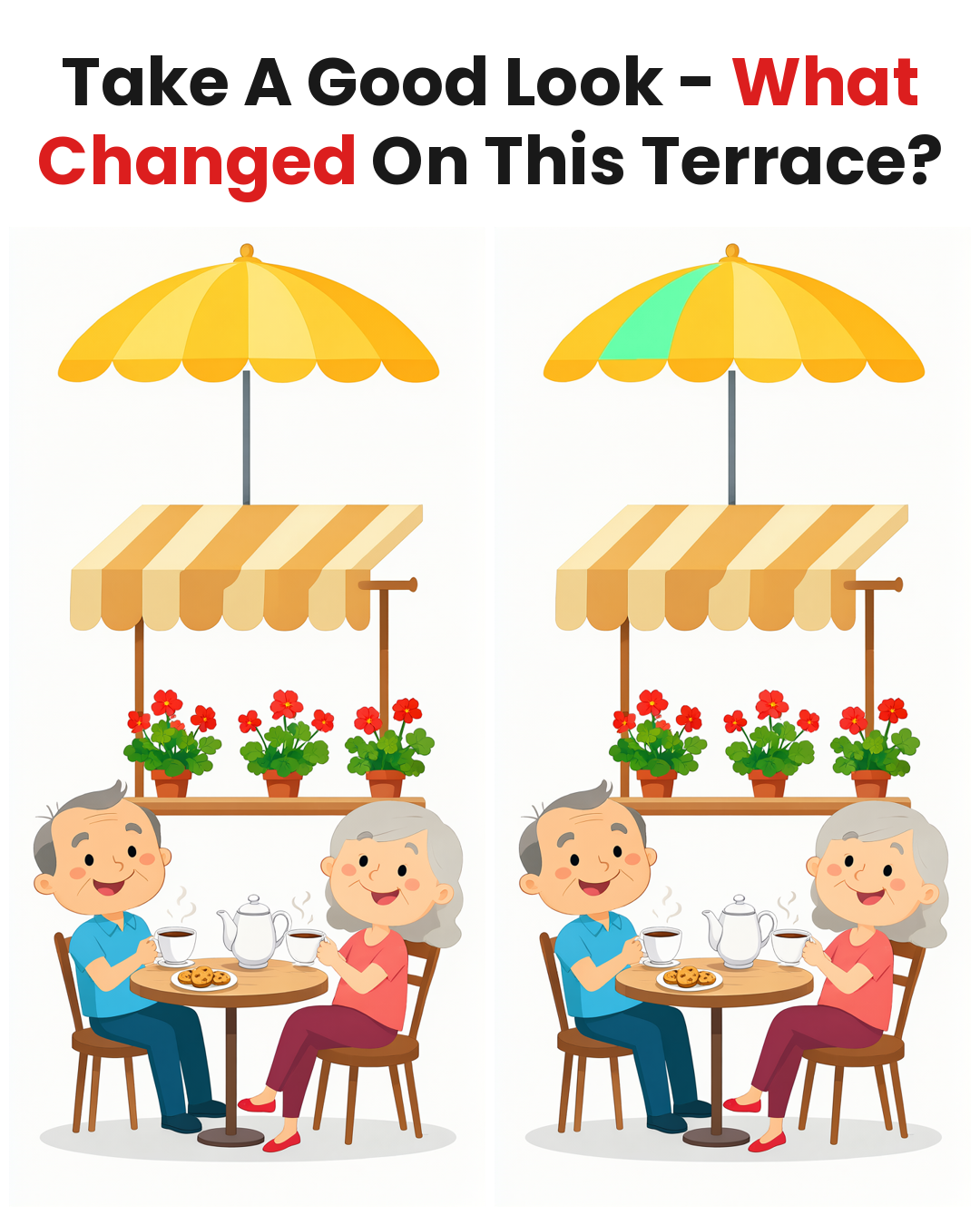
Take your time and look closely before you scroll down!
Compare Shapes, Then Colours
There are two kinds of change a picture puzzle can hide. Something can move or disappear, which changes the shape of the scene, or something can simply change colour, which leaves every shape where it was.
So make two passes. On the first pass, look only at outlines: the umbrella, the awning, the chairs, the table, the two friends and the row of flower pots. Ask whether anything has grown, shrunk, moved or vanished. On the second pass, forget the shapes completely and look only at colours, going over the same objects in the same order.
Splitting the job in two sounds slower, but it is usually much faster. Each pass asks your eyes one simple question instead of two, and simple questions are the ones our attention answers best.
Why The Brain Takes Shortcuts
Our minds are wonderful pattern machines. A row of stripes, a fan of umbrella panels, a line of flower pots: the brain sees the pattern, decides it is regular, and stops examining the individual pieces. It is the same shortcut that lets us read a familiar word without spelling it out.
That shortcut saves us a great deal of effort every day, but it is exactly what a good puzzle takes advantage of. Hide a change inside a repeating pattern and most people will look straight at it without really seeing it, because they are seeing the pattern rather than the parts.
A Quiet Tradition
Picture puzzles like this one have been a part of family life for generations. They were printed in weekend papers beside the crossword, cut out and pinned to kitchen walls, and passed around at the table while the coffee cooled.
There is a good reason they have lasted. They are short, kind and free of frustration. Nobody loses, the answer is always there in front of you, and the little jolt of pleasure when you finally see it is exactly the same at any age.
How Fast Can You Be?
Most people find this one in about thirty to fifty seconds. Those who start at the top of the picture rather than at the faces often catch it much sooner.
Try it once quickly, then once slowly and in order. Then pass the picture to a friend and see whether they can beat you. Half the fun of a puzzle like this is watching somebody else search.
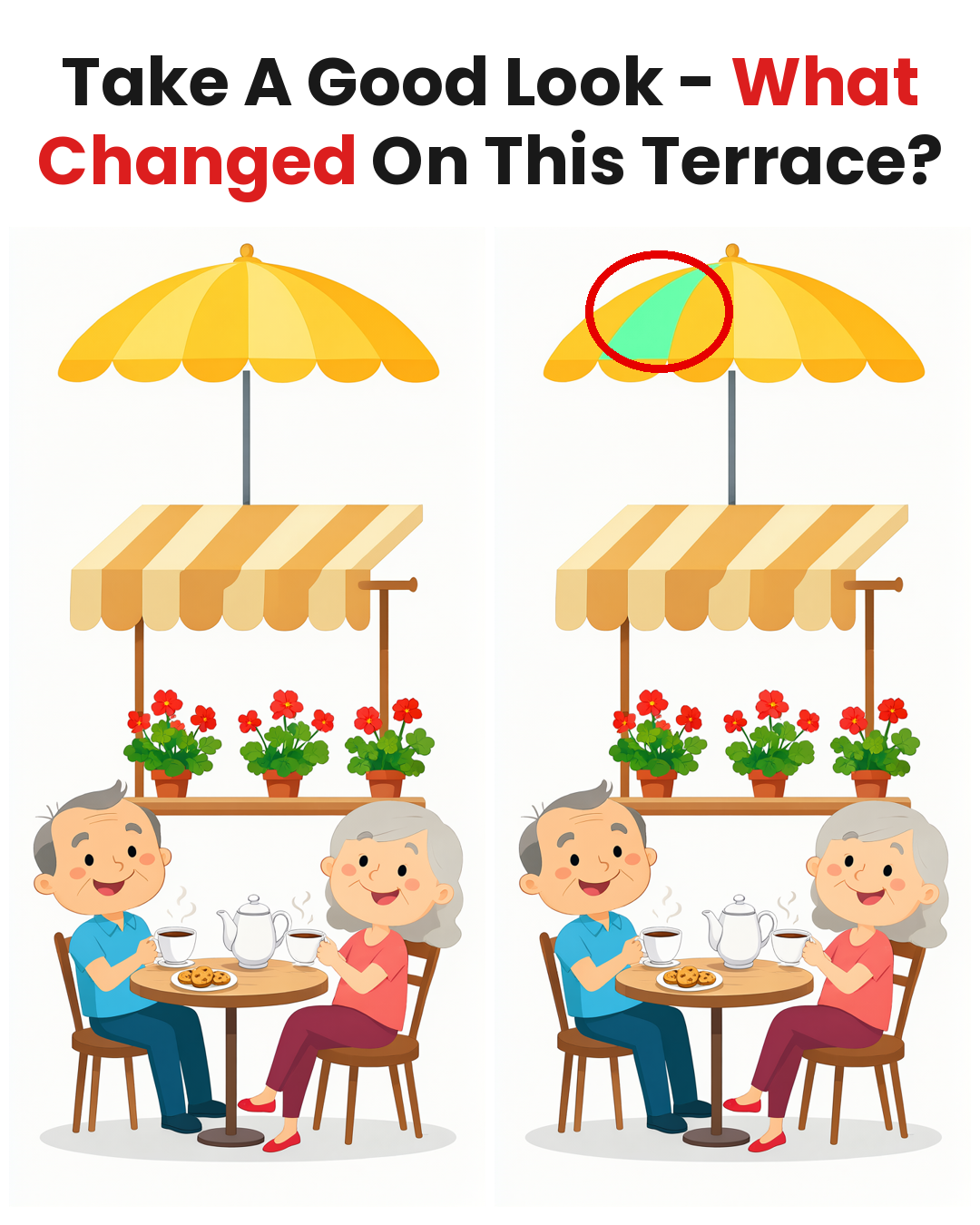
ANSWER: One panel of the yellow umbrella changed colour – it is mint green in the second picture.
Where The Change Is Hiding
Look up at the big yellow umbrella above the little table. It is made of panels in two shades of yellow that take turns around the fan, a light one and then a darker one.
In the second picture one of those panels, just left of the centre pole, is no longer yellow at all. It has become a soft mint green. The pole, the little knob on top, the scalloped edge and every other panel are untouched, as are the awning, the flowers, the teapot and the two smiling friends.
Why So Many People Miss It
Faces are magnets for attention. The moment we open a picture with people in it, our eyes go to them and stay there, reading expressions and clothing long before anything else. The umbrella is just scenery, and scenery is usually taken on trust.
The repeating panels help the trick along too. Once the mind has decided it is looking at a striped umbrella, it is satisfied, and one odd stripe in a regular fan is surprisingly easy to overlook.
How Did You Do?
Under ten seconds means you have truly sharp eyes and a good habit of scanning from the top down. Ten to thirty seconds is an excellent score and better than most people manage.
Thirty to sixty seconds is a solid, patient result. Longer than that simply means the two friends held your attention, which is a perfectly human thing to happen. Next time, start with the biggest object in the picture and work down to the smallest.