The perfume-house owner watched a woman in white fur spray crystal mist into his saleswoman’s face… But when the girl held up the bottle with its blue thread, he stopped breathing.
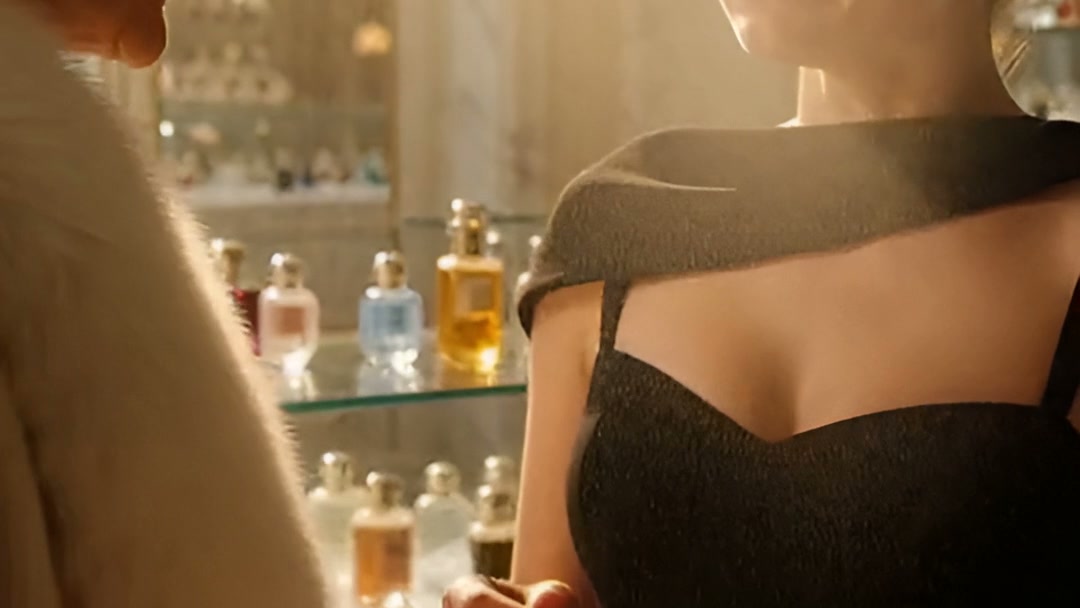
The perfume hall of Voss & Serin glittered on a Thursday afternoon like the inside of a jewelry box. Golden light poured through the arched windows and caught every faceted bottle on the counter, turning the whole room amber and rose. It was the kind of place that made people lower their voices — except for the woman in the white fur-trimmed coat.
Her name was Claudette Marsh, and she had been making salespeople cry since before most of them were born.
“I’m telling you,” the young woman behind the counter said carefully, her voice steady, “this is the last bottle of Numéro Neuf we have. We haven’t produced it since—”
“Since nothing.” Claudette snatched the crystal bottle right out of the girl’s hands. “You’re hiding the new stock because you don’t think I can afford it. I see exactly what you’re doing.”
“Mrs. Marsh, please—”
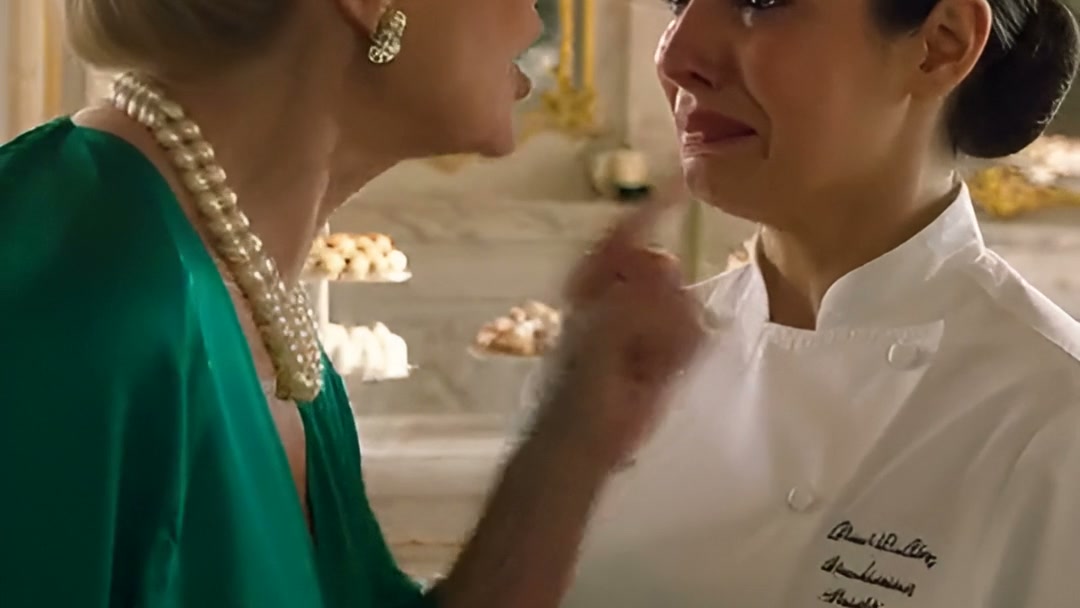
Claudette uncapped the bottle and sprayed it directly into the girl’s face.
The hall went quiet. Three other customers turned. A child in the next aisle looked up from behind her mother’s coat.
The girl — her name tag read *Sera* — stood with her eyes shut and her hands trembling at her sides. Crystal droplets caught on her lashes. She didn’t scream. She didn’t move.
“Cheap liar,” Claudette hissed, and wagged a finger an inch from Sera’s nose. Then she reached for Sera’s wrist.
A hand caught hers in mid-air.
It was not a rough grab. It was calm, almost gentle, the way you’d catch a glass before it hit the floor. The hand belonged to a man in a cream linen suit who had been standing just to the left of the display — still, unremarkable, the kind of man you’d look past in a room full of things that sparkled.
“Don’t,” he said.
Claudette spun on him. “Excuse me? Do you work here? Because I will have you—”
“My name is Édouard Voss.” He said it quietly. “This is my house.”
The name *Voss* landed on her like cold water. Everyone in the hall had heard of Édouard Voss. Almost no one had seen his face.
Claudette’s hand fell. She looked at Sera, then back at him, then at the floor. Without another word she gathered her coat around herself and walked toward the door, her heels sharp and fast on the marble.
No one helped her with the door.
Édouard turned to Sera. She was gripping the edge of the counter with both hands to keep herself upright, and there were tears on her cheeks that she hadn’t let herself shed until now.
“Are you all right?” he asked.
“Yes,” she said, which was not true, and they both knew it.
He reached over and placed the crystal bottle back in her hands. It was only as she wrapped both palms around it that he saw it — a thin blue thread tied in a simple knot around the neck of the bottle.
He said nothing for a moment.
“Where did you get this bottle?” he asked, and his voice had changed — not sharper, but quieter, the way a sound changes when it enters a large empty room.
Sera looked down. “It’s the one we keep behind the counter. For display. We don’t sell it. We’ve never sold it.”
“The thread,” he said. “Who tied the thread?”
She blinked. “My mother worked here. Years ago. She said she tied it herself. She said…” Sera stopped. She turned the bottle slowly in her fingers. “She always called it bottle nine. She said she mixed it. The whole formula.”
Édouard Voss did not move.
“She mixed it,” he repeated.
“She said she spent almost a year on it.” Sera looked up at him now, unsure of his expression — not afraid exactly, but careful, the way you are when you realize the conversation has become about something much larger than you understood. “She passed away two years ago. I took her job here when she did. I didn’t know — I didn’t know the bottle was worth anything, I just kept it because it smelled like her kitchen.”
Édouard Voss set both his hands flat on the counter.
Numéro Neuf had been the last project of his wife, Margaux. She had died before it was finished. He had buried the formula with her in his memory, convinced it was lost, convinced that whatever she had whispered to him about a nearly finished blend had died in the year she spent sick and working in secret and refusing to tell him how close she was.
He had never sold Numéro Neuf. He had never released it. He had kept one bottle — the prototype she made — behind the counter of the hall she loved most, with the blue thread she had tied around it on the last day she ever came to work.
He had thought the thread was his. He had thought no one else knew about it.
“What was your mother’s name?” he asked.
Sera’s voice dropped to almost nothing. “Margaux,” she said. “Margaux Serin.”
The name hit the air between them and sat there.
Serin. The second name on the door. The name that had been there since the beginning, that every customer walked past without understanding — because Margaux had not wanted a portrait on the wall or a biography in the catalog. She had wanted only her name on the glass above the door and the smell of her best work in the air of the room she loved.
Sera didn’t know. She had grown up with a mother who worked long hours and smelled of flowers and sandalwood and kept her work life quiet. She had no idea that the second name on the door of the most famous perfume house in the city belonged to her.
Édouard looked at her for a long moment — at the shape of her face, the way she held the bottle, the careful steadiness she had shown when Claudette Marsh humiliated her in front of a room full of people. He had seen that steadiness before. In a woman who could stand in a lab for nine months without telling anyone how close she was to something extraordinary.
“Sera,” he said. “I think there are some things I need to tell you about your mother.”
She lifted her eyes.
“She didn’t just work here,” he said. “She built this.”
The tears that came then were not from the perfume spray. They were slower, and quieter, and they came from somewhere Sera had not let anyone reach in two years — the place where grief lives when you’ve been holding your chin up for too long.
Édouard Voss did not look away. He let her cry. He kept his hands on the counter, steady, the way the house had always been steady because Margaux had built it that way.
Three weeks later, Édouard filed the paperwork that the lawyers had been asking about for years. Serin was not a ceremonial name. It was a legal one. Margaux had been a fifty-percent owner of the house since the day they built it together, a fact she had hidden from everyone — including her own daughter — out of some bone-deep combination of privacy and pride that Édouard had spent years arguing with her about and never won.
The estate passed to Sera. All of it.
Claudette Marsh was quietly asked never to return to any Voss & Serin location. She was not asked politely.
Numéro Neuf — Margaux Serin’s formula, the one she had spent a year completing alone — went into production six months later. It sold out in four days. The bottle had a thin blue thread around its neck, printed on the label, because Sera had insisted.
On the morning the first shipment left the warehouse, Sera stood in the perfume hall with the original crystal bottle in both hands. The golden afternoon light came through the arched windows the way it always had.
She didn’t cry this time.
She just held it, and breathed, and said, “Hi, Mom.”