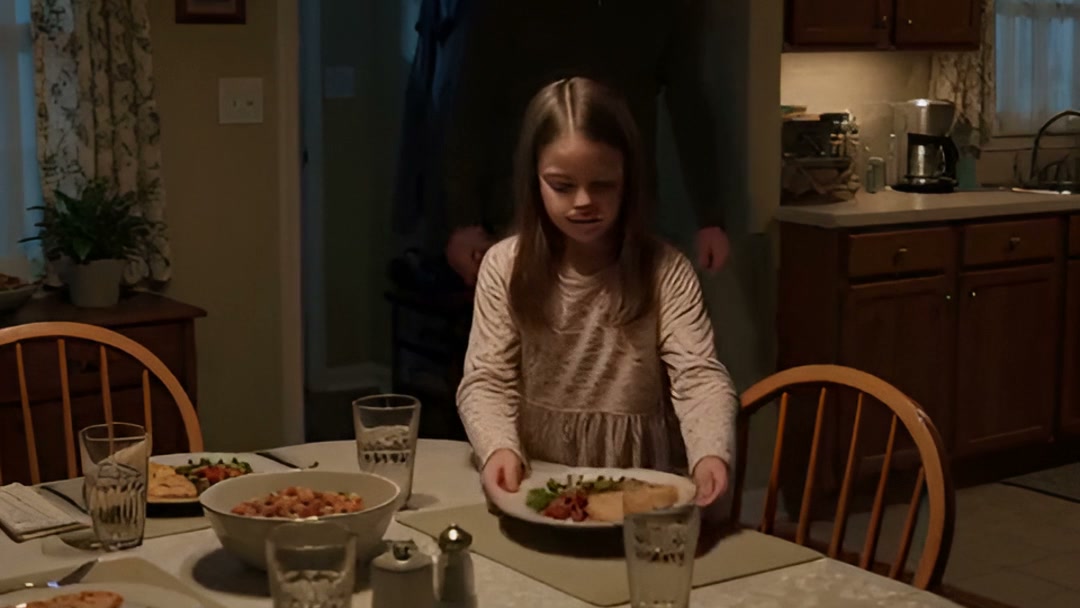
A six-year-old set a fifth place at dinner four nights in a row… But the “imaginary lady” turned out to be her mother’s sister, declared dead for six years and living in their garage loft.
The first time Nora did it, Ryan thought nothing of it.
Kids miscounted. Kids set extra places for stuffed animals and imaginary friends and the memory of a goldfish named Captain who’d been flushed in April.
He moved the plate back to the cabinet.
She set it again Friday.
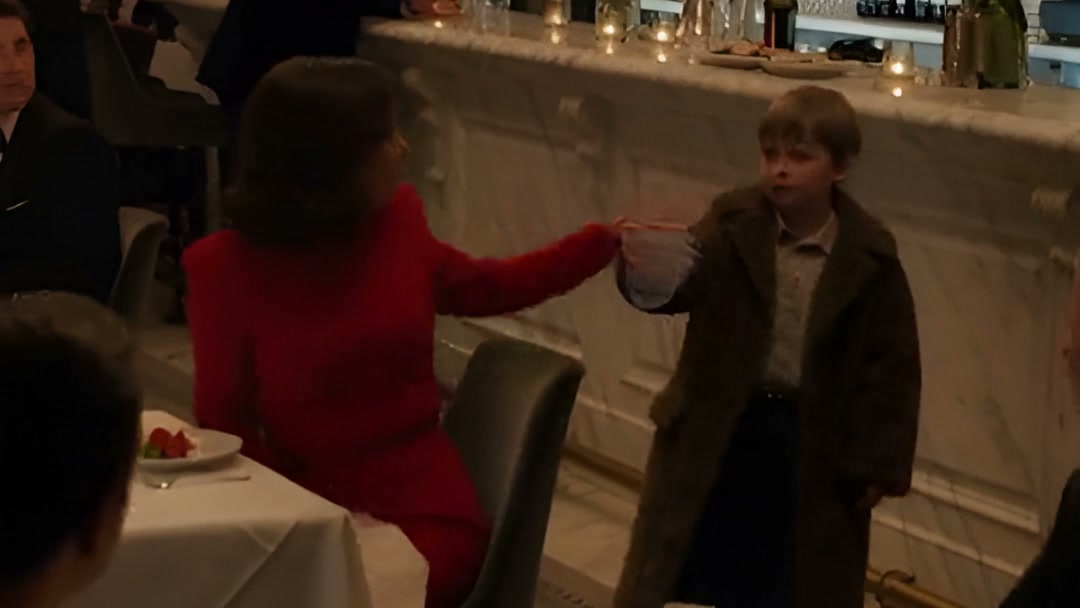
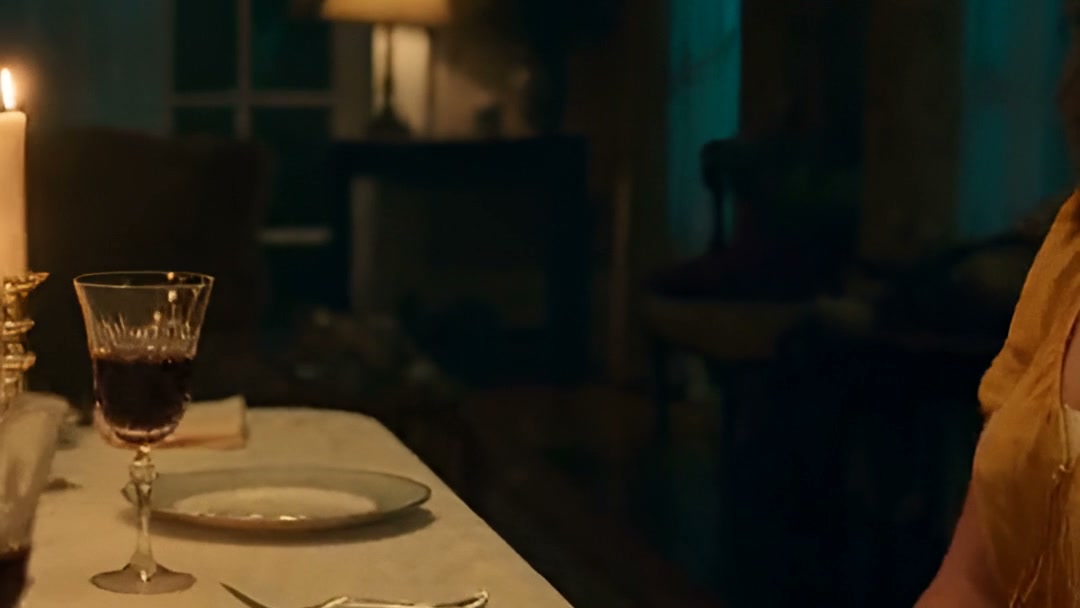
Saturday he watched her count the chairs out loud — one, two, three, four — and then walk back to the cabinet and carry a fifth plate to the table like it was the most obvious thing in the world.
He crouched to her level.
“Nora. Who’s the extra one for?”
She didn’t look at him. She looked at the chair at the far end of the table, the one nobody ever sat in because it was closest to the cold window.
“For the lady.”
Behind him, his wife Claire stopped drying her hands.
“What lady?” Claire asked.
Nora picked up a fork and set it down beside the plate with the practiced care of someone who had done this before, who had been asked to do this.
“The one in the garage.”
They stood there for a moment without moving.
Ryan looked at Claire. Claire looked at the door to the garage.
“It’s nothing,” Ryan said. “She probably heard a squirrel.”
“Right,” Claire said. “A squirrel.”
Neither of them moved for dinner.
He went up to the loft at 11:20 that night with a flashlight and the specific kind of dread that feels like swallowed ice.
The loft hatch was unlatched. He’d latched it himself back in March. He remembered because the bolt had been rusted and he’d cut his palm on the edge of it and bled on his jeans.
He pushed the hatch open.
Dust. Cold air.
And something underneath both of those — warm, organic, unmistakably human. The smell of someone who had been sleeping somewhere for a long time.
He swept the flashlight around.
A sleeping bag, folded neatly against the far wall.
Two water bottles, both half full.
A granola bar wrapper.
And Nora’s winter coat — the puffy blue one with the broken zipper they’d reported missing at school in February. It was folded into a square and being used as a pillow.
His hand was shaking by the time he found the photograph.
It was propped against a cardboard box, facing outward like something displayed.
His wedding photo. Him and Claire, seven years ago, outside the church in October light.
Someone had cut a third person out of the frame. The edge was ragged. Done with scissors, or maybe torn by hand.
He turned it over.
In handwriting he recognized instantly — not because he saw it often, but because he had spent three days staring at it on condolence cards and legal documents and a eulogy that Claire had read out loud only once and then burned —
*Tell Nora I’m sorry about the coat.*
He went down the ladder too fast. His knee hit the concrete floor and he stayed there for a second, just breathing.
Claire was in the doorway.
“Ryan? What happened?”
He stood up. He held out the photograph.
She looked at the front. The cut-out shape where a third person used to stand.
She turned it over.
Her hand went over her mouth.
“That’s not possible,” she said.
“I know.”
“Ryan.” Her voice had dropped to almost nothing. “That is *not* possible.”
“I know what it isn’t. Tell me what it is.”
Behind them, from the dark far end of the garage, something moved.
Not a squirrel.
Not the water heater settling.
A footstep.
Claire’s hand closed around Ryan’s arm.
A woman stepped out from behind the water heater.
She was thin in a way that looked earned over a long time, not chosen. Her hair was cut short and unevenly, like she’d done it herself with kitchen scissors in a dim light. She was wearing a coat Ryan recognized because he had driven Claire to the store to pick it out, four years before the accident. Charcoal gray. Slightly too big at the shoulders. Claire had bought two.
The woman looked at Claire first.
Her jaw moved. Nothing came out.
Then she looked at Ryan.
“Don’t call anyone yet,” she said. “Please. Not yet.”
Claire’s legs gave out. She caught the edge of the workbench and held on.
Because the woman standing in the garage had been declared legally dead in the county of Harlan in February of 2020.
Her name was Delia Marsh, née Delia Navarro.
She was Claire’s older sister.
And she had been living in their loft for eleven weeks.
They went inside.
Ryan didn’t know what else to do. He couldn’t leave her in the garage. He couldn’t call the police — not yet, not until he understood, not while Claire was sitting on the kitchen floor with both hands pressed flat against the tile like she needed to feel something solid.
Delia sat at the table.
At the fifth seat.
“How long?” Ryan said.
“Since October.” Her voice was rough and careful, like someone relearning how to use it. “I didn’t have anywhere else.”
“Delia.” Claire’s voice came from somewhere very far away. “They had a *funeral*.”
“I know.”
“I read at your funeral. I stood at a grave.”
“I know, Claire.”
“*Stop saying I know*.” Claire stood up. She was shaking. “If you knew, you wouldn’t have — you couldn’t have just let us —” She stopped. She pressed her fingers to her mouth. “The accident. They found the car in the river. They found —”
“They found enough,” Delia said. “I let them find enough.”
The kitchen went very quiet.
Ryan was the one who said it.
“You staged it.”
Delia looked at her hands, folded on the table in front of her. Her knuckles were chapped. Two of her fingernails were broken to the quick.
“Marcus was going to kill me,” she said. “That is not an exaggeration. He had told me specifically how. He had a timeline. I found a notebook.” She paused. “I had three days. I used them.”
Marcus.
Ryan had met Marcus Marsh exactly four times. At the wedding. At Thanksgiving, once. At the first Christmas after the wedding, when he’d stood in the corner of Claire’s parents’ living room and made every single person in it find a reason to leave the room.
At the funeral.
Ryan had shaken his hand at the funeral. He remembered thinking the man’s face looked wrong — not grief-wrong, but calculation-wrong, like something being performed.
“Why here?” Ryan said. “After six years, why did you come here and not —”
“I came to a lot of places,” Delia said. “I wasn’t always in one.” She looked up. “I came here because Nora was born. Because I couldn’t.” She stopped. Started again. “You were the only people I — I didn’t have anyone else who didn’t also know Marcus.”
Claire sat down across from her.
For a long time neither of them said anything.
“He’s been looking,” Delia said. “He never stopped. I think he knows I’m not dead. He just can’t prove it and he can’t say it without explaining why he’d want to find a dead woman.”
“What do you need?” Claire said.
Delia blinked. Like the question had come at her sideways.
“Claire —”
“What do you need? Right now. What do you actually need?”
“I don’t know,” Delia said. And then, quietly, undone: “I think I need to stop running.”
In the morning, Ryan called his attorney.
Not the police. Not yet. His attorney first, because that was the right order.
The attorney called a colleague who specialized in protective orders and domestic violence documentation and the very specific legal machinery that surrounds a woman who has had to disappear to survive.
Delia sat at the kitchen table with Claire’s laptop and began to write down everything she remembered. The notebook she’d found. The dates. The names of the two men Marcus had spoken to. The injuries she’d documented and the doctor she’d seen in secret who had noted them and not been asked about them since.
Nora came downstairs at 7 a.m. in her pajamas.
She walked into the kitchen.
She looked at Delia.
She climbed up onto the chair next to her — the fifth chair — without a word and pulled Delia’s arm around herself.
Delia froze.
Then, slowly, she held on.
“I kept your coat warm,” Nora said.
Delia made a sound that wasn’t crying and also was.
“I know, baby,” she said. “Thank you.”
The order of protection was filed the following Monday.
Marcus Marsh was served at his office in front of three colleagues and a paralegal who had, as it happened, also kept records.
The investigation that followed uncovered the notebook — which Delia had photographed and sent to a sealed email account before she disappeared. It uncovered two prior restraining orders filed by two women, both withdrawn under circumstances the DA’s office now found worth revisiting.
Marcus’s attorney called Ryan’s attorney to request, in his words, a conversation.
Ryan’s attorney replied in three words.
*We’re done talking.*
Delia Marsh was declared legally alive on the fourth of March.
She sat in a county clerk’s office in a chair that was slightly too small and signed her name to a form that said, in the language of official documents, that she existed.
Claire sat next to her.
Ryan was home with Nora.
When Delia came home that evening — home, to their house, to the room they’d moved her into with a proper bed and a door that locked from the inside — Nora was sitting at the table.
Five places set.
But all five had people in them this time.
Delia sat down. She looked at her plate. She looked at Nora.
“You can stop setting that now,” she said. “I’m not going anywhere.”
Nora picked up her fork.
“I know,” she said. “That’s why I set it.”
[END]