He Slapped A Quiet Girl At Assembly — Her Brother Walked Off The Stage
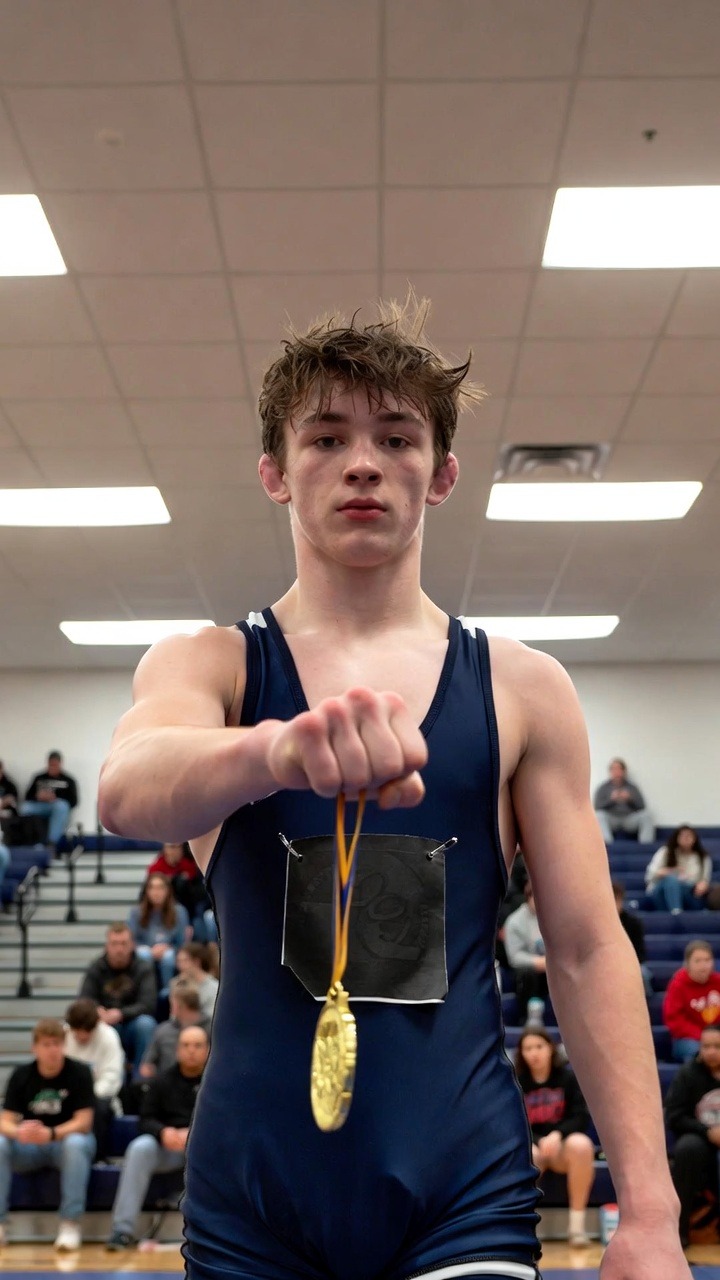
A senior boy slapped a quiet girl at morning assembly in front of the entire school… But her brother had just taken a state championship medal off his own neck and was already walking toward him.
The medal was still warm from the principal’s hands when Jake Reeves unclasped it.
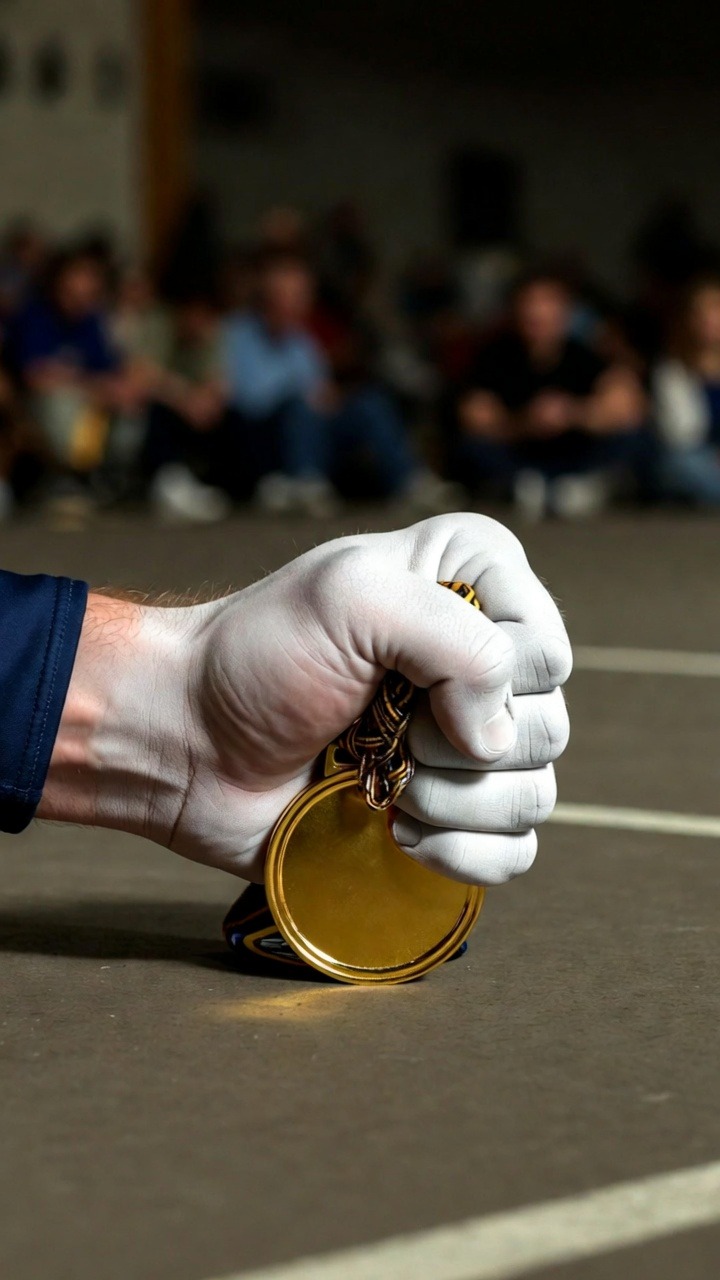
Not for the crowd. Not for the cameras. He just reached up, lifted it off, and held it in his fist the way you hold something you’re not putting down yet.
He’d won it forty minutes ago. One hundred and forty-two pound class. State championship. Four years of five AM practices, of cutting weight, of the specific lonely arithmetic of a sport that happened mostly alone on a mat.
His coach had told him that morning: *When they put that medal around your neck, that’s yours forever. Nobody can take that.*
He was thinking about that when he heard it.
Not from the crowd noise. *Through* it. The specific sound that cuts through gymnasium noise the way wrong sounds always cut through right ones — sharp, flat, and human.
He knew it was Sofia before he turned.
The way you know things about people you’ve been protecting your whole life.
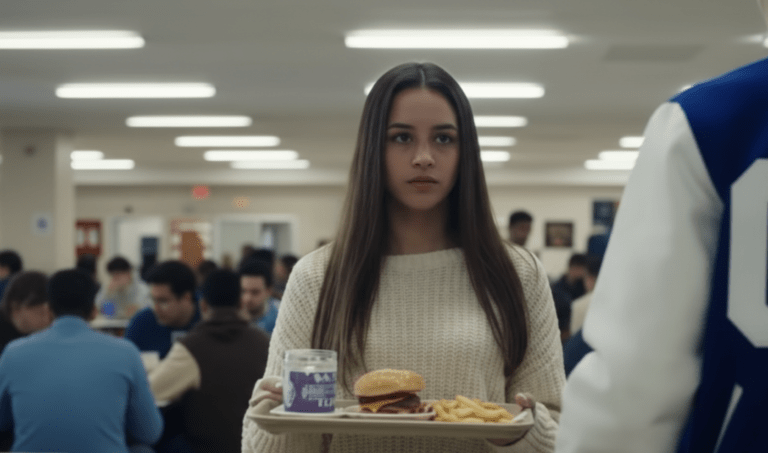
Sofia Reeves was fifteen and small for it. She had spent three years at Jefferson High being invisible in the specific way that quiet girls learned to be invisible when the alternative was worse. Head down. Earbuds in one ear. Seat near the aisle so she could leave quickly.
Jake had understood the system. He’d been visible — athlete, state qualifier, the kind of student schools put in brochures — and he’d known for most of high school that his visibility was the only thing standing between Sofia and the particular cruelty that found quiet girls when nobody was watching.
Then he’d graduated in June.
Gone to State on a wrestling scholarship in September.
Sofia had started tenth grade alone.
He’d called every Sunday. She’d told him everything was fine. He’d believed her because he’d needed to.
He hadn’t been there for twelve weeks.
The stage was six feet off the gymnasium floor.
Jake came down the steps in his singlet — medal in his fist — and the crowd parted the way crowds parted for him, the automatic accommodation that four years of being *someone* had trained into the student body.
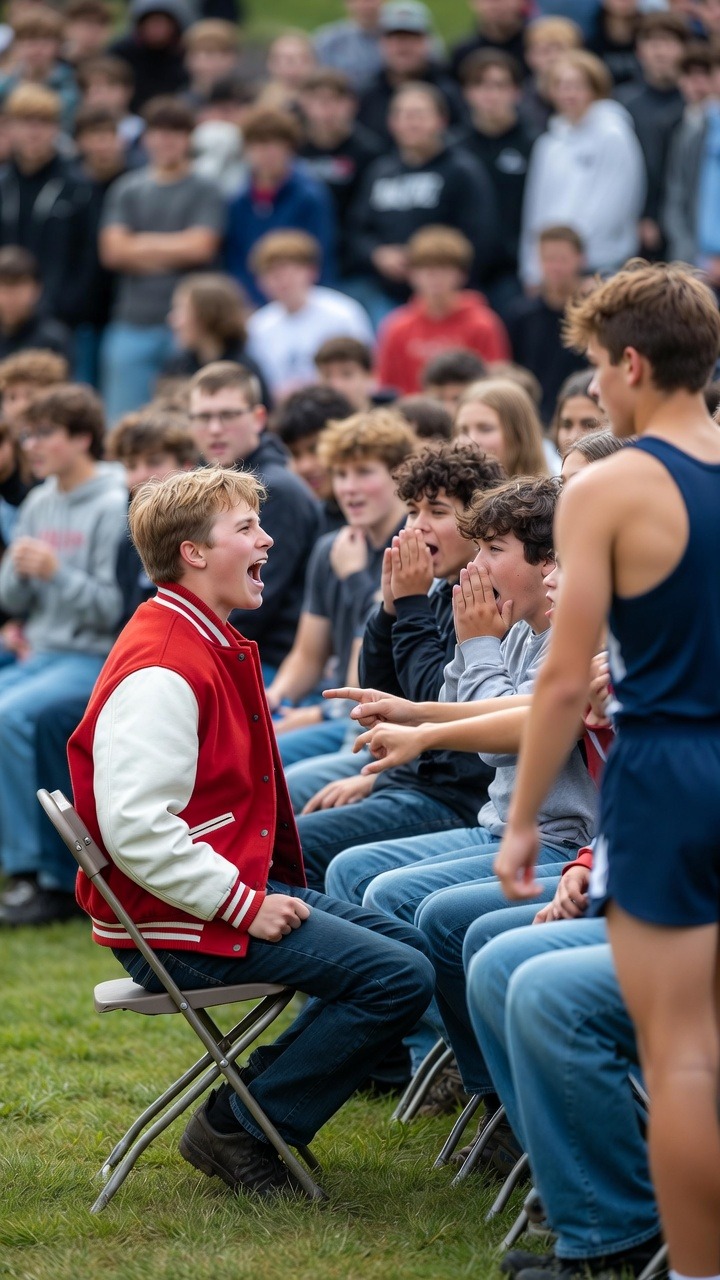
He reached the third row.
Looked at his sister’s hand pressed against the back of her head.
At the boy behind her — broad, letterman jacket, the comfortable posture of someone who had never once been held accountable for anything.
At the thirty students around them with their phones already up.
He looked at Sofia first.
“Hey,” he said. “Look at me.”
Sofia looked up. At the singlet. At the competition number still pinned to his chest. At her brother standing in the middle of morning assembly in his competition clothes with *state champion* still fresh on his skin.
“You won,” she said quietly.
“Are you okay.”
“You were on stage—”
“Are you okay, Sofia.”
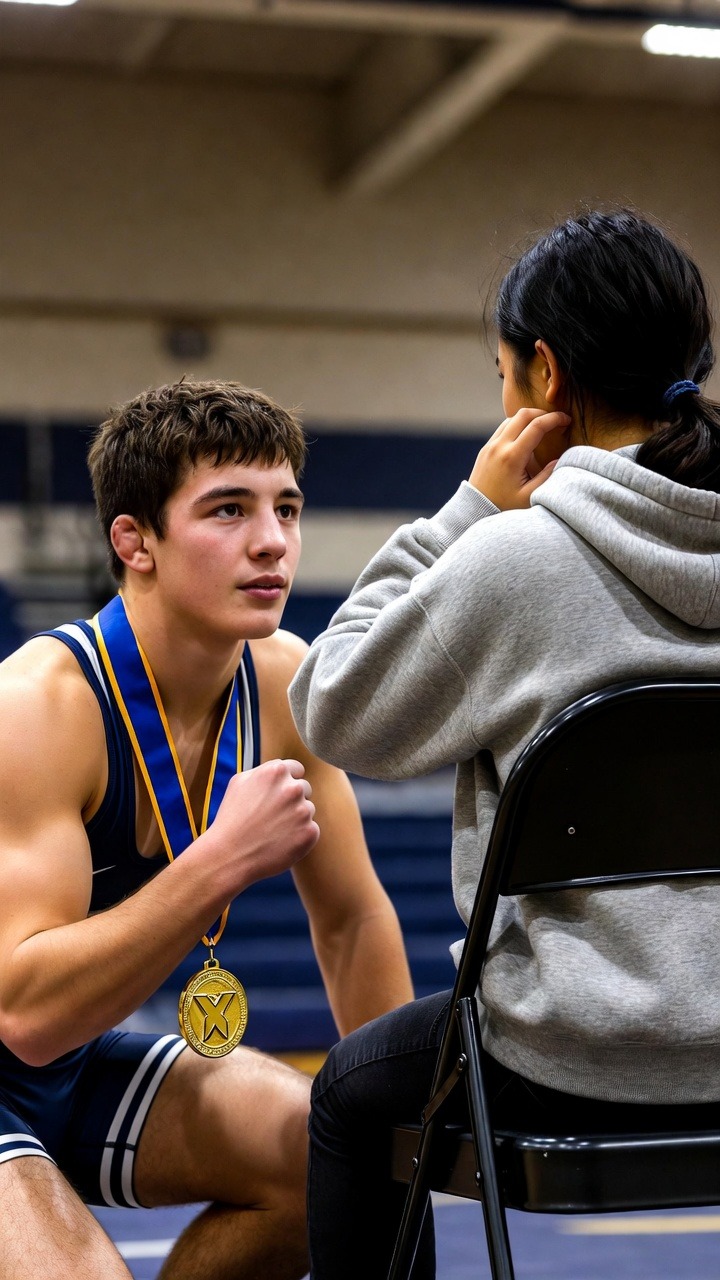
She looked at her hands in her lap.
“He does it a lot,” she said. “Not just to me.”
Jake nodded once. Slow. The kind of nod that isn’t agreement — it’s inventory.
He stood up.
Turned to the boy in the letterman jacket.
The boy’s name was Cody Marsh. He was seventeen and had been reading Jake since the moment he stepped off the stage — the singlet, the competition number, the medal in the fist, the specific body of someone who had spent four years on a mat and was now standing three feet away. Cody had done the math. He’d decided the math was survivable.
“Relax,” Cody said. “It was nothing.”
“Say that again,” Jake said.
“It was nothing. She bumped my knee, I—”
“You open-palm slapped my fifteen-year-old sister in the back of the head,” Jake said. His voice was level. That was the thing that made the students nearest them go quiet. No shake in it. No heat. Just a man describing a fact. “In front of four hundred people. During my assembly.”
“You don’t go here anymore,” Cody said.
“No,” Jake said. “I don’t.”
He held up the medal.
Set it carefully on the empty seat beside Sofia.
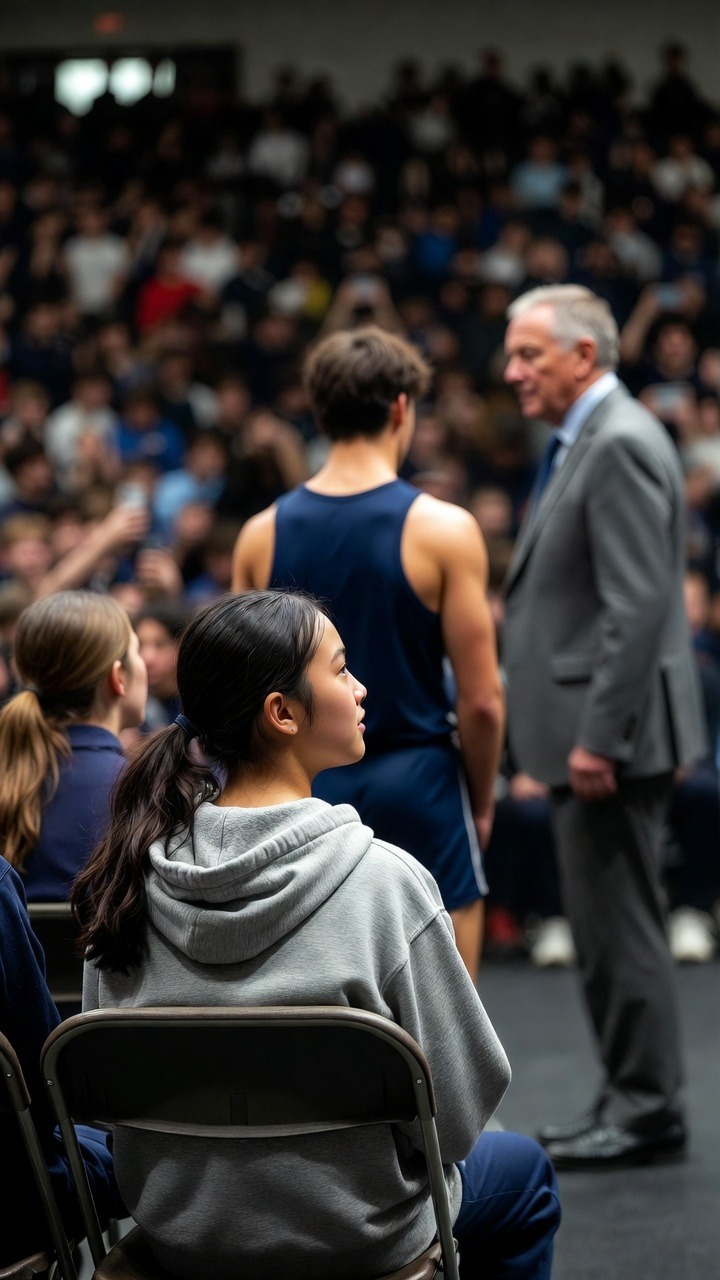
Then he looked at the boy.
“Stand up.”
“I’m not standing up.”
“Then stay seated,” Jake said. “Either way.”
Principal Hargrove was already moving down the center aisle — sixty, grey suit, the expression of a man who had managed seventeen years of assemblies and recognized the specific energy of something he could not stop. He reached Jake’s row in twelve seconds.
“Jake—”
“Mr. Hargrove.” Jake didn’t look away from Cody. “How many times has this been reported?”
Hargrove went still.
“How many times,” Jake said, “has someone reported Cody Marsh putting his hands on a student.”
The gymnasium had gone completely silent. Four hundred students. Not a phone lowered.
“That’s a conversation for my office,” Hargrove said.
“Sofia,” Jake said. “How many times did you report it?”
Sofia looked at the principal.
“Three times,” she said. “Twice to my homeroom teacher and once to the vice principal.”
“Three times,” Jake said.
Hargrove’s jaw tightened.
“I want to speak with you privately—”
“I went to State,” Jake said, still level, still not raising his voice. “I was on that stage for twelve seconds before I heard my sister get hit. And you’re telling me the conversation about why that’s still happening belongs in your office, away from the four hundred students who just watched it happen.”
The gymnasium held its breath.
Cody Marsh stood up.
Not because Jake had told him to. Because staying seated had started to feel worse.
“It was a joke,” Cody said, louder now, playing to the room. “Everyone needs to calm—”
“Sit down, Cody,” said a voice from the fifth row.
Then another: “Sit *down*.”
Then six more. Ten. A sound moving through the student body like a current finding its direction.
Cody sat down.
What happened in Hargrove’s office took forty minutes.
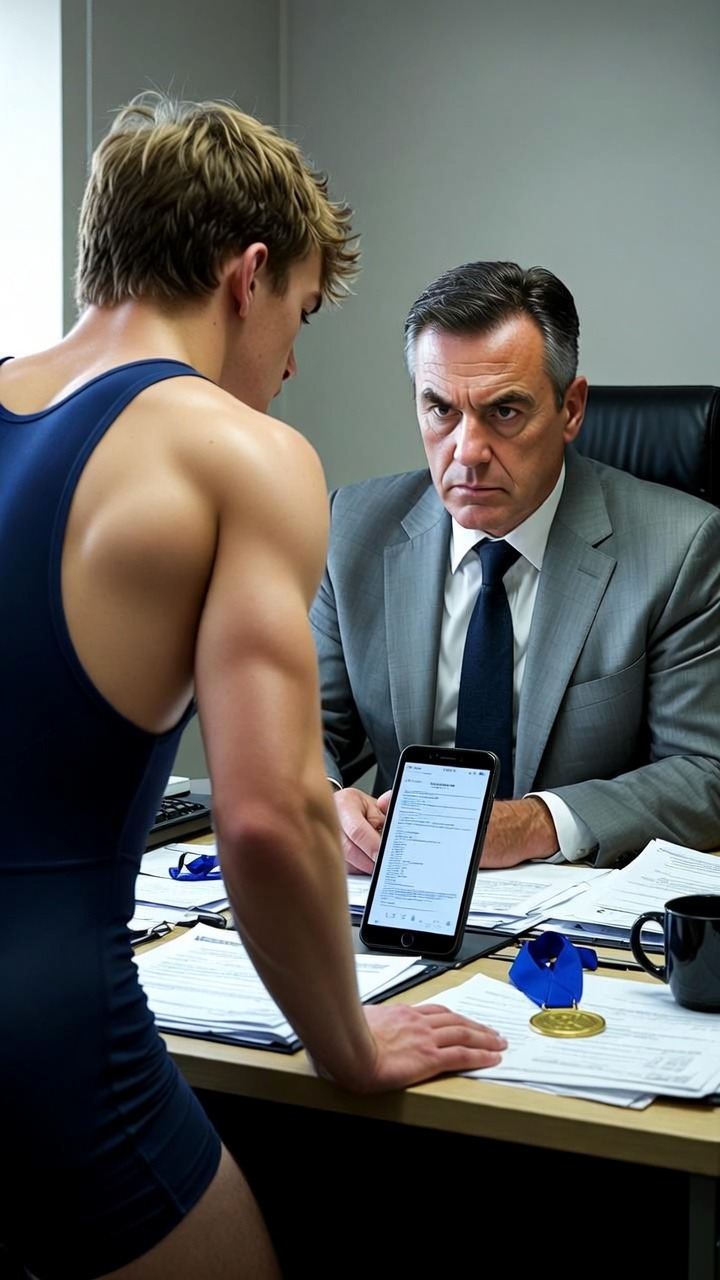
Jake sat across from the principal with Sofia beside him and his phone on the desk between them — open to the Jefferson County School District’s harassment policy, which he had read in the car on the way to the assembly that morning because Sofia had finally told him the truth on Saturday night and he had driven four hours back from State by Sunday noon.
He had not come to the assembly for the medal.
He had come because Sofia had asked him not to make it worse, and he’d promised her he would be calm, and he had kept that promise.
“The documentation exists,” Jake said. “Three reports. None escalated. I’ve already spoken with a district advocate this morning. You have until Friday to provide written documentation of disciplinary action or we file a formal complaint with the district board.”
“Jake, I understand you’re upset—”
“I’m not upset,” Jake said. He picked up the medal from the desk where he’d set it. Turned it over in his hand. “I’m a nineteen-year-old college student who drove four hours because my fifteen-year-old sister told me she was afraid to come to school. I’m not the problem you need to manage right now.”
Hargrove looked at Sofia.
“Sofia,” he said. “I want you to know this school takes your safety seriously.”
Sofia looked at him.
“You had three chances to show me that,” she said.
Cody Marsh was suspended for ten days pending a disciplinary hearing.
The hearing, two weeks later, produced a formal record of prior incidents — four other students who had reported contact, two of whom had been told to *try not to provoke him*. The district advocate Jake had contacted filed a systemic complaint. Hargrove received a formal written reprimand. The vice principal who had dismissed Sofia’s third report was removed from student conduct oversight.
Cody did not return after his suspension. His family transferred him to a private school across the county.
Jake heard about it on a Sunday call.

“Is it better?” he asked.
“Yeah,” Sofia said. “It’s actually better.”
“You would tell me.”
“I would tell you,” she said. “I’m telling you now.”
He believed her this time for a different reason — not because he needed to, but because she had proven she would.
The medal went on the shelf in his dorm room.
Not the place of honor. Just the shelf. Next to his water bottle and his textbooks and a photo of him and Sofia from two summers ago at the state fair, both of them squinting into the sun.
His roommate asked about it once.
“State championship,” Jake said.
“What weight class?”
“One forty-two.”
“That’s serious cutting,” his roommate said.
“Yeah,” Jake said.
He looked at the photo.
“Worth it,” he said.